1
/
of
15
Kinrinji Maki-e Lacquer Natsume Tea Caddy by Yusai — Autumn Grasses on Tame-nuri, Signed Box
Kinrinji Maki-e Lacquer Natsume Tea Caddy by Yusai — Autumn Grasses on Tame-nuri, Signed Box
Regular price
Dhs. 1,068.00 AED
Regular price
Sale price
Dhs. 1,068.00 AED
Taxes included.
Shipping calculated at checkout.
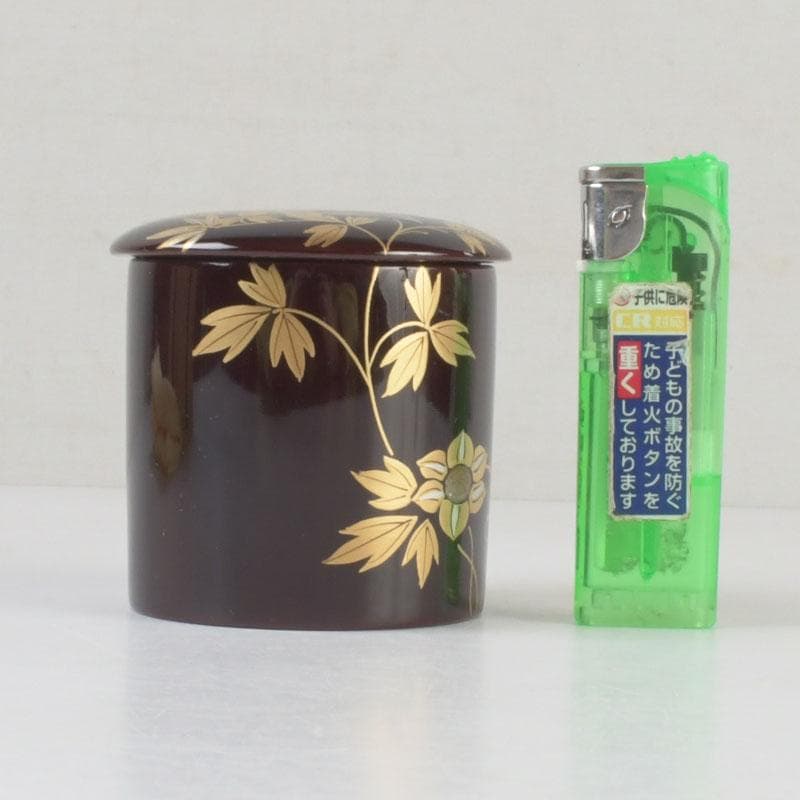
Experience Authentic Japan Art with this Japanese Maki-e Tea Caddy. This Kinrinji Natsume serves as a Lacquer Tea Ceremony Caddy and Japanese Tea Caddy Maki-e, featuring Autumn Grass Maki-e and Tame-nuri Lacquer—a must-have for any Art Collector seeking Vintage Japanese Lacquerware, Tea Ceremony Accessories, and Signed Wooden Box Antiques by the maki-e master Yusai.
🔹 [ BASIC DETAILS ]
• Artist: Yusai (友斉) — maki-e lacquer artist, signed on the lid of the original wooden box
• Technique: Hira maki-e (flat gold maki-e) with silver and blue pigment accents on tame-nuri (translucent amber-over-black) lacquer ground
• Form: Kinrinji natsume (金輪寺棗) — cylindrical straight-walled tea caddy, a shape historically associated with Kinrinji temple in Yamato Province
• Motif: Aki-kusa (autumn grasses) — kikyo (bellflower / Platycodon) and daisy-form blossoms trailing across the body and lid in gold, silver, and deep indigo
• Era: Post-war to Showa period (estimated 1960s–1980s), consistent with mature Showa maki-e studio production
• Origin: Japan (likely Kyoto lacquer tradition)
• Dimensions: Height approx. 7 cm, Diameter approx. 7 cm, Weight approx. 50 g
• Box: Tomobako (original signed wooden box) with artist seal in red; fabric bag (shifuku) included
• Condition: Excellent overall. Lacquer surface is bright and clean with vivid maki-e. Minor age-appropriate micro-wear consistent with careful storage. No cracks, no chips.
🔹 [ CULTURAL & ARTISTIC INSIGHT ]
The kinrinji natsume is one of the oldest and most contemplative forms in the natsume lineage. Unlike the rounded shapes preferred in later centuries, the kinrinji's cylindrical walls rise with deliberate uprightness — a posture that mirrors the stillness expected within a formal tea gathering. The shape's name traces to Kinrinji, a temple in what is now Nara Prefecture, where the cylindrical container was reputedly used to hold sacred powdered incense. When the form entered the tea world, it carried that temple quietness with it.
Yusai's choice to pair this austere form with aki-kusa — autumn grasses and bellflowers — is not incidental. In Japanese aesthetics, the bellflower (kikyo) belongs to the musashino, the open autumn plains, and carries a gentle melancholy. The flower blooms precisely when the heat of summer relents; its blue-violet petals in nature become, in Yusai's hand, a deep indigo against gold. To look at this natsume in the amber light of a tea room is to sense the particular quality the Japanese call yoake-mae no shizukesa — the silence just before autumn dawn.
The tame-nuri ground — a technique in which translucent amber urushi is layered over a black base and polished to a warm, deep reddish-brown — provides the perfect field for hira maki-e. Unlike the sharp contrast of ro-iro (mirror-black), tame-nuri gives the gold a softer luminosity, as though the flowers are being seen through still water rather than glass.
🔹 [ DEEP-DIVE COMMENTARY ]
The kinrinji natsume as a form occupies a distinct position in the typology of Japanese lacquer tea caddies. Most natsume are distinguished by their rounded, turnip-like profile — designed to be grasped and turned in the palm during the tea service. The kinrinji, by contrast, presents a straight cylindrical body with a slightly domed lid, creating a form that reads as more architecturally considered. This shape was standardized within the Enshuryu and Sohenryu schools of tea as a utensil for koicha (thick tea) service on formal occasions, though its clean geometry has made it a favorite across schools.
Hira maki-e, the technique employed here, is the foundational vocabulary of Japanese lacquer decoration. The process involves drawing a design in wet urushi, dusting it with fine metallic powder (in this case gold and silver), then sealing and polishing the surface to integrate the powder into the lacquer film. What distinguishes a skilled maki-e artist is the brushwork underlying the gold — the line quality of stems, the taper of petals, the suggestion of depth through relative density of powder. Examining Yusai's work closely, one notices that the bellflower petals carry a subtle graduation: denser gold at the petal base shading to lighter toward the tips, a technique called e-nashiji that creates the illusion of natural light falling across the bloom.
The use of blue ao-urushi (blue lacquer pigment) for the bellflower petals is a more complex technical achievement than it first appears. Blue pigments in traditional urushi work are unstable under heat and light; sustaining their depth across decades of use requires both a precise formulation and careful sealing layers. The fact that the indigo on this natsume remains vivid and saturated is evidence of both the artist's technical care and the excellent storage conditions maintained by its previous owners.
The tomobako — the original wooden storage box bearing Yusai's signature and red seal — is not merely provenance documentation. In the tea world, a tomobako elevates a piece from commodity to authenticated object. The box establishes a direct lineage: this natsume left the artist's hands in this exact state. For collectors of Japanese lacquerware, a tomobako-complete piece occupies a categorically different tier from an unboxed example, regardless of the lacquer quality alone.
Within the broader context of 20th-century Japanese maki-e production, Yusai represents the serious studio tradition that continued to employ classical techniques — tame-nuri grounds, hira maki-e brushwork, seasonal motif vocabularies drawn from waka poetry — at a time when commercial production was simplifying those methods. Pieces like this kinrinji natsume stand as tangible evidence that the high standards of Kyoto lacquer ateliers persisted well into the Showa period.
---
【日本語解説】
■ 基本情報
作家:友斉(ゆうさい)— 蒔絵師。共箱の蓋裏に署名・朱印あり。
技法:溜塗(透明感ある飴色漆を黒漆の上に重ね、磨き上げた技法)の地に金平蒔絵(ひら蒔絵)。銀および青漆による差し色あり。
形状:金輪寺(金林寺)棗 — 直筒型の茶入れ。大和国・金輪寺に由来すると伝えられる端正な形。
図柄:秋草蒔絵 — 桔梗と秋の花草を金・銀・深い藍色で本体と蓋に流れるように描く。
年代:昭和中期〜後期(1960〜1980年代)と推定。
寸法:高さ約7cm、直径約7cm、重さ約50g。
付属品:共箱(作家署名・朱印入り)、仕服(袋)完備。
状態:全体的に優品。漆面の光沢が鮮明で蒔絵の発色も鮮やか。保管状態に由来するわずかな微細な擦れが見られる程度。割れ・欠けなし。
■ 文化的・芸術的考察
金輪寺棗は、なつめの型の中でも最も古い形式のひとつです。後世に好まれた丸みを帯びた形とは異なり、金輪寺の真っ直ぐな筒形は、茶席における静謐な佇まいをそのまま体現しています。大和国・金輪寺でかつて香を入れる器として用いられたとも伝わり、その寺院的な静けさを帯びたまま茶の世界に入ってきた形です。
友斉がこの簡潔な形に秋草を選んだことは、偶然ではありません。桔梗は武蔵野の秋風の花であり、金色の地に深い藍で描かれたその姿は、夏の終わりの静かな変容を表しています。茶室の柔らかな光の中でこの棗を手に取るとき、日本人が「夜明け前の静けさ」と呼ぶ感覚が、指先から伝わってくるようです。
溜塗は黒漆の上に透明感ある飴色の漆を重ね、磨き上げることで深みのある赤褐色を作り出す技法です。鏡面黒の端正な緊張感とは異なり、溜塗は金蒔絵に柔らかな発光を与え、花々が静水の底から浮かび上がるような奥行きを生みます。
■ 深層解説
金輪寺棗という形は、日本の漆器茶入れの類型の中で独自の位置を占めます。一般的ななつめが茶手前で掌に包み込まれることを想定した丸みを持つのに対し、金輪寺はその直筒型の胴と緩やかに丸みを帯びた蓋によって、より建築的な印象を与えます。遠州流や宗偏流において濃茶用の茶器として用いられてきた格のある形であり、その清潔な造形ゆえに流派を超えて愛用されてきました。
ひら蒔絵は、日本漆芸の装飾技法の根幹をなすものです。まず湿った漆で図柄を描き、その上に金や銀の微粉を蒔いて定着させ、磨き上げることで漆皮膜の中に金属粉を封じ込めます。熟練した蒔絵師の技量が如実に表れるのは、金の下に潜む筆の線質です。茎の流れ、花弁の先細り、粉の濃淡によって生み出す奥行き感。友斉の仕事を精細に観察すると、桔梗の花弁には根元から先端にかけて金の密度が変化する「絵梨地」的な表現が認められ、自然光が花に差すような立体感を作り出しています。
桔梗の花弁に使われた青漆(青呂)は、見た目以上に技術的に高度な選択です。漆工における青系顔料は熱と光によって劣化しやすく、その深みを数十年にわたって保つには、精確な調合と丁寧な封じ込め層が必要です。この棗の藍色が今もなお鮮やかに発色しているという事実は、作家の技術的な誠実さと、旧蔵者による優れた保管状態の両方を証明しています。
友斉の署名と朱印が入った共箱は、単なる来歴の証明書ではありません。茶の世界において共箱は、その器をありふれた商品から認証された作品へと高める装置です。共箱完備の作品は、漆の品質がいかに高くとも共箱を欠く作品とは、コレクターの目線においてまったく異なる格を持ちます。
---
🔹 [ SHIPPING & PACKAGING ]
• Dispatch: Within 1-6 business days
• Carrier: Japan Post EMS / UPS (with tracking)
• Packaging: Carefully wrapped with protective materials
🔹 [ BASIC DETAILS ]
• Artist: Yusai (友斉) — maki-e lacquer artist, signed on the lid of the original wooden box
• Technique: Hira maki-e (flat gold maki-e) with silver and blue pigment accents on tame-nuri (translucent amber-over-black) lacquer ground
• Form: Kinrinji natsume (金輪寺棗) — cylindrical straight-walled tea caddy, a shape historically associated with Kinrinji temple in Yamato Province
• Motif: Aki-kusa (autumn grasses) — kikyo (bellflower / Platycodon) and daisy-form blossoms trailing across the body and lid in gold, silver, and deep indigo
• Era: Post-war to Showa period (estimated 1960s–1980s), consistent with mature Showa maki-e studio production
• Origin: Japan (likely Kyoto lacquer tradition)
• Dimensions: Height approx. 7 cm, Diameter approx. 7 cm, Weight approx. 50 g
• Box: Tomobako (original signed wooden box) with artist seal in red; fabric bag (shifuku) included
• Condition: Excellent overall. Lacquer surface is bright and clean with vivid maki-e. Minor age-appropriate micro-wear consistent with careful storage. No cracks, no chips.
🔹 [ CULTURAL & ARTISTIC INSIGHT ]
The kinrinji natsume is one of the oldest and most contemplative forms in the natsume lineage. Unlike the rounded shapes preferred in later centuries, the kinrinji's cylindrical walls rise with deliberate uprightness — a posture that mirrors the stillness expected within a formal tea gathering. The shape's name traces to Kinrinji, a temple in what is now Nara Prefecture, where the cylindrical container was reputedly used to hold sacred powdered incense. When the form entered the tea world, it carried that temple quietness with it.
Yusai's choice to pair this austere form with aki-kusa — autumn grasses and bellflowers — is not incidental. In Japanese aesthetics, the bellflower (kikyo) belongs to the musashino, the open autumn plains, and carries a gentle melancholy. The flower blooms precisely when the heat of summer relents; its blue-violet petals in nature become, in Yusai's hand, a deep indigo against gold. To look at this natsume in the amber light of a tea room is to sense the particular quality the Japanese call yoake-mae no shizukesa — the silence just before autumn dawn.
The tame-nuri ground — a technique in which translucent amber urushi is layered over a black base and polished to a warm, deep reddish-brown — provides the perfect field for hira maki-e. Unlike the sharp contrast of ro-iro (mirror-black), tame-nuri gives the gold a softer luminosity, as though the flowers are being seen through still water rather than glass.
🔹 [ DEEP-DIVE COMMENTARY ]
The kinrinji natsume as a form occupies a distinct position in the typology of Japanese lacquer tea caddies. Most natsume are distinguished by their rounded, turnip-like profile — designed to be grasped and turned in the palm during the tea service. The kinrinji, by contrast, presents a straight cylindrical body with a slightly domed lid, creating a form that reads as more architecturally considered. This shape was standardized within the Enshuryu and Sohenryu schools of tea as a utensil for koicha (thick tea) service on formal occasions, though its clean geometry has made it a favorite across schools.
Hira maki-e, the technique employed here, is the foundational vocabulary of Japanese lacquer decoration. The process involves drawing a design in wet urushi, dusting it with fine metallic powder (in this case gold and silver), then sealing and polishing the surface to integrate the powder into the lacquer film. What distinguishes a skilled maki-e artist is the brushwork underlying the gold — the line quality of stems, the taper of petals, the suggestion of depth through relative density of powder. Examining Yusai's work closely, one notices that the bellflower petals carry a subtle graduation: denser gold at the petal base shading to lighter toward the tips, a technique called e-nashiji that creates the illusion of natural light falling across the bloom.
The use of blue ao-urushi (blue lacquer pigment) for the bellflower petals is a more complex technical achievement than it first appears. Blue pigments in traditional urushi work are unstable under heat and light; sustaining their depth across decades of use requires both a precise formulation and careful sealing layers. The fact that the indigo on this natsume remains vivid and saturated is evidence of both the artist's technical care and the excellent storage conditions maintained by its previous owners.
The tomobako — the original wooden storage box bearing Yusai's signature and red seal — is not merely provenance documentation. In the tea world, a tomobako elevates a piece from commodity to authenticated object. The box establishes a direct lineage: this natsume left the artist's hands in this exact state. For collectors of Japanese lacquerware, a tomobako-complete piece occupies a categorically different tier from an unboxed example, regardless of the lacquer quality alone.
Within the broader context of 20th-century Japanese maki-e production, Yusai represents the serious studio tradition that continued to employ classical techniques — tame-nuri grounds, hira maki-e brushwork, seasonal motif vocabularies drawn from waka poetry — at a time when commercial production was simplifying those methods. Pieces like this kinrinji natsume stand as tangible evidence that the high standards of Kyoto lacquer ateliers persisted well into the Showa period.
---
【日本語解説】
■ 基本情報
作家:友斉(ゆうさい)— 蒔絵師。共箱の蓋裏に署名・朱印あり。
技法:溜塗(透明感ある飴色漆を黒漆の上に重ね、磨き上げた技法)の地に金平蒔絵(ひら蒔絵)。銀および青漆による差し色あり。
形状:金輪寺(金林寺)棗 — 直筒型の茶入れ。大和国・金輪寺に由来すると伝えられる端正な形。
図柄:秋草蒔絵 — 桔梗と秋の花草を金・銀・深い藍色で本体と蓋に流れるように描く。
年代:昭和中期〜後期(1960〜1980年代)と推定。
寸法:高さ約7cm、直径約7cm、重さ約50g。
付属品:共箱(作家署名・朱印入り)、仕服(袋)完備。
状態:全体的に優品。漆面の光沢が鮮明で蒔絵の発色も鮮やか。保管状態に由来するわずかな微細な擦れが見られる程度。割れ・欠けなし。
■ 文化的・芸術的考察
金輪寺棗は、なつめの型の中でも最も古い形式のひとつです。後世に好まれた丸みを帯びた形とは異なり、金輪寺の真っ直ぐな筒形は、茶席における静謐な佇まいをそのまま体現しています。大和国・金輪寺でかつて香を入れる器として用いられたとも伝わり、その寺院的な静けさを帯びたまま茶の世界に入ってきた形です。
友斉がこの簡潔な形に秋草を選んだことは、偶然ではありません。桔梗は武蔵野の秋風の花であり、金色の地に深い藍で描かれたその姿は、夏の終わりの静かな変容を表しています。茶室の柔らかな光の中でこの棗を手に取るとき、日本人が「夜明け前の静けさ」と呼ぶ感覚が、指先から伝わってくるようです。
溜塗は黒漆の上に透明感ある飴色の漆を重ね、磨き上げることで深みのある赤褐色を作り出す技法です。鏡面黒の端正な緊張感とは異なり、溜塗は金蒔絵に柔らかな発光を与え、花々が静水の底から浮かび上がるような奥行きを生みます。
■ 深層解説
金輪寺棗という形は、日本の漆器茶入れの類型の中で独自の位置を占めます。一般的ななつめが茶手前で掌に包み込まれることを想定した丸みを持つのに対し、金輪寺はその直筒型の胴と緩やかに丸みを帯びた蓋によって、より建築的な印象を与えます。遠州流や宗偏流において濃茶用の茶器として用いられてきた格のある形であり、その清潔な造形ゆえに流派を超えて愛用されてきました。
ひら蒔絵は、日本漆芸の装飾技法の根幹をなすものです。まず湿った漆で図柄を描き、その上に金や銀の微粉を蒔いて定着させ、磨き上げることで漆皮膜の中に金属粉を封じ込めます。熟練した蒔絵師の技量が如実に表れるのは、金の下に潜む筆の線質です。茎の流れ、花弁の先細り、粉の濃淡によって生み出す奥行き感。友斉の仕事を精細に観察すると、桔梗の花弁には根元から先端にかけて金の密度が変化する「絵梨地」的な表現が認められ、自然光が花に差すような立体感を作り出しています。
桔梗の花弁に使われた青漆(青呂)は、見た目以上に技術的に高度な選択です。漆工における青系顔料は熱と光によって劣化しやすく、その深みを数十年にわたって保つには、精確な調合と丁寧な封じ込め層が必要です。この棗の藍色が今もなお鮮やかに発色しているという事実は、作家の技術的な誠実さと、旧蔵者による優れた保管状態の両方を証明しています。
友斉の署名と朱印が入った共箱は、単なる来歴の証明書ではありません。茶の世界において共箱は、その器をありふれた商品から認証された作品へと高める装置です。共箱完備の作品は、漆の品質がいかに高くとも共箱を欠く作品とは、コレクターの目線においてまったく異なる格を持ちます。
---
🔹 [ SHIPPING & PACKAGING ]
• Dispatch: Within 1-6 business days
• Carrier: Japan Post EMS / UPS (with tracking)
• Packaging: Carefully wrapped with protective materials
Quantity
Couldn't load pickup availability
Low stock: 1 left
View full details