1
/
of
11
Kingfisher Maki-e Lacquer Tea Caddy by Nakatake Shoho — White Natsume with Signed Box
Kingfisher Maki-e Lacquer Tea Caddy by Nakatake Shoho — White Natsume with Signed Box
Regular price
Dhs. 1,399.00 AED
Regular price
Sale price
Dhs. 1,399.00 AED
Taxes included.
Shipping calculated at checkout.
Experience Authentic Japan Art with this Japanese Maki-e Tea Caddy. This White Lacquer Natsume serves as a Japanese Tea Ceremony Utensil and Collectible Lacquer Art, featuring Kingfisher Maki-e Design and Hand-Painted Reed Motif—a must-have for any Art Collector seeking Wabi-Sabi Aesthetic and Traditional Chado Craft.
🔹 [ BASIC DETAILS ]
• Artist: Nakatake Shoho (中出松峰) — Certified natsume lacquer artist, Tier 2 tea ceremony specialist
• Technique: Shiro-nuri (white lacquer ground) with kingfisher (kawasemi) maki-e in polychrome urushi; reed and water-plant motif rendered in fine needle-maki-e
• Era: 2000s–2010s (contemporary master craftwork)
• Origin: Japan (natsume lacquer tradition)
• Dimensions: Diameter approx. 6.7 cm, Height approx. 7 cm
• Box: Tomobako (artist's own signed wooden box) — lid inscribed 白塗 翡翠蒔絵 中棗 / 松峰 with red seal
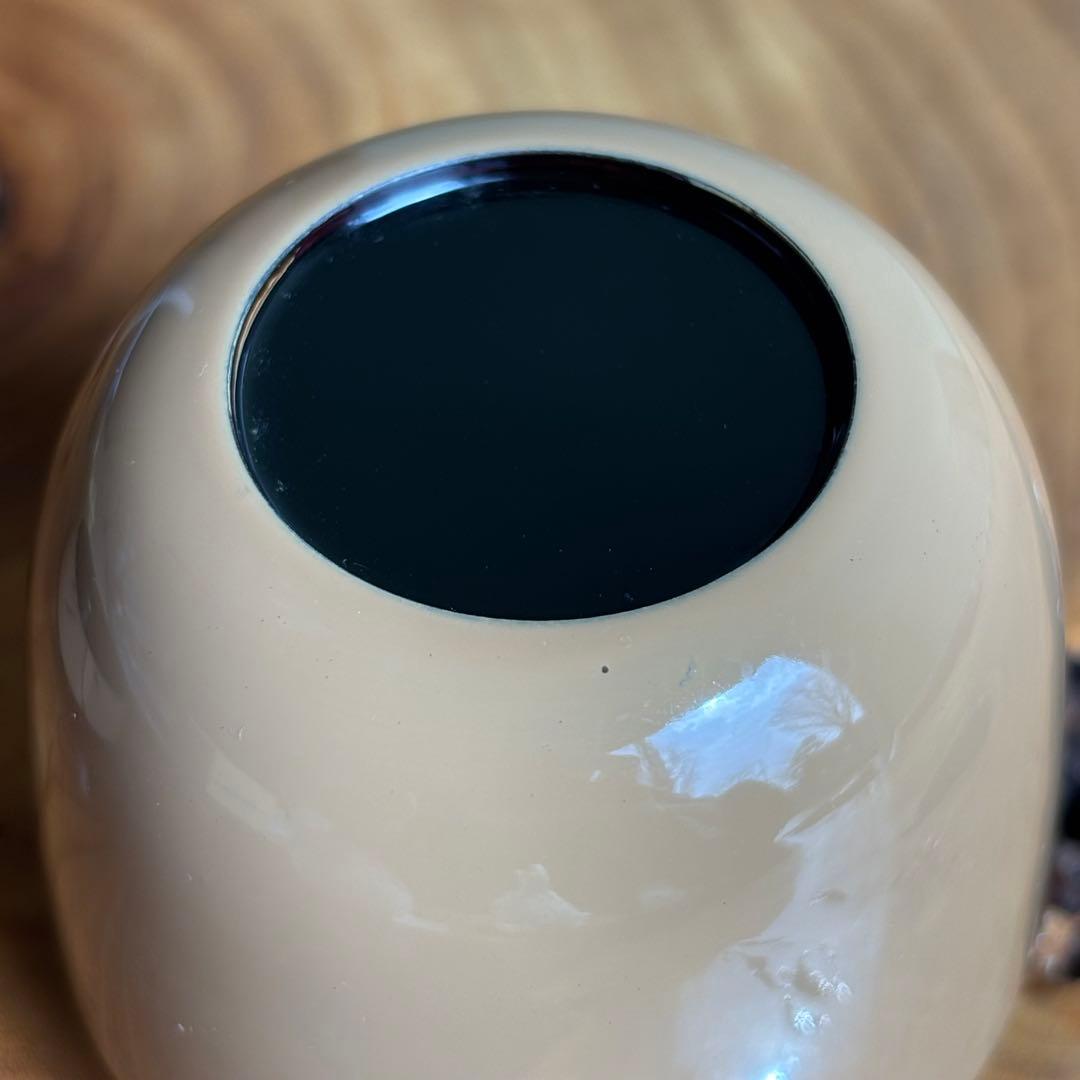
• Condition: Excellent — no chips, no cracks, no restoration; gloss surface intact throughout
🔹 [ CULTURAL & ARTISTIC INSIGHT ]
On a field of pale cream-white lacquer — the color of morning mist above a still river — a single kingfisher perches on a slender reed. The bird's iridescent teal plumage is rendered in microscopic strokes of colored urushi, each feather implied rather than stated. Below, brushstrokes of grass green suggest the riverbank without insisting on it. The composition is built from negative space: fully two-thirds of the surface is left unadorned, and it is precisely that silence that gives the image its breath.
The kingfisher (翡翠, kawasemi) has been a motif of Japanese decorative arts since the Heian period. Associated with clarity of vision and swift precision — the bird dives without hesitation and never misses — it carries a philosophical charge well suited to the tea room. In chado, the natsume enters the ceremony as the vessel for thin-tea (usucha) matcha, handled by the host in full view of guests. Its surface is therefore a stage, and what is painted there speaks.
Nakatake Shoho's choice of shiro-nuri — white rather than the conventional black or vermillion lacquer ground — is a deliberate aesthetic statement. White in Japanese material culture is the color of purity, transition, and unwritten possibility. Placed against the polished white ground, the kingfisher appears to hang in mid-air between sky and water, which is precisely where the real bird lives.
POETIC LINE: "One bird perched on one reed — the white ground holds everything the brushstroke did not say."
🔹 [ DEEP-DIVE COMMENTARY ]
Maki-e (蒔絵, "sprinkled picture") is among the most technically demanding of Japanese lacquer arts. The artist applies layers of refined urushi, allows partial curing, then draws or stamps a design in wet lacquer and dusts metallic powder — gold, silver, or colored pigment — over the wet surface before full hardening. The finest maki-e work, such as the needle-line (togidashi or hira-maki-e) seen here, requires a brush of only a few hairs and an unhurried hand; a single tremor corrupts the line irreparably.
Shiro-nuri (白塗) presents its own technical difficulty. White pigment in traditional Japanese lacquerwork is achieved by mixing lead carbonate (oshiroi) or, in more recent formulations, titanium compounds into the urushi resin. Achieving a stable, non-yellowing cream-white that remains glossy after polishing requires precise temperature and humidity control throughout the curing process. The result visible here — a warm, light-reflective surface — indicates both quality materials and experienced hand-polishing.
The natsume form itself (medium size: chu-natsume, 中棗) was standardized in the tea tradition through the influence of Sen no Rikyu in the late sixteenth century. Its rounded, slightly shouldered silhouette — mimicking the jujube (natsume) fruit — became the definitive container for koicha and usucha powder. The chu-natsume sits perfectly between the fingertips for the formal temae manipulation, and its weight and balance affect the ceremony's entire rhythm. Nakatake Shoho's piece handles with the confident weight and close-fitting lid that indicate proper craft.
For collectors, a natsume by a named lacquer artist with complete tomobako carries dual value: as a functional utensil and as a documented artwork. The box inscription — hand-lettered by the artist — constitutes provenance, naming the form (中棗), the technique (白塗 翡翠蒔絵), and the maker (松峰 with red seal). This piece can pass directly into a tea practitioner's active utensil rotation or be displayed as a cabinet object. Its condition — no chips, no restoration — makes it an unusually clean representative of contemporary Japanese maki-e craft at its disciplined best.
---
🔹 [ 日本語解説 ]
■ 基本情報
作家:中出松峰。茶道具蒔絵作家として活動する現代の漆芸師。棗専門の工人として、茶道関係者の間で評価を受けている。
技法:白塗(しろぬり)地に翡翠(カワセミ)蒔絵。水辺の蘆に翡翠が止まる情景を、極細の針蒔絵で描く。彩色漆を用いた多色仕上げ。
時代:2000年代〜2010年代の現代作。
産地:日本(棗漆芸の伝統を受け継ぐ現代作)。
寸法:径約6.7cm、高さ約7cm(中棗サイズ)。
箱:共箱。蓋裏に「白塗 翡翠蒔絵 中棗」と作品名、「松峰」と赤印。作家自筆の証明付き。
状態:美品。ヒビ・カケなし。塗面の光沢は全体にわたって健全。修復歴なし。
■ 文化・美学的考察
白塗の胎は、河面に立ちこめる朝の霧を思わせる淡い乳白色をしている。その静謐な地の上に、一羽のカワセミが細い蘆の茎に止まっている。翡翠色の羽根は顕微鏡的な細さの筆致で描かれ、羽毛の一枚一枚が「ある」とも「ない」ともつかない繊細さで示唆される。構図の三分の二近くは意図的に余白に委ねられており、その沈黙が絵の呼吸となっている。
カワセミ(翡翠)は平安期以降、日本の装飾美術に繰り返し登場する鳥である。澄んだ視力と一撃必殺の潜水――一切の逡巡なく水面に飛び込み、決して外さない――というその性質は、茶室の精神と深く共鳴する。茶道において棗は薄茶の抹茶を収める器として客前に運ばれ、亭主の手捌きのなかで表面が問われる。何が描かれているか、どのように描かれているか。その答えがこの棗の白塗面に静かに置かれている。
白塗という地の選択は様式的な意思表明である。黒や朱が一般的な棗の定番に対し、白はより強い余白の主張であり、清浄と未生の可能性の色でもある。白地の上で、カワセミは空と水の間――本物の翡翠が棲む場所――に漂うように見える。
詩的所見:「一羽の鳥、一本の蘆。白い地は、筆の語らなかったすべてをそのまま抱いている。」
■ 上級コレクター向け解説
蒔絵とは、漆の地に意匠を描き、乾燥前に金属粉や色漆粉を蒔いて定着させる技法の総称である。最も精緻な針蒔絵(平蒔絵・研ぎ出し蒔絵の線描部分)では、数本の毛からなる極細筆を用い、一瞬の震えも線を狂わせるため、深い集中と長年の修練が要求される。本作に見られる翡翠の羽根の描線と蘆の筆致は、その水準に達した手技を示している。
白塗の技術的難度は高い。漆に白色を定着させるには従来から鉛白(おしろい)、現代では酸化チタン系の顔料を生漆に混錬し、温度・湿度を精密に管理しながら乾燥・研ぎ出しを繰り返す。変色せず光沢を保つ白を実現するためには素材の純度と塗師の経験の両方が求められる。本作に見られる温かみのある乳白色の艶は、その工程を丁寧に踏んだことを物語っている。
中棗(ちゅうなつめ)の形式は、千利休が十六世紀後半の茶の湯改革の中で規範化した棗のサイズ区分である。なつめの実(棗の果実)を模した丸みを帯びた肩張りのシルエットは、点前中に指先で保持するのに最適な重心と径を持ち、蓋の開閉が茶事のテンポに直接影響する。本作の蓋合いと手の中での収まりは、工芸品として正しく設計されていることを示している。
コレクターにとって、作家名入り共箱を伴う棗は鑑賞具としての資料価値と、現役の茶道具としての実用価値を兼ねる。共箱の筆跡は作家の自署であり、作品名・技法・作家名を一体として記録した一次資料である。ヒビも補修痕もない美品の状態は、現代蒔絵棗の水準を示す標本として、茶人にとっても研究者にとっても誠実な一点である。
🔹 [ SHIPPING & PACKAGING ]
• Dispatch: Within 1-6 business days
• Carrier: Japan Post EMS / UPS (with tracking)
• Packaging: Carefully wrapped with protective materials
🔹 [ BASIC DETAILS ]
• Artist: Nakatake Shoho (中出松峰) — Certified natsume lacquer artist, Tier 2 tea ceremony specialist
• Technique: Shiro-nuri (white lacquer ground) with kingfisher (kawasemi) maki-e in polychrome urushi; reed and water-plant motif rendered in fine needle-maki-e
• Era: 2000s–2010s (contemporary master craftwork)
• Origin: Japan (natsume lacquer tradition)
• Dimensions: Diameter approx. 6.7 cm, Height approx. 7 cm
• Box: Tomobako (artist's own signed wooden box) — lid inscribed 白塗 翡翠蒔絵 中棗 / 松峰 with red seal
• Condition: Excellent — no chips, no cracks, no restoration; gloss surface intact throughout
🔹 [ CULTURAL & ARTISTIC INSIGHT ]
On a field of pale cream-white lacquer — the color of morning mist above a still river — a single kingfisher perches on a slender reed. The bird's iridescent teal plumage is rendered in microscopic strokes of colored urushi, each feather implied rather than stated. Below, brushstrokes of grass green suggest the riverbank without insisting on it. The composition is built from negative space: fully two-thirds of the surface is left unadorned, and it is precisely that silence that gives the image its breath.
The kingfisher (翡翠, kawasemi) has been a motif of Japanese decorative arts since the Heian period. Associated with clarity of vision and swift precision — the bird dives without hesitation and never misses — it carries a philosophical charge well suited to the tea room. In chado, the natsume enters the ceremony as the vessel for thin-tea (usucha) matcha, handled by the host in full view of guests. Its surface is therefore a stage, and what is painted there speaks.
Nakatake Shoho's choice of shiro-nuri — white rather than the conventional black or vermillion lacquer ground — is a deliberate aesthetic statement. White in Japanese material culture is the color of purity, transition, and unwritten possibility. Placed against the polished white ground, the kingfisher appears to hang in mid-air between sky and water, which is precisely where the real bird lives.
POETIC LINE: "One bird perched on one reed — the white ground holds everything the brushstroke did not say."
🔹 [ DEEP-DIVE COMMENTARY ]
Maki-e (蒔絵, "sprinkled picture") is among the most technically demanding of Japanese lacquer arts. The artist applies layers of refined urushi, allows partial curing, then draws or stamps a design in wet lacquer and dusts metallic powder — gold, silver, or colored pigment — over the wet surface before full hardening. The finest maki-e work, such as the needle-line (togidashi or hira-maki-e) seen here, requires a brush of only a few hairs and an unhurried hand; a single tremor corrupts the line irreparably.
Shiro-nuri (白塗) presents its own technical difficulty. White pigment in traditional Japanese lacquerwork is achieved by mixing lead carbonate (oshiroi) or, in more recent formulations, titanium compounds into the urushi resin. Achieving a stable, non-yellowing cream-white that remains glossy after polishing requires precise temperature and humidity control throughout the curing process. The result visible here — a warm, light-reflective surface — indicates both quality materials and experienced hand-polishing.
The natsume form itself (medium size: chu-natsume, 中棗) was standardized in the tea tradition through the influence of Sen no Rikyu in the late sixteenth century. Its rounded, slightly shouldered silhouette — mimicking the jujube (natsume) fruit — became the definitive container for koicha and usucha powder. The chu-natsume sits perfectly between the fingertips for the formal temae manipulation, and its weight and balance affect the ceremony's entire rhythm. Nakatake Shoho's piece handles with the confident weight and close-fitting lid that indicate proper craft.
For collectors, a natsume by a named lacquer artist with complete tomobako carries dual value: as a functional utensil and as a documented artwork. The box inscription — hand-lettered by the artist — constitutes provenance, naming the form (中棗), the technique (白塗 翡翠蒔絵), and the maker (松峰 with red seal). This piece can pass directly into a tea practitioner's active utensil rotation or be displayed as a cabinet object. Its condition — no chips, no restoration — makes it an unusually clean representative of contemporary Japanese maki-e craft at its disciplined best.
---
🔹 [ 日本語解説 ]
■ 基本情報
作家:中出松峰。茶道具蒔絵作家として活動する現代の漆芸師。棗専門の工人として、茶道関係者の間で評価を受けている。
技法:白塗(しろぬり)地に翡翠(カワセミ)蒔絵。水辺の蘆に翡翠が止まる情景を、極細の針蒔絵で描く。彩色漆を用いた多色仕上げ。
時代:2000年代〜2010年代の現代作。
産地:日本(棗漆芸の伝統を受け継ぐ現代作)。
寸法:径約6.7cm、高さ約7cm(中棗サイズ)。
箱:共箱。蓋裏に「白塗 翡翠蒔絵 中棗」と作品名、「松峰」と赤印。作家自筆の証明付き。
状態:美品。ヒビ・カケなし。塗面の光沢は全体にわたって健全。修復歴なし。
■ 文化・美学的考察
白塗の胎は、河面に立ちこめる朝の霧を思わせる淡い乳白色をしている。その静謐な地の上に、一羽のカワセミが細い蘆の茎に止まっている。翡翠色の羽根は顕微鏡的な細さの筆致で描かれ、羽毛の一枚一枚が「ある」とも「ない」ともつかない繊細さで示唆される。構図の三分の二近くは意図的に余白に委ねられており、その沈黙が絵の呼吸となっている。
カワセミ(翡翠)は平安期以降、日本の装飾美術に繰り返し登場する鳥である。澄んだ視力と一撃必殺の潜水――一切の逡巡なく水面に飛び込み、決して外さない――というその性質は、茶室の精神と深く共鳴する。茶道において棗は薄茶の抹茶を収める器として客前に運ばれ、亭主の手捌きのなかで表面が問われる。何が描かれているか、どのように描かれているか。その答えがこの棗の白塗面に静かに置かれている。
白塗という地の選択は様式的な意思表明である。黒や朱が一般的な棗の定番に対し、白はより強い余白の主張であり、清浄と未生の可能性の色でもある。白地の上で、カワセミは空と水の間――本物の翡翠が棲む場所――に漂うように見える。
詩的所見:「一羽の鳥、一本の蘆。白い地は、筆の語らなかったすべてをそのまま抱いている。」
■ 上級コレクター向け解説
蒔絵とは、漆の地に意匠を描き、乾燥前に金属粉や色漆粉を蒔いて定着させる技法の総称である。最も精緻な針蒔絵(平蒔絵・研ぎ出し蒔絵の線描部分)では、数本の毛からなる極細筆を用い、一瞬の震えも線を狂わせるため、深い集中と長年の修練が要求される。本作に見られる翡翠の羽根の描線と蘆の筆致は、その水準に達した手技を示している。
白塗の技術的難度は高い。漆に白色を定着させるには従来から鉛白(おしろい)、現代では酸化チタン系の顔料を生漆に混錬し、温度・湿度を精密に管理しながら乾燥・研ぎ出しを繰り返す。変色せず光沢を保つ白を実現するためには素材の純度と塗師の経験の両方が求められる。本作に見られる温かみのある乳白色の艶は、その工程を丁寧に踏んだことを物語っている。
中棗(ちゅうなつめ)の形式は、千利休が十六世紀後半の茶の湯改革の中で規範化した棗のサイズ区分である。なつめの実(棗の果実)を模した丸みを帯びた肩張りのシルエットは、点前中に指先で保持するのに最適な重心と径を持ち、蓋の開閉が茶事のテンポに直接影響する。本作の蓋合いと手の中での収まりは、工芸品として正しく設計されていることを示している。
コレクターにとって、作家名入り共箱を伴う棗は鑑賞具としての資料価値と、現役の茶道具としての実用価値を兼ねる。共箱の筆跡は作家の自署であり、作品名・技法・作家名を一体として記録した一次資料である。ヒビも補修痕もない美品の状態は、現代蒔絵棗の水準を示す標本として、茶人にとっても研究者にとっても誠実な一点である。
🔹 [ SHIPPING & PACKAGING ]
• Dispatch: Within 1-6 business days
• Carrier: Japan Post EMS / UPS (with tracking)
• Packaging: Carefully wrapped with protective materials
Quantity
Couldn't load pickup availability
Low stock: 1 left
View full details