1
/
of
9
Kimura Koji Hagi Ware Matcha Bowl - Karadomari-yama Kiln Chawan
Kimura Koji Hagi Ware Matcha Bowl - Karadomari-yama Kiln Chawan
Regular price
Dhs. 940.00 AED
Regular price
Sale price
Dhs. 940.00 AED
Taxes included.
Shipping calculated at checkout.
Experience authentic Japanese Hagi ware with this Kimura Koji Karadomari-yama Kiln Matcha Bowl. This Hagi Chawan serves as a Straw Ash Glaze and Yamaguchi Pottery, featuring Kairagi Texture Bowl and Tea Ceremony Art—a must-have for any Art Collector seeking Japanese Ceramic Art and Wabi Sabi Ceramic.
━━━━━━━━━━━━━━━━━━━━
🔹 [ BASIC DETAILS ]
• Artist: Kimura Koji (喜村浩司)
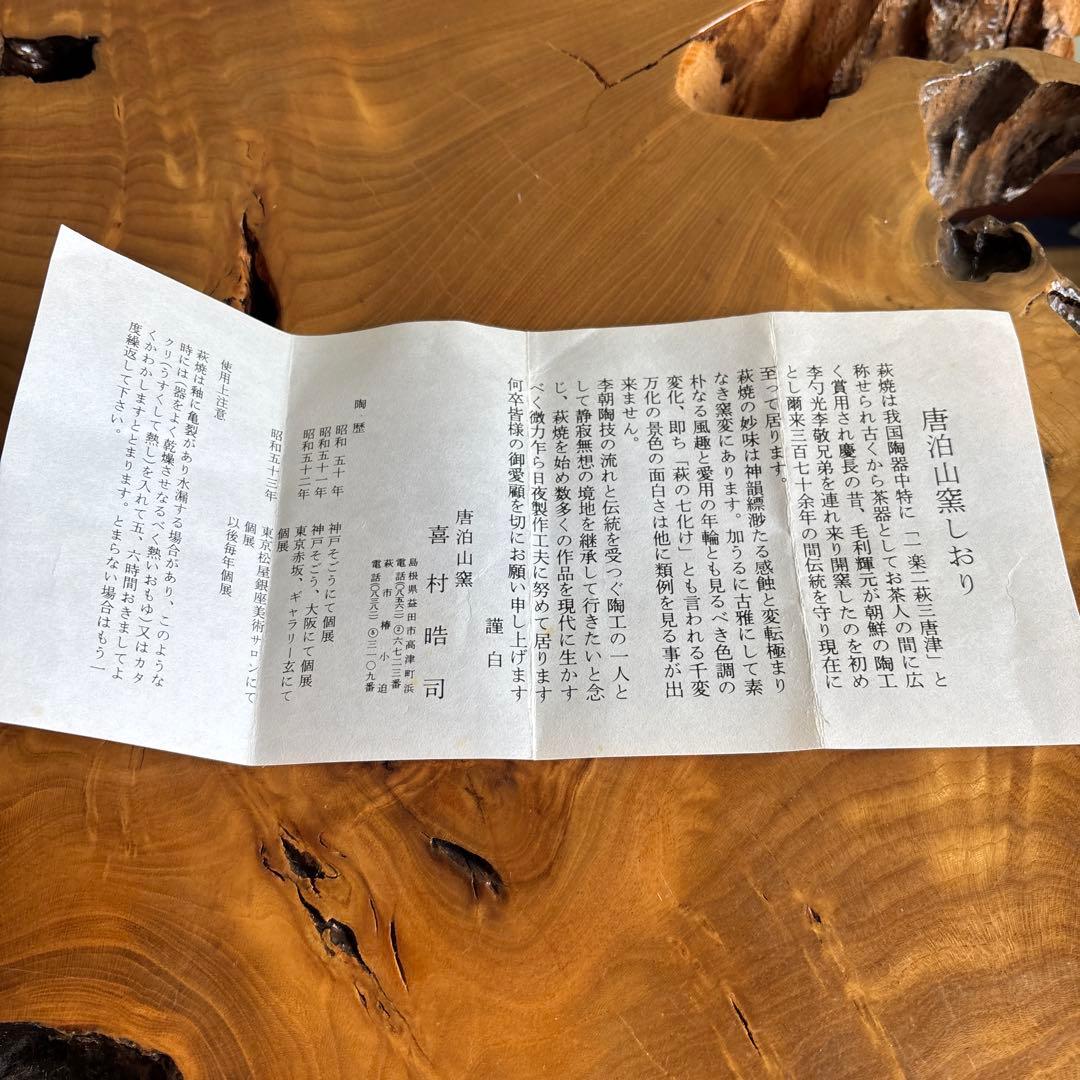
• Kiln: Karadomari-yama kiln (唐泊山窯)
• Type: Hagi Chawan (萩茶碗) — matcha tea bowl
• Technique: Hagi ware — straw-ash glazed stoneware
• Era: Contemporary (Heisei–Reiwa period)
• Origin: Hagi, Yamaguchi Prefecture, Japan
• Dimensions: Dia approx. 14.5 cm × H approx. 9 cm
• Box: Tomobako (signed wooden box) with calligraphy, red seal, and yellow cord
• Condition: Excellent — no cracks or chips
━━━━━━━━━━━━━━━━━━━━
🔹 [ CULTURAL & ARTISTIC INSIGHT ]
Hagi ware occupies the second position in the revered hierarchy of tea ceramics: "Ichi Raku, Ni Hagi, San Karatsu" — first Raku, second Hagi, third Karatsu. This ranking is not merely tradition. It reflects the profound affinity between Hagi's soft, absorbent glazes and the culture of tea, where a bowl is not a static object but a living surface that evolves with every use.
The Karadomari-yama kiln (唐泊山窯) operated by Kimura Koji continues the lineage of Hagi's Korean-descended ceramic tradition — techniques brought to Yamaguchi Prefecture by Korean potters following the campaigns of the 1590s. Over four centuries, these methods merged with Japanese tea sensibility to produce wares of quiet warmth and understated presence.
What distinguishes Hagi is transformation. The porous clay body absorbs tea over years of use, gradually shifting in tone — a phenomenon known as "Hagi no nanabake" (萩の七化け), the seven transformations of Hagi. A new Hagi bowl is a beginning, not a finished statement.
*"The bowl arrives complete. Then it begins to change — and that is where its life starts."*
━━━━━━━━━━━━━━━━━━━━
🔹 [ DEEP-DIVE COMMENTARY ]
**Hagi Ware — Korean Roots, Japanese Soul**: Hagi ware traces its origins to the Korean potters Yi Sukkwang and Yi Kyung, who established kilns in Hagi under the patronage of the Mori clan following Toyotomi Hideyoshi's Korean campaigns. The tradition retains core Korean techniques — the use of local Daido clay, straw-ash glazes, and deliberate simplicity of form — while having evolved over centuries into something distinctly attuned to the Japanese tea aesthetic.
**Glaze Character**: This bowl wears Hagi's characteristic white straw-ash glaze (wara-bai-yu) — a milky, translucent coating that pools and thins unevenly across the surface. Where the glaze accumulates, it develops a warm cream tone with faint crackling (kannyu). Where it thins, the underlying clay body — a warm sandy beige with visible stone inclusions — asserts itself. This dialogue between glaze and clay is not accidental; it is the essential character of Hagi.
**Kairagi — The Shark-Skin Texture**: At the foot ring (kodai), the glaze has pulled and crawled during firing, producing the textured crackling known as kairagi (梅花皮 — literally "plum blossom skin," though the kanji refers to shark skin). This prized surface effect is one of the markers that tea practitioners look for in Hagi bowls. It cannot be precisely controlled — the kiln decides where and how the glaze will shrink, making each occurrence unique.
**Form and Proportion**: Kimura has shaped a generous, slightly flared form that sits comfortably in both hands. The proportions — wider at the mouth, gently tapering to a modest foot ring — follow the classic Hagi tea bowl silhouette. The trimming marks on the foot carry the directness of the potter's knife, evidence of a confident hand that does not smooth away the traces of making.
━━━━━━━━━━━━━━━━━━━━
🔹 [ 日本語解説 ]
【基本情報】
• 作家:喜村浩司
• 窯:唐泊山窯(からどまりやまがま)
• 技法:萩焼(藡灰釉)
• 時代:現代(平成〜令和)
• 産地:山口県萩市
• 寸法:径 約14.5cm × 高 約9cm
• 付属:共箱(署名・朱印入り)、黄紐
• 状態:良好(傷・欠けなし)
【解説】
喜村浩司による萩焼の抹茶碗です。唐泊山窯は萩焼の伝統を受け継ぐ窯元であり、本作は萩焼の特徴を余すところなく体現した一碗です。
「一楽二萩三唐津」と称されるように、萩焼は茶陶の中でも特に重んじられてきました。その理由は、柔らかく吸水性のある素地と藡灰釉が生み出す温かみのある肌合い、そして使い込むほどに色味が変化する「萩の七化け」にあります。
本作は乳白色の藡灰釉がたっぷりと掛かり、釉薬の薄い部分には砂色の素地と石はぜが覆きます。高台周りには梅花皮(かいらぎ)と呼ばれる縮れた釉肌が現れ、削り跡とともに見どころとなっています。やや開いた口縁から高台へ向けて緩やかにすぼまる端正な姿は、手に馴染みやすく、茶を点てるのに申し分のない一碗です。
━━━━━━━━━━━━━━━━━━━━
🔹 [ SHIPPING & PACKAGING ]
• Dispatch: Within 1-6 business days
• Carrier: Japan Post EMS / UPS (with tracking)
• Packaging: Carefully wrapped with protective materials
*Second in the old hierarchy — not by accident, but by nature. Hagi begins where the kiln ends, and continues in the hands of the one who drinks from it.*
━━━━━━━━━━━━━━━━━━━━
🔹 [ BASIC DETAILS ]
• Artist: Kimura Koji (喜村浩司)
• Kiln: Karadomari-yama kiln (唐泊山窯)
• Type: Hagi Chawan (萩茶碗) — matcha tea bowl
• Technique: Hagi ware — straw-ash glazed stoneware
• Era: Contemporary (Heisei–Reiwa period)
• Origin: Hagi, Yamaguchi Prefecture, Japan
• Dimensions: Dia approx. 14.5 cm × H approx. 9 cm
• Box: Tomobako (signed wooden box) with calligraphy, red seal, and yellow cord
• Condition: Excellent — no cracks or chips
━━━━━━━━━━━━━━━━━━━━
🔹 [ CULTURAL & ARTISTIC INSIGHT ]
Hagi ware occupies the second position in the revered hierarchy of tea ceramics: "Ichi Raku, Ni Hagi, San Karatsu" — first Raku, second Hagi, third Karatsu. This ranking is not merely tradition. It reflects the profound affinity between Hagi's soft, absorbent glazes and the culture of tea, where a bowl is not a static object but a living surface that evolves with every use.
The Karadomari-yama kiln (唐泊山窯) operated by Kimura Koji continues the lineage of Hagi's Korean-descended ceramic tradition — techniques brought to Yamaguchi Prefecture by Korean potters following the campaigns of the 1590s. Over four centuries, these methods merged with Japanese tea sensibility to produce wares of quiet warmth and understated presence.
What distinguishes Hagi is transformation. The porous clay body absorbs tea over years of use, gradually shifting in tone — a phenomenon known as "Hagi no nanabake" (萩の七化け), the seven transformations of Hagi. A new Hagi bowl is a beginning, not a finished statement.
*"The bowl arrives complete. Then it begins to change — and that is where its life starts."*
━━━━━━━━━━━━━━━━━━━━
🔹 [ DEEP-DIVE COMMENTARY ]
**Hagi Ware — Korean Roots, Japanese Soul**: Hagi ware traces its origins to the Korean potters Yi Sukkwang and Yi Kyung, who established kilns in Hagi under the patronage of the Mori clan following Toyotomi Hideyoshi's Korean campaigns. The tradition retains core Korean techniques — the use of local Daido clay, straw-ash glazes, and deliberate simplicity of form — while having evolved over centuries into something distinctly attuned to the Japanese tea aesthetic.
**Glaze Character**: This bowl wears Hagi's characteristic white straw-ash glaze (wara-bai-yu) — a milky, translucent coating that pools and thins unevenly across the surface. Where the glaze accumulates, it develops a warm cream tone with faint crackling (kannyu). Where it thins, the underlying clay body — a warm sandy beige with visible stone inclusions — asserts itself. This dialogue between glaze and clay is not accidental; it is the essential character of Hagi.
**Kairagi — The Shark-Skin Texture**: At the foot ring (kodai), the glaze has pulled and crawled during firing, producing the textured crackling known as kairagi (梅花皮 — literally "plum blossom skin," though the kanji refers to shark skin). This prized surface effect is one of the markers that tea practitioners look for in Hagi bowls. It cannot be precisely controlled — the kiln decides where and how the glaze will shrink, making each occurrence unique.
**Form and Proportion**: Kimura has shaped a generous, slightly flared form that sits comfortably in both hands. The proportions — wider at the mouth, gently tapering to a modest foot ring — follow the classic Hagi tea bowl silhouette. The trimming marks on the foot carry the directness of the potter's knife, evidence of a confident hand that does not smooth away the traces of making.
━━━━━━━━━━━━━━━━━━━━
🔹 [ 日本語解説 ]
【基本情報】
• 作家:喜村浩司
• 窯:唐泊山窯(からどまりやまがま)
• 技法:萩焼(藡灰釉)
• 時代:現代(平成〜令和)
• 産地:山口県萩市
• 寸法:径 約14.5cm × 高 約9cm
• 付属:共箱(署名・朱印入り)、黄紐
• 状態:良好(傷・欠けなし)
【解説】
喜村浩司による萩焼の抹茶碗です。唐泊山窯は萩焼の伝統を受け継ぐ窯元であり、本作は萩焼の特徴を余すところなく体現した一碗です。
「一楽二萩三唐津」と称されるように、萩焼は茶陶の中でも特に重んじられてきました。その理由は、柔らかく吸水性のある素地と藡灰釉が生み出す温かみのある肌合い、そして使い込むほどに色味が変化する「萩の七化け」にあります。
本作は乳白色の藡灰釉がたっぷりと掛かり、釉薬の薄い部分には砂色の素地と石はぜが覆きます。高台周りには梅花皮(かいらぎ)と呼ばれる縮れた釉肌が現れ、削り跡とともに見どころとなっています。やや開いた口縁から高台へ向けて緩やかにすぼまる端正な姿は、手に馴染みやすく、茶を点てるのに申し分のない一碗です。
━━━━━━━━━━━━━━━━━━━━
🔹 [ SHIPPING & PACKAGING ]
• Dispatch: Within 1-6 business days
• Carrier: Japan Post EMS / UPS (with tracking)
• Packaging: Carefully wrapped with protective materials
*Second in the old hierarchy — not by accident, but by nature. Hagi begins where the kiln ends, and continues in the hands of the one who drinks from it.*
Quantity
Couldn't load pickup availability
Out of stock
View full details