1
/
of
13
Ki-Seto Tea Bowl 'Seifu' by Kato Takuzo – Living National Treasure – Mino Ware – Japan
Ki-Seto Tea Bowl 'Seifu' by Kato Takuzo – Living National Treasure – Mino Ware – Japan
Regular price
Dhs. 9,076.00 AED
Regular price
Sale price
Dhs. 9,076.00 AED
Taxes included.
Shipping calculated at checkout.
Experience Authentic Japanese Tea Ceremony Art with this Ki-Seto Tea Bowl by Living National Treasure. This Kato Takuzo Chawan serves as a Mino Ware Masterpiece and Japanese Ceramics Treasure, featuring Tanpan Green Glaze and Wabi Sabi Pottery aesthetics — a must-have for any Japanese Art Collector.
🔹 [ BASIC DETAILS ]
• Artist: Kato Takuzo (加藤孝造, 1935–2024), designated Living National Treasure (Ningen Kokuho) for Shino ware (2010)
• Technique: Ki-Seto (Yellow Seto) glaze with Tanpan (copper-green) botanical motifs
• Era: Contemporary (Heisei–Reiwa period)
• Origin: Hirashibagama kiln, Kani City, Gifu Prefecture, Mino region
• Dimensions: Diameter approx. 16.7 cm × Height approx. 8.7 cm
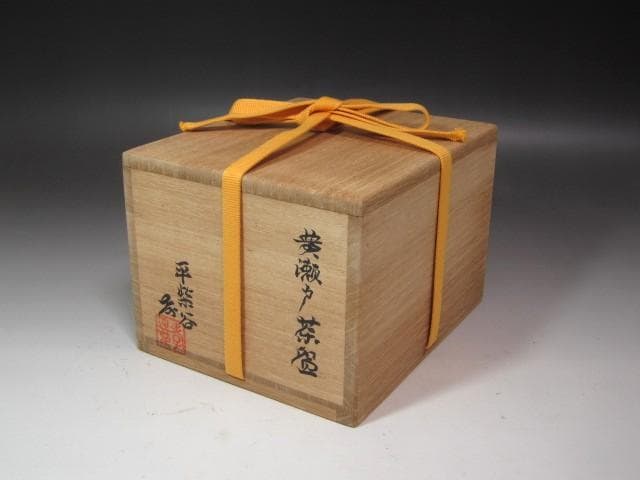
• Box: Tomobako (signed wooden box) inscribed 'Ki-Seto Chawan, Mei: Seifu, Hirashibagama, Taka'
• Provenance: Kao (cipher) of Horinouchi-ryū 12th Iemoto Kenchūsai Sōkan (堀内流十二代兼中斎宗完)
• Shifuku: Orange silk bag included
• Condition: Excellent — no chips, cracks, or repairs; naturally aged surface with beautiful patina
🔹 [ CULTURAL & ARTISTIC INSIGHT ]
Kato Takuzo was one of the most revered ceramic artists of post-war Japan. Though formally honored as a Living National Treasure for his mastery of Shino ware, his command of Ki-Seto — the warm, amber-toned glaze tradition born in Mino's ancient kilns — was equally celebrated among connoisseurs. Ki-Seto, literally 'Yellow Seto,' emerged during the Momoyama period (16th century) as tea masters sought vessels that embodied warmth, humility, and understated beauty.
This chawan, inscribed with the poetic name 'Seifu' (清風, 'Pure Breeze'), carries the endorsement of Horinouchi-ryū's 12th-generation Grand Tea Master Kenchūsai Sōkan — a lineage directly descended from Sen no Rikyū's aesthetic philosophy. The presence of his kao (花押) on the box elevates this bowl beyond mere craft into the sacred theater of chanoyu.
The tanpan copper-green accents cascade across the body like tendrils of vine, contrasting exquisitely with the honeyed amber glaze. The pronounced throwing marks (rokuro-me) spiral upward with deliberate force, while the gently warped rim creates what tea practitioners call 'keshiki' — the landscape of the bowl.
*A pure breeze moves through the tea room — this bowl holds its silence.*
🔹 [ DEEP-DIVE COMMENTARY ]
Ki-Seto (黄瀬戸) is one of the four great Mino glazes alongside Shino, Oribe, and Setoguro. Originating in the kilns of present-day Gifu Prefecture during the Azuchi-Momoyama period, Ki-Seto achieves its characteristic warm yellow through an ash glaze containing trace iron, fired in a controlled oxidation atmosphere. The subtle amber tones — ranging from pale straw to deep honey — result from meticulous kiln temperature management, typically 1200–1250°C.
The tanpan (胆礬) technique involves applying copper sulfate to incised decorative lines before glazing. During firing, the copper diffuses into the surrounding ash glaze, creating distinctive green accents against the yellow ground. This interplay between the iron-rich base glaze and copper highlights is one of Ki-Seto's most prized features, connecting it to the Momoyama-era ideal of restrained ornamentation.
Kato Takuzo studied under Arakawa Toyozo (荒川豊蔵), himself a Living National Treasure, who rediscovered the lost Momoyama Shino techniques at the Mutabora kiln site in 1930. This direct artistic lineage — from Momoyama potters through Arakawa to Kato — represents an unbroken chain of ceramic wisdom spanning over four centuries.
The Hirashibagama (平柴窯) kiln, built by Kato in the wooded hills of Kani, Gifu, became legendary for producing works that honor ancestral techniques while expressing a modern sensibility. Each bowl bears the stamp of his 'Taka' (孝) mark, visible on the unglazed foot ring.
[ JAPANESE DESCRIPTION / 日本語解説 ]
🔹 【基本情報】
• 作家:加藤孝造(1935–2024)、2010年に志野の技法で重要無形文化財保持者(人間国宝)に認定
• 技法:黄瀬戸釉に胆礬(タンパン)による草花文
• 時代:平成〜令和
• 産地:岐阜県可児市 平柴窯
• 寸法:直径約16.7cm × 高さ約8.7cm
• 箱:共箱(「黄瀬戸 茶碗 銘 清風 平柴窯 孝」の箱書き)
• 伝来:堀内流十二代兼中斎宗完の花押あり
• 仕覆:朱色の帛紗付
• 状態:良好 — 欠け、ひび、修復跡なし
🔹 【文化的・芸術的解説】
加藤孝造は、戦後日本を代表する陶芸家の一人である。志野の技法により人間国宝に認定されたが、黄瀬戸においてもその技量は愛好家の間で高く評価されている。黄瀬戸は桃山時代、美濃の窯で誕生した温かみのある黄釉の伝統であり、茶人たちが器に求めた温もり、謙虚さ、そして控えめな美を具現化する釉薬である。
本茶碗に与えられた銘「清風」は、堀内流十二代家元・兼中斎宗完による花押とともに、千利休の美学を直接に受け継ぐ茶の湯の正統を物語る。胴部に施された胆礬の緑が蔓草のように蜂蜜色の釉薬に映え、力強い轆轤目と微かに歪んだ口縁が、茶人の言う「景色」を生み出している。
*清風一陣、茶室を抜ける — この碗はその静寂を宿す。*
🔹 【ディープダイブ解説】
黄瀬戸は、志野・織部・瀬戸黒と並ぶ美濃四大釉の一つである。灰釉に微量の鉄分を含み、酸化焼成で焼き上げることで、淡い藁色から深い蜂蜜色に至る温かな黄色を発色する。焼成温度は通常1200〜1250℃で、微妙な温度管理が色調の鍵を握る。
胆礬(タンパン)技法は、刻線による装飾に硫酸銅を施し、施釉後の焼成で銅が周囲の灰釉に拡散して特有の緑色を生む。この鉄系の地釉と銅のアクセントの対比は、黄瀬戸の最も珍重される特徴のひとつである。
加藤孝造の師・荒川豊蔵は、1930年に牟田洞窯跡で桃山志野の技法を再発見した人間国宝である。桃山の陶工から荒川、そして加藤へと至る直系の芸術的系譜は、四百年以上にわたる陶芸の智慧の連鎖を示している。
🔹 [ SHIPPING & PACKAGING ]
Shipped with museum-grade double-boxing and acid-free tissue. Fully insured international express delivery (EMS/FedEx). Tracking number provided.
[ 発送・梱包 ]
美術品梱包の二重箱仕様、酸フリー薄葉紙使用。全額保険付き国際エクスプレス便(EMS/FedEx)でお届け。追跡番号をご案内いたします。
🔹 [ BASIC DETAILS ]
• Artist: Kato Takuzo (加藤孝造, 1935–2024), designated Living National Treasure (Ningen Kokuho) for Shino ware (2010)
• Technique: Ki-Seto (Yellow Seto) glaze with Tanpan (copper-green) botanical motifs
• Era: Contemporary (Heisei–Reiwa period)
• Origin: Hirashibagama kiln, Kani City, Gifu Prefecture, Mino region
• Dimensions: Diameter approx. 16.7 cm × Height approx. 8.7 cm
• Box: Tomobako (signed wooden box) inscribed 'Ki-Seto Chawan, Mei: Seifu, Hirashibagama, Taka'
• Provenance: Kao (cipher) of Horinouchi-ryū 12th Iemoto Kenchūsai Sōkan (堀内流十二代兼中斎宗完)
• Shifuku: Orange silk bag included
• Condition: Excellent — no chips, cracks, or repairs; naturally aged surface with beautiful patina
🔹 [ CULTURAL & ARTISTIC INSIGHT ]
Kato Takuzo was one of the most revered ceramic artists of post-war Japan. Though formally honored as a Living National Treasure for his mastery of Shino ware, his command of Ki-Seto — the warm, amber-toned glaze tradition born in Mino's ancient kilns — was equally celebrated among connoisseurs. Ki-Seto, literally 'Yellow Seto,' emerged during the Momoyama period (16th century) as tea masters sought vessels that embodied warmth, humility, and understated beauty.
This chawan, inscribed with the poetic name 'Seifu' (清風, 'Pure Breeze'), carries the endorsement of Horinouchi-ryū's 12th-generation Grand Tea Master Kenchūsai Sōkan — a lineage directly descended from Sen no Rikyū's aesthetic philosophy. The presence of his kao (花押) on the box elevates this bowl beyond mere craft into the sacred theater of chanoyu.
The tanpan copper-green accents cascade across the body like tendrils of vine, contrasting exquisitely with the honeyed amber glaze. The pronounced throwing marks (rokuro-me) spiral upward with deliberate force, while the gently warped rim creates what tea practitioners call 'keshiki' — the landscape of the bowl.
*A pure breeze moves through the tea room — this bowl holds its silence.*
🔹 [ DEEP-DIVE COMMENTARY ]
Ki-Seto (黄瀬戸) is one of the four great Mino glazes alongside Shino, Oribe, and Setoguro. Originating in the kilns of present-day Gifu Prefecture during the Azuchi-Momoyama period, Ki-Seto achieves its characteristic warm yellow through an ash glaze containing trace iron, fired in a controlled oxidation atmosphere. The subtle amber tones — ranging from pale straw to deep honey — result from meticulous kiln temperature management, typically 1200–1250°C.
The tanpan (胆礬) technique involves applying copper sulfate to incised decorative lines before glazing. During firing, the copper diffuses into the surrounding ash glaze, creating distinctive green accents against the yellow ground. This interplay between the iron-rich base glaze and copper highlights is one of Ki-Seto's most prized features, connecting it to the Momoyama-era ideal of restrained ornamentation.
Kato Takuzo studied under Arakawa Toyozo (荒川豊蔵), himself a Living National Treasure, who rediscovered the lost Momoyama Shino techniques at the Mutabora kiln site in 1930. This direct artistic lineage — from Momoyama potters through Arakawa to Kato — represents an unbroken chain of ceramic wisdom spanning over four centuries.
The Hirashibagama (平柴窯) kiln, built by Kato in the wooded hills of Kani, Gifu, became legendary for producing works that honor ancestral techniques while expressing a modern sensibility. Each bowl bears the stamp of his 'Taka' (孝) mark, visible on the unglazed foot ring.
[ JAPANESE DESCRIPTION / 日本語解説 ]
🔹 【基本情報】
• 作家:加藤孝造(1935–2024)、2010年に志野の技法で重要無形文化財保持者(人間国宝)に認定
• 技法:黄瀬戸釉に胆礬(タンパン)による草花文
• 時代:平成〜令和
• 産地:岐阜県可児市 平柴窯
• 寸法:直径約16.7cm × 高さ約8.7cm
• 箱:共箱(「黄瀬戸 茶碗 銘 清風 平柴窯 孝」の箱書き)
• 伝来:堀内流十二代兼中斎宗完の花押あり
• 仕覆:朱色の帛紗付
• 状態:良好 — 欠け、ひび、修復跡なし
🔹 【文化的・芸術的解説】
加藤孝造は、戦後日本を代表する陶芸家の一人である。志野の技法により人間国宝に認定されたが、黄瀬戸においてもその技量は愛好家の間で高く評価されている。黄瀬戸は桃山時代、美濃の窯で誕生した温かみのある黄釉の伝統であり、茶人たちが器に求めた温もり、謙虚さ、そして控えめな美を具現化する釉薬である。
本茶碗に与えられた銘「清風」は、堀内流十二代家元・兼中斎宗完による花押とともに、千利休の美学を直接に受け継ぐ茶の湯の正統を物語る。胴部に施された胆礬の緑が蔓草のように蜂蜜色の釉薬に映え、力強い轆轤目と微かに歪んだ口縁が、茶人の言う「景色」を生み出している。
*清風一陣、茶室を抜ける — この碗はその静寂を宿す。*
🔹 【ディープダイブ解説】
黄瀬戸は、志野・織部・瀬戸黒と並ぶ美濃四大釉の一つである。灰釉に微量の鉄分を含み、酸化焼成で焼き上げることで、淡い藁色から深い蜂蜜色に至る温かな黄色を発色する。焼成温度は通常1200〜1250℃で、微妙な温度管理が色調の鍵を握る。
胆礬(タンパン)技法は、刻線による装飾に硫酸銅を施し、施釉後の焼成で銅が周囲の灰釉に拡散して特有の緑色を生む。この鉄系の地釉と銅のアクセントの対比は、黄瀬戸の最も珍重される特徴のひとつである。
加藤孝造の師・荒川豊蔵は、1930年に牟田洞窯跡で桃山志野の技法を再発見した人間国宝である。桃山の陶工から荒川、そして加藤へと至る直系の芸術的系譜は、四百年以上にわたる陶芸の智慧の連鎖を示している。
🔹 [ SHIPPING & PACKAGING ]
Shipped with museum-grade double-boxing and acid-free tissue. Fully insured international express delivery (EMS/FedEx). Tracking number provided.
[ 発送・梱包 ]
美術品梱包の二重箱仕様、酸フリー薄葉紙使用。全額保険付き国際エクスプレス便(EMS/FedEx)でお届け。追跡番号をご案内いたします。
Quantity
Couldn't load pickup availability
Low stock: 1 left
View full details