1
/
of
7
Ki-Seto Matcha Bowl with Carved Water Motif by Aoki Kunihiro — Imperial Theme Chawan, Signed Box
Ki-Seto Matcha Bowl with Carved Water Motif by Aoki Kunihiro — Imperial Theme Chawan, Signed Box
Regular price
Dhs. 461.00 AED
Regular price
Sale price
Dhs. 461.00 AED
Taxes included.
Shipping calculated at checkout.
Experience Authentic Japan Art with this Ki-Seto Matcha Bowl. This Japanese Tea Ceremony Bowl serves as a Mino Ware Chawan and Imperial Theme Chawan, featuring Carved Water Motif and Yellow Glaze Stoneware—a must-have for any Art Collector seeking a Handmade Japanese Chawan or Antique Tea Bowl Gift.
🔹 [ BASIC DETAILS ]
• Artist: Aoki Kunihiro (青木九仁博)
• Technique: Ki-Seto (Yellow Seto) glaze with hand-carved flowing-water (ryusui) relief motif; iron-oxide darkening in carved recesses
• Era: Contemporary (estimated 2000s–2010s)
• Origin: Mino ware tradition, Japan
• Dimensions: Diameter approx. 12 cm, Height approx. 7 cm
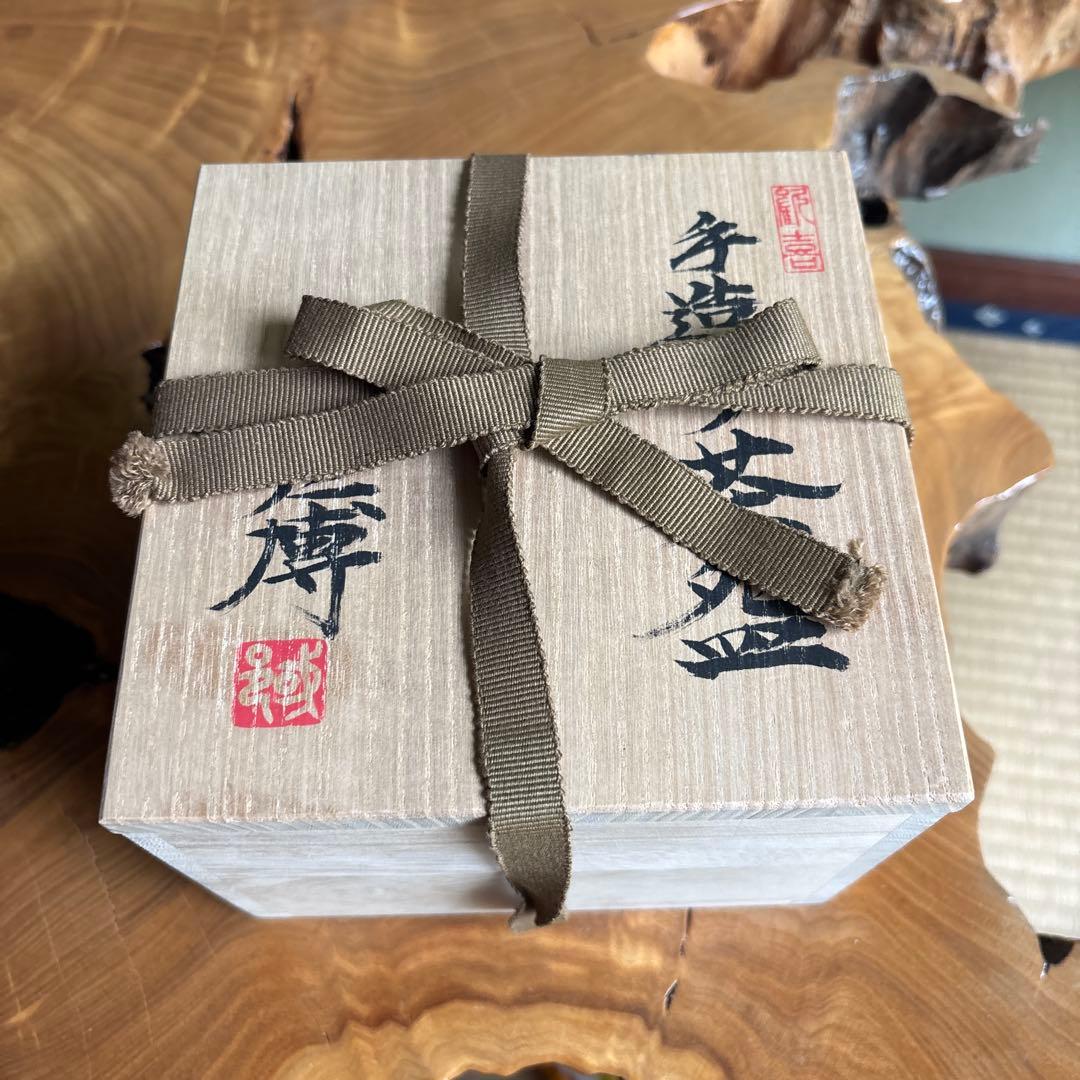
• Box: Comes with original signed wooden box (tomobako) inscribed with the Imperial theme "Mizu" (Water) — a rare mark of formal Chado context
• Condition: Excellent — no chips, no cracks, no repairs
🔹 [ CULTURAL & ARTISTIC INSIGHT ]
Ki-Seto, literally "Yellow Seto," is one of the oldest and most venerated glazes in the Mino ceramic tradition, tracing its roots to the Momoyama period (late 16th century). Its characteristic warm amber-ochre tone — achieved through iron-bearing clay fired in oxidizing atmospheres — carries a quiet, autumnal warmth that tea masters have prized for centuries. Unlike the more dramatic tenmoku or the assertively rustic Shino, Ki-Seto speaks in whispers: its beauty is of the understated, of the evening light on old straw.
On this bowl, Aoki Kunihiro has layered meaning upon glaze. The carved ryusui motif — flowing water rendered in bold, continuous incised lines that spiral across the lower belly of the bowl — speaks directly to the Imperial chokudai (勅題), the annual poetic theme selected each year by the Japanese Imperial Household. The theme "Mizu" (Water) invites contemplation of flow, impermanence, and the ceaseless movement of all things. Where the glaze pools into the carved grooves, iron minerals concentrate and deepen to slate-blue, creating a visual echo of water moving through stone.
Poetic line: "The carved stream does not move, yet water is always there — held in clay, released in each bowl of tea."
🔹 [ DEEP-DIVE COMMENTARY ]
Ki-Seto (黄瀬戸) emerged as a defining style of the Mino kilns in present-day Gifu Prefecture during the Momoyama era, when tea master Sen no Rikyu and his circle elevated the asymmetrical, unassuming vessel to the highest aesthetic ideal. The glaze is typically formed from iron-bearing feldspathic compounds that, in an oxidizing kiln atmosphere at around 1250–1280°C, yield tones ranging from pale straw-yellow to deep honey-amber. Characteristic to authentic Ki-Seto are subtle surface textures — fine pitting, occasional crawling — and the natural accumulation of iron pigment at rims and carved edges.
The technique of hand-carving (horitsugi or tebori) into the leather-hard clay body before glazing is a demanding practice that requires the potter to envision the final composition in its unfired, unglazed state. Aoki Kunihiro's ryusui carving here is confident and unhurried: the lines are deeply incised, their edges clean, and the flowing pattern is dynamic without being agitated — it moves as water moves, always forward, never forcing. Once glazed and fired, the Ki-Seto glaze settles differentially across the surface, pooling darker in the recesses and remaining lighter on the raised clay ridges, producing the three-dimensional depth that characterizes this bowl's visual drama.
The tomobako inscription references the chokudai — the Imperial poetic theme. Since the Meiji period, the Imperial Household has announced an annual poetic theme each New Year, inspiring artists, poets, and potters alike to create works in dialogue with it. A chawan explicitly connected to such a theme occupies a particular cultural register: it is not merely a functional vessel but a participant in a living aesthetic conversation that links maker, emperor, and the literary tradition of waka poetry. Collectors of Chado utensils (chadogu) regard chokudai-themed pieces with special interest.
Aoki Kunihiro works within the living tradition of Mino ceramic art, a tradition that has produced some of Japan's most collected tea wares. His understanding of Ki-Seto glazechemistry and his fluency with carved surface decoration place him among contemporary potters who bridge the historical canon and personal artistic expression. For collectors seeking a piece that is simultaneously usable at the tea bowl, display-worthy, and culturally layered, this bowl offers unusual depth at its price point.
🔹 [ 日本語解説 ]
【詳細スペック】
• 作家:青木九仁博
• 技法:黄瀬戸釉(美濃・瀬戸系)、手彫りによる流水文(浮彫)、鉄分が彫刻部に沈着し青灰色に発色
• 年代:現代(2000年代〜2010年代推定)
• 産地:美濃焼系統
• サイズ:口径 約12cm、高さ 約7cm
• 箱:共箱付き(勅題「水」の銘入り)
• 状態:良好。ヒビ・カケなし、補修なし
【文化・芸術的考察】
黄瀬戸は、美濃焼の中でも最も古い釉薬の一つで、桃山時代に遡る格調ある様式です。鉄分を含む長石質の素地が酸化焼成によって琥珀色・麦藁色に発色し、その静かな暖かみは茶人たちに深く愛されてきました。派手さを排し、しかし品格を失わない——黄瀬戸の美とは、そのような沈黙の中の豊かさにあります。
本作では、青木九仁博がその黄瀬戸の地に流水文を大胆に彫り込んでいます。これは毎年元日に宮内庁が発表する「勅題(ちょくだい)」——本作の場合は「水」——に呼応した茶碗であり、共箱にもその銘が記されています。勅題にちなんだ茶道具は、単なる実用品を超え、天皇・作家・和歌の伝統が交差する文化的な器として、茶道の世界で特別な位置を占めます。彫刻の溝に鉄分が沈み青灰色を帯びる景色は、水の流れそのものを器面に封じ込めたかのようです。
詩的一文:「動かぬ流水の線——しかし手に取るたび、水はそこにある。」
【ディープダイブ解説】
黄瀬戸釉は、1250〜1280℃前後の酸化焔焼成により、鉄分を含む長石釉が黄金色・琥珀色に熟成することで生まれます。表面には細かいピンホールや自然な釉の流れが見られ、これが「景色」として茶人に愛でられてきました。口縁や彫刻の稜線に鉄分が集まり、色調に変化をもたらすのも黄瀬戸の特徴です。
手彫り(てぼり)の技法は、素地が生乾きの状態で行われ、焼成後の姿を想像しながら彫り進める高度な技術を要します。本作の流水文は線が太く力強く、かつ一筆書きのような流れの自然さを持ち、彫り込みの深さが釉薬の沈着によるコントラストを際立たせています。
勅題は明治以降、毎年元旦に発表され、画家・陶芸家・歌人が競うように作品を発表する日本の文化的慣習です。「水」の勅題は流れ、循環、無常といった禅的テーマとも深く共鳴し、茶道の精神性と自然に結びつきます。こうした勅題茶碗は、茶道具コレクターにとって文化的背景を持つ特別な一碗として重宝されます。
青木九仁博は美濃系黄瀬戸の伝統に根ざしながら、現代の感性で造形に向き合う作家です。実用に堪える茶碗としての完成度と、展示品としての鑑賞価値を兼ね備えた本作は、茶道入門者からコレクターまで幅広くお楽しみいただけます。
🔹 [ SHIPPING & PACKAGING ]
• Dispatch: Within 1-6 business days
• Carrier: Japan Post EMS / UPS (with tracking)
• Packaging: Carefully wrapped with protective materials
🔹 [ BASIC DETAILS ]
• Artist: Aoki Kunihiro (青木九仁博)
• Technique: Ki-Seto (Yellow Seto) glaze with hand-carved flowing-water (ryusui) relief motif; iron-oxide darkening in carved recesses
• Era: Contemporary (estimated 2000s–2010s)
• Origin: Mino ware tradition, Japan
• Dimensions: Diameter approx. 12 cm, Height approx. 7 cm
• Box: Comes with original signed wooden box (tomobako) inscribed with the Imperial theme "Mizu" (Water) — a rare mark of formal Chado context
• Condition: Excellent — no chips, no cracks, no repairs
🔹 [ CULTURAL & ARTISTIC INSIGHT ]
Ki-Seto, literally "Yellow Seto," is one of the oldest and most venerated glazes in the Mino ceramic tradition, tracing its roots to the Momoyama period (late 16th century). Its characteristic warm amber-ochre tone — achieved through iron-bearing clay fired in oxidizing atmospheres — carries a quiet, autumnal warmth that tea masters have prized for centuries. Unlike the more dramatic tenmoku or the assertively rustic Shino, Ki-Seto speaks in whispers: its beauty is of the understated, of the evening light on old straw.
On this bowl, Aoki Kunihiro has layered meaning upon glaze. The carved ryusui motif — flowing water rendered in bold, continuous incised lines that spiral across the lower belly of the bowl — speaks directly to the Imperial chokudai (勅題), the annual poetic theme selected each year by the Japanese Imperial Household. The theme "Mizu" (Water) invites contemplation of flow, impermanence, and the ceaseless movement of all things. Where the glaze pools into the carved grooves, iron minerals concentrate and deepen to slate-blue, creating a visual echo of water moving through stone.
Poetic line: "The carved stream does not move, yet water is always there — held in clay, released in each bowl of tea."
🔹 [ DEEP-DIVE COMMENTARY ]
Ki-Seto (黄瀬戸) emerged as a defining style of the Mino kilns in present-day Gifu Prefecture during the Momoyama era, when tea master Sen no Rikyu and his circle elevated the asymmetrical, unassuming vessel to the highest aesthetic ideal. The glaze is typically formed from iron-bearing feldspathic compounds that, in an oxidizing kiln atmosphere at around 1250–1280°C, yield tones ranging from pale straw-yellow to deep honey-amber. Characteristic to authentic Ki-Seto are subtle surface textures — fine pitting, occasional crawling — and the natural accumulation of iron pigment at rims and carved edges.
The technique of hand-carving (horitsugi or tebori) into the leather-hard clay body before glazing is a demanding practice that requires the potter to envision the final composition in its unfired, unglazed state. Aoki Kunihiro's ryusui carving here is confident and unhurried: the lines are deeply incised, their edges clean, and the flowing pattern is dynamic without being agitated — it moves as water moves, always forward, never forcing. Once glazed and fired, the Ki-Seto glaze settles differentially across the surface, pooling darker in the recesses and remaining lighter on the raised clay ridges, producing the three-dimensional depth that characterizes this bowl's visual drama.
The tomobako inscription references the chokudai — the Imperial poetic theme. Since the Meiji period, the Imperial Household has announced an annual poetic theme each New Year, inspiring artists, poets, and potters alike to create works in dialogue with it. A chawan explicitly connected to such a theme occupies a particular cultural register: it is not merely a functional vessel but a participant in a living aesthetic conversation that links maker, emperor, and the literary tradition of waka poetry. Collectors of Chado utensils (chadogu) regard chokudai-themed pieces with special interest.
Aoki Kunihiro works within the living tradition of Mino ceramic art, a tradition that has produced some of Japan's most collected tea wares. His understanding of Ki-Seto glazechemistry and his fluency with carved surface decoration place him among contemporary potters who bridge the historical canon and personal artistic expression. For collectors seeking a piece that is simultaneously usable at the tea bowl, display-worthy, and culturally layered, this bowl offers unusual depth at its price point.
🔹 [ 日本語解説 ]
【詳細スペック】
• 作家:青木九仁博
• 技法:黄瀬戸釉(美濃・瀬戸系)、手彫りによる流水文(浮彫)、鉄分が彫刻部に沈着し青灰色に発色
• 年代:現代(2000年代〜2010年代推定)
• 産地:美濃焼系統
• サイズ:口径 約12cm、高さ 約7cm
• 箱:共箱付き(勅題「水」の銘入り)
• 状態:良好。ヒビ・カケなし、補修なし
【文化・芸術的考察】
黄瀬戸は、美濃焼の中でも最も古い釉薬の一つで、桃山時代に遡る格調ある様式です。鉄分を含む長石質の素地が酸化焼成によって琥珀色・麦藁色に発色し、その静かな暖かみは茶人たちに深く愛されてきました。派手さを排し、しかし品格を失わない——黄瀬戸の美とは、そのような沈黙の中の豊かさにあります。
本作では、青木九仁博がその黄瀬戸の地に流水文を大胆に彫り込んでいます。これは毎年元日に宮内庁が発表する「勅題(ちょくだい)」——本作の場合は「水」——に呼応した茶碗であり、共箱にもその銘が記されています。勅題にちなんだ茶道具は、単なる実用品を超え、天皇・作家・和歌の伝統が交差する文化的な器として、茶道の世界で特別な位置を占めます。彫刻の溝に鉄分が沈み青灰色を帯びる景色は、水の流れそのものを器面に封じ込めたかのようです。
詩的一文:「動かぬ流水の線——しかし手に取るたび、水はそこにある。」
【ディープダイブ解説】
黄瀬戸釉は、1250〜1280℃前後の酸化焔焼成により、鉄分を含む長石釉が黄金色・琥珀色に熟成することで生まれます。表面には細かいピンホールや自然な釉の流れが見られ、これが「景色」として茶人に愛でられてきました。口縁や彫刻の稜線に鉄分が集まり、色調に変化をもたらすのも黄瀬戸の特徴です。
手彫り(てぼり)の技法は、素地が生乾きの状態で行われ、焼成後の姿を想像しながら彫り進める高度な技術を要します。本作の流水文は線が太く力強く、かつ一筆書きのような流れの自然さを持ち、彫り込みの深さが釉薬の沈着によるコントラストを際立たせています。
勅題は明治以降、毎年元旦に発表され、画家・陶芸家・歌人が競うように作品を発表する日本の文化的慣習です。「水」の勅題は流れ、循環、無常といった禅的テーマとも深く共鳴し、茶道の精神性と自然に結びつきます。こうした勅題茶碗は、茶道具コレクターにとって文化的背景を持つ特別な一碗として重宝されます。
青木九仁博は美濃系黄瀬戸の伝統に根ざしながら、現代の感性で造形に向き合う作家です。実用に堪える茶碗としての完成度と、展示品としての鑑賞価値を兼ね備えた本作は、茶道入門者からコレクターまで幅広くお楽しみいただけます。
🔹 [ SHIPPING & PACKAGING ]
• Dispatch: Within 1-6 business days
• Carrier: Japan Post EMS / UPS (with tracking)
• Packaging: Carefully wrapped with protective materials
Quantity
Couldn't load pickup availability
Low stock: 1 left
View full details