1
/
of
20
Kenzan-Utsushi Mt. Fuji Chawan by Eiraku Myozen, 17th Zengoro - Senke Jusshoku Kyoto Tea Bowl with Tomobako
Regular price
Dhs. 2,869.00 AED
Regular price
Sale price
Dhs. 2,869.00 AED
Taxes included.
Shipping calculated at checkout.
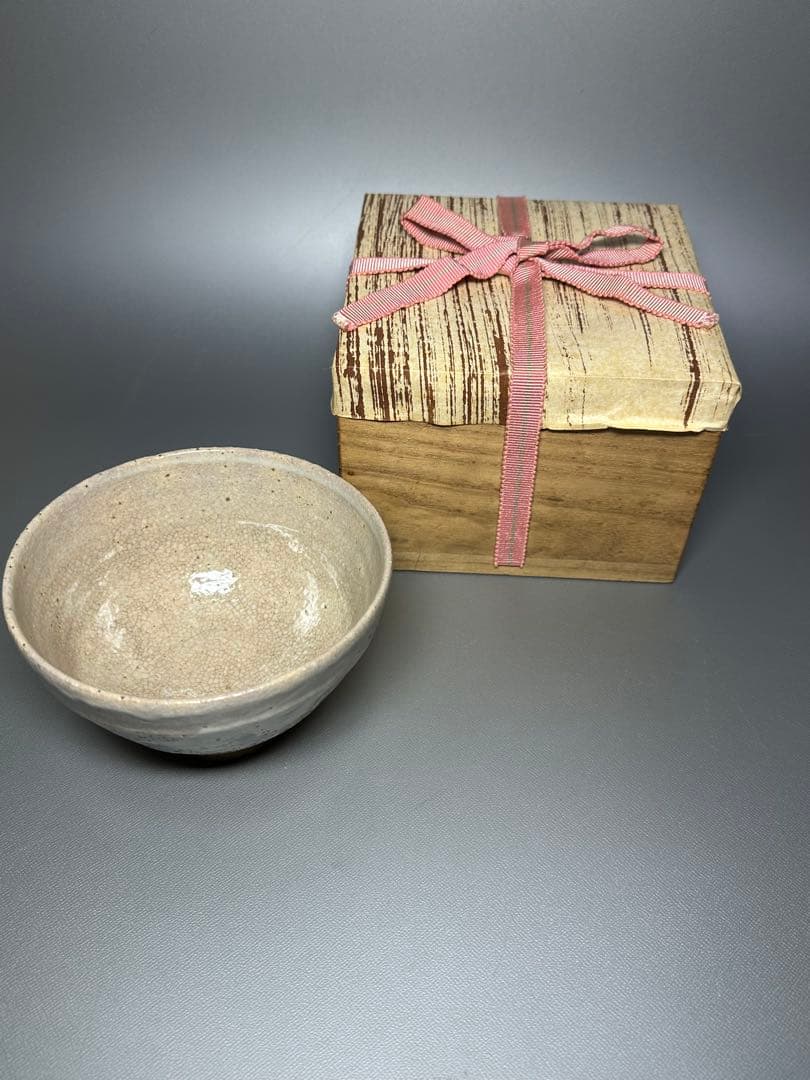
A Kenzan-utsushi chawan by Eiraku Myozen (永楽妙善), the 17th-generation head of the Eiraku Zengoro lineage. The bowl arrives with its signed kiri-wood tomobako inscribed Kenzan-utsushi chawan and sealed Zengoro - the formal authentication of the Senke Jusshoku workshop in Kyoto.
[ THE EIRAKU LINEAGE - SENKE JUSSHOKU ]
The Eiraku family is one of the Senke Jusshoku, the ten official artisanal houses appointed to serve the three Sen tea lineages (Omotesenke, Urasenke, Mushakojisenke). Within that constellation the Eiraku house carries two specific charges: the tsuchi-buro (earthen brazier) and the yakimono (ceramic vessels) used in the formal tea procedure. Their work has stood beside the Raku family at the center of chanoyu pottery since the Edo period.
Myozen succeeded the workshop after the death of her husband, the 16th Shozen, and was formally recognised as the 17th-generation Zengoro - an unusual succession in a lineage historically transmitted from father to son. Her tenure carried the Eiraku idiom forward with a quieter, more interior register.
[ KENZAN-UTSUSHI - PAYING HOMAGE TO OGATA KENZAN ]
Kenzan-utsushi (乾山写) is the practice of working in the manner of Ogata Kenzan (1663-1743), the Kyoto literatus-potter whose pictorial vessels collapsed the distance between painting and ceramic. To make a Kenzan-utsushi is not to copy. It is to step into a long conversation - to take up the soft white slip ground, the painterly brushwork, the unhurried cadence between image and silence - and answer it in one's own voice.
Myozen's response here is sober. The bowl is not decorative. It carries one motif and lets it breathe.
[ THE MT. FUJI MOTIF AS WABI GESTURE ]
Fuji is rendered in ash-grey and indigo wash across the lower body of the bowl. There is no peak rendered in vermillion, no auspicious sunrise, no calligraphic flourish. The mountain is given as a low silhouette half-lost in cloud, the snowline suggested rather than drawn. A single dark fleck on the slope reads as a distant pine.
This restraint is the wabi gesture. Where Edo-period Fuji imagery often celebrates auspiciousness, Myozen's mountain is closer to the mountain seen at dawn through the tearoom window - present, unannouncing, allowing the drinker to meet it without ceremony.
[ THE BOWL IN THE HAND ]
The form is a deep wan-nari (bowl-shape) on a low, neatly turned kodai. The clay shows warm beige at the foot, exposed where the slip lifts. The slip itself is a soft pinkish-cream with the quiet pooling characteristic of Kyoto wares. The interior glaze gathers light without glare. The lip is gently uneven, rewarding the mouth.
The scale - 12.7cm diameter, 8cm height - sits in the hand with the weight of a working chawan rather than a display piece. It is intended to be used.
[ CONDITION ]
Pristine. No chips, no hairlines, no repairs. The tomobako is intact, the inscription crisp, the seal clear. A piece preserved with the care its lineage asks for.
[ DIMENSIONS ]
Diameter: 12.7 cm / Height: 8 cm
With original signed kiri-wood tomobako (storage box).
[ FOR THE COLLECTOR AND THE PRACTITIONER ]
For the chajin: a working chawan from the Senke Jusshoku, suitable for the standing tea procedures of any of the three Sen schools.
For the collector of Kyoto ceramics: a documented Eiraku piece, with the female-line succession of the 17th generation an uncommon biographical detail in the Eiraku archive.
For the student of Kenzan: a careful, restrained reading of the Kenzan vocabulary by a workshop hand trained at the highest level.
🔹 [ BASIC DETAILS ]
🔹 [ CULTURAL & ARTISTIC INSIGHT ]
🔹 [ DEEP-DIVE COMMENTARY ]
🔹 [ 日本語解説 ]
永楽善五郎家十七代・妙善による乾山写富士絵茶碗。千家十職の系譜にあって、夫である十六代正全の没後に家督を継いだ妙善の手による作。乾山の絵画的世界を静かな筆致で受け継ぎ、富士を一筆の侘びの所作として描く。共箱付・美品。径12.7cm・高8cm。茶事に堪える実用の茶碗としても、京焼コレクションの一碗としても確かな一椀。
🔹 [ SHIPPING & PACKAGING ]
• Dispatch: Within 1-6 business days
• Carrier: Japan Post EMS / UPS (with tracking)
• Packaging: Carefully wrapped with protective materials
[ THE EIRAKU LINEAGE - SENKE JUSSHOKU ]
The Eiraku family is one of the Senke Jusshoku, the ten official artisanal houses appointed to serve the three Sen tea lineages (Omotesenke, Urasenke, Mushakojisenke). Within that constellation the Eiraku house carries two specific charges: the tsuchi-buro (earthen brazier) and the yakimono (ceramic vessels) used in the formal tea procedure. Their work has stood beside the Raku family at the center of chanoyu pottery since the Edo period.
Myozen succeeded the workshop after the death of her husband, the 16th Shozen, and was formally recognised as the 17th-generation Zengoro - an unusual succession in a lineage historically transmitted from father to son. Her tenure carried the Eiraku idiom forward with a quieter, more interior register.
[ KENZAN-UTSUSHI - PAYING HOMAGE TO OGATA KENZAN ]
Kenzan-utsushi (乾山写) is the practice of working in the manner of Ogata Kenzan (1663-1743), the Kyoto literatus-potter whose pictorial vessels collapsed the distance between painting and ceramic. To make a Kenzan-utsushi is not to copy. It is to step into a long conversation - to take up the soft white slip ground, the painterly brushwork, the unhurried cadence between image and silence - and answer it in one's own voice.
Myozen's response here is sober. The bowl is not decorative. It carries one motif and lets it breathe.
[ THE MT. FUJI MOTIF AS WABI GESTURE ]
Fuji is rendered in ash-grey and indigo wash across the lower body of the bowl. There is no peak rendered in vermillion, no auspicious sunrise, no calligraphic flourish. The mountain is given as a low silhouette half-lost in cloud, the snowline suggested rather than drawn. A single dark fleck on the slope reads as a distant pine.
This restraint is the wabi gesture. Where Edo-period Fuji imagery often celebrates auspiciousness, Myozen's mountain is closer to the mountain seen at dawn through the tearoom window - present, unannouncing, allowing the drinker to meet it without ceremony.
[ THE BOWL IN THE HAND ]
The form is a deep wan-nari (bowl-shape) on a low, neatly turned kodai. The clay shows warm beige at the foot, exposed where the slip lifts. The slip itself is a soft pinkish-cream with the quiet pooling characteristic of Kyoto wares. The interior glaze gathers light without glare. The lip is gently uneven, rewarding the mouth.
The scale - 12.7cm diameter, 8cm height - sits in the hand with the weight of a working chawan rather than a display piece. It is intended to be used.
[ CONDITION ]
Pristine. No chips, no hairlines, no repairs. The tomobako is intact, the inscription crisp, the seal clear. A piece preserved with the care its lineage asks for.
[ DIMENSIONS ]
Diameter: 12.7 cm / Height: 8 cm
With original signed kiri-wood tomobako (storage box).
[ FOR THE COLLECTOR AND THE PRACTITIONER ]
For the chajin: a working chawan from the Senke Jusshoku, suitable for the standing tea procedures of any of the three Sen schools.
For the collector of Kyoto ceramics: a documented Eiraku piece, with the female-line succession of the 17th generation an uncommon biographical detail in the Eiraku archive.
For the student of Kenzan: a careful, restrained reading of the Kenzan vocabulary by a workshop hand trained at the highest level.
🔹 [ BASIC DETAILS ]
🔹 [ CULTURAL & ARTISTIC INSIGHT ]
🔹 [ DEEP-DIVE COMMENTARY ]
🔹 [ 日本語解説 ]
永楽善五郎家十七代・妙善による乾山写富士絵茶碗。千家十職の系譜にあって、夫である十六代正全の没後に家督を継いだ妙善の手による作。乾山の絵画的世界を静かな筆致で受け継ぎ、富士を一筆の侘びの所作として描く。共箱付・美品。径12.7cm・高8cm。茶事に堪える実用の茶碗としても、京焼コレクションの一碗としても確かな一椀。
🔹 [ SHIPPING & PACKAGING ]
• Dispatch: Within 1-6 business days
• Carrier: Japan Post EMS / UPS (with tracking)
• Packaging: Carefully wrapped with protective materials
Quantity
Couldn't load pickup availability
Low stock: 1 left
View full details