1
/
of
12
Kenzan-Style Four Gentlemen Chawan Tea Bowl by Minamiguchi Kansui
Kenzan-Style Four Gentlemen Chawan Tea Bowl by Minamiguchi Kansui
Regular price
Dhs. 820.00 AED
Regular price
Sale price
Dhs. 820.00 AED
Taxes included.
Shipping calculated at checkout.
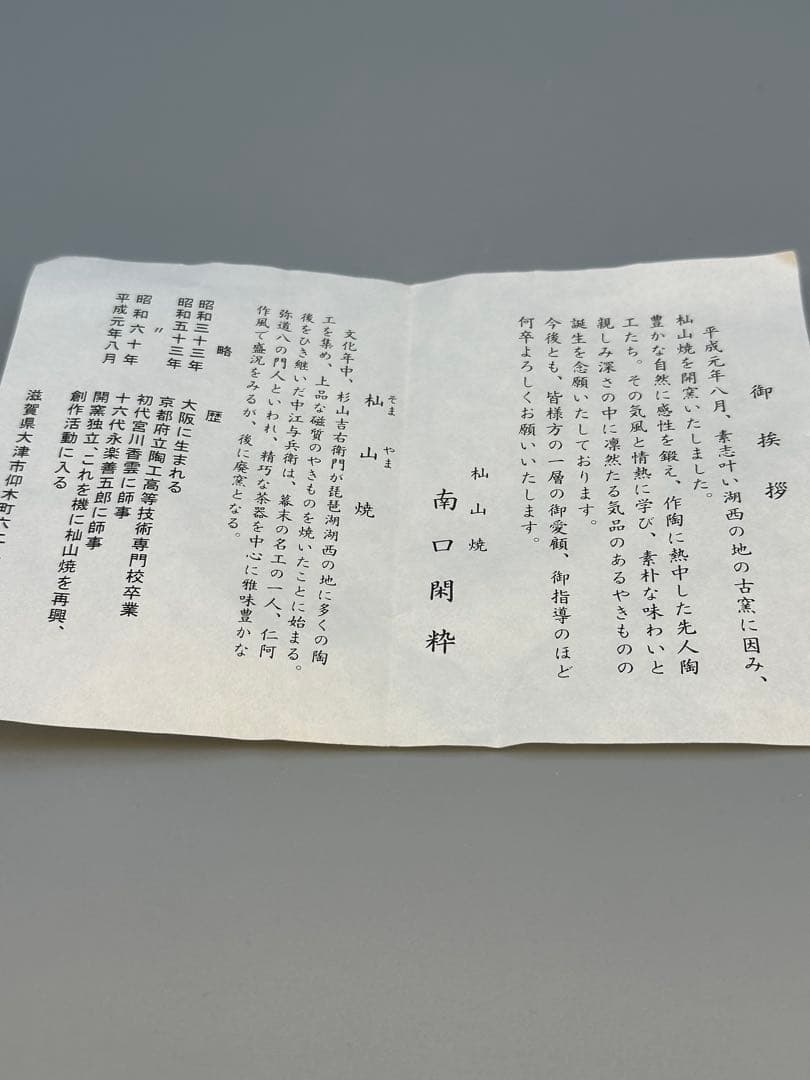
A Kenzan style chawan depicting the four gentlemen bowl motifs — bamboo chrysanthemum, orchid, and plum — by Minamiguchi Kansui. This Japanese tea bowl in the kyo-yaki tea bowl tradition features gold painted pottery and enamel painted bowl technique for the matcha tea ceremony, a botanical tea bowl authenticated with tomobako artist box.
🔹 [ Basic Details ]
• Artist: Minamiguchi Kansui (南口閑粸)
• Technique: Kenzan-utsushi (乾山写) — Kenzan-style overglaze enamel with gold painting
• Era: Contemporary (Heisei–Reiwa period)
• Origin: Kyoto, Japan
• Form: Chawan (茶碗) — tea bowl for matcha
• Dimensions: H approx. 7.8 cm × Dia approx. 12.2 cm
• Box: Tomobako (共箱) inscribed "乾山写 四君子 茶碗" with "閑粸" seal
• Condition: Good — box and bowl in clean condition
🔹 [ Cultural & Artistic Insight ]
The Four Gentlemen — shikunshi (四君子) — is one of the most enduring compositional themes in East Asian art. Bamboo, plum blossom, orchid, and chrysanthemum: each represents a season, and together they embody the complete cycle of the year. More than botanical illustration, they are moral emblems. Bamboo bends without breaking. Plum blooms in the cold. Orchid flourishes unseen. Chrysanthemum endures into frost.
Minamiguchi Kansui renders this theme in the Kenzan tradition — bold, painterly, unafraid of the brush's own character. The bamboo dominates in gold: thick stalks rendered with decisive vertical strokes, leaves scattering in angular gestures that suggest wind without depicting it. Around the bowl's circumference, chrysanthemums in red and white cluster alongside orchid stems and plum branches, each element distinct yet flowing into the next. The dark iron rim (kuchibeni) frames the composition with quiet authority.
To hold this bowl is to hold all four seasons at once — a complete year compressed into a single circumference.
🔹 [ Deep-Dive Commentary ]
■ The Kenzan Legacy
Ogata Kenzan (1663–1743) transformed Kyoto ceramics by treating the potter's surface as a painter's canvas. Where his contemporaries pursued technical perfection in form and glaze, Kenzan pursued expression. His works combined literary references, bold calligraphy, and painterly decoration with a deliberate roughness of form — an aesthetic that anticipated wabi-sabi sensibilities while remaining distinctly intellectual. To work in the Kenzan style (Kenzan-utsushi) is to inhabit this tradition: surface as narrative, clay as medium for painting, the bowl as a small landscape.
■ Shikunshi: The Moral Botany
The Four Gentlemen theme originated in Chinese literati painting and migrated to ceramics, textiles, lacquerwork, and metalwork across East Asia. In the tea ceremony context, a shikunshi bowl is appropriate for any season precisely because it contains all seasons. The symbolism runs deeper than seasonal association: bamboo represents integrity (it bends but does not break), plum represents resilience (it blooms in adversity), orchid represents modesty (it grows in hidden valleys), and chrysanthemum represents endurance (it flowers when other plants have finished). A tea host who selects a shikunshi bowl makes a statement about completeness — about the virtue of embracing the full cycle rather than any single moment.
■ Gold in Kyo-yaki Tradition
The use of gold painting (kinsai 金彩) in Kyoto ceramics connects directly to the city's broader decorative arts tradition. Gold leaf and gold paint appear across Kyoto's lacquerwork, textile dyeing, screen painting, and ceramic decoration. On this bowl, the gold bamboo carries a luminosity that shifts with the light — bright and assertive in direct illumination, warm and subdued in the soft light of a tea room. This responsiveness to environment is one of the qualities that distinguishes hand-painted gold from mechanical reproduction.
🔹 [ 日本語解説 ]
南口閑粸作 乾山写四君子茶碗。竹・梅・蘭・菊の四君子を乾山流の大胆な絵付で描いた作品です。
四君子(しくんし)は東アジア美術において最も息の長い画題のひとつです。竹は折れずにしなる潔白、梅は寒中に咲く忍耐、蘭は人知れず花開く謙虚、菊は霜の中に耀く不屈。四季すべてを包含するがゆえに、いかなる季節の茶席にもふさわしい意匠です。
尾形光琳(乾山、♯1663–1743)は、陶器の表面を画家のキャンバスとして扱うことで京都の陶芸を変革しました。乾山写とは、この伝統を受け継ぎ、大胆な筆致と文学的意匠を碗上に展開する様式です。本作では金彩の竹が力強い縦線で主役を務め、周囲に赤白の菊、蘭、梅が彩りを添えます。口縁の鉄釉(口紅)が構図全体を静かに引き締めています。
金彩(きんさい)の使用は京都の装飾芸術全体に通底する伝統です。漆芸、染織、屏風絵画、そして陶磁器。本作の金の竹は、光の加減によって表情を変えます——直射光では華やかに輝き、茶室の柔らかな光の中では温かく深みを帯びます。
共箱には「乾山写 四君子 茶碗」の箱書きと「閑粸」の印があります。
寸法:高さ約7.8cm × 径約12.2cm
状態:良好。共箱も綺麗な状態です。
🔹 [ SHIPPING & PACKAGING ]
• Dispatch: Within 1-6 business days
• Carrier: Japan Post EMS / UPS (with tracking)
• Packaging: Carefully wrapped with protective materials
🔹 [ Basic Details ]
• Artist: Minamiguchi Kansui (南口閑粸)
• Technique: Kenzan-utsushi (乾山写) — Kenzan-style overglaze enamel with gold painting
• Era: Contemporary (Heisei–Reiwa period)
• Origin: Kyoto, Japan
• Form: Chawan (茶碗) — tea bowl for matcha
• Dimensions: H approx. 7.8 cm × Dia approx. 12.2 cm
• Box: Tomobako (共箱) inscribed "乾山写 四君子 茶碗" with "閑粸" seal
• Condition: Good — box and bowl in clean condition
🔹 [ Cultural & Artistic Insight ]
The Four Gentlemen — shikunshi (四君子) — is one of the most enduring compositional themes in East Asian art. Bamboo, plum blossom, orchid, and chrysanthemum: each represents a season, and together they embody the complete cycle of the year. More than botanical illustration, they are moral emblems. Bamboo bends without breaking. Plum blooms in the cold. Orchid flourishes unseen. Chrysanthemum endures into frost.
Minamiguchi Kansui renders this theme in the Kenzan tradition — bold, painterly, unafraid of the brush's own character. The bamboo dominates in gold: thick stalks rendered with decisive vertical strokes, leaves scattering in angular gestures that suggest wind without depicting it. Around the bowl's circumference, chrysanthemums in red and white cluster alongside orchid stems and plum branches, each element distinct yet flowing into the next. The dark iron rim (kuchibeni) frames the composition with quiet authority.
To hold this bowl is to hold all four seasons at once — a complete year compressed into a single circumference.
🔹 [ Deep-Dive Commentary ]
■ The Kenzan Legacy
Ogata Kenzan (1663–1743) transformed Kyoto ceramics by treating the potter's surface as a painter's canvas. Where his contemporaries pursued technical perfection in form and glaze, Kenzan pursued expression. His works combined literary references, bold calligraphy, and painterly decoration with a deliberate roughness of form — an aesthetic that anticipated wabi-sabi sensibilities while remaining distinctly intellectual. To work in the Kenzan style (Kenzan-utsushi) is to inhabit this tradition: surface as narrative, clay as medium for painting, the bowl as a small landscape.
■ Shikunshi: The Moral Botany
The Four Gentlemen theme originated in Chinese literati painting and migrated to ceramics, textiles, lacquerwork, and metalwork across East Asia. In the tea ceremony context, a shikunshi bowl is appropriate for any season precisely because it contains all seasons. The symbolism runs deeper than seasonal association: bamboo represents integrity (it bends but does not break), plum represents resilience (it blooms in adversity), orchid represents modesty (it grows in hidden valleys), and chrysanthemum represents endurance (it flowers when other plants have finished). A tea host who selects a shikunshi bowl makes a statement about completeness — about the virtue of embracing the full cycle rather than any single moment.
■ Gold in Kyo-yaki Tradition
The use of gold painting (kinsai 金彩) in Kyoto ceramics connects directly to the city's broader decorative arts tradition. Gold leaf and gold paint appear across Kyoto's lacquerwork, textile dyeing, screen painting, and ceramic decoration. On this bowl, the gold bamboo carries a luminosity that shifts with the light — bright and assertive in direct illumination, warm and subdued in the soft light of a tea room. This responsiveness to environment is one of the qualities that distinguishes hand-painted gold from mechanical reproduction.
🔹 [ 日本語解説 ]
南口閑粸作 乾山写四君子茶碗。竹・梅・蘭・菊の四君子を乾山流の大胆な絵付で描いた作品です。
四君子(しくんし)は東アジア美術において最も息の長い画題のひとつです。竹は折れずにしなる潔白、梅は寒中に咲く忍耐、蘭は人知れず花開く謙虚、菊は霜の中に耀く不屈。四季すべてを包含するがゆえに、いかなる季節の茶席にもふさわしい意匠です。
尾形光琳(乾山、♯1663–1743)は、陶器の表面を画家のキャンバスとして扱うことで京都の陶芸を変革しました。乾山写とは、この伝統を受け継ぎ、大胆な筆致と文学的意匠を碗上に展開する様式です。本作では金彩の竹が力強い縦線で主役を務め、周囲に赤白の菊、蘭、梅が彩りを添えます。口縁の鉄釉(口紅)が構図全体を静かに引き締めています。
金彩(きんさい)の使用は京都の装飾芸術全体に通底する伝統です。漆芸、染織、屏風絵画、そして陶磁器。本作の金の竹は、光の加減によって表情を変えます——直射光では華やかに輝き、茶室の柔らかな光の中では温かく深みを帯びます。
共箱には「乾山写 四君子 茶碗」の箱書きと「閑粸」の印があります。
寸法:高さ約7.8cm × 径約12.2cm
状態:良好。共箱も綺麗な状態です。
🔹 [ SHIPPING & PACKAGING ]
• Dispatch: Within 1-6 business days
• Carrier: Japan Post EMS / UPS (with tracking)
• Packaging: Carefully wrapped with protective materials
Quantity
Couldn't load pickup availability
Low stock: 1 left
View full details