1
/
of
11
Kato Tokuro Shino Chawan "Matsu-yuki" Pine Snow — Signed Box, Museum Grade
Kato Tokuro Shino Chawan "Matsu-yuki" Pine Snow — Signed Box, Museum Grade
Regular price
Dhs. 2,697.00 AED
Regular price
Sale price
Dhs. 2,697.00 AED
Taxes included.
Shipping calculated at checkout.
A Shino tea bowl by Kato Tokuro (1898–1985), titled "Matsu-yuki" — Pine Snow. One of the most consequential figures in 20th-century Japanese ceramics, Kato devoted his life to the revival and reinterpretation of Momoyama-period Shino ware. This chawan embodies that life's work: milky white feldspathic glaze with hi-iro fire color emerging in orange and red, iron oxide pine branch decoration, and the unmistakable authorship of a hand that shaped thousands of bowls and kept only the ones that mattered. A Japanese tea ceremony bowl of profound cultural weight.
🔹 [ BASIC DETAILS ]
• Artist: Kato Tokuro (加藤唐九郎, 1898–1985)
• Technique: Shino — feldspathic glaze with iron oxide brush decoration, wood-fired
• Era: Mid–late 20th century (Showa era)
• Origin: Seto / Mino region, Aichi–Gifu, Japan
• Dimensions: Ø 13 cm × H 10 cm
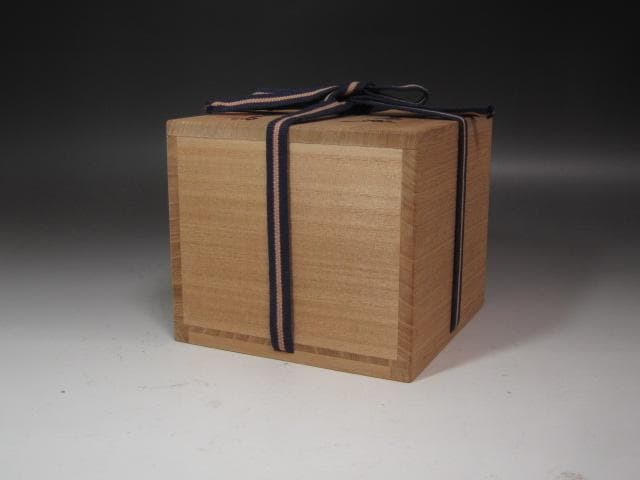
• Box: Tomobako inscribed "鈇 松雪" (Shino, Matsu-yuki) with artist's signature and seal
• Condition: Good — consistent with age, beautifully irregular mouth rim
🔹 [ CULTURAL & ARTISTIC INSIGHT ]
Kato Tokuro's place in Japanese ceramic history is singular and complex. He was nominated as a Living National Treasure (Ningen Kokuho) for his mastery of Shino and Setoguro ware, though the designation was later returned following the Eiraku controversy of 1960. None of this diminished his standing among collectors, scholars, or fellow potters. If anything, the controversy deepened the regard in which he was held — an artist whose knowledge of historical ceramics was so complete that it became indistinguishable from the originals.
His Shino work is defined by a commitment to the Momoyama aesthetic: the thick, white feldspathic glaze that was first developed in Mino kilns during the late 16th century. When fired in a wood-burning kiln, this glaze produces hi-iro — the orange-red "fire color" that appears where flame touched the surface most intensely. It cannot be designed. It can only be invited.
The title "Matsu-yuki" (Pine Snow) speaks to the Japanese poetic tradition of finding beauty in the weight of snow on pine branches — resilience made visible. The iron oxide brushwork depicts pine branches in the unhesitating manner that Tokuro made his own.
🔹 [ DEEP-DIVE COMMENTARY ]
At 13 cm across and 10 cm tall, this is a generous, commanding bowl. The proportions give it presence — this is not a bowl that recedes. It occupies space with the quiet confidence of an artist who had nothing left to prove.
The feldspathic glaze is archetypal Tokuro Shino: thick, opaque white with a surface that catches light in soft, irregular planes. Where the glaze thins — at the rim, along the foot, and around the brush decoration — hi-iro emerges in warm orange and russet tones. These are the marks of the kiln itself, the record of a firing that lasted days.
The iron oxide decoration of pine branches is applied with the economy that distinguishes mastery from effort. Few strokes, each one carrying the full weight of the branch it depicts. There is no overworking, no correction. The brush moved and stopped.
The mouth rim is beautifully irregular — not the careless irregularity of accident, but the deliberate irregularity of a potter who understood that the lip of a chawan is where the bowl meets the body, and that this meeting should never feel mechanical.
The tomobako is inscribed "鈇 松雪" in Tokuro's hand, with his seal clearly visible. For collectors of Mino ware and students of 20th-century Japanese studio ceramics, this box inscription is itself a document of significance.
🔹 [ 日本語の説明 ]
加藤唐九郎(1898–1985)による志野茶碗「松雪」。20世紀日本陶芸史において最も重要な作家の一人であり、桃山時代の志野・瀬戸黒の復興と再解釈に生涯を捧げた巨匠の作品です。
唐九郎は人間国宝に認定されましたが、永仁の壺事件(1960年)を機に辞退。しかしこの出来事は彼の評価を損なうどころか、歴史的陶磁への深い知見と技術の高さを逆説的に証明するものとなりました。
本作は唐九郎の志野を体現する一碗です。厚く白い長石釉、薪窯焼成で現れる緋色(ひいろ)、鉄絵による松の枝の描写。釉薬の厚い部分は柔らかな乳白色、薄い部分からは温かいオレンジと赤褐色の緋色が現れ、窯の記憶そのものが器に刻まれています。
「松雪」の銘は、松の枝に積もる雪の重みに美を見出す日本の詩的伝統に根ざしています。鉄絵の松は無駄のない筆致で描かれ、修正の痕跡はありません。筆が動き、止まった。それだけです。
口径13cm、高さ10cmの堂々たる寸法。口縁の美しい歪みは、碗が口に触れる瞬間を機械的にしないための意図的な造形です。共箱には唐九郎自筆の「鈇 松雪」の箱書きと落款が確認できます。
🔹 [ SHIPPING & PACKAGING ]
• Dispatch: Within 1-6 business days
• Carrier: Japan Post EMS / UPS (with tracking)
• Packaging: Carefully wrapped with protective materials
🔹 [ BASIC DETAILS ]
• Artist: Kato Tokuro (加藤唐九郎, 1898–1985)
• Technique: Shino — feldspathic glaze with iron oxide brush decoration, wood-fired
• Era: Mid–late 20th century (Showa era)
• Origin: Seto / Mino region, Aichi–Gifu, Japan
• Dimensions: Ø 13 cm × H 10 cm
• Box: Tomobako inscribed "鈇 松雪" (Shino, Matsu-yuki) with artist's signature and seal
• Condition: Good — consistent with age, beautifully irregular mouth rim
🔹 [ CULTURAL & ARTISTIC INSIGHT ]
Kato Tokuro's place in Japanese ceramic history is singular and complex. He was nominated as a Living National Treasure (Ningen Kokuho) for his mastery of Shino and Setoguro ware, though the designation was later returned following the Eiraku controversy of 1960. None of this diminished his standing among collectors, scholars, or fellow potters. If anything, the controversy deepened the regard in which he was held — an artist whose knowledge of historical ceramics was so complete that it became indistinguishable from the originals.
His Shino work is defined by a commitment to the Momoyama aesthetic: the thick, white feldspathic glaze that was first developed in Mino kilns during the late 16th century. When fired in a wood-burning kiln, this glaze produces hi-iro — the orange-red "fire color" that appears where flame touched the surface most intensely. It cannot be designed. It can only be invited.
The title "Matsu-yuki" (Pine Snow) speaks to the Japanese poetic tradition of finding beauty in the weight of snow on pine branches — resilience made visible. The iron oxide brushwork depicts pine branches in the unhesitating manner that Tokuro made his own.
🔹 [ DEEP-DIVE COMMENTARY ]
At 13 cm across and 10 cm tall, this is a generous, commanding bowl. The proportions give it presence — this is not a bowl that recedes. It occupies space with the quiet confidence of an artist who had nothing left to prove.
The feldspathic glaze is archetypal Tokuro Shino: thick, opaque white with a surface that catches light in soft, irregular planes. Where the glaze thins — at the rim, along the foot, and around the brush decoration — hi-iro emerges in warm orange and russet tones. These are the marks of the kiln itself, the record of a firing that lasted days.
The iron oxide decoration of pine branches is applied with the economy that distinguishes mastery from effort. Few strokes, each one carrying the full weight of the branch it depicts. There is no overworking, no correction. The brush moved and stopped.
The mouth rim is beautifully irregular — not the careless irregularity of accident, but the deliberate irregularity of a potter who understood that the lip of a chawan is where the bowl meets the body, and that this meeting should never feel mechanical.
The tomobako is inscribed "鈇 松雪" in Tokuro's hand, with his seal clearly visible. For collectors of Mino ware and students of 20th-century Japanese studio ceramics, this box inscription is itself a document of significance.
🔹 [ 日本語の説明 ]
加藤唐九郎(1898–1985)による志野茶碗「松雪」。20世紀日本陶芸史において最も重要な作家の一人であり、桃山時代の志野・瀬戸黒の復興と再解釈に生涯を捧げた巨匠の作品です。
唐九郎は人間国宝に認定されましたが、永仁の壺事件(1960年)を機に辞退。しかしこの出来事は彼の評価を損なうどころか、歴史的陶磁への深い知見と技術の高さを逆説的に証明するものとなりました。
本作は唐九郎の志野を体現する一碗です。厚く白い長石釉、薪窯焼成で現れる緋色(ひいろ)、鉄絵による松の枝の描写。釉薬の厚い部分は柔らかな乳白色、薄い部分からは温かいオレンジと赤褐色の緋色が現れ、窯の記憶そのものが器に刻まれています。
「松雪」の銘は、松の枝に積もる雪の重みに美を見出す日本の詩的伝統に根ざしています。鉄絵の松は無駄のない筆致で描かれ、修正の痕跡はありません。筆が動き、止まった。それだけです。
口径13cm、高さ10cmの堂々たる寸法。口縁の美しい歪みは、碗が口に触れる瞬間を機械的にしないための意図的な造形です。共箱には唐九郎自筆の「鈇 松雪」の箱書きと落款が確認できます。
🔹 [ SHIPPING & PACKAGING ]
• Dispatch: Within 1-6 business days
• Carrier: Japan Post EMS / UPS (with tracking)
• Packaging: Carefully wrapped with protective materials
Quantity
Couldn't load pickup availability
Low stock: 1 left
View full details