1
/
of
12
Kato Takuo Shino Tea Bowl — Living National Treasure, Certified 1995
Kato Takuo Shino Tea Bowl — Living National Treasure, Certified 1995
Regular price
Dhs. 2,107.00 AED
Regular price
Sale price
Dhs. 2,107.00 AED
Taxes included.
Shipping calculated at checkout.
A shino chawan by Kato Takuo — Living National Treasure, recognized in 1995 for his mastery of Mino ancient glazes including shino, oribe, and yellow seto. The bowl presents a robust, hand-formed silhouette in white shino glaze heavily marked by orange fire-color: the surface reads as geological strata, each horizontal band of color a record of the firing's temperature shifts. Comes in original signed wooden box. An object that carries the density of intention from one of the 20th century's most honored ceramic voices.
🔹 [ BASIC DETAILS ]
• Artist: Kato Takuo (加藤卓男, 1917–2005), Living National Treasure (Ningen Kokuhō, 1995)
• Technique: Shino ware (志野焼), hand-formed, kiln-fired
• Era: Late Showa to early Heisei period
• Origin: Tajimi, Gifu Prefecture (Mino), Japan
• Dimensions: Diameter approx. 12.8 cm × H approx. 9.9 cm
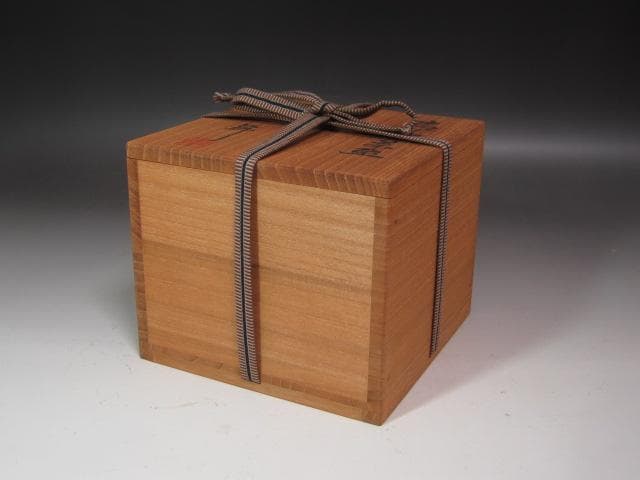
• Box: Original signed wooden box (共箱) with artist's brushwork inscription
• Condition: Good, characteristic kiln marks consistent with the tradition
🔹 [ CULTURAL & ARTISTIC INSIGHT ]
Kato Takuo was among the most technically ambitious ceramicists of the 20th century — a figure who pursued both the revival of ancient Mino techniques and original research into Persian and Chinese glaze traditions. His designation as a Living National Treasure in 1995 covered specifically the ancient Mino glazes: shino, oribe, kiseto, and kuroseto. The shino work here demonstrates the dense, layered quality that defines his approach: the feldspar-based white glaze is not applied for visual softness but for structural tension — it sits against the iron-rich clay body, and where the body breathes through, the orange hi-iro appears as the literal signature of fire. The horizontal throwing marks visible across the surface are not disguised but emphasized, creating a rhythm across the form that speaks of physical labor transformed into presence.
🔹 [ DEEP-DIVE COMMENTARY ]
Kato Takuo (1917–2005) was born into the ceramics-making environment of Tajimi in Gifu Prefecture — the geographic heart of Mino ware production — and spent decades researching glaze formulas from Momoyama-era sherds and ancient Persian lusterware. This dual orientation — backward into Japanese ceramic history and outward toward Persian craft — gave his work an unusual density of reference.
The tea bowl shown here is direct Mino shino: hand-formed with a confident, slightly irregular rim that shows no desire for symmetrical refinement. The white shino glaze pools thickly at the shoulder and thins toward the foot, creating a natural gradation that the orange hi-iro then complicates — the fire color appears in horizontal bands across the mid-body, conforming to the throwing marks and reinforcing the sense that the bowl was shaped by continuous, circular motion.
The foot is left rough and minimally finished in the shino tradition, bearing the marks of the kiln sand on which it rested during firing. The interior shows a clean, slightly matte surface typical of Kato's shino work.
The signed wooden box with Kato's own brushwork inscription provides full provenance for this piece. For collectors of Living National Treasure ceramics, this bowl represents one of the most important Mino shino practitioners of the last century — one whose work bridged historical revival and personal expression.
[ JAPANESE DESCRIPTION / 日本語解説 ]
人間国宝・加藤卓男による志野茶碗。1995年、美濃の古陶技法(志野・織部・黄瀬戸・瀬戸黒)で国指定重要無形文化財保持者に認定。白い志野釉にオレンジの火色が横帯状に走り、轆轤目が力強い印象を与える。共箱入り。
🔹 【基本情報】
• 作者:加藤卓男(1917–2005)、人間国宝(1995年認定)
• 技法:志野焼、手びねり
• 寸法:直径約12.8cm 高さ約9.9cm
• 箱:共箱(作家自筆書き込み)
• 状態:良好
🔹 【文化的背景】
加藤卓男は美濃・多治見出身。志野・織部・黄瀬戸などの桃山陶を現代に蘇らせた第一人者。ペルシャ古陶磁の研究にも精力的に取り組み、釉薬研究の深さは群を抜いた。この志野茶碗は横帯状の轆轤目と火色が織りなす力強い景色を持ち、桃山志野の本質的な美意識を体現している。
🔹 【コレクター向け解説】
加藤卓男の作品は東京国立博物館・岐阜県現代陶芸美術館はじめ国内外の主要機関に収蔵されている。共箱の自筆書き込みにより来歴が明確。20世紀の最重要美濃陶芸家の一人の作品を手にする機会。
🔹 [ SHIPPING & PACKAGING ]
• Dispatch: Within 1-6 business days
• Carrier: Japan Post EMS / UPS (with tracking)
• Packaging: Carefully wrapped with protective materials
🔹 [ BASIC DETAILS ]
• Artist: Kato Takuo (加藤卓男, 1917–2005), Living National Treasure (Ningen Kokuhō, 1995)
• Technique: Shino ware (志野焼), hand-formed, kiln-fired
• Era: Late Showa to early Heisei period
• Origin: Tajimi, Gifu Prefecture (Mino), Japan
• Dimensions: Diameter approx. 12.8 cm × H approx. 9.9 cm
• Box: Original signed wooden box (共箱) with artist's brushwork inscription
• Condition: Good, characteristic kiln marks consistent with the tradition
🔹 [ CULTURAL & ARTISTIC INSIGHT ]
Kato Takuo was among the most technically ambitious ceramicists of the 20th century — a figure who pursued both the revival of ancient Mino techniques and original research into Persian and Chinese glaze traditions. His designation as a Living National Treasure in 1995 covered specifically the ancient Mino glazes: shino, oribe, kiseto, and kuroseto. The shino work here demonstrates the dense, layered quality that defines his approach: the feldspar-based white glaze is not applied for visual softness but for structural tension — it sits against the iron-rich clay body, and where the body breathes through, the orange hi-iro appears as the literal signature of fire. The horizontal throwing marks visible across the surface are not disguised but emphasized, creating a rhythm across the form that speaks of physical labor transformed into presence.
🔹 [ DEEP-DIVE COMMENTARY ]
Kato Takuo (1917–2005) was born into the ceramics-making environment of Tajimi in Gifu Prefecture — the geographic heart of Mino ware production — and spent decades researching glaze formulas from Momoyama-era sherds and ancient Persian lusterware. This dual orientation — backward into Japanese ceramic history and outward toward Persian craft — gave his work an unusual density of reference.
The tea bowl shown here is direct Mino shino: hand-formed with a confident, slightly irregular rim that shows no desire for symmetrical refinement. The white shino glaze pools thickly at the shoulder and thins toward the foot, creating a natural gradation that the orange hi-iro then complicates — the fire color appears in horizontal bands across the mid-body, conforming to the throwing marks and reinforcing the sense that the bowl was shaped by continuous, circular motion.
The foot is left rough and minimally finished in the shino tradition, bearing the marks of the kiln sand on which it rested during firing. The interior shows a clean, slightly matte surface typical of Kato's shino work.
The signed wooden box with Kato's own brushwork inscription provides full provenance for this piece. For collectors of Living National Treasure ceramics, this bowl represents one of the most important Mino shino practitioners of the last century — one whose work bridged historical revival and personal expression.
[ JAPANESE DESCRIPTION / 日本語解説 ]
人間国宝・加藤卓男による志野茶碗。1995年、美濃の古陶技法(志野・織部・黄瀬戸・瀬戸黒)で国指定重要無形文化財保持者に認定。白い志野釉にオレンジの火色が横帯状に走り、轆轤目が力強い印象を与える。共箱入り。
🔹 【基本情報】
• 作者:加藤卓男(1917–2005)、人間国宝(1995年認定)
• 技法:志野焼、手びねり
• 寸法:直径約12.8cm 高さ約9.9cm
• 箱:共箱(作家自筆書き込み)
• 状態:良好
🔹 【文化的背景】
加藤卓男は美濃・多治見出身。志野・織部・黄瀬戸などの桃山陶を現代に蘇らせた第一人者。ペルシャ古陶磁の研究にも精力的に取り組み、釉薬研究の深さは群を抜いた。この志野茶碗は横帯状の轆轤目と火色が織りなす力強い景色を持ち、桃山志野の本質的な美意識を体現している。
🔹 【コレクター向け解説】
加藤卓男の作品は東京国立博物館・岐阜県現代陶芸美術館はじめ国内外の主要機関に収蔵されている。共箱の自筆書き込みにより来歴が明確。20世紀の最重要美濃陶芸家の一人の作品を手にする機会。
🔹 [ SHIPPING & PACKAGING ]
• Dispatch: Within 1-6 business days
• Carrier: Japan Post EMS / UPS (with tracking)
• Packaging: Carefully wrapped with protective materials
Quantity
Couldn't load pickup availability
Low stock: 1 left
View full details