1
/
of
14
Kato Junatsu Kojin Kiln Celadon Guinomi Sake Cup Moss Green Stoneware
Kato Junatsu Kojin Kiln Celadon Guinomi Sake Cup Moss Green Stoneware
Regular price
Dhs. 469.00 AED
Regular price
Sale price
Dhs. 469.00 AED
Taxes included.
Shipping calculated at checkout.
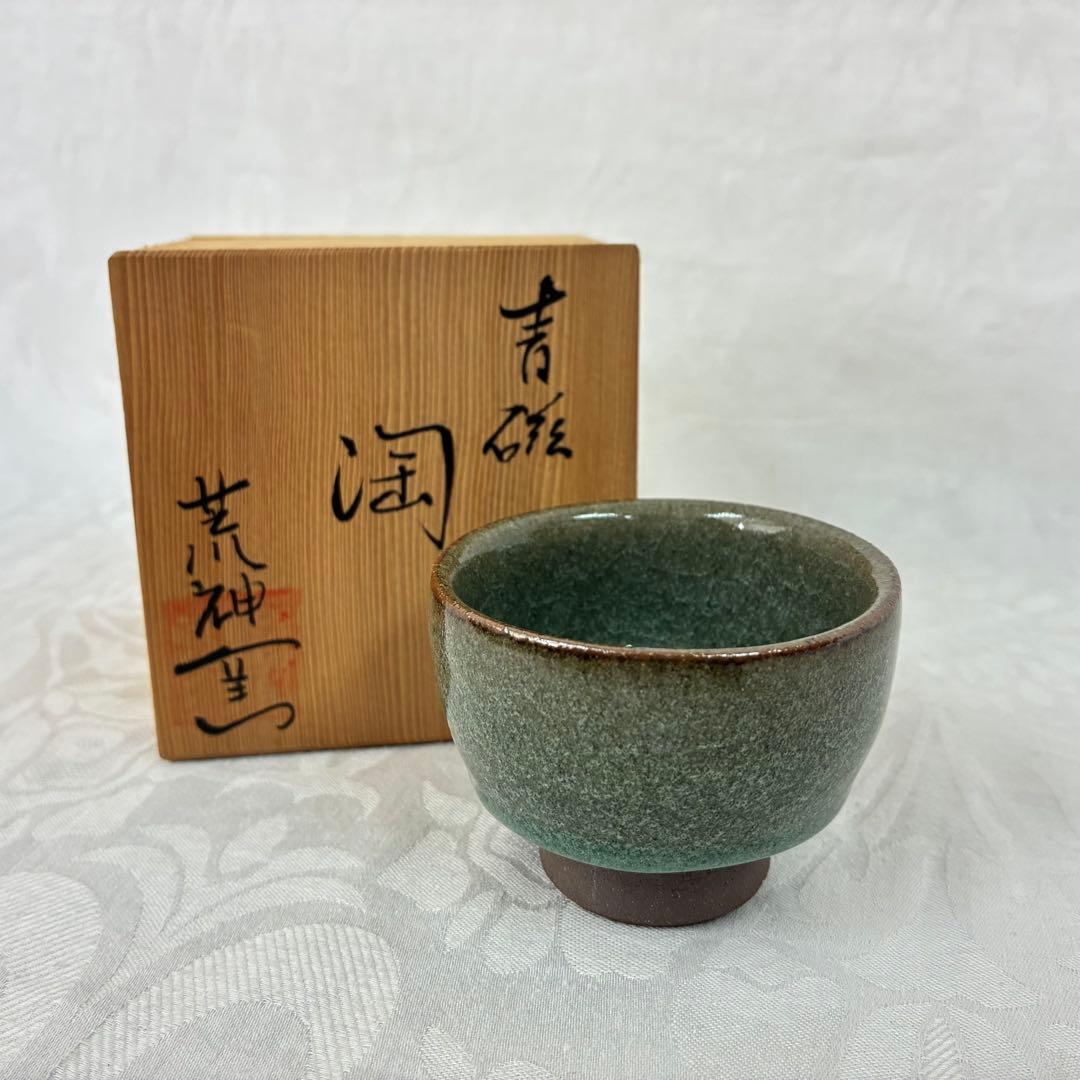
A celadon guinomi by Kato Junatsu of Kojin-gama — not the luminous celadon of courtly tradition, but something older in spirit. Deep moss-green glaze blankets a stoneware body with the mottled density of lichen on stone, the surface carrying a geological weight that declares itself the moment it meets your hand. A sake cup rooted in the earth it came from.
━━━━━━━━━━━━━━━━━━━━
🔹 [ BASIC DETAILS ]
• Artist: Kato Junatsu (加藤順厚) — Kojin-gama (荒神窯)
• Technique: Celadon glaze (青磁) on stoneware
• Era: Showa–Heisei period
• Origin: Japan
• Dimensions: 6.5 cm × 5.0 cm (2.6" dia × 2.0" h)
• Box: Wooden storage box inscribed "青磁 陶 荒神窯" with red seal
• Condition: Mint — unused, no chips, cracks, or repairs
• Artist credentials: Studied under Hineno Sakuzo (16 years) and Nakashima Masao (20 years); selected for Nihon Dento Kogei-ten and Tokai Dento Kogei-ten
━━━━━━━━━━━━━━━━━━━━
🔹 [ CULTURAL & ARTISTIC INSIGHT ]
The word “celadon” typically conjures smooth, translucent glazes of pale blue-green. Kato Junatsu’s work at Kojin-gama deliberately steps away from that expectation. His celadon is stoneware celadon — an interpretation that prioritizes tactile presence over visual polish. The glaze behaves differently on a coarse clay body: instead of pooling to glassy smoothness, it clings to the surface in a granular, mottled field of moss-green and sage, interrupted by iron-brown where the clay body asserts itself at the rim and around the foot.
This approach aligns with a strain of Japanese ceramic thought that values the material’s own voice. Where a porcelain celadon speaks of refinement, this stoneware celadon speaks of terrain. The surface reads like a weathered boulder in a mountain stream — mineral, patient, indifferent to the passage of time.
As a guinomi, this cup is designed for the intimate ritual of sake drinking. Its compact form fills the palm with satisfying weight. The slight asymmetry of the rim — visible from every angle — confirms the hand of the maker, distinguishing this from any machine-produced vessel. Sake poured into this cup does not merely sit; it inhabits a landscape.
*"Where the glaze thins, the mountain shows through."*
━━━━━━━━━━━━━━━━━━━━
🔹 [ DEEP-DIVE COMMENTARY ]
**Kato Junatsu & Kojin-gama**: Kato Junatsu trained under two significant masters — Hineno Sakuzo for sixteen years and Nakashima Masao for twenty — a combined apprenticeship of over three decades before establishing his independent practice at Kojin-gama. This depth of training is reflected in the discipline of his glaze work: what appears spontaneous is the product of decades of controlled experimentation. His selection for both the Nihon Dento Kogei-ten and the Tokai Dento Kogei-ten confirms recognition within Japan’s traditional craft establishment.
**Stoneware Celadon**: The distinction between porcelain celadon and stoneware celadon is fundamental. Porcelain celadon relies on a white, vitreous body to reflect light back through the glaze, creating translucency. Stoneware celadon absorbs light into a coarser, iron-rich body, producing depth rather than luminosity. The result is a surface that rewards touch as much as sight — the granular texture of this cup is felt before it is fully understood visually. This tactile quality is central to Japanese sake drinking culture, where the sensation of the vessel against the lips is part of the experience.
**Kuchibeni Effect**: The iron-brown rim edge — where the glaze thins to reveal the clay beneath — creates a natural kuchibeni (lip-mark) effect. This is not applied decoration but a consequence of gravity: glaze naturally thins at high points during firing. In Japanese ceramic appreciation, this effect is valued as evidence of the firing process itself, a record of the kiln’s action on material. Here, it provides warm contrast to the cool green field and guides the eye around the cup’s perimeter.
**The Impressed Seal**: The bottom of the cup carries an impressed kiln mark within the dark unglazed foot ring. This deliberate stamping — a mark made in soft clay before firing — connects each piece to its origin and provides a point of authentication. The foot itself, left unglazed in dark brown stoneware, anchors the cup visually and provides stable footing.
**Guinomi Culture**: The guinomi exists at the intersection of craft and conviviality. Unlike the formality of tea ceremony utensils, the sake cup is a vessel of spontaneity — pulled from a shelf for an evening’s conversation, chosen to match a mood or a season. Collectors often accumulate dozens, each cup carrying its own character and memory. This Kojin-gama cup, with its earthy gravity and restrained palette, would be a natural choice for autumn evenings or hearty winter fare.
━━━━━━━━━━━━━━━━━━━━
🔹 [ 日本語解説 ]
【基本情報】
• 作家:加藤順厚(荒神窯)
• 技法:青磁釉(陶器)
• 時代:昭和〜平成期
• 産地:日本
• 寸法:口径6.5cm × 高さ5.0cm
• 付属:木箱(「青磁 陶 荒神窯」銘・朱印)
• 状態:未使用・美品
• 陶歴:日根野作三先生師事16年、中島正雄先生師事20年、日本伝統工芸展・東海伝統工芸展入選
【解説】
加藤順厚・荒神窯による青磁ぐい呑み。磁器の青磁とは異なり、陶器の粗い土に青磁釉を掛けた「陶の青磁」とも呼べる作風。苔のような深い緑の釉薬が、粒状のテクスチャで器面を覆う。
口縁には釉が薄くなり鉄分が現れた口紅が自然に生まれ、高台は黒褐色の無釉で土の力強さがそのまま残る。底部には窯印が刻印されている。
日根野作三、中島正雄両先生のもとで計36年の修業を経た加藤の仕事は、一見素朴でありながら、釉の最深部に長年の経験が静かに宿っている。手に取れば、その重みと手触りが土の記憶を伝える。
未使用の完品。箱内に作家経歴の栞が付属する。
━━━━━━━━━━━━━━━━━━━━
🔹 [ SHIPPING & PACKAGING ]
• Dispatch: Within 1-6 business days
• Carrier: Japan Post EMS / UPS (with tracking)
• Packaging: Carefully wrapped with protective materials
*Thirty-six years of training. One cup. The mountain does not explain itself — it simply holds the moss.*
━━━━━━━━━━━━━━━━━━━━
🔹 [ BASIC DETAILS ]
• Artist: Kato Junatsu (加藤順厚) — Kojin-gama (荒神窯)
• Technique: Celadon glaze (青磁) on stoneware
• Era: Showa–Heisei period
• Origin: Japan
• Dimensions: 6.5 cm × 5.0 cm (2.6" dia × 2.0" h)
• Box: Wooden storage box inscribed "青磁 陶 荒神窯" with red seal
• Condition: Mint — unused, no chips, cracks, or repairs
• Artist credentials: Studied under Hineno Sakuzo (16 years) and Nakashima Masao (20 years); selected for Nihon Dento Kogei-ten and Tokai Dento Kogei-ten
━━━━━━━━━━━━━━━━━━━━
🔹 [ CULTURAL & ARTISTIC INSIGHT ]
The word “celadon” typically conjures smooth, translucent glazes of pale blue-green. Kato Junatsu’s work at Kojin-gama deliberately steps away from that expectation. His celadon is stoneware celadon — an interpretation that prioritizes tactile presence over visual polish. The glaze behaves differently on a coarse clay body: instead of pooling to glassy smoothness, it clings to the surface in a granular, mottled field of moss-green and sage, interrupted by iron-brown where the clay body asserts itself at the rim and around the foot.
This approach aligns with a strain of Japanese ceramic thought that values the material’s own voice. Where a porcelain celadon speaks of refinement, this stoneware celadon speaks of terrain. The surface reads like a weathered boulder in a mountain stream — mineral, patient, indifferent to the passage of time.
As a guinomi, this cup is designed for the intimate ritual of sake drinking. Its compact form fills the palm with satisfying weight. The slight asymmetry of the rim — visible from every angle — confirms the hand of the maker, distinguishing this from any machine-produced vessel. Sake poured into this cup does not merely sit; it inhabits a landscape.
*"Where the glaze thins, the mountain shows through."*
━━━━━━━━━━━━━━━━━━━━
🔹 [ DEEP-DIVE COMMENTARY ]
**Kato Junatsu & Kojin-gama**: Kato Junatsu trained under two significant masters — Hineno Sakuzo for sixteen years and Nakashima Masao for twenty — a combined apprenticeship of over three decades before establishing his independent practice at Kojin-gama. This depth of training is reflected in the discipline of his glaze work: what appears spontaneous is the product of decades of controlled experimentation. His selection for both the Nihon Dento Kogei-ten and the Tokai Dento Kogei-ten confirms recognition within Japan’s traditional craft establishment.
**Stoneware Celadon**: The distinction between porcelain celadon and stoneware celadon is fundamental. Porcelain celadon relies on a white, vitreous body to reflect light back through the glaze, creating translucency. Stoneware celadon absorbs light into a coarser, iron-rich body, producing depth rather than luminosity. The result is a surface that rewards touch as much as sight — the granular texture of this cup is felt before it is fully understood visually. This tactile quality is central to Japanese sake drinking culture, where the sensation of the vessel against the lips is part of the experience.
**Kuchibeni Effect**: The iron-brown rim edge — where the glaze thins to reveal the clay beneath — creates a natural kuchibeni (lip-mark) effect. This is not applied decoration but a consequence of gravity: glaze naturally thins at high points during firing. In Japanese ceramic appreciation, this effect is valued as evidence of the firing process itself, a record of the kiln’s action on material. Here, it provides warm contrast to the cool green field and guides the eye around the cup’s perimeter.
**The Impressed Seal**: The bottom of the cup carries an impressed kiln mark within the dark unglazed foot ring. This deliberate stamping — a mark made in soft clay before firing — connects each piece to its origin and provides a point of authentication. The foot itself, left unglazed in dark brown stoneware, anchors the cup visually and provides stable footing.
**Guinomi Culture**: The guinomi exists at the intersection of craft and conviviality. Unlike the formality of tea ceremony utensils, the sake cup is a vessel of spontaneity — pulled from a shelf for an evening’s conversation, chosen to match a mood or a season. Collectors often accumulate dozens, each cup carrying its own character and memory. This Kojin-gama cup, with its earthy gravity and restrained palette, would be a natural choice for autumn evenings or hearty winter fare.
━━━━━━━━━━━━━━━━━━━━
🔹 [ 日本語解説 ]
【基本情報】
• 作家:加藤順厚(荒神窯)
• 技法:青磁釉(陶器)
• 時代:昭和〜平成期
• 産地:日本
• 寸法:口径6.5cm × 高さ5.0cm
• 付属:木箱(「青磁 陶 荒神窯」銘・朱印)
• 状態:未使用・美品
• 陶歴:日根野作三先生師事16年、中島正雄先生師事20年、日本伝統工芸展・東海伝統工芸展入選
【解説】
加藤順厚・荒神窯による青磁ぐい呑み。磁器の青磁とは異なり、陶器の粗い土に青磁釉を掛けた「陶の青磁」とも呼べる作風。苔のような深い緑の釉薬が、粒状のテクスチャで器面を覆う。
口縁には釉が薄くなり鉄分が現れた口紅が自然に生まれ、高台は黒褐色の無釉で土の力強さがそのまま残る。底部には窯印が刻印されている。
日根野作三、中島正雄両先生のもとで計36年の修業を経た加藤の仕事は、一見素朴でありながら、釉の最深部に長年の経験が静かに宿っている。手に取れば、その重みと手触りが土の記憶を伝える。
未使用の完品。箱内に作家経歴の栞が付属する。
━━━━━━━━━━━━━━━━━━━━
🔹 [ SHIPPING & PACKAGING ]
• Dispatch: Within 1-6 business days
• Carrier: Japan Post EMS / UPS (with tracking)
• Packaging: Carefully wrapped with protective materials
*Thirty-six years of training. One cup. The mountain does not explain itself — it simply holds the moss.*
Quantity
Couldn't load pickup availability
Low stock: 1 left
View full details