1
/
of
9
Kaga Maki-e Natsume Tea Caddy — Raden Heron & Reed by Maehata Shunsai II, Signed Tomobako
Kaga Maki-e Natsume Tea Caddy — Raden Heron & Reed by Maehata Shunsai II, Signed Tomobako
Regular price
Dhs. 2,082.00 AED
Regular price
Sale price
Dhs. 2,082.00 AED
Taxes included.
Shipping calculated at checkout.
Experience Authentic Japan Art with this Kaga Maki-e Tea Caddy. This Japanese Lacquer Natsume serves as a Tea Ceremony Caddy and Antique Lacquerware, featuring Raden Mother of Pearl Inlay and Heron Reed Maki-e—a must-have for any Art Collector. Crafted by a master of Kaga Lacquer Art, this Vintage Maki-e Natsume exemplifies the tradition of Japanese Maki-e Gold Lacquer at its most refined.
🔹 [ BASIC DETAILS ]
• Artist: Maehata Shunsai II (二代 前端春斎), a distinguished master of Kaga maki-e lacquer, Kanazawa
• Technique: Uchi-nashiji interior ground (内梨地 — inner surface finished with gold-flake nashiji lacquer), yuki-fuki form (雪吹 — a classic cylindrical natsume silhouette); exterior decorated with ashi-ni-sagi (芦に鷺 — herons among reeds) motif combining gold taka-maki-e reed grasses and raden (螺鈿) mother-of-pearl inlay for the heron
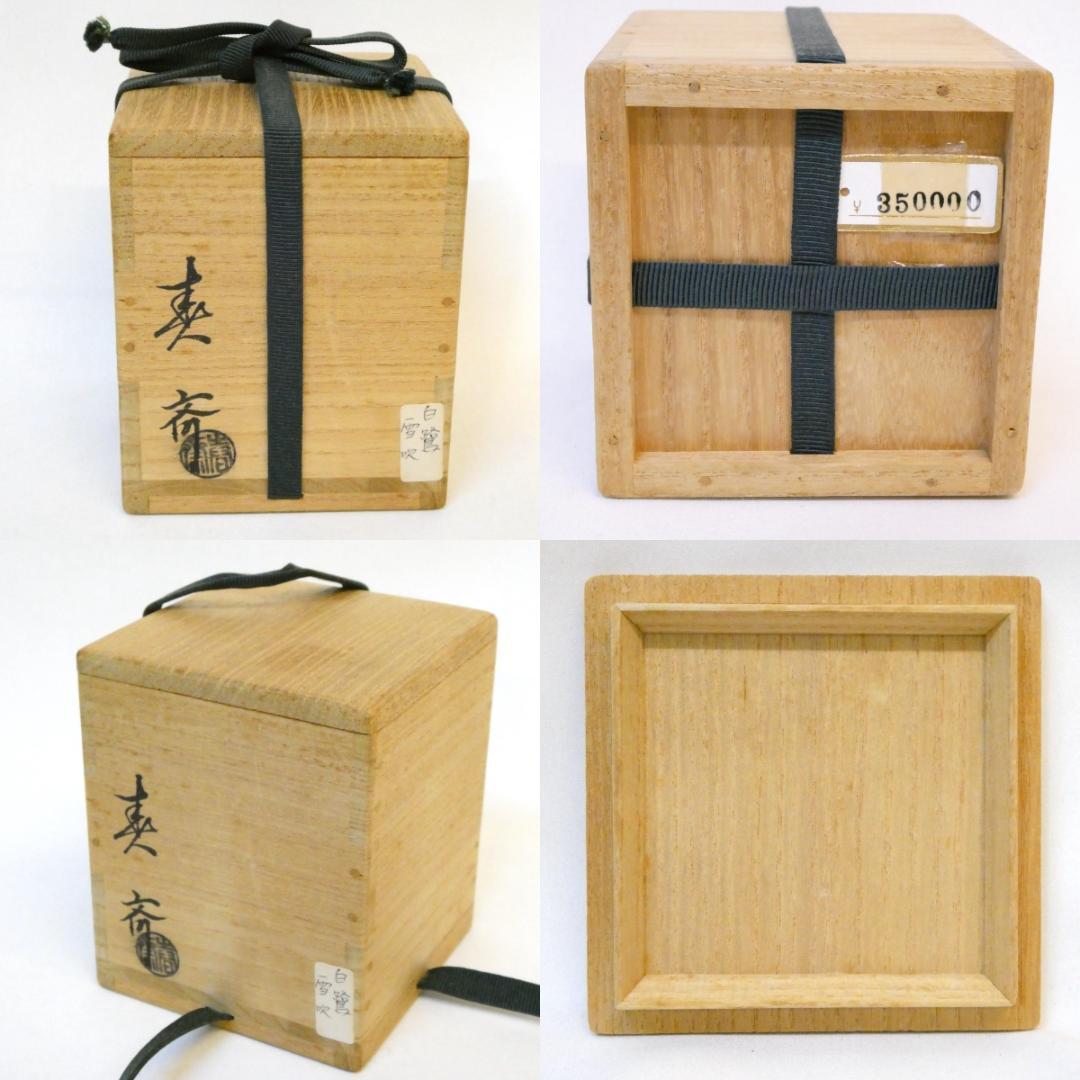
• Era: Late Showa – early Heisei (estimated 1980s–1990s); original retail value approximately ¥350,000 at time of sale
• Origin: Kanazawa, Ishikawa Prefecture — the historic heartland of Kaga maki-e, a lacquer tradition patronized by the Maeda domain for over four centuries
• Dimensions: Height approx. 8 cm, Diameter approx. 7.4 cm
• Box: Original signed wooden tomobako with yomo-san lid (四方桟蓋); artist's brushed signature and seal on box lid
• Condition: Very good overall. One area of raden (mother-of-pearl) on the heron's back has been professionally restored; this is fully disclosed and does not affect the compositional integrity or visual impact. All remaining surfaces — body, lid, interior nashiji — are intact and unblemished.
🔹 [ CULTURAL & ARTISTIC INSIGHT ]
The yuki-fuki natsume is one of the most architecturally spare forms in the chado object vocabulary. Its cylindrical body and domed lid carry no excess — every surface becomes a canvas, and every mark counts. Here, Maehata Shunsai II has chosen the ashi-ni-sagi composition: reed grasses rendered in gold maki-e swaying across the full 360-degree body, and a solitary heron inlaid in raden that shimmers with blue, violet, and white iridescence against the dark lacquer ground. The contrast is not decorative — it is meteorological. The gold reeds read as late-autumn light; the raden heron reads as the still water below.
The interior is finished in uchi-nashiji — a field of suspended gold flakes sealed beneath translucent lacquer, producing a depth that seems to glow from within. This interior ground is invisible when the lid is on. It exists only for the moment of preparation: when the host lifts the lid and reaches for the powdered tea, the gold interior surfaces briefly to the guest's gaze. It is a gift hidden inside a gift.
Kaga maki-e emerged from the patronage of the Maeda clan, lords of Kaga domain (modern Kanazawa), who from the seventeenth century onward employed master lacquerers to produce objects of cultural ambition matching the Kyoto court. Kaga maki-e developed its own identity — a preference for naturalistic motifs, precise botanical rendering, and the integration of raden into maki-e compositions in ways that differ from the more geometric or abstracted traditions of Edo lacquer. Maehata Shunsai is one of the lineage names most associated with the modern continuation of this tradition.
PHILOSOPHICAL LINE: The heron waits without urgency. The reeds remember the wind. Between them, the lacquer holds the silence that makes a room feel real.
🔹 [ DEEP-DIVE COMMENTARY ]
Raden (螺鈿) is among the most demanding decorative techniques in East Asian lacquerwork. Thin sections of abalone, awabi, or other iridescent shell are cut — sometimes to sub-millimeter thickness — and inlaid into prepared lacquer grounds with precision instruments. The optical behavior of raden changes with viewing angle: a piece seen in raking light reads differently from the same piece seen in ambient light, which is why raden objects reward handling and close observation in ways that purely maki-e pieces do not. In this natsume, the raden is concentrated in the heron's body, creating a focal point that appears almost luminous against the matte-dark ground.
Maki-e (蒔絵 — literally "sprinkled picture") encompasses several distinct techniques. The reed motif on this piece uses taka-maki-e (高蒔絵 — raised maki-e), in which gold powder is built up in relief over multiple lacquer layers to create a three-dimensional texture. The fine lines of individual reed leaves have been articulated with a brush technique called kirigane-bori or fine-line drawing, giving the grasses a delicate botanical accuracy. This level of detail is characteristic of Kaga maki-e at its most accomplished, where the lacquerer approaches the botanical precision of a Rinpa painter.
The nashiji interior (梨地 — pear-ground) is produced by sprinkling irregularly shaped gold and silver flakes into wet lacquer, then sealing with multiple transparent topcoats. The result is a surface that suggests depth, as though the gold is suspended within the material rather than applied to its surface. In tea ceremony objects, nashiji interiors signal a kind of invisible generosity: the interior is finished to the same standard as the exterior, even though it is seen only fleetingly.
The yuki-fuki form takes its name from the image of snow blowing horizontally — the slight outward flare at the base and the rounded shoulder of the lid evoke that horizontal movement. It is a form associated with winter temae in the tea calendar. Paired with the ashi-ni-sagi motif — herons and reeds are a canonical autumn-winter compositional pair in Japanese decorative arts — this natsume situates itself precisely in the transitional season, the point where autumn cold becomes the silence of winter.
For collectors, a piece by a named second-generation master (二代) of a recognized Kaga maki-e lineage, accompanied by a tomobako with a brushed signature and seal, represents a documented provenance that anchors the object in a specific workshop tradition. The disclosed raden restoration on the heron's back is professionally executed and typical of the careful stewardship applied to working tea ceremony objects that have been in active use.
【日本語解説】
🔹 [ 作品詳細 ]
• 作家:二代 前端春斎。加賀蒔絵の正統を継ぐ金沢の名工
• 技法・形状:雪吹形(吹雪の横なびきを想起させる古典的な棗形)、外面は芦に鷺蒔絵(高蒔絵による金色の葦と螺鈿による鷺)、内面は梨地仕上げ(内梨地)
• 年代:昭和後期〜平成初期(推定1980年代〜90年代)。新品時の小売価格は約35万円
• 産地:石川県金沢市(加賀前田藩以来、四百年の蒔絵伝統の中心地)
• 寸法:高さ約8cm、径約7.4cm
• 付属品:共箱(四方桟蓋)、箱蓋に作家の草書銘と印
• 状態:全体的に良好。蓋の螺鈿(鷺の背部)に一箇所の補修跡あり(出品時に明記)。それ以外の部位——胴部、蓋、内梨地——は無傷。補修は丁寧に施されており、全体の意匠と鑑賞価値を損なうものではない
🔹 [ 文化・芸術的考察 ]
雪吹形の棗は、茶道具の中でも最も構造的に簡潔な形式のひとつである。余分を持たない円筒の胴と丸みを帯びた蓋は、そのまま絵画の支持体となる。ここに前端春斎二代は「芦に鷺」という構図を選んだ——秋草を思わせる芦を金の高蒔絵で360度にわたって描き、その中に一羽の鷺を螺鈿で嵌め込んでいる。アワビ貝の虹色の光が、暗い漆地の中で青、紫、白と揺れる様は、単なる装飾を超えて気象的な印象を宿す。金の葦は晩秋の光であり、螺鈿の鷺は静止した水面そのものである。
内面を彩る梨地は、蒔絵金粉を透明漆の中に封じ込めることで、表面ではなく素材の内側から光が発しているかのような奥行きを生む。この内梨地は、蓋をした状態では見えない。主人が蓋を持ち上げて抹茶を掬う一瞬だけ、客の視野に入る。それは器の中に隠された、もうひとつの贈り物である。
詩的な一節:鷺は急がない。葦は風を覚えている。その間に、漆は沈黙を保ち、空間をして現実たらしめる。
🔹 [ 深層解説 ]
螺鈿は東アジアの漆芸における最も技術的な難度を誇る技法のひとつである。アワビや夜光貝などの貝殻を薄く切り出し——時にはサブミリ単位の厚さまで——、専用の道具で漆地に嵌め込む。螺鈿の光学的特性は観察角度によって変化し、斜めの光では異なる色彩が現れる。この棗では螺鈿が鷺の胴体に集中しており、暗い地の中で発光するかのような焦点をつくり出している。
蒔絵(「まき絵」——蒔き散らした絵)は複数の技法を内包する。本作の芦紋には高蒔絵が用いられており、金粉を漆の重ね塗りの上に盛り上げることで立体的なテクスチャが生まれている。個々の葦の葉の細線描写は蒔絵筆による精密な線引き技術によるもので、加賀蒔絵が最も充実した段階で示す植物画的な精度を反映している。
内梨地は不規則な形の金箔・銀箔片を湿漆に振りかけ、透明な上塗りで封じることで生まれる。その結果、金が表面に貼られているのではなく、素材の中に浮かんでいるかのような奥行きが生じる。茶道具における梨地の内面仕上げは、外からは見えない部分にまで誠実に向き合う作者の姿勢——不可視の誠実さ——を象徴する。
加賀蒔絵は、17世紀以降、加賀藩主前田家の庇護のもとで育まれた。金沢の蒔絵師たちは江戸の抽象的・幾何学的な傾向とは異なる独自の路線を歩み、写実的な植物描写と螺鈿の統合を得意とした。前端春斎はその伝統を現代に継ぐ系譜名である。二代目を銘する作家の作品が共箱・銘入りで揃うことは、工房の伝統に裏づけられた出所を意味し、コレクターにとって重要な文脈をなす。
🔹 [ SHIPPING & PACKAGING ]
• Dispatch: Within 1-6 business days
• Carrier: Japan Post EMS / UPS (with tracking)
• Packaging: Carefully wrapped with protective materials
🔹 [ BASIC DETAILS ]
• Artist: Maehata Shunsai II (二代 前端春斎), a distinguished master of Kaga maki-e lacquer, Kanazawa
• Technique: Uchi-nashiji interior ground (内梨地 — inner surface finished with gold-flake nashiji lacquer), yuki-fuki form (雪吹 — a classic cylindrical natsume silhouette); exterior decorated with ashi-ni-sagi (芦に鷺 — herons among reeds) motif combining gold taka-maki-e reed grasses and raden (螺鈿) mother-of-pearl inlay for the heron
• Era: Late Showa – early Heisei (estimated 1980s–1990s); original retail value approximately ¥350,000 at time of sale
• Origin: Kanazawa, Ishikawa Prefecture — the historic heartland of Kaga maki-e, a lacquer tradition patronized by the Maeda domain for over four centuries
• Dimensions: Height approx. 8 cm, Diameter approx. 7.4 cm
• Box: Original signed wooden tomobako with yomo-san lid (四方桟蓋); artist's brushed signature and seal on box lid
• Condition: Very good overall. One area of raden (mother-of-pearl) on the heron's back has been professionally restored; this is fully disclosed and does not affect the compositional integrity or visual impact. All remaining surfaces — body, lid, interior nashiji — are intact and unblemished.
🔹 [ CULTURAL & ARTISTIC INSIGHT ]
The yuki-fuki natsume is one of the most architecturally spare forms in the chado object vocabulary. Its cylindrical body and domed lid carry no excess — every surface becomes a canvas, and every mark counts. Here, Maehata Shunsai II has chosen the ashi-ni-sagi composition: reed grasses rendered in gold maki-e swaying across the full 360-degree body, and a solitary heron inlaid in raden that shimmers with blue, violet, and white iridescence against the dark lacquer ground. The contrast is not decorative — it is meteorological. The gold reeds read as late-autumn light; the raden heron reads as the still water below.
The interior is finished in uchi-nashiji — a field of suspended gold flakes sealed beneath translucent lacquer, producing a depth that seems to glow from within. This interior ground is invisible when the lid is on. It exists only for the moment of preparation: when the host lifts the lid and reaches for the powdered tea, the gold interior surfaces briefly to the guest's gaze. It is a gift hidden inside a gift.
Kaga maki-e emerged from the patronage of the Maeda clan, lords of Kaga domain (modern Kanazawa), who from the seventeenth century onward employed master lacquerers to produce objects of cultural ambition matching the Kyoto court. Kaga maki-e developed its own identity — a preference for naturalistic motifs, precise botanical rendering, and the integration of raden into maki-e compositions in ways that differ from the more geometric or abstracted traditions of Edo lacquer. Maehata Shunsai is one of the lineage names most associated with the modern continuation of this tradition.
PHILOSOPHICAL LINE: The heron waits without urgency. The reeds remember the wind. Between them, the lacquer holds the silence that makes a room feel real.
🔹 [ DEEP-DIVE COMMENTARY ]
Raden (螺鈿) is among the most demanding decorative techniques in East Asian lacquerwork. Thin sections of abalone, awabi, or other iridescent shell are cut — sometimes to sub-millimeter thickness — and inlaid into prepared lacquer grounds with precision instruments. The optical behavior of raden changes with viewing angle: a piece seen in raking light reads differently from the same piece seen in ambient light, which is why raden objects reward handling and close observation in ways that purely maki-e pieces do not. In this natsume, the raden is concentrated in the heron's body, creating a focal point that appears almost luminous against the matte-dark ground.
Maki-e (蒔絵 — literally "sprinkled picture") encompasses several distinct techniques. The reed motif on this piece uses taka-maki-e (高蒔絵 — raised maki-e), in which gold powder is built up in relief over multiple lacquer layers to create a three-dimensional texture. The fine lines of individual reed leaves have been articulated with a brush technique called kirigane-bori or fine-line drawing, giving the grasses a delicate botanical accuracy. This level of detail is characteristic of Kaga maki-e at its most accomplished, where the lacquerer approaches the botanical precision of a Rinpa painter.
The nashiji interior (梨地 — pear-ground) is produced by sprinkling irregularly shaped gold and silver flakes into wet lacquer, then sealing with multiple transparent topcoats. The result is a surface that suggests depth, as though the gold is suspended within the material rather than applied to its surface. In tea ceremony objects, nashiji interiors signal a kind of invisible generosity: the interior is finished to the same standard as the exterior, even though it is seen only fleetingly.
The yuki-fuki form takes its name from the image of snow blowing horizontally — the slight outward flare at the base and the rounded shoulder of the lid evoke that horizontal movement. It is a form associated with winter temae in the tea calendar. Paired with the ashi-ni-sagi motif — herons and reeds are a canonical autumn-winter compositional pair in Japanese decorative arts — this natsume situates itself precisely in the transitional season, the point where autumn cold becomes the silence of winter.
For collectors, a piece by a named second-generation master (二代) of a recognized Kaga maki-e lineage, accompanied by a tomobako with a brushed signature and seal, represents a documented provenance that anchors the object in a specific workshop tradition. The disclosed raden restoration on the heron's back is professionally executed and typical of the careful stewardship applied to working tea ceremony objects that have been in active use.
【日本語解説】
🔹 [ 作品詳細 ]
• 作家:二代 前端春斎。加賀蒔絵の正統を継ぐ金沢の名工
• 技法・形状:雪吹形(吹雪の横なびきを想起させる古典的な棗形)、外面は芦に鷺蒔絵(高蒔絵による金色の葦と螺鈿による鷺)、内面は梨地仕上げ(内梨地)
• 年代:昭和後期〜平成初期(推定1980年代〜90年代)。新品時の小売価格は約35万円
• 産地:石川県金沢市(加賀前田藩以来、四百年の蒔絵伝統の中心地)
• 寸法:高さ約8cm、径約7.4cm
• 付属品:共箱(四方桟蓋)、箱蓋に作家の草書銘と印
• 状態:全体的に良好。蓋の螺鈿(鷺の背部)に一箇所の補修跡あり(出品時に明記)。それ以外の部位——胴部、蓋、内梨地——は無傷。補修は丁寧に施されており、全体の意匠と鑑賞価値を損なうものではない
🔹 [ 文化・芸術的考察 ]
雪吹形の棗は、茶道具の中でも最も構造的に簡潔な形式のひとつである。余分を持たない円筒の胴と丸みを帯びた蓋は、そのまま絵画の支持体となる。ここに前端春斎二代は「芦に鷺」という構図を選んだ——秋草を思わせる芦を金の高蒔絵で360度にわたって描き、その中に一羽の鷺を螺鈿で嵌め込んでいる。アワビ貝の虹色の光が、暗い漆地の中で青、紫、白と揺れる様は、単なる装飾を超えて気象的な印象を宿す。金の葦は晩秋の光であり、螺鈿の鷺は静止した水面そのものである。
内面を彩る梨地は、蒔絵金粉を透明漆の中に封じ込めることで、表面ではなく素材の内側から光が発しているかのような奥行きを生む。この内梨地は、蓋をした状態では見えない。主人が蓋を持ち上げて抹茶を掬う一瞬だけ、客の視野に入る。それは器の中に隠された、もうひとつの贈り物である。
詩的な一節:鷺は急がない。葦は風を覚えている。その間に、漆は沈黙を保ち、空間をして現実たらしめる。
🔹 [ 深層解説 ]
螺鈿は東アジアの漆芸における最も技術的な難度を誇る技法のひとつである。アワビや夜光貝などの貝殻を薄く切り出し——時にはサブミリ単位の厚さまで——、専用の道具で漆地に嵌め込む。螺鈿の光学的特性は観察角度によって変化し、斜めの光では異なる色彩が現れる。この棗では螺鈿が鷺の胴体に集中しており、暗い地の中で発光するかのような焦点をつくり出している。
蒔絵(「まき絵」——蒔き散らした絵)は複数の技法を内包する。本作の芦紋には高蒔絵が用いられており、金粉を漆の重ね塗りの上に盛り上げることで立体的なテクスチャが生まれている。個々の葦の葉の細線描写は蒔絵筆による精密な線引き技術によるもので、加賀蒔絵が最も充実した段階で示す植物画的な精度を反映している。
内梨地は不規則な形の金箔・銀箔片を湿漆に振りかけ、透明な上塗りで封じることで生まれる。その結果、金が表面に貼られているのではなく、素材の中に浮かんでいるかのような奥行きが生じる。茶道具における梨地の内面仕上げは、外からは見えない部分にまで誠実に向き合う作者の姿勢——不可視の誠実さ——を象徴する。
加賀蒔絵は、17世紀以降、加賀藩主前田家の庇護のもとで育まれた。金沢の蒔絵師たちは江戸の抽象的・幾何学的な傾向とは異なる独自の路線を歩み、写実的な植物描写と螺鈿の統合を得意とした。前端春斎はその伝統を現代に継ぐ系譜名である。二代目を銘する作家の作品が共箱・銘入りで揃うことは、工房の伝統に裏づけられた出所を意味し、コレクターにとって重要な文脈をなす。
🔹 [ SHIPPING & PACKAGING ]
• Dispatch: Within 1-6 business days
• Carrier: Japan Post EMS / UPS (with tracking)
• Packaging: Carefully wrapped with protective materials
Quantity
Couldn't load pickup availability
Low stock: 1 left
View full details