1
/
of
17
Kaga Maki-e Natsume Tea Caddy — Bamboo Grove by Okamoto Yasumitsu, Signed Tomobako, New Unused
Kaga Maki-e Natsume Tea Caddy — Bamboo Grove by Okamoto Yasumitsu, Signed Tomobako, New Unused
Regular price
Dhs. 1,968.00 AED
Regular price
Sale price
Dhs. 1,968.00 AED
Taxes included.
Shipping calculated at checkout.
Experience Authentic Japan Art with this Kaga Maki-e Tea Caddy. This Japanese Lacquer Natsume serves as a Matcha Tea Ceremony Object and Tea Ceremony Gift, featuring Gold Bamboo Maki-e Lacquer and Kijiro Lacquer Technique—a must-have for any Art Collector seeking a Japanese Tea Caddy Gift or Zen Home Decor piece by a Kaga Lacquer Artist.
🔹 [ BASIC DETAILS ]
• Artist: Okamoto Yasumitsu (岡本康光), Kaga Maki-e master
• Technique: So-takeuri maki-e (total bamboo-grove maki-e) on kijiro lacquer ground
• Era: 2010 – 2019
• Origin: Kaga, Ishikawa Prefecture, Japan
• Dimensions: Width approx. 5.5 cm, Height approx. 8.1 cm
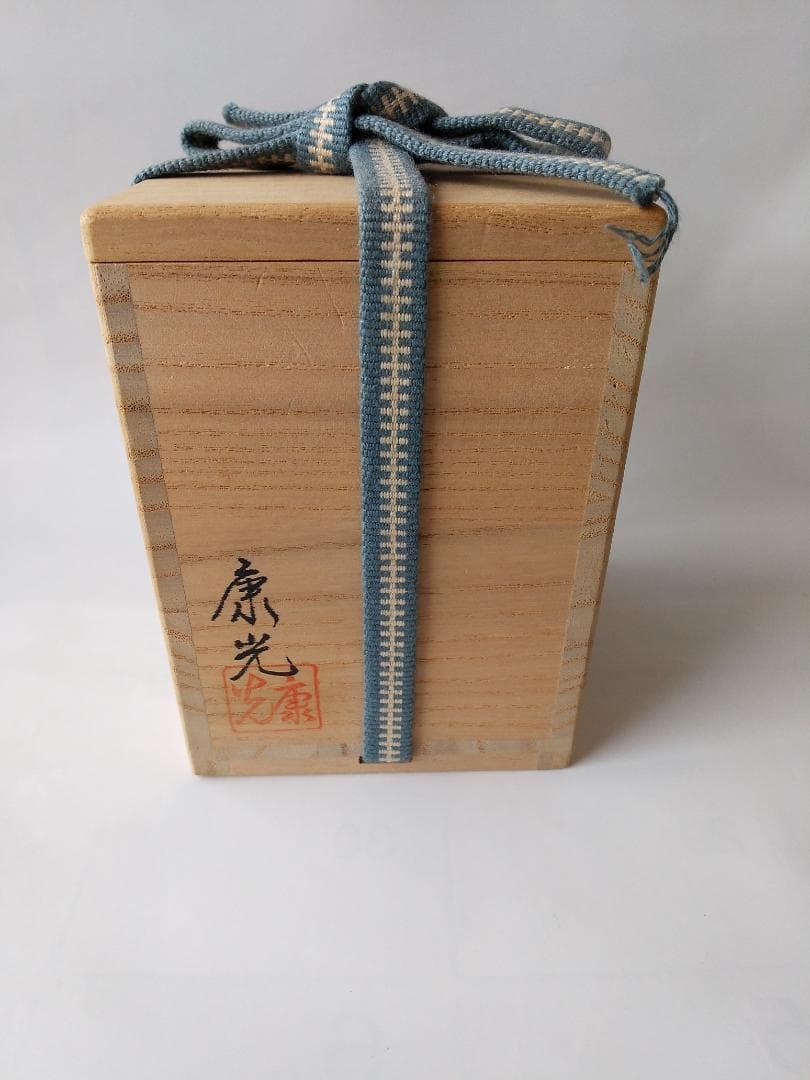
• Box: Original signed tomobako (共箱) included
• Condition: New, unused — stored in pristine condition
🔹 [ CULTURAL & ARTISTIC INSIGHT ]
The Kaga maki-e tradition traces its roots to the patronage of the Maeda clan, lords of the wealthy Kaga domain (present-day Kanazawa, Ishikawa), who cultivated an artistic culture rivaling Kyoto in refinement. From the seventeenth century onward, Kaga's lacquer artisans developed a distinctive sensibility: dense, naturalistic motifs rendered with patient precision rather than the bold decorative drama of Kyoto's Rinpa-influenced styles. The bamboo has been a constant companion of this tradition — symbol of resilience, uprightness, and the quiet strength that endures through winter.
Okamoto Yasumitsu works within this lineage with complete command. His so-takeuri maki-e — the "total bamboo grove" covering — does not merely decorate the natsume: it subsumes it. The warm amber-brown kijiro ground, which allows the natural grain of the lacquered wood to breathe through the surface like slow breath, becomes the forest floor beneath an endless stand of bamboo. Gold culms rise from base to lid without interruption. Leaves in high and low relief catch imagined light. The modulation between bright and muted gold across the same surface creates a depth that photographs struggle to capture — the sense of standing at the edge of a grove and looking in.
The natsume form itself — compact, rounded, lidded — belongs to the formality of chanoyu. As a chu-natsume (medium natsume), this piece is suited to a range of tea gatherings, from informal thin-tea settings to moderately formal occasions. Its proportions, approximately 5.5 cm wide and 8.1 cm tall, sit naturally in the hand during the temae. The signed tomobako in clean paulownia wood confirms the work's authenticity and the artist's intention that this piece be received as a complete, gift-worthy creation.
POETIC LINE: "A grove of gold stands still inside the lacquer — not painted, but remembered, the way bamboo stands after snow."
🔹 [ DEEP-DIVE COMMENTARY ]
Maki-e (蒔絵, "sprinkled picture") is Japan's most celebrated lacquerwork technique. The artist applies wet urushi lacquer to the surface, then sprinkles metallic powders — gold, silver, or alloys — before the lacquer cures. Once dry, additional lacquer layers are applied and polished away to varying depths, creating relief and luster. The process demands patience on a geological scale: a single piece may require dozens of application and drying cycles spanning weeks.
So-takeuri maki-e, as executed here, is particularly demanding because it allows no undecorated ground to "rest" — every centimeter of the curved, three-dimensional natsume must carry the motif with consistent density and tonal variation. The bamboo culms, rendered in flat gold, contrast with the finely rendered leaves that sit in delicate low and high relief. The artist has deliberately varied the gold tone — bright and matte, dense and sparse — to suggest the way real bamboo shifts between shadow and light within a grove.
Kijiro lacquer (木地呂塗, "wood-tone lacquer") is a semi-transparent finishing technique that allows the underlying wood grain to remain visible beneath the lacquer film. Rather than concealing the material, kijiro celebrates it: the warm reddish-brown of the natsume's core radiates through the gold maki-e like afternoon light through a bamboo screen. This combination of technique and material is characteristic of the Kaga tradition's preference for naturalistic warmth over theatrical contrast.
For collectors, a signed tomobako from an active Kaga maki-e artisan represents a specific form of provenance: the box confirms the work is original, the signature confirms authorship, and the condition — new, unused — means the lacquer surface retains its full brilliance without the micro-abrasions of use. This piece is equally viable as a tea-practice object and as a display piece for a collection focused on contemporary Japanese lacquerwork.
[ JAPANESE DESCRIPTION / 日本語解説 ]
【基本情報】
• 作家:岡本康光(加賀蒔絵師)
• 技法:木地呂塗地・総竹林蒔絵
• 時代:2010年代(現代)
• 産地:石川県・加賀
• 寸法:幅約5.5cm、高さ約8.1cm
• 箱:共箱完備(作家署名・落款入り)
• 状態:新品未使用・保管品
【文化的・芸術的解説】
加賀蒔絵の伝統は、加賀百万石・前田家の庇護のもとに育まれた。京都の華やかな装飾美とは異なる、緻密で写実的な自然表現を得意とする加賀の漆芸は、竹の文様を特に愛してきた。竹は清廉・剛直・耐寒の象徴として、茶の湯の精神とも深く結びついている。
岡本康光はその系譜に連なる蒔絵師である。本作の「総竹林蒔絵」は、器全体を竹林で埋め尽くす様式であり、余白を許さない。木地呂塗の温かみある茶褐色の地肌が杢目ごと透けて見え、その上に金銀の竹がまるで森の向こうから光を受けるように立ち上がる。高低差のある蒔絵表現が奥行きを生み出し、平面的な装飾ではなく、立体的な林の気配を感じさせる。
中棗は薄茶の点前で用いられる抹茶入れの一形態である。幅5.5cm・高さ8.1cmの本作は手の中に過不足なく収まり、稽古・正式な茶会いずれにも対応する。共箱が完備され、新品未使用の状態であることは、漆面の光沢が制作時のままに保たれていることを意味する。
詩的一言:「金の竹林が漆の中で静かに立っている。描かれたのではなく、思い出されたように。」
【深層解説】
蒔絵とは、湿った漆を塗布し、乾かぬうちに金銀などの金属粉を蒔きつけ、研ぎ出すことで光沢と立体感を生む日本固有の漆芸技法である。一器を仕上げるには、塗り・乾燥・研ぎのサイクルを数十回繰り返す場合もあり、卓越した技術と長時間の集中を要する。
「総竹林」は器の全面を竹のモチーフで覆う構成であり、曲面をもつ棗に施す場合には余白のない密度を均一に保つ必要があり、熟練の度合いが直接見える。本作では太い竹幹を金の平蒔絵で表現し、細かな枝葉には研ぎ出しと肉蒔きを使い分けて立体感を生み出している。金の明度にも強弱をつけることで、静止した竹林の中に光の動きを見せる。
木地呂塗は透明感の高い仕上げ漆であり、素地の木目を透かして見せる。漆膜が木を隠すのではなく、木の温もりを生かしたまま金蒔絵を乗せることで、加賀蒔絵らしい写実的で落ち着いた風趣が生まれる。
コレクターにとって、現役の加賀蒔絵師による署名共箱付きの新品未使用作品は、来歴が明確で表面状態が最良であることを意味する。茶道具として実際に使うことも、現代漆芸コレクションの展示品として所蔵することも、等しく適している一品である。
🔹 [ SHIPPING & PACKAGING ]
• Dispatch: Within 1-6 business days
• Carrier: Japan Post EMS / UPS (with tracking)
• Packaging: Carefully wrapped with protective materials
🔹 [ BASIC DETAILS ]
• Artist: Okamoto Yasumitsu (岡本康光), Kaga Maki-e master
• Technique: So-takeuri maki-e (total bamboo-grove maki-e) on kijiro lacquer ground
• Era: 2010 – 2019
• Origin: Kaga, Ishikawa Prefecture, Japan
• Dimensions: Width approx. 5.5 cm, Height approx. 8.1 cm
• Box: Original signed tomobako (共箱) included
• Condition: New, unused — stored in pristine condition
🔹 [ CULTURAL & ARTISTIC INSIGHT ]
The Kaga maki-e tradition traces its roots to the patronage of the Maeda clan, lords of the wealthy Kaga domain (present-day Kanazawa, Ishikawa), who cultivated an artistic culture rivaling Kyoto in refinement. From the seventeenth century onward, Kaga's lacquer artisans developed a distinctive sensibility: dense, naturalistic motifs rendered with patient precision rather than the bold decorative drama of Kyoto's Rinpa-influenced styles. The bamboo has been a constant companion of this tradition — symbol of resilience, uprightness, and the quiet strength that endures through winter.
Okamoto Yasumitsu works within this lineage with complete command. His so-takeuri maki-e — the "total bamboo grove" covering — does not merely decorate the natsume: it subsumes it. The warm amber-brown kijiro ground, which allows the natural grain of the lacquered wood to breathe through the surface like slow breath, becomes the forest floor beneath an endless stand of bamboo. Gold culms rise from base to lid without interruption. Leaves in high and low relief catch imagined light. The modulation between bright and muted gold across the same surface creates a depth that photographs struggle to capture — the sense of standing at the edge of a grove and looking in.
The natsume form itself — compact, rounded, lidded — belongs to the formality of chanoyu. As a chu-natsume (medium natsume), this piece is suited to a range of tea gatherings, from informal thin-tea settings to moderately formal occasions. Its proportions, approximately 5.5 cm wide and 8.1 cm tall, sit naturally in the hand during the temae. The signed tomobako in clean paulownia wood confirms the work's authenticity and the artist's intention that this piece be received as a complete, gift-worthy creation.
POETIC LINE: "A grove of gold stands still inside the lacquer — not painted, but remembered, the way bamboo stands after snow."
🔹 [ DEEP-DIVE COMMENTARY ]
Maki-e (蒔絵, "sprinkled picture") is Japan's most celebrated lacquerwork technique. The artist applies wet urushi lacquer to the surface, then sprinkles metallic powders — gold, silver, or alloys — before the lacquer cures. Once dry, additional lacquer layers are applied and polished away to varying depths, creating relief and luster. The process demands patience on a geological scale: a single piece may require dozens of application and drying cycles spanning weeks.
So-takeuri maki-e, as executed here, is particularly demanding because it allows no undecorated ground to "rest" — every centimeter of the curved, three-dimensional natsume must carry the motif with consistent density and tonal variation. The bamboo culms, rendered in flat gold, contrast with the finely rendered leaves that sit in delicate low and high relief. The artist has deliberately varied the gold tone — bright and matte, dense and sparse — to suggest the way real bamboo shifts between shadow and light within a grove.
Kijiro lacquer (木地呂塗, "wood-tone lacquer") is a semi-transparent finishing technique that allows the underlying wood grain to remain visible beneath the lacquer film. Rather than concealing the material, kijiro celebrates it: the warm reddish-brown of the natsume's core radiates through the gold maki-e like afternoon light through a bamboo screen. This combination of technique and material is characteristic of the Kaga tradition's preference for naturalistic warmth over theatrical contrast.
For collectors, a signed tomobako from an active Kaga maki-e artisan represents a specific form of provenance: the box confirms the work is original, the signature confirms authorship, and the condition — new, unused — means the lacquer surface retains its full brilliance without the micro-abrasions of use. This piece is equally viable as a tea-practice object and as a display piece for a collection focused on contemporary Japanese lacquerwork.
[ JAPANESE DESCRIPTION / 日本語解説 ]
【基本情報】
• 作家:岡本康光(加賀蒔絵師)
• 技法:木地呂塗地・総竹林蒔絵
• 時代:2010年代(現代)
• 産地:石川県・加賀
• 寸法:幅約5.5cm、高さ約8.1cm
• 箱:共箱完備(作家署名・落款入り)
• 状態:新品未使用・保管品
【文化的・芸術的解説】
加賀蒔絵の伝統は、加賀百万石・前田家の庇護のもとに育まれた。京都の華やかな装飾美とは異なる、緻密で写実的な自然表現を得意とする加賀の漆芸は、竹の文様を特に愛してきた。竹は清廉・剛直・耐寒の象徴として、茶の湯の精神とも深く結びついている。
岡本康光はその系譜に連なる蒔絵師である。本作の「総竹林蒔絵」は、器全体を竹林で埋め尽くす様式であり、余白を許さない。木地呂塗の温かみある茶褐色の地肌が杢目ごと透けて見え、その上に金銀の竹がまるで森の向こうから光を受けるように立ち上がる。高低差のある蒔絵表現が奥行きを生み出し、平面的な装飾ではなく、立体的な林の気配を感じさせる。
中棗は薄茶の点前で用いられる抹茶入れの一形態である。幅5.5cm・高さ8.1cmの本作は手の中に過不足なく収まり、稽古・正式な茶会いずれにも対応する。共箱が完備され、新品未使用の状態であることは、漆面の光沢が制作時のままに保たれていることを意味する。
詩的一言:「金の竹林が漆の中で静かに立っている。描かれたのではなく、思い出されたように。」
【深層解説】
蒔絵とは、湿った漆を塗布し、乾かぬうちに金銀などの金属粉を蒔きつけ、研ぎ出すことで光沢と立体感を生む日本固有の漆芸技法である。一器を仕上げるには、塗り・乾燥・研ぎのサイクルを数十回繰り返す場合もあり、卓越した技術と長時間の集中を要する。
「総竹林」は器の全面を竹のモチーフで覆う構成であり、曲面をもつ棗に施す場合には余白のない密度を均一に保つ必要があり、熟練の度合いが直接見える。本作では太い竹幹を金の平蒔絵で表現し、細かな枝葉には研ぎ出しと肉蒔きを使い分けて立体感を生み出している。金の明度にも強弱をつけることで、静止した竹林の中に光の動きを見せる。
木地呂塗は透明感の高い仕上げ漆であり、素地の木目を透かして見せる。漆膜が木を隠すのではなく、木の温もりを生かしたまま金蒔絵を乗せることで、加賀蒔絵らしい写実的で落ち着いた風趣が生まれる。
コレクターにとって、現役の加賀蒔絵師による署名共箱付きの新品未使用作品は、来歴が明確で表面状態が最良であることを意味する。茶道具として実際に使うことも、現代漆芸コレクションの展示品として所蔵することも、等しく適している一品である。
🔹 [ SHIPPING & PACKAGING ]
• Dispatch: Within 1-6 business days
• Carrier: Japan Post EMS / UPS (with tracking)
• Packaging: Carefully wrapped with protective materials
Quantity
Couldn't load pickup availability
Low stock: 1 left
View full details