1
/
of
18
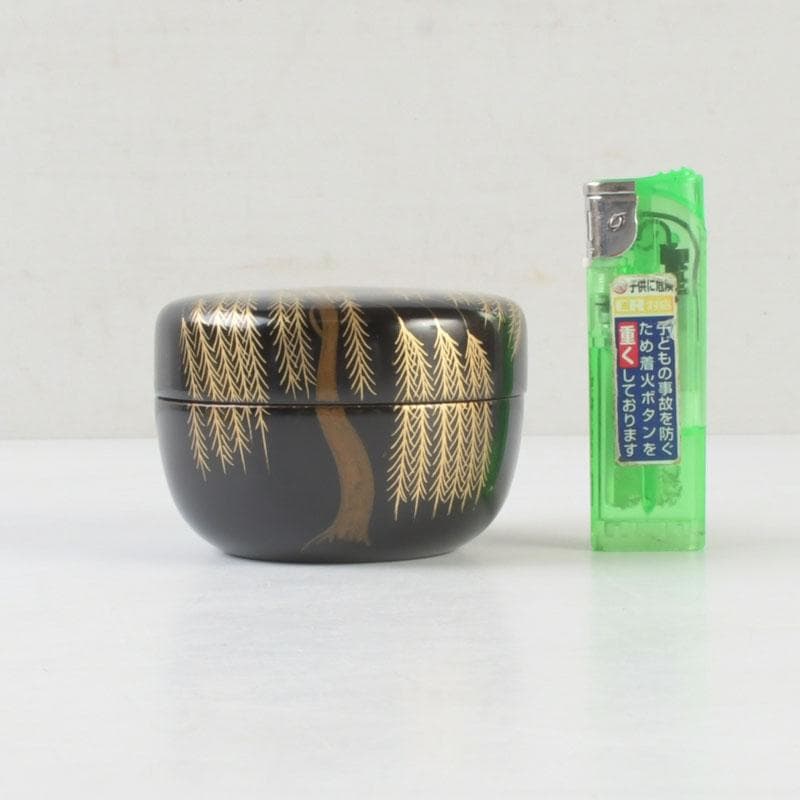
Japanese Lacquer Tea Caddy Hira-Natsume — Weeping Willow Maki-e by Yusai, Tomobako
Regular price
Dhs. 1,256.00 AED
Regular price
Sale price
Dhs. 1,256.00 AED
Taxes included.
Shipping calculated at checkout.
A hira-natsume that holds its silence well.
🔹 [ BASIC DETAILS ]
• Artist: Yusai
• Origin: Japan
• Material: Urushi lacquer with gold maki-e
• Motif: Weeping Willow (Shidare Yanagi)
• Era: 1990_2000
• Box: Tomobako (artist's wooden presentation box)
• Condition: Good, carefully inspected
🔹 [ Cultural & Artistic Insight ]
The form is low and wide — the classic flat proportion of a hira-natsume, shaped for summer temae when the hand moves close to the mat. Lacquered in deep kuro-urushi, the surface carries the kind of depth that only accumulated layers of lacquer can produce: not a single finish, but a field.
Across that field, weeping willow branches fall.
Maki-e artist Yusai drew the shidare yanagi in fine gold lines — each frond rendered individually, hundreds of strokes composing the soft, downward weight of willow in season. The trunk rises in a darker, warmer register, suggesting nashiji beneath, giving the tree its mass without interrupting the gold. The composition follows the curve of the lid and continues across the body without interruption, as though the tree exists independent of the form it inhabits.
The lid seats with quiet precision. The interior shows clean black lacquer. The piece carries full tomobako — the paulownia box signed in brush 友斎 with red seal — and the original silk wrapping cloth.
🔹 [ Deep-Dive Commentary ]
-- OBJECT DETAILS --
Artist: Yusai (友斎), maki-e lacquer artist
Technique: Gold maki-e (weeping willow) on black urushi lacquer
Motif: Shidare yanagi — weeping willow, a motif of late spring and early summer
Form: Hira-natsume (flat tea caddy)
Dimensions: H approx. 5.2 cm / W approx. 7.8 cm / Weight approx. 53 g
Condition: Excellent. Lacquer surface intact and bright. No chips, no repairs visible.
Provenance: Comes with original tomobako (paulownia wood box, signed and sealed) and silk cloth
-- TEA CEREMONY CONTEXT --
The hira-natsume is used in temae where the caddy is placed close to the host — its low profile a quiet counterpoint to the verticality of the chawan. Willow is a seasonal motif for late spring through early summer, evocative of water's edge, of softness after rain. Its use in a tea setting signals attunement to the calendar of nature that underpins chado.
This piece is appropriate for:
- Hatsugama, Nagaita, Ryurei temae and related summer procedures
- A collector focused on signed, artist-attributed lacquerware
- Display as an art object independent of practice
--
🔹 [ 日本語解説 ]
蒔絵師・友斎が手がけた平棗。黒漆の深い艶を地として、金蒔絵で描かれた枝垂柳が蓋と胴をまたいで流れる。一筋一筋丁寧に引かれた柳の葉は、夏の茶席にふさわしい静けさをたたえている。共箱・共布付きの美品。
🔹 [ SHIPPING & PACKAGING ]
• Dispatch: Within 1-6 business days
• Carrier: Japan Post EMS / UPS (with tracking)
• Packaging: Carefully wrapped with protective materials
🔹 [ BASIC DETAILS ]
• Artist: Yusai
• Origin: Japan
• Material: Urushi lacquer with gold maki-e
• Motif: Weeping Willow (Shidare Yanagi)
• Era: 1990_2000
• Box: Tomobako (artist's wooden presentation box)
• Condition: Good, carefully inspected
🔹 [ Cultural & Artistic Insight ]
The form is low and wide — the classic flat proportion of a hira-natsume, shaped for summer temae when the hand moves close to the mat. Lacquered in deep kuro-urushi, the surface carries the kind of depth that only accumulated layers of lacquer can produce: not a single finish, but a field.
Across that field, weeping willow branches fall.
Maki-e artist Yusai drew the shidare yanagi in fine gold lines — each frond rendered individually, hundreds of strokes composing the soft, downward weight of willow in season. The trunk rises in a darker, warmer register, suggesting nashiji beneath, giving the tree its mass without interrupting the gold. The composition follows the curve of the lid and continues across the body without interruption, as though the tree exists independent of the form it inhabits.
The lid seats with quiet precision. The interior shows clean black lacquer. The piece carries full tomobako — the paulownia box signed in brush 友斎 with red seal — and the original silk wrapping cloth.
🔹 [ Deep-Dive Commentary ]
-- OBJECT DETAILS --
Artist: Yusai (友斎), maki-e lacquer artist
Technique: Gold maki-e (weeping willow) on black urushi lacquer
Motif: Shidare yanagi — weeping willow, a motif of late spring and early summer
Form: Hira-natsume (flat tea caddy)
Dimensions: H approx. 5.2 cm / W approx. 7.8 cm / Weight approx. 53 g
Condition: Excellent. Lacquer surface intact and bright. No chips, no repairs visible.
Provenance: Comes with original tomobako (paulownia wood box, signed and sealed) and silk cloth
-- TEA CEREMONY CONTEXT --
The hira-natsume is used in temae where the caddy is placed close to the host — its low profile a quiet counterpoint to the verticality of the chawan. Willow is a seasonal motif for late spring through early summer, evocative of water's edge, of softness after rain. Its use in a tea setting signals attunement to the calendar of nature that underpins chado.
This piece is appropriate for:
- Hatsugama, Nagaita, Ryurei temae and related summer procedures
- A collector focused on signed, artist-attributed lacquerware
- Display as an art object independent of practice
--
🔹 [ 日本語解説 ]
蒔絵師・友斎が手がけた平棗。黒漆の深い艶を地として、金蒔絵で描かれた枝垂柳が蓋と胴をまたいで流れる。一筋一筋丁寧に引かれた柳の葉は、夏の茶席にふさわしい静けさをたたえている。共箱・共布付きの美品。
🔹 [ SHIPPING & PACKAGING ]
• Dispatch: Within 1-6 business days
• Carrier: Japan Post EMS / UPS (with tracking)
• Packaging: Carefully wrapped with protective materials
Quantity
Couldn't load pickup availability
Low stock: 1 left
View full details