1
/
of
10
Iron-Painted Maple Leaf Chawan by Kuroki Gicao — Otsuda River Tea Bowl, Signed Tomobako
Iron-Painted Maple Leaf Chawan by Kuroki Gicao — Otsuda River Tea Bowl, Signed Tomobako
Regular price
Dhs. 509.00 AED
Regular price
Sale price
Dhs. 509.00 AED
Taxes included.
Shipping calculated at checkout.
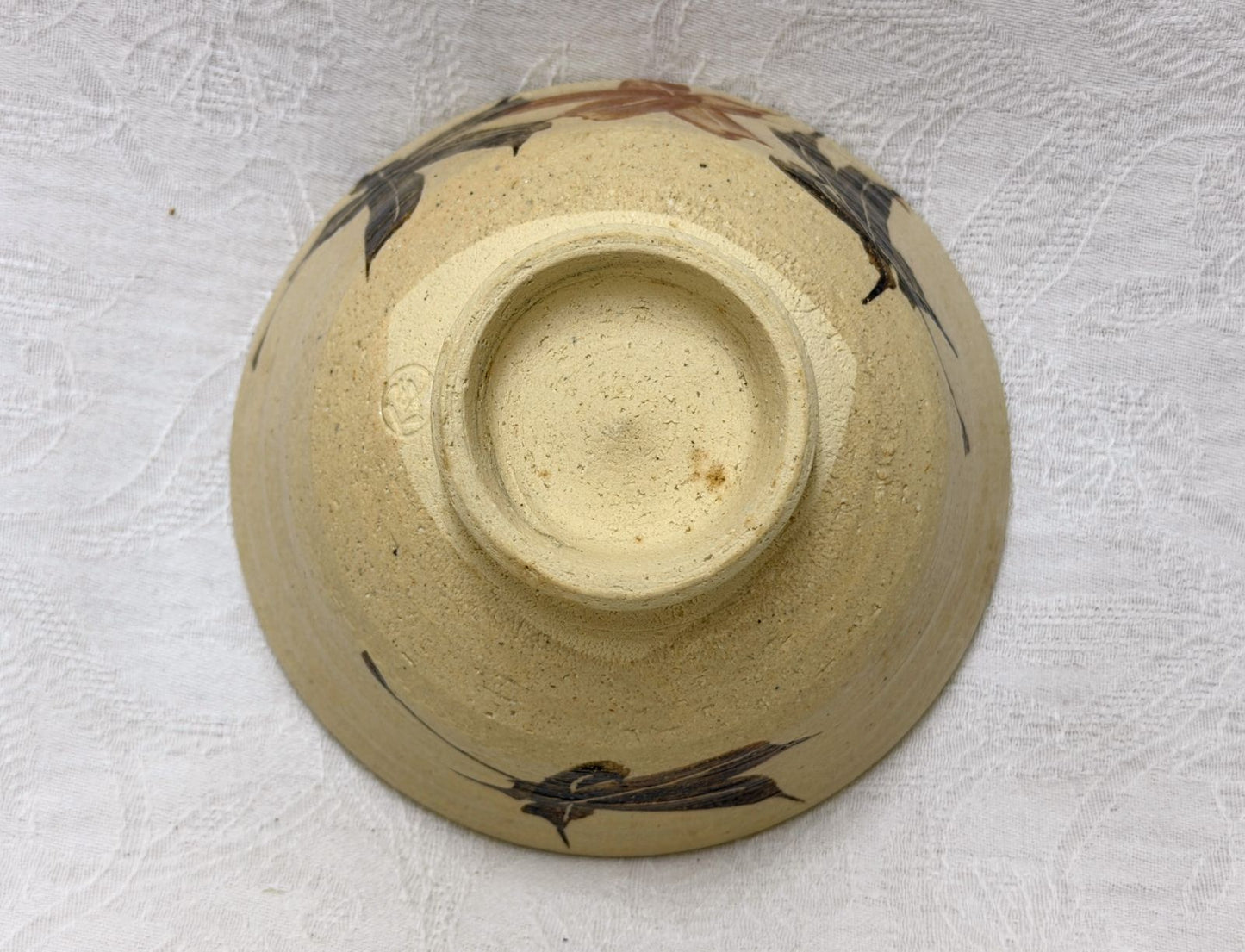
A chawan by Kuroki Gicao (栗木伎茶夫), named Otsuda River (太津田川茶碗) — the body a warm cream stoneware, its surface carrying two maple leaves painted in iron pigment: one in deep blackish-brown, one in rust-red. The brushwork is gestural and unhesitating, each leaf placed as though fallen mid-motion onto the clay. Wheel-thrown rings remain faintly visible beneath the glaze, grounding the painted surface in the work of the hand.
🔹 [ BASIC DETAILS ]
• Artist: Kuroki Gicao (栗木伎茶夫), Ankaney Kiln (安可祢窯)
• Technique: Tetsu-e (iron underglaze painting) on stoneware; transparent glaze over cream-toned body
• Named work: Otsuda River Tea Bowl (太津田川茶碗)
• Motif: Autumn maple leaves (紅葉, momiji) in iron pigment — dark brown and rust-red
• Origin: Japan
• Dimensions: Diameter approx. 13.5 cm, Height approx. 7.0 cm
• Accessories: Signed tomobako (共箱, artist's own wooden box) with brushed inscription and red seal; shiori (栞, paper insert) from Tōgakai (陶雅会)
• Condition: No notable chips, cracks, or repairs observed
🔹 [ CULTURAL & ARTISTIC INSIGHT ]
The maple leaf — momiji — is among the most charged seasonal motifs in Japanese aesthetics. It arrives in tea ceramics not as decoration but as a marker of time: the specific brevity of autumn, the color that precedes disappearance. In the tea room, a bowl carrying this motif places the season itself in the drinker's hands.
Tetsu-e, or iron-pigment painting, is a technique with deep roots in Japanese folk ceramics — Karatsu, Oribe, and the Mino tradition all employed iron oxide brushwork under glaze to produce this quality of mark. Unlike the controlled precision of cobalt blue (sometsuke), iron painting tends toward the calligraphic: the brush leaves a trace of the painter's pace and pressure, qualities that survive the firing. Kuroki Gicao's leaves here retain exactly that directness — they read less as design than as gesture.
The Ankaney Kiln (安可祢窯) is associated with this quietly individual voice in contemporary Japanese ceramics. The form itself — an open hirazukuri profile with a clearly articulated high foot ring — sits well in the hand during temae (tea procedure), the wide rim allowing the tea to cool slightly and settle before drinking.
Poetic Line: Two leaves, still falling — held in iron against a pale field, the moment of descent made permanent in clay.
🔹 [ DEEP-DIVE COMMENTARY ]
Tetsu-e (鉄絵) designates ceramics decorated with iron-oxide pigment applied directly to the unfired or bisque clay surface, then sealed under a transparent or semi-opaque glaze and fired. The iron compounds oxidize or reduce depending on kiln atmosphere, producing a spectrum from warm amber-brown through deep blackish-brown — a range visible in this bowl's two leaves, where the pigment density and brushstroke thickness produce distinctly different tonal results from a single colorant.
This technique flourished in the Momoyama and early Edo periods across several regional traditions. In Karatsu ware (唐津焼), iron painting on a pale, often sandy-toned stoneware body became a defining aesthetic — bold, swift brushwork depicting plants, birds, and landscapes. The appeal lay precisely in the tension between the coarse, unglamorous clay and the confident calligraphic mark placed upon it. Kuroki Gicao's Otsuda River bowl works in this lineage: the cream body acts as ground, the leaves as the entirety of the composition.
The tomobako — a wooden box made and inscribed by the artist — is significant beyond provenance. In Japanese ceramics culture, the tomobako is considered part of the object itself: the brushwork on the lid, the seal, the written title together constitute a document of authorship. When box and bowl are retained together, the work remains traceable and whole. This bowl comes with both its tomobako and a shiori from Tōgakai (陶雅会), a ceramics study association that documented and authenticated works in its exhibition context.
The named piece — 太津田川茶碗, Otsuda River — follows the long tradition in Japanese ceramics and tea of giving individual bowls personal names (銘, mei). These names root the object in a specific poetic or geographic reference, inviting the tea practitioner to hold that association alongside the matcha itself. A named bowl is one that has been looked at carefully enough to be spoken to.
---
【日本語解説】
栗木伎茶夫による太津田川茶碗——安可祢窯作。温かみのある乳白色の炻器に、鉄絵の紅葉が二枚描かれている。一枚は深い黒褐色、もう一枚は錆朱色。筆致は迷いなく一気に引かれており、葉が静かに舞い落ちる瞬間を釉薬の下に封じ込めたかのようだ。ろくろ目が薄く体部に残り、手仕事の痕跡が絵付けの地として生きている。
🔹 【基本情報】
• 作家:栗木伎茶夫(安可祢窯)
• 技法:鉄絵(鉄酸化物による下絵付け)、透明釉掛け
• 銘:太津田川茶碗
• 文様:紅葉(黒褐色・錆朱の二色)
• 産地:日本
• 寸法:口径 約13.5cm、高さ 約7.0cm
• 付属品:栞(陶雅会)、共箱(作家直筆箱書・朱印入り)
• 状態:目立つ傷・ヒビ・修復痕なし
🔹 【文化・芸術的解説】
紅葉は日本の茶の美意識において、単なる装飾模様ではない。それは時間の標識——秋の短い鮮やかさ、消える直前の色を記録する器——として茶碗に宿る。この茶碗を手に取るとき、飲む者はその季節そのものを掌に受け取ることになる。
鉄絵は、唐津、織部、美濃など日本の民陶に深く根ざした技法である。酸化鉄を筆で素地に描き、透明釉の下で焼成することで、絵具の濃淡と筆速が釉薬の奥に定着する。コバルトの染付が持つ精密さとは異なり、鉄絵は書の質を帯びる——筆を持つ者の速度と重みが、焼成後も消えずに残る。栗木伎茶夫の紅葉はまさにその直接性を持ち、デザインというより身振りとして立ち現れる。
形は開いた平造りに高めの高台を持ち、点前での扱いやすさと、飲み口での落ち着きを両立させている。
詩的一文:二枚の葉、まだ落ちている途中——鉄で蒼白い地に留められ、落下の瞬間が土の中で永遠になった。
🔹 【上級コレクター向け解説】
鉄絵(てつえ)とは、鉄酸化物(酸化第二鉄系)の顔料を生地または素焼き面に筆で描き、透明釉または半透明釉を掛けて焼成する技法を指す。窯の雰囲気(酸化・還元)によって鉄化合物の発色が変わり、温かみのある飴色から深い黒褐色まで幅を持つ。本作の葉二枚が異なる色調を見せるのは、筆の濃淡と運筆速度の差による顔料層の厚みの違いが焼成によって増幅された結果である。
この技法は桃山・江戸初期に多くの産地で開花した。唐津焼では特に、砂質の淡い炻器地に大胆な鉄絵が描かれ、植物・鳥・景色が速筆で表現された。粗野な土と大胆な筆跡の緊張関係がその魅力の核心であり、本作もその美学的系譜に連なる。
共箱は、日本の陶磁文化において本体と一体のものとして扱われる。作家自身が書き、捺した箱書は真作を示す文書であると同時に、その作品への眼差しの記録でもある。陶雅会の栞は、当時の展示・鑑定の文脈を伝える副証書として機能する。
銘「太津田川」という個人名の付与は、日本茶道における古来からの習慣に従うものだ。名を与えられた茶碗は、ただの器ではなく、詩的・地理的な参照点を持つ存在として点前の場に召喚される。それは茶碗を十分に見つめた者だけが与えられる行為である。
🔹 [ SHIPPING & PACKAGING ]
• Dispatch: Within 1-6 business days
• Carrier: Japan Post EMS / UPS / FedEx (with tracking)
• Packaging: Carefully wrapped with protective materials
🔹 [ BASIC DETAILS ]
• Artist: Kuroki Gicao (栗木伎茶夫), Ankaney Kiln (安可祢窯)
• Technique: Tetsu-e (iron underglaze painting) on stoneware; transparent glaze over cream-toned body
• Named work: Otsuda River Tea Bowl (太津田川茶碗)
• Motif: Autumn maple leaves (紅葉, momiji) in iron pigment — dark brown and rust-red
• Origin: Japan
• Dimensions: Diameter approx. 13.5 cm, Height approx. 7.0 cm
• Accessories: Signed tomobako (共箱, artist's own wooden box) with brushed inscription and red seal; shiori (栞, paper insert) from Tōgakai (陶雅会)
• Condition: No notable chips, cracks, or repairs observed
🔹 [ CULTURAL & ARTISTIC INSIGHT ]
The maple leaf — momiji — is among the most charged seasonal motifs in Japanese aesthetics. It arrives in tea ceramics not as decoration but as a marker of time: the specific brevity of autumn, the color that precedes disappearance. In the tea room, a bowl carrying this motif places the season itself in the drinker's hands.
Tetsu-e, or iron-pigment painting, is a technique with deep roots in Japanese folk ceramics — Karatsu, Oribe, and the Mino tradition all employed iron oxide brushwork under glaze to produce this quality of mark. Unlike the controlled precision of cobalt blue (sometsuke), iron painting tends toward the calligraphic: the brush leaves a trace of the painter's pace and pressure, qualities that survive the firing. Kuroki Gicao's leaves here retain exactly that directness — they read less as design than as gesture.
The Ankaney Kiln (安可祢窯) is associated with this quietly individual voice in contemporary Japanese ceramics. The form itself — an open hirazukuri profile with a clearly articulated high foot ring — sits well in the hand during temae (tea procedure), the wide rim allowing the tea to cool slightly and settle before drinking.
Poetic Line: Two leaves, still falling — held in iron against a pale field, the moment of descent made permanent in clay.
🔹 [ DEEP-DIVE COMMENTARY ]
Tetsu-e (鉄絵) designates ceramics decorated with iron-oxide pigment applied directly to the unfired or bisque clay surface, then sealed under a transparent or semi-opaque glaze and fired. The iron compounds oxidize or reduce depending on kiln atmosphere, producing a spectrum from warm amber-brown through deep blackish-brown — a range visible in this bowl's two leaves, where the pigment density and brushstroke thickness produce distinctly different tonal results from a single colorant.
This technique flourished in the Momoyama and early Edo periods across several regional traditions. In Karatsu ware (唐津焼), iron painting on a pale, often sandy-toned stoneware body became a defining aesthetic — bold, swift brushwork depicting plants, birds, and landscapes. The appeal lay precisely in the tension between the coarse, unglamorous clay and the confident calligraphic mark placed upon it. Kuroki Gicao's Otsuda River bowl works in this lineage: the cream body acts as ground, the leaves as the entirety of the composition.
The tomobako — a wooden box made and inscribed by the artist — is significant beyond provenance. In Japanese ceramics culture, the tomobako is considered part of the object itself: the brushwork on the lid, the seal, the written title together constitute a document of authorship. When box and bowl are retained together, the work remains traceable and whole. This bowl comes with both its tomobako and a shiori from Tōgakai (陶雅会), a ceramics study association that documented and authenticated works in its exhibition context.
The named piece — 太津田川茶碗, Otsuda River — follows the long tradition in Japanese ceramics and tea of giving individual bowls personal names (銘, mei). These names root the object in a specific poetic or geographic reference, inviting the tea practitioner to hold that association alongside the matcha itself. A named bowl is one that has been looked at carefully enough to be spoken to.
---
【日本語解説】
栗木伎茶夫による太津田川茶碗——安可祢窯作。温かみのある乳白色の炻器に、鉄絵の紅葉が二枚描かれている。一枚は深い黒褐色、もう一枚は錆朱色。筆致は迷いなく一気に引かれており、葉が静かに舞い落ちる瞬間を釉薬の下に封じ込めたかのようだ。ろくろ目が薄く体部に残り、手仕事の痕跡が絵付けの地として生きている。
🔹 【基本情報】
• 作家:栗木伎茶夫(安可祢窯)
• 技法:鉄絵(鉄酸化物による下絵付け)、透明釉掛け
• 銘:太津田川茶碗
• 文様:紅葉(黒褐色・錆朱の二色)
• 産地:日本
• 寸法:口径 約13.5cm、高さ 約7.0cm
• 付属品:栞(陶雅会)、共箱(作家直筆箱書・朱印入り)
• 状態:目立つ傷・ヒビ・修復痕なし
🔹 【文化・芸術的解説】
紅葉は日本の茶の美意識において、単なる装飾模様ではない。それは時間の標識——秋の短い鮮やかさ、消える直前の色を記録する器——として茶碗に宿る。この茶碗を手に取るとき、飲む者はその季節そのものを掌に受け取ることになる。
鉄絵は、唐津、織部、美濃など日本の民陶に深く根ざした技法である。酸化鉄を筆で素地に描き、透明釉の下で焼成することで、絵具の濃淡と筆速が釉薬の奥に定着する。コバルトの染付が持つ精密さとは異なり、鉄絵は書の質を帯びる——筆を持つ者の速度と重みが、焼成後も消えずに残る。栗木伎茶夫の紅葉はまさにその直接性を持ち、デザインというより身振りとして立ち現れる。
形は開いた平造りに高めの高台を持ち、点前での扱いやすさと、飲み口での落ち着きを両立させている。
詩的一文:二枚の葉、まだ落ちている途中——鉄で蒼白い地に留められ、落下の瞬間が土の中で永遠になった。
🔹 【上級コレクター向け解説】
鉄絵(てつえ)とは、鉄酸化物(酸化第二鉄系)の顔料を生地または素焼き面に筆で描き、透明釉または半透明釉を掛けて焼成する技法を指す。窯の雰囲気(酸化・還元)によって鉄化合物の発色が変わり、温かみのある飴色から深い黒褐色まで幅を持つ。本作の葉二枚が異なる色調を見せるのは、筆の濃淡と運筆速度の差による顔料層の厚みの違いが焼成によって増幅された結果である。
この技法は桃山・江戸初期に多くの産地で開花した。唐津焼では特に、砂質の淡い炻器地に大胆な鉄絵が描かれ、植物・鳥・景色が速筆で表現された。粗野な土と大胆な筆跡の緊張関係がその魅力の核心であり、本作もその美学的系譜に連なる。
共箱は、日本の陶磁文化において本体と一体のものとして扱われる。作家自身が書き、捺した箱書は真作を示す文書であると同時に、その作品への眼差しの記録でもある。陶雅会の栞は、当時の展示・鑑定の文脈を伝える副証書として機能する。
銘「太津田川」という個人名の付与は、日本茶道における古来からの習慣に従うものだ。名を与えられた茶碗は、ただの器ではなく、詩的・地理的な参照点を持つ存在として点前の場に召喚される。それは茶碗を十分に見つめた者だけが与えられる行為である。
🔹 [ SHIPPING & PACKAGING ]
• Dispatch: Within 1-6 business days
• Carrier: Japan Post EMS / UPS / FedEx (with tracking)
• Packaging: Carefully wrapped with protective materials
Quantity
Couldn't load pickup availability
Low stock: 1 left
View full details