1
/
of
11
Iro-e Komurasaki Chawan by Fukumoto Miki, Kyo-yaki Tea Bowl with Signed Box
Iro-e Komurasaki Chawan by Fukumoto Miki, Kyo-yaki Tea Bowl with Signed Box
Regular price
Dhs. 1,076.00 AED
Regular price
Sale price
Dhs. 1,076.00 AED
Taxes included.
Shipping calculated at checkout.
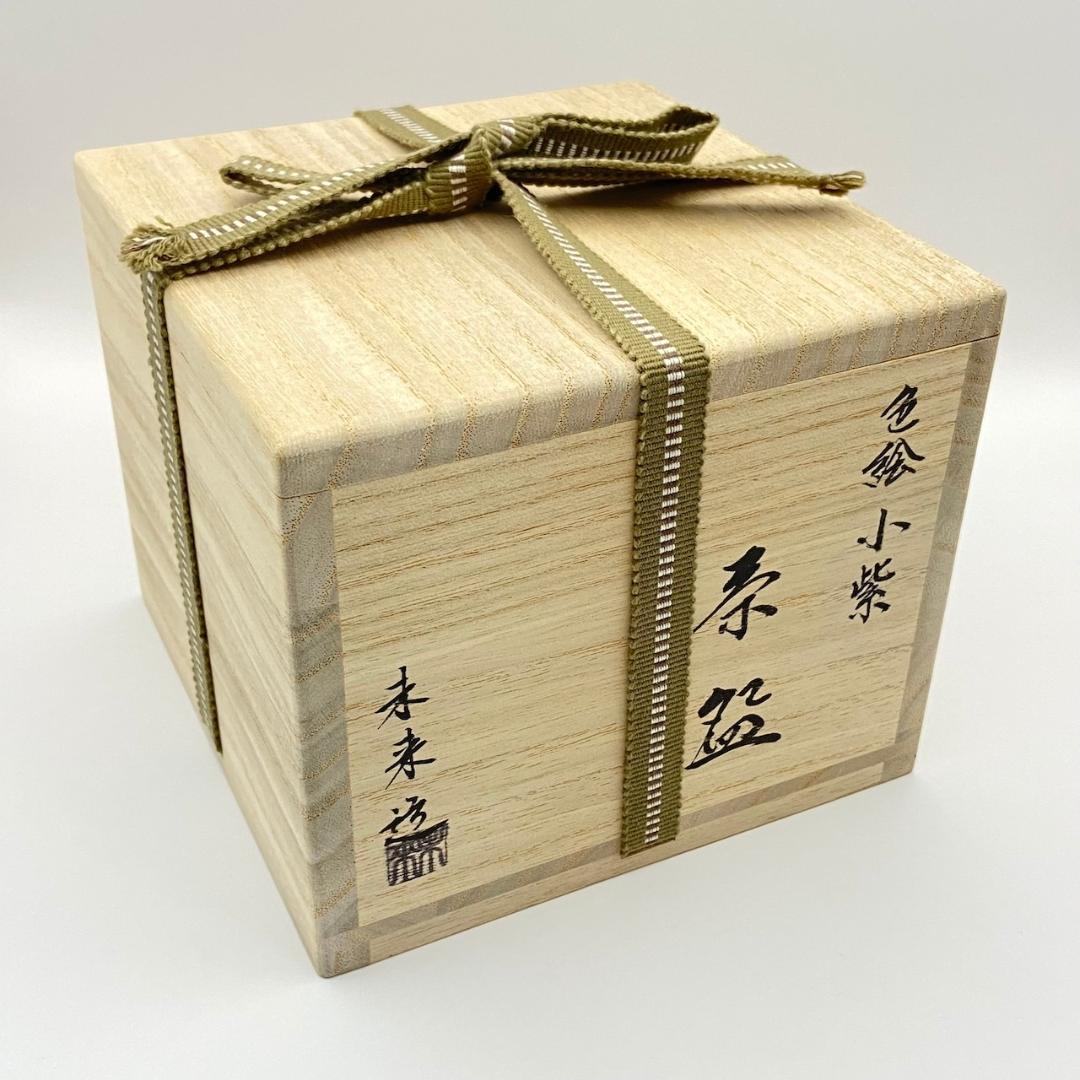
A chawan by Fukumoto Miki, its surface carrying iro-e overglaze enamel gathered into komurasaki — the small purple berries and slender leaves of the autumn shrub — set with fine gold accent work. The body is Kyo-yaki, thrown in Kyoto and fired to a stoneware body that holds the enamel's color without disturbing the wheel marks beneath. The rim settles into a soft, unhurried curve, and the bowl is accompanied by its artist-signed wooden box.
🔹 [ BASIC DETAILS ]
- Artist: Fukumoto Miki (福本未来)
- Technique: Iro-e (overglaze enamel painting) with kinsai (gold accent) detailing
- Era: Contemporary Kyo-yaki production, estimated 2010s
- Origin: Kyoto, Japan (Kyo-yaki tradition)
- Dimensions: Diameter approx. 12.2 cm, Height approx. 8 cm
- Box: Artist-signed wooden tomobako included
- Condition: Good — no chips, cracks, or repairs noted in the seller's record
🔹 [ CULTURAL & ARTISTIC INSIGHT ]
Kyo-yaki does not name a single kiln but a lineage of Kyoto potters working since the Momoyama period, refined further under the patronage of the tea masters and the decorative innovations of artists like Ninsei and Kenzan. Iro-e — overglaze enamel painting — entered this lineage as a way to carry color and narrative onto a fired surface without losing the clay's own character underneath. A chawan carrying this decoration sits inside the chanoyu tradition as both vessel and canvas: it holds the tea, and it holds a season.
The komurasaki motif — the small purple berries of Callicarpa japonica, paired here with their leaves — marks the turn toward autumn, a moment tea practice has always tracked closely through its choice of utensils. The berries are painted in clusters, each touched with a fine line of gold, so the eye moves from leaf to fruit and back before settling into the bowl's quiet interior. The glaze beneath is left plain enough that the hand-painted decoration reads as event rather than pattern — a single passage of color across a settled field.
The berries hold their color the way autumn holds its own — briefly, and without asking to be kept.
🔹 [ DEEP-DIVE COMMENTARY ]
Iro-e describes a two-firing process: the chawan is first thrown, glazed, and fired to its stoneware body, after which the overglaze enamels are applied by hand and the piece is returned to the kiln at a lower temperature to fix the color onto the surface. Gold accent work, when present, is typically the final firing, added after the enamel has set so the metal sits distinctly above the color beneath it.
This layering is why iro-e decoration reads as raised and separate from the body rather than absorbed into it — a collector running a finger across the surface can feel the enamel's slight relief where the brush passed. The technique rewards close, unhurried looking rather than a glance from across a room.
For collectors, Kyo-yaki iro-e work carries the weight of a regional lineage that has supplied Kyoto's tea culture for centuries, while remaining a living practice rather than a closed historical style. A piece by a named contemporary maker like Fukumoto Miki sits at the point where that inherited vocabulary — komurasaki, kinsai, the Kyoto stoneware body — is still being handled by living hands, not only referenced.
The chawan's continuity with its own tradition is part of what a collector is holding: the same seasonal attentiveness that shaped Kyoto tea wares generations ago, still being exercised, still being fired.
🔹 [ 日本語解説 ]
福本未来による抹茶茶碗。色絵(上絵付け)による小紫——実と葉を描いた秋の意匠——に、金彩による細やかな仕上げが施されている。京焼の土を用い、京都で轆轤引きされた器胎は、下に残る轆轤目を損なうことなく上絵の発色を受け止めている。口縁はゆるやかに、急がぬ曲線へと収まり、共箱(作家在銘)が付属する。
🔹 [ 基本情報 ]
- 作家: 福本未来
- 技法: 色絵(上絵付け)、金彩仕上げ
- 年代: 現代京焼作品(2010年代推定)
- 産地: 京都(京焼の系譜)
- 寸法: 直径約12.2cm、高さ約8cm
- 箱: 作家在銘の共箱付き
- 状態: 良好——出品者記録上、欠け・ひび・修理の記載なし
京焼とは特定の一窯を指す名ではなく、桃山時代以来続く京都の陶工たちの系譜であり、茶人たちの後援や仁清・乾山らによる装飾的革新を経て洗練されてきた。色絵——上絵付け——は、焼成後の器面に色彩と物語性を、素地そのものの性質を損なうことなく重ねる手法として、この系譜に加わった。この装飾を纏う茶碗は、茶の湯の伝統の中で器であると同時に画布でもある——茶を盛り、季節を宿す。
小紫の意匠——紫式部(コムラサキ)の小さな実を、その葉と共に描いたもの——は、秋への転換を示している。茶の湯が古来、道具立てを通じて注意深く追ってきた季節の節目である。実は房になって描かれ、それぞれに細い金の線が添えられ、視線は葉から実へ、また実から葉へと動いたのち、茶碗の静かな見込みへと落ち着く。下地の釉薬は控えめに残され、手描きの装飾が模様ではなく出来事として読めるようになっている——静まった器面を横切る、色彩のひと筆。
実の色は、秋そのものと同じように——束の間で、留め置かれることを求めない。
色絵は二度の焼成による技法である。まず轆轤成形・施釉ののち器胎として本焼きされ、そのうえで上絵具が手作業で施され、色を定着させるためにより低温で再度焼成される。金彩を伴う場合、多くは上絵の発色が定まったあとの最終焼成で加えられ、金がその下の色彩から明確に浮き立つように仕上げられる。
この重なりゆえに、色絵の装飾は素地に溶け込むのではなく、盛り上がって独立して見える——指先で表面をなぞれば、筆の通った箇所にわずかな凹凸を感じ取ることができる。この技法は、遠目の一瞥ではなく、近く落ち着いた眼差しに応える。
蒐集する者にとって、京焼の色絵作品は、京都の茶の湯文化を数百年にわたり支えてきた地域的系譜の重みを纏いながら、閉じられた歴史様式ではなく生きた実践であり続けている。福本未来のような現代作家による一点は、小紫・金彩・京焼の土という継承された語彙が、参照されるだけでなく、今なお手によって扱われている地点に立っている。
この茶碗が自らの伝統と保つ連続性——かつて京都の茶道具を形づくったのと同じ季節への眼差しが、今もなお行使され、今もなお焼かれている——それもまた、蒐集する者が手にするものの一部である。
🔹 [ SHIPPING & PACKAGING ]
• Dispatch: Within 1-6 business days
• Carrier: Japan Post EMS / UPS / FedEx (with tracking)
• Packaging: Carefully wrapped with protective materials
Quantity
Couldn't load pickup availability
Out of stock
View full details