1
/
of
16
Iro-e Fan Motif Matcha Bowl by Wada Tozan, Kotoura Kiln — Signed Wooden Box
Iro-e Fan Motif Matcha Bowl by Wada Tozan, Kotoura Kiln — Signed Wooden Box
Regular price
Dhs. 1,038.00 AED
Regular price
Sale price
Dhs. 1,038.00 AED
Taxes included.
Shipping calculated at checkout.
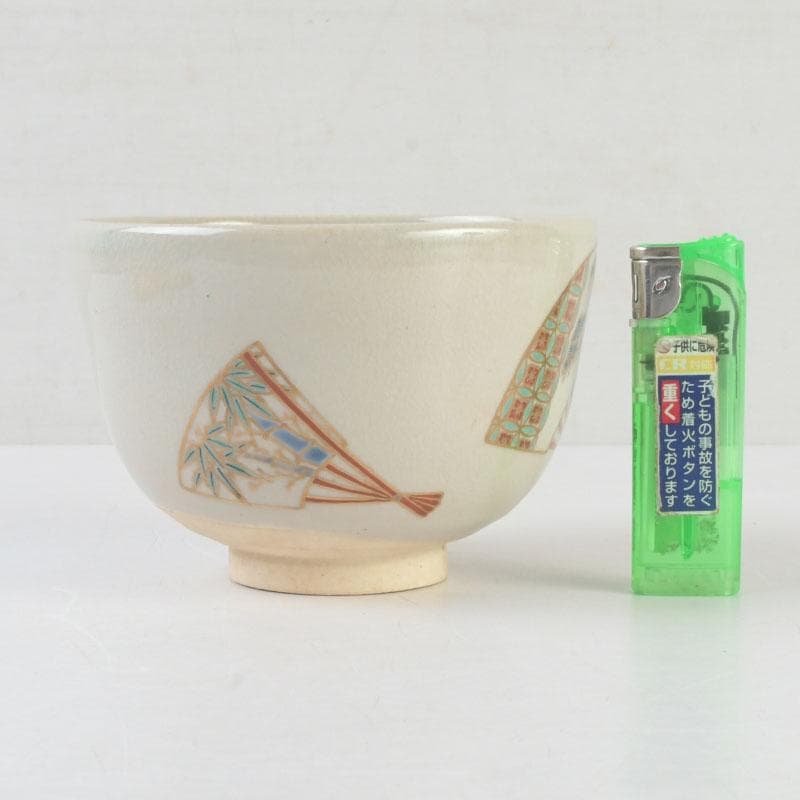
Experience Authentic Japan Art with this Iro-e Fan Motif Matcha Bowl. This Japanese Tea Ceremony Bowl serves as a Kotoura Kiln Ceramic and Wada Tozan Signed Work, featuring Iro-e Polychrome Decoration and Fan Pattern Tea Bowl—a must-have for any Japanese Pottery Collector. This Signed Wooden Box Chawan and Antique Japanese Chawan embodies the elegance of Traditional Chado Utensil and Polychrome Overglaze Enamel Tea Bowl artistry.
🔹 [ BASIC DETAILS ]
• Artist: Wada Tozan (和田桐山), Kotoura Kiln (琴浦窯)
• Technique: Iro-e (色絵) — polychrome overglaze enamel decoration
• Motifs: Folding fans (扇文) adorned with pine (松), plum blossoms (梅), and ichimatsu checkerboard (市松) patterns
• Era: 20th century (Showa–Heisei period)
• Origin: Kotoura Kiln, Japan
• Dimensions: Height approx. 8.2 cm, Diameter approx. 12 cm, Weight approx. 261 g
• Box: Signed wooden box (共箱) included
• Condition: Excellent — no chips, cracks, or repairs noted; interior shows natural kiln specks consistent with age
🔹 [ CULTURAL & ARTISTIC INSIGHT ]
The folding fan — ōgi or sensu — is among the most auspicious symbols in Japanese aesthetics. Associated with the unfolding of good fortune, fans appear in court poetry, Noh theater, and ceremonial gifts across a thousand years of culture. Here, three fans arranged in an overlapping composition carry distinct interior worlds: one holds the ichimatsu checkerboard in warm ochre and blue, another shelters plum blossoms rendered in persimmon-red and gold, and a third suggests the canopy of a pine set against a pale sky — all rendered in the iro-e (color picture) technique where translucent enamels are applied over a fired glaze and refired at lower temperature to fix the palette.
The ground of this bowl is a quiet celadon-tinged white — almost the color of thin winter cloud — against which the fan motifs float with the lightness of paper. This restraint is not emptiness; it is intention. The negative space carries as much weight as the decoration.
The interior, seen from above, is a still pool of pale celadon. To hold this bowl and look down into that interior before the matcha is whisked is to stand at the edge of something very old.
Poetic line: 'Three fans open on a winter ground — pine, plum, and a pattern of squares — each holding a season the others cannot reach.'
🔹 [ DEEP-DIVE COMMENTARY ]
Iro-e, literally 'color picture,' designates a class of Japanese ceramic decoration in which pigmented glass enamels are painted onto a glazed, bisque-fired surface and fused in a second, lower-temperature firing. Unlike cobalt underglazes that must survive the full stoneware or porcelain heat, overglaze enamels allow a painter's range of colors — copper red, iron brown, cobalt blue, green, and gold — to remain vivid and precise. The technique originated in Japan through the Kakiemon and Nabeshima kilns of Kyushu in the seventeenth century before diffusing widely to kilns across the country.
Kotoura Kiln (琴浦窯) is a studio tradition associated with refined decorative ware in the classical iro-e manner. Wada Tozan (和田桐山), the artist whose signature appears on the wooden box lid, worked within this lineage, producing tea utensils and serving vessels whose decoration draws on the formal vocabulary of Kyoto court taste — auspicious seasonal motifs, classical patterns, and the measured elegance prized by chanoyu practitioners.
The fan (扇) as motif carries layered meaning in Japanese tea culture. In chanoyu, the folding fan is a practical object — carried by both host and guest, placed before one as a boundary of respect — and simultaneously a symbol of expanding possibility, of blessings radiating outward like the fan's spines. To paint fans on a tea bowl is to render the utensil itself a statement about the ceremony it will serve.
The three motif systems layered within the fans on this bowl — ichimatsu (市松, the checkerboard of alternating squares), plum blossom (梅), and pine (松) — are each independently auspicious. Together they constitute a classical felicitous program: ichimatsu for continuity and pattern, plum for endurance through winter, pine for constancy through all seasons. The bowl does not merely hold tea; it holds a formal wish.
For a collector, this piece represents a well-documented studio work — signed box confirming attribution — in very good condition, exhibiting the characteristic soft warmth of a Kotoura ground glaze and the careful hand of a practiced iro-e painter. Its proportions (8.2 cm high, 12 cm across) place it in the standard chawan range, suitable for thick tea (koicha) or thin tea (usucha), practical as well as beautiful.
🔹 [ 日本語解説 ]
【基本情報】
・作家:和田桐山(琴浦窯)
・技法:色絵(上絵付け——施釉・本焼き後に絵の具を重ね、低温で再焼成)
・文様:扇文(松・梅・市松を各扇面に配した吉祥文)
・年代:20世紀(昭和〜平成期)
・産地:琴浦窯
・大きさ:高さ約8.2cm、幅(口径)約12cm、重さ約261g
・箱:共箱付き
・状態:良好——欠け・ひび・補修なし。内側に窯変による自然な小点あり
【文化・芸術的解説】
扇は日本美術において最も格調高い吉祥文様のひとつです。扇が開く姿は幸運の拡がりを象徴し、宮廷文化・能・茶の湯において千年にわたって愛されてきました。この茶碗には三枚の扇が重なり合って描かれ、それぞれの扇面に異なる世界が宿っています——市松(藍と黄土の交互格子)、梅の花(柿色と金)、そして薄青の空を背景にした松。いずれも色絵技法によって、透明感ある琺瑯彩で白地に浮かび上がらせています。
この茶碗の素地は、薄い冬雲のような静かな白磁——そこに扇文様が紙のような軽さで漂います。余白は虚ではなく、意図された静寂です。見込みを覗けば、淡い青白の池。点前の前にその底を眺めるとき、時間の深さに触れる感覚があります。
詩的一文:「冬の白地に三つの扇が開く——松、梅、そして繰り返す格子——それぞれが、他の扇の届かない季節を抱いている。」
【ディープダイブ解説】
色絵とは、焼き締めた釉薬の上に発色性の高い絵の具(上絵具)を重ね、低温(800〜900℃程度)で再焼成することで色を定着させる技法です。本焼きの高温に耐えられる顔料に限定される呉須(コバルト)の下絵付けと異なり、上絵付けは赤・緑・青・金など幅広い色彩表現を可能にします。日本では17世紀の柿右衛門・鍋島の各窯が先駆をなし、その後全国の窯場へ広がりました。
琴浦窯は、古典的な色絵様式を継承した精緻な作陶の窯として知られています。共箱の蓋書きに名を残す和田桐山は、京都宮廷趣味の文脈——吉祥文・古典文様・茶の湯の礼節を基準とした意匠——に根ざした茶道具を制作した陶芸家です。
扇という文様は、茶道において二重の意味を持ちます。実用品として亭主・客それぞれが携え、挨拶の際に前に置く「境界」の道具であると同時に、扇の骨が放射状に広がるように吉運が外へ向かって拡がるイメージを体現しています。茶碗に扇を描くことは、その器そのものを「茶の湯という場」への宣言とする行為です。
各扇面の文様——市松(継続と秩序)、梅(冬の忍耐と新生)、松(常緑の恒常性)——はそれぞれ独立した吉祥を担い、三つ合わさることで「継続・再生・永続」という古典的な祝意の体系を形成しています。
コレクターの観点から見ると、この茶碗は共箱による作家確認が取れた作品で、状態は良好です。琴浦窯の柔らかな地釉の温かみと、熟練した色絵師の丁寧な描画が両立しています。標準的な茶碗の寸法(高さ8.2cm、口径12cm)は、濃茶・薄茶いずれにも対応する汎用性を持ち、観賞用としても点前用としても満足のいく一碗です。
🔹 [ SHIPPING & PACKAGING ]
• Dispatch: Within 1-6 business days
• Carrier: Japan Post EMS / UPS (with tracking)
• Packaging: Carefully wrapped with protective materials
🔹 [ BASIC DETAILS ]
• Artist: Wada Tozan (和田桐山), Kotoura Kiln (琴浦窯)
• Technique: Iro-e (色絵) — polychrome overglaze enamel decoration
• Motifs: Folding fans (扇文) adorned with pine (松), plum blossoms (梅), and ichimatsu checkerboard (市松) patterns
• Era: 20th century (Showa–Heisei period)
• Origin: Kotoura Kiln, Japan
• Dimensions: Height approx. 8.2 cm, Diameter approx. 12 cm, Weight approx. 261 g
• Box: Signed wooden box (共箱) included
• Condition: Excellent — no chips, cracks, or repairs noted; interior shows natural kiln specks consistent with age
🔹 [ CULTURAL & ARTISTIC INSIGHT ]
The folding fan — ōgi or sensu — is among the most auspicious symbols in Japanese aesthetics. Associated with the unfolding of good fortune, fans appear in court poetry, Noh theater, and ceremonial gifts across a thousand years of culture. Here, three fans arranged in an overlapping composition carry distinct interior worlds: one holds the ichimatsu checkerboard in warm ochre and blue, another shelters plum blossoms rendered in persimmon-red and gold, and a third suggests the canopy of a pine set against a pale sky — all rendered in the iro-e (color picture) technique where translucent enamels are applied over a fired glaze and refired at lower temperature to fix the palette.
The ground of this bowl is a quiet celadon-tinged white — almost the color of thin winter cloud — against which the fan motifs float with the lightness of paper. This restraint is not emptiness; it is intention. The negative space carries as much weight as the decoration.
The interior, seen from above, is a still pool of pale celadon. To hold this bowl and look down into that interior before the matcha is whisked is to stand at the edge of something very old.
Poetic line: 'Three fans open on a winter ground — pine, plum, and a pattern of squares — each holding a season the others cannot reach.'
🔹 [ DEEP-DIVE COMMENTARY ]
Iro-e, literally 'color picture,' designates a class of Japanese ceramic decoration in which pigmented glass enamels are painted onto a glazed, bisque-fired surface and fused in a second, lower-temperature firing. Unlike cobalt underglazes that must survive the full stoneware or porcelain heat, overglaze enamels allow a painter's range of colors — copper red, iron brown, cobalt blue, green, and gold — to remain vivid and precise. The technique originated in Japan through the Kakiemon and Nabeshima kilns of Kyushu in the seventeenth century before diffusing widely to kilns across the country.
Kotoura Kiln (琴浦窯) is a studio tradition associated with refined decorative ware in the classical iro-e manner. Wada Tozan (和田桐山), the artist whose signature appears on the wooden box lid, worked within this lineage, producing tea utensils and serving vessels whose decoration draws on the formal vocabulary of Kyoto court taste — auspicious seasonal motifs, classical patterns, and the measured elegance prized by chanoyu practitioners.
The fan (扇) as motif carries layered meaning in Japanese tea culture. In chanoyu, the folding fan is a practical object — carried by both host and guest, placed before one as a boundary of respect — and simultaneously a symbol of expanding possibility, of blessings radiating outward like the fan's spines. To paint fans on a tea bowl is to render the utensil itself a statement about the ceremony it will serve.
The three motif systems layered within the fans on this bowl — ichimatsu (市松, the checkerboard of alternating squares), plum blossom (梅), and pine (松) — are each independently auspicious. Together they constitute a classical felicitous program: ichimatsu for continuity and pattern, plum for endurance through winter, pine for constancy through all seasons. The bowl does not merely hold tea; it holds a formal wish.
For a collector, this piece represents a well-documented studio work — signed box confirming attribution — in very good condition, exhibiting the characteristic soft warmth of a Kotoura ground glaze and the careful hand of a practiced iro-e painter. Its proportions (8.2 cm high, 12 cm across) place it in the standard chawan range, suitable for thick tea (koicha) or thin tea (usucha), practical as well as beautiful.
🔹 [ 日本語解説 ]
【基本情報】
・作家:和田桐山(琴浦窯)
・技法:色絵(上絵付け——施釉・本焼き後に絵の具を重ね、低温で再焼成)
・文様:扇文(松・梅・市松を各扇面に配した吉祥文)
・年代:20世紀(昭和〜平成期)
・産地:琴浦窯
・大きさ:高さ約8.2cm、幅(口径)約12cm、重さ約261g
・箱:共箱付き
・状態:良好——欠け・ひび・補修なし。内側に窯変による自然な小点あり
【文化・芸術的解説】
扇は日本美術において最も格調高い吉祥文様のひとつです。扇が開く姿は幸運の拡がりを象徴し、宮廷文化・能・茶の湯において千年にわたって愛されてきました。この茶碗には三枚の扇が重なり合って描かれ、それぞれの扇面に異なる世界が宿っています——市松(藍と黄土の交互格子)、梅の花(柿色と金)、そして薄青の空を背景にした松。いずれも色絵技法によって、透明感ある琺瑯彩で白地に浮かび上がらせています。
この茶碗の素地は、薄い冬雲のような静かな白磁——そこに扇文様が紙のような軽さで漂います。余白は虚ではなく、意図された静寂です。見込みを覗けば、淡い青白の池。点前の前にその底を眺めるとき、時間の深さに触れる感覚があります。
詩的一文:「冬の白地に三つの扇が開く——松、梅、そして繰り返す格子——それぞれが、他の扇の届かない季節を抱いている。」
【ディープダイブ解説】
色絵とは、焼き締めた釉薬の上に発色性の高い絵の具(上絵具)を重ね、低温(800〜900℃程度)で再焼成することで色を定着させる技法です。本焼きの高温に耐えられる顔料に限定される呉須(コバルト)の下絵付けと異なり、上絵付けは赤・緑・青・金など幅広い色彩表現を可能にします。日本では17世紀の柿右衛門・鍋島の各窯が先駆をなし、その後全国の窯場へ広がりました。
琴浦窯は、古典的な色絵様式を継承した精緻な作陶の窯として知られています。共箱の蓋書きに名を残す和田桐山は、京都宮廷趣味の文脈——吉祥文・古典文様・茶の湯の礼節を基準とした意匠——に根ざした茶道具を制作した陶芸家です。
扇という文様は、茶道において二重の意味を持ちます。実用品として亭主・客それぞれが携え、挨拶の際に前に置く「境界」の道具であると同時に、扇の骨が放射状に広がるように吉運が外へ向かって拡がるイメージを体現しています。茶碗に扇を描くことは、その器そのものを「茶の湯という場」への宣言とする行為です。
各扇面の文様——市松(継続と秩序)、梅(冬の忍耐と新生)、松(常緑の恒常性)——はそれぞれ独立した吉祥を担い、三つ合わさることで「継続・再生・永続」という古典的な祝意の体系を形成しています。
コレクターの観点から見ると、この茶碗は共箱による作家確認が取れた作品で、状態は良好です。琴浦窯の柔らかな地釉の温かみと、熟練した色絵師の丁寧な描画が両立しています。標準的な茶碗の寸法(高さ8.2cm、口径12cm)は、濃茶・薄茶いずれにも対応する汎用性を持ち、観賞用としても点前用としても満足のいく一碗です。
🔹 [ SHIPPING & PACKAGING ]
• Dispatch: Within 1-6 business days
• Carrier: Japan Post EMS / UPS (with tracking)
• Packaging: Carefully wrapped with protective materials
Quantity
Couldn't load pickup availability
Low stock: 1 left
View full details