1
/
of
8
Ichinose Ware Hakeme Chawan — White Slip Brush Tea Bowl by Mei, Tomobako
Ichinose Ware Hakeme Chawan — White Slip Brush Tea Bowl by Mei, Tomobako
Regular price
Dhs. 597.00 AED
Regular price
Sale price
Dhs. 597.00 AED
Taxes included.
Shipping calculated at checkout.
Experience Authentic Japan Art with this Ichinose Ware Hakeme Chawan. This Hakeme Tea Bowl serves as a Japanese Tea Ceremony bowl and White Slip Chawan, featuring Koishiwara Lineage Ware and Fukuoka Pottery—a find for any Art Collector drawn to Wabi Sabi Ceramics, Brushed Slip Glaze, and Kannyu Crackle Ware.
🔹 [ BASIC DETAILS ]
• Artist: Mei (明), Ichinose kiln, Fukuoka Prefecture
• Technique: Hakeme (white slip brush decoration over iron-rich clay body)
• Era: 1990s–2006
• Origin: Ichinose, Fukuoka, Japan (within the Koishiwara ceramic tradition, descended from Korean Korai potters)
• Dimensions: Height approx. 7.4 cm, Diameter approx. 11 cm
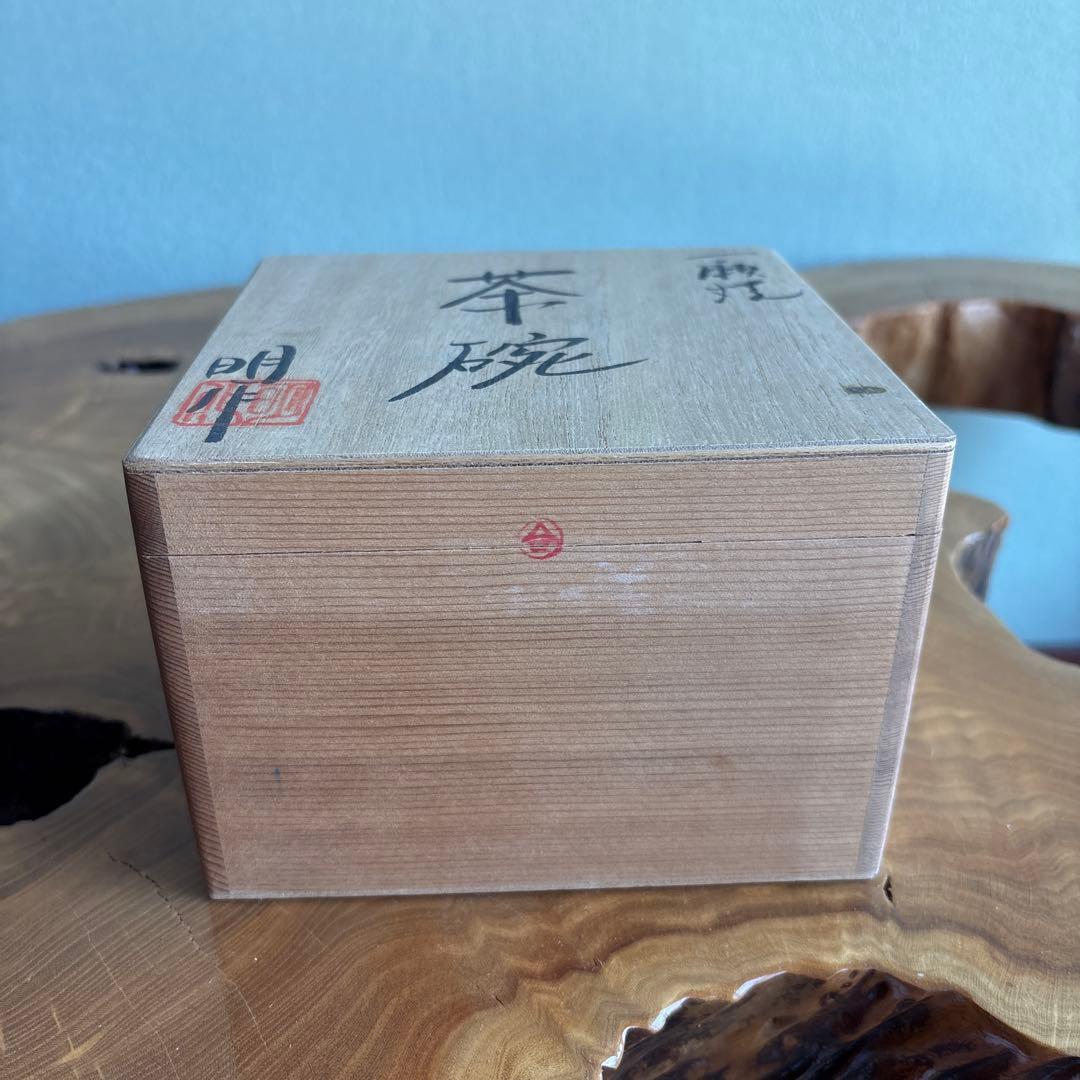
• Box: Tomobako — artist-signed wooden box, lid bearing the characters 茶碗 and the seal of Mei
• Condition: Excellent vintage condition. Fine kannyu crackle across the body — natural to the ware. No chips, cracks, or restoration.
🔹 [ CULTURAL & ARTISTIC INSIGHT ]
Ichinose sits within the broader Koishiwara ceramic region of Fukuoka — a tradition whose roots reach back to Korean potters brought to Kyushu during the late sixteenth century. That lineage is still felt in the clay itself: iron-rich, warm, never refined into anonymity. Hakeme — the sweeping application of white slip with a broad brush — arrived with those potters and never left. In this bowl, the technique has been absorbed fully. Each brushstroke is unhurried, the white pulling across the reddish body in arcs that suggest water, fog, or field light at dusk.
The crackle (kannyu) that laces the glaze surface is not accident but character — a record of the tension between slip and body as they cool at different rates. Over years of use with matcha, those fine lines deepen and soften. The bowl becomes its own slow document.
Something this restrained asks for nothing from you. It simply holds.
🔹 [ DEEP-DIVE COMMENTARY ]
Hakeme is among the oldest techniques in the Koishiwara-Ichinose lineage. A wide brush — often made from dried grass or straw — is loaded with white rice-straw ash slip and swept across the leather-hard clay body. The result is never uniform: the bristles leave distinct tracks, sometimes opaque, sometimes thin enough to reveal the warm clay beneath. No two passes are identical.
In this bowl, the exterior hakeme runs in horizontal bands, denser above the midline and loosening toward the foot — a quiet compositional decision that draws the eye downward. The interior reveals a different register: the slip traces a spiral from rim to center, almost as if the brush followed the memory of the wheel's rotation. The effect, when the bowl is held and tilted, is of movement arrested mid-breath.
Kannyu — the fine web of crackle in the glaze — develops because white slip contracts at a different rate than the underlying clay body during cooling. Potters in this tradition do not fight it. They fire in ways that encourage it. The crackle becomes a kind of aging in advance, an acknowledgment that time is already present in the object.
Mei worked within the Ichinose aesthetic — directness, economy of means, materials allowed to speak — without ornamentation beyond what the technique itself produces. The tomobako, signed and sealed in the artist's hand, confirms the work is considered and complete.
For collectors, this bowl sits at the intersection of folk-craft seriousness and tea-ceremony presence. It is not a studio showpiece. It is a working object of quiet authority — the kind that improves in your hands.
[ JAPANESE DESCRIPTION / 日本語解説 ]
一之瀬焼 刷毛目茶碗 明作 共箱
福岡県の一之瀬は、朝鮮半島から渡来した陶工たちの技が根付いた小石原焼の系譜に連なる産地。その土は鉄分豊かで、素直に温かく、余計な精製を受けていない。明作のこの茶碗は、その土の声をそのまま器に宿した一椀である。
刷毛目は、轆轤成形後の革乾き状態の器面に、白化粧土を刷毛で大きく刷き流す技法。均一を求めない。むしろ、刷毛の毛跡と刷き残しが重なることで、霧や水面のような景色が生まれる。外側は横方向に帯状に刷き流され、胴中央から下にかけてわずかに淡くなる。内側では刷毛目が渦を描き、轆轤の回転の記憶を残すように、中央へと収束している。
貫入は、白化粧と素地の収縮率の違いが生み出す自然な亀裂。この産地の陶工たちはそれを欠点とは見ない。時間と使用が貫入に深みを与え、器は使われるほどにその人の記録を帯びていく。
共箱の蓋には「茶碗」の文字と「明」の落款。作家が仕上がりを認めた証である。
控えめで、端正で、余計なものが何もない。手に取るほどに、その密度が伝わってくる茶碗。
🔹 [ SHIPPING & PACKAGING ]
• Dispatch: Within 1-6 business days
• Carrier: Japan Post EMS / UPS (with tracking)
• Packaging: Carefully wrapped with protective materials
🔹 [ BASIC DETAILS ]
• Artist: Mei (明), Ichinose kiln, Fukuoka Prefecture
• Technique: Hakeme (white slip brush decoration over iron-rich clay body)
• Era: 1990s–2006
• Origin: Ichinose, Fukuoka, Japan (within the Koishiwara ceramic tradition, descended from Korean Korai potters)
• Dimensions: Height approx. 7.4 cm, Diameter approx. 11 cm
• Box: Tomobako — artist-signed wooden box, lid bearing the characters 茶碗 and the seal of Mei
• Condition: Excellent vintage condition. Fine kannyu crackle across the body — natural to the ware. No chips, cracks, or restoration.
🔹 [ CULTURAL & ARTISTIC INSIGHT ]
Ichinose sits within the broader Koishiwara ceramic region of Fukuoka — a tradition whose roots reach back to Korean potters brought to Kyushu during the late sixteenth century. That lineage is still felt in the clay itself: iron-rich, warm, never refined into anonymity. Hakeme — the sweeping application of white slip with a broad brush — arrived with those potters and never left. In this bowl, the technique has been absorbed fully. Each brushstroke is unhurried, the white pulling across the reddish body in arcs that suggest water, fog, or field light at dusk.
The crackle (kannyu) that laces the glaze surface is not accident but character — a record of the tension between slip and body as they cool at different rates. Over years of use with matcha, those fine lines deepen and soften. The bowl becomes its own slow document.
Something this restrained asks for nothing from you. It simply holds.
🔹 [ DEEP-DIVE COMMENTARY ]
Hakeme is among the oldest techniques in the Koishiwara-Ichinose lineage. A wide brush — often made from dried grass or straw — is loaded with white rice-straw ash slip and swept across the leather-hard clay body. The result is never uniform: the bristles leave distinct tracks, sometimes opaque, sometimes thin enough to reveal the warm clay beneath. No two passes are identical.
In this bowl, the exterior hakeme runs in horizontal bands, denser above the midline and loosening toward the foot — a quiet compositional decision that draws the eye downward. The interior reveals a different register: the slip traces a spiral from rim to center, almost as if the brush followed the memory of the wheel's rotation. The effect, when the bowl is held and tilted, is of movement arrested mid-breath.
Kannyu — the fine web of crackle in the glaze — develops because white slip contracts at a different rate than the underlying clay body during cooling. Potters in this tradition do not fight it. They fire in ways that encourage it. The crackle becomes a kind of aging in advance, an acknowledgment that time is already present in the object.
Mei worked within the Ichinose aesthetic — directness, economy of means, materials allowed to speak — without ornamentation beyond what the technique itself produces. The tomobako, signed and sealed in the artist's hand, confirms the work is considered and complete.
For collectors, this bowl sits at the intersection of folk-craft seriousness and tea-ceremony presence. It is not a studio showpiece. It is a working object of quiet authority — the kind that improves in your hands.
[ JAPANESE DESCRIPTION / 日本語解説 ]
一之瀬焼 刷毛目茶碗 明作 共箱
福岡県の一之瀬は、朝鮮半島から渡来した陶工たちの技が根付いた小石原焼の系譜に連なる産地。その土は鉄分豊かで、素直に温かく、余計な精製を受けていない。明作のこの茶碗は、その土の声をそのまま器に宿した一椀である。
刷毛目は、轆轤成形後の革乾き状態の器面に、白化粧土を刷毛で大きく刷き流す技法。均一を求めない。むしろ、刷毛の毛跡と刷き残しが重なることで、霧や水面のような景色が生まれる。外側は横方向に帯状に刷き流され、胴中央から下にかけてわずかに淡くなる。内側では刷毛目が渦を描き、轆轤の回転の記憶を残すように、中央へと収束している。
貫入は、白化粧と素地の収縮率の違いが生み出す自然な亀裂。この産地の陶工たちはそれを欠点とは見ない。時間と使用が貫入に深みを与え、器は使われるほどにその人の記録を帯びていく。
共箱の蓋には「茶碗」の文字と「明」の落款。作家が仕上がりを認めた証である。
控えめで、端正で、余計なものが何もない。手に取るほどに、その密度が伝わってくる茶碗。
🔹 [ SHIPPING & PACKAGING ]
• Dispatch: Within 1-6 business days
• Carrier: Japan Post EMS / UPS (with tracking)
• Packaging: Carefully wrapped with protective materials
Quantity
Couldn't load pickup availability
Low stock: 1 left
View full details