1
/
of
7
Hirose Hoshu Hyuga Takasaki Yaki Oil Drop Tenmoku Tea Bowl Yuteki Chawan
Hirose Hoshu Hyuga Takasaki Yaki Oil Drop Tenmoku Tea Bowl Yuteki Chawan
Regular price
Dhs. 519.00 AED
Regular price
Sale price
Dhs. 519.00 AED
Taxes included.
Shipping calculated at checkout.
A Hyuga Takasaki-yaki tea bowl by Hirose Hoshu, finished in yuteki tenmoku — the oil drop glaze technique that traces its origins to Song dynasty China. Silvery droplets scatter across a deep steel-blue ground, each one a frozen moment of kiln chemistry. A porcelain-bodied Japanese tea ceremony bowl where ancient firing science meets contemporary ceramic mastery. Signed tomobako accompanies this oil drop tenmoku chawan.
━━━━━━━━━━━━━━━━━━━━
🔹 [ BASIC DETAILS ]
• Artist: Hirose Hoshu (広瀬宝秀)
• Technique: Yuteki tenmoku (油滴天目) — oil drop glaze
• Era: Heisei–Reiwa period
• Origin: Hyuga, Miyazaki Prefecture, Japan (Takasaki-yaki)
• Dimensions: 12 cm × 7.4 cm (4.7" dia × 2.9" h)
• Box: Tomobako (signed wooden box with yellow silk ribbon — 「宝秀作」)
• Condition: Excellent — appears unused; no chips, cracks, or repairs
━━━━━━━━━━━━━━━━━━━━
🔹 [ CULTURAL & ARTISTIC INSIGHT ]
Yuteki tenmoku — oil drop glaze — stands among the most technically demanding achievements in ceramic history. First mastered at the Jian kilns of Song dynasty Fujian, the technique produces metallic droplets suspended across a dark iron-saturated glaze surface. Each droplet forms when iron oxide crystals separate and cluster during cooling, creating iridescent spots that shimmer between silver and gold depending on light and angle. The process demands precise control of kiln atmosphere, temperature, and cooling rate — variables that remain partially ungovernable even with modern technology.
Hirose Hoshu works within the Hyuga Takasaki-yaki tradition of Miyazaki Prefecture, bringing a refined sensibility to this historically charged technique. His oil drop tenmoku chawan achieves a restrained elegance: the silvery spots are distributed with natural irregularity across a deep steel-blue ground, neither too dense nor too sparse. The iron-brown rim edge — where the glaze thins to reveal its oxide foundation — provides a warm frame that softens the cool authority of the body.
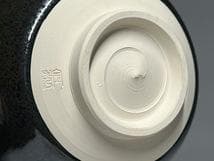
The porcelain substrate distinguishes this bowl from earthenware tenmoku traditions. The clean white foot ring speaks to a body of considerable refinement, providing structural strength and thermal responsiveness suited to the temperature fluctuations of tea preparation. When hot water meets this vessel, it warms evenly and holds heat with the consistency that porcelain uniquely provides.
*"Each spot — a star the kiln decided to leave behind."*
━━━━━━━━━━━━━━━━━━━━
🔹 [ DEEP-DIVE COMMENTARY ]
**Song Dynasty Legacy**: The original yuteki tenmoku bowls from Jian kilns were so prized that Japanese tea masters of the Kamakura period imported them as the highest category of tea vessel. Four yuteki tenmoku bowls survive as designated National Treasures or Important Cultural Properties in Japan — more than in China itself. This historical reverence means that every contemporary yuteki bowl exists in dialogue with those ancestral masterworks, measured against a standard set eight centuries ago.
**The Chemistry of Oil Drops**: The formation of yuteki spots is a phenomenon at the intersection of chemistry and chance. During firing above 1,250 degrees Celsius, iron oxide in the glaze becomes saturated and begins to crystallize. As the kiln cools, these crystals cluster into discrete spots, each one a microscopic landscape of metallic phases. The size, density, and color of the spots depend on kiln atmosphere (reduction vs. oxidation), peak temperature, cooling speed, and glaze thickness. Hoshu's ability to consistently produce well-formed, evenly distributed spots speaks to deep empirical knowledge of these variables.
**Hyuga Takasaki-yaki Tradition**: Takasaki-yaki is a ceramic tradition rooted in Miyazaki Prefecture, historically less prominent than the great kilns of Seto, Mino, or Bizen but carrying its own lineage of technical accomplishment. Hoshu's work places this regional tradition in conversation with the broader history of tenmoku ware, demonstrating that mastery of this demanding technique is not confined to historically dominant production centers.
**Porcelain Body Construction**: The choice of porcelain over stoneware for a tenmoku bowl is deliberate. The white, vitrified body provides a neutral substrate that does not chemically interfere with the iron-saturated glaze, allowing the oil drop crystals to form with greater clarity. The clean white foot ring visible on this bowl confirms the refined nature of the body and offers a stark visual counterpoint to the dark, metallic glaze above — a meeting of earth and sky within a single vessel.
**The Iron Rim**: The characteristic brown edge at the rim, where the glaze flows thin during firing, is not a flaw but a signature of authentic tenmoku. This kuchizuki — literally "mouth mark" — is the point where the drinker's lips meet the bowl, and its warm iron tone provides both tactile and visual transition between the vessel and its user.
━━━━━━━━━━━━━━━━━━━━
🔹 [ 日本語解説 ]
【基本情報】
• 作家:広瀬宝秀(Hirose Hoshu)
• 技法:油滴天目(ゆてきてんもく)
• 時代:平成〜令和
• 産地:宮崎県 日向高崎焼
• 寸法:口径約12cm × 高さ約7.4cm
• 付属:共箱(黄布紐・「宝秀作」銘)
• 状態:極めて良好 — 未使用と思われる、欠け・ヒビ・直しなし
【解説】
広瀬宝秀による油滴天目茶碗。深い鋼青色の釉面に銀色の油滴が散り、光の角度によって微妙に表情を変える。宋代建窯に端を発する油滴天目の技法を、日向高崎焼の文脈で再現した一碗である。
油滴の形成は、釉中の酸化鉄が高温で飽和し、冷却過程で結晶化する現象によるもので、窯内の雰囲気・温度・冷却速度の精密な制御を要する。宝秀の油滴は適度な大きさと密度で均一に分布し、技術的な安定感を示している。
磁器質の素地を用いている点も特筆すべきで、高台には清潔な白磁の肌が露出する。鉄釉の暗色と白磁の明色の対比が、天と地の出会いを一碗のなかに凝縮している。口縁部の鉄褐色の縁——釉が薄くなり酸化鉄の地が現れる部分——は天目茶碗の意匠的特徴であり、使い手の唇が触れる場所に温かみを添えている。
━━━━━━━━━━━━━━━━━━━━
🔹 [ SHIPPING & PACKAGING ]
• Dispatch: Within 1-6 business days
• Carrier: Japan Post EMS / UPS (with tracking)
• Packaging: Carefully wrapped with protective materials
*Silver constellations on a dark field — each one placed not by the potter's hand, but by the kiln's own will.*
━━━━━━━━━━━━━━━━━━━━
🔹 [ BASIC DETAILS ]
• Artist: Hirose Hoshu (広瀬宝秀)
• Technique: Yuteki tenmoku (油滴天目) — oil drop glaze
• Era: Heisei–Reiwa period
• Origin: Hyuga, Miyazaki Prefecture, Japan (Takasaki-yaki)
• Dimensions: 12 cm × 7.4 cm (4.7" dia × 2.9" h)
• Box: Tomobako (signed wooden box with yellow silk ribbon — 「宝秀作」)
• Condition: Excellent — appears unused; no chips, cracks, or repairs
━━━━━━━━━━━━━━━━━━━━
🔹 [ CULTURAL & ARTISTIC INSIGHT ]
Yuteki tenmoku — oil drop glaze — stands among the most technically demanding achievements in ceramic history. First mastered at the Jian kilns of Song dynasty Fujian, the technique produces metallic droplets suspended across a dark iron-saturated glaze surface. Each droplet forms when iron oxide crystals separate and cluster during cooling, creating iridescent spots that shimmer between silver and gold depending on light and angle. The process demands precise control of kiln atmosphere, temperature, and cooling rate — variables that remain partially ungovernable even with modern technology.
Hirose Hoshu works within the Hyuga Takasaki-yaki tradition of Miyazaki Prefecture, bringing a refined sensibility to this historically charged technique. His oil drop tenmoku chawan achieves a restrained elegance: the silvery spots are distributed with natural irregularity across a deep steel-blue ground, neither too dense nor too sparse. The iron-brown rim edge — where the glaze thins to reveal its oxide foundation — provides a warm frame that softens the cool authority of the body.
The porcelain substrate distinguishes this bowl from earthenware tenmoku traditions. The clean white foot ring speaks to a body of considerable refinement, providing structural strength and thermal responsiveness suited to the temperature fluctuations of tea preparation. When hot water meets this vessel, it warms evenly and holds heat with the consistency that porcelain uniquely provides.
*"Each spot — a star the kiln decided to leave behind."*
━━━━━━━━━━━━━━━━━━━━
🔹 [ DEEP-DIVE COMMENTARY ]
**Song Dynasty Legacy**: The original yuteki tenmoku bowls from Jian kilns were so prized that Japanese tea masters of the Kamakura period imported them as the highest category of tea vessel. Four yuteki tenmoku bowls survive as designated National Treasures or Important Cultural Properties in Japan — more than in China itself. This historical reverence means that every contemporary yuteki bowl exists in dialogue with those ancestral masterworks, measured against a standard set eight centuries ago.
**The Chemistry of Oil Drops**: The formation of yuteki spots is a phenomenon at the intersection of chemistry and chance. During firing above 1,250 degrees Celsius, iron oxide in the glaze becomes saturated and begins to crystallize. As the kiln cools, these crystals cluster into discrete spots, each one a microscopic landscape of metallic phases. The size, density, and color of the spots depend on kiln atmosphere (reduction vs. oxidation), peak temperature, cooling speed, and glaze thickness. Hoshu's ability to consistently produce well-formed, evenly distributed spots speaks to deep empirical knowledge of these variables.
**Hyuga Takasaki-yaki Tradition**: Takasaki-yaki is a ceramic tradition rooted in Miyazaki Prefecture, historically less prominent than the great kilns of Seto, Mino, or Bizen but carrying its own lineage of technical accomplishment. Hoshu's work places this regional tradition in conversation with the broader history of tenmoku ware, demonstrating that mastery of this demanding technique is not confined to historically dominant production centers.
**Porcelain Body Construction**: The choice of porcelain over stoneware for a tenmoku bowl is deliberate. The white, vitrified body provides a neutral substrate that does not chemically interfere with the iron-saturated glaze, allowing the oil drop crystals to form with greater clarity. The clean white foot ring visible on this bowl confirms the refined nature of the body and offers a stark visual counterpoint to the dark, metallic glaze above — a meeting of earth and sky within a single vessel.
**The Iron Rim**: The characteristic brown edge at the rim, where the glaze flows thin during firing, is not a flaw but a signature of authentic tenmoku. This kuchizuki — literally "mouth mark" — is the point where the drinker's lips meet the bowl, and its warm iron tone provides both tactile and visual transition between the vessel and its user.
━━━━━━━━━━━━━━━━━━━━
🔹 [ 日本語解説 ]
【基本情報】
• 作家:広瀬宝秀(Hirose Hoshu)
• 技法:油滴天目(ゆてきてんもく)
• 時代:平成〜令和
• 産地:宮崎県 日向高崎焼
• 寸法:口径約12cm × 高さ約7.4cm
• 付属:共箱(黄布紐・「宝秀作」銘)
• 状態:極めて良好 — 未使用と思われる、欠け・ヒビ・直しなし
【解説】
広瀬宝秀による油滴天目茶碗。深い鋼青色の釉面に銀色の油滴が散り、光の角度によって微妙に表情を変える。宋代建窯に端を発する油滴天目の技法を、日向高崎焼の文脈で再現した一碗である。
油滴の形成は、釉中の酸化鉄が高温で飽和し、冷却過程で結晶化する現象によるもので、窯内の雰囲気・温度・冷却速度の精密な制御を要する。宝秀の油滴は適度な大きさと密度で均一に分布し、技術的な安定感を示している。
磁器質の素地を用いている点も特筆すべきで、高台には清潔な白磁の肌が露出する。鉄釉の暗色と白磁の明色の対比が、天と地の出会いを一碗のなかに凝縮している。口縁部の鉄褐色の縁——釉が薄くなり酸化鉄の地が現れる部分——は天目茶碗の意匠的特徴であり、使い手の唇が触れる場所に温かみを添えている。
━━━━━━━━━━━━━━━━━━━━
🔹 [ SHIPPING & PACKAGING ]
• Dispatch: Within 1-6 business days
• Carrier: Japan Post EMS / UPS (with tracking)
• Packaging: Carefully wrapped with protective materials
*Silver constellations on a dark field — each one placed not by the potter's hand, but by the kiln's own will.*
Quantity
Couldn't load pickup availability
Low stock: 1 left
View full details