1
/
of
8
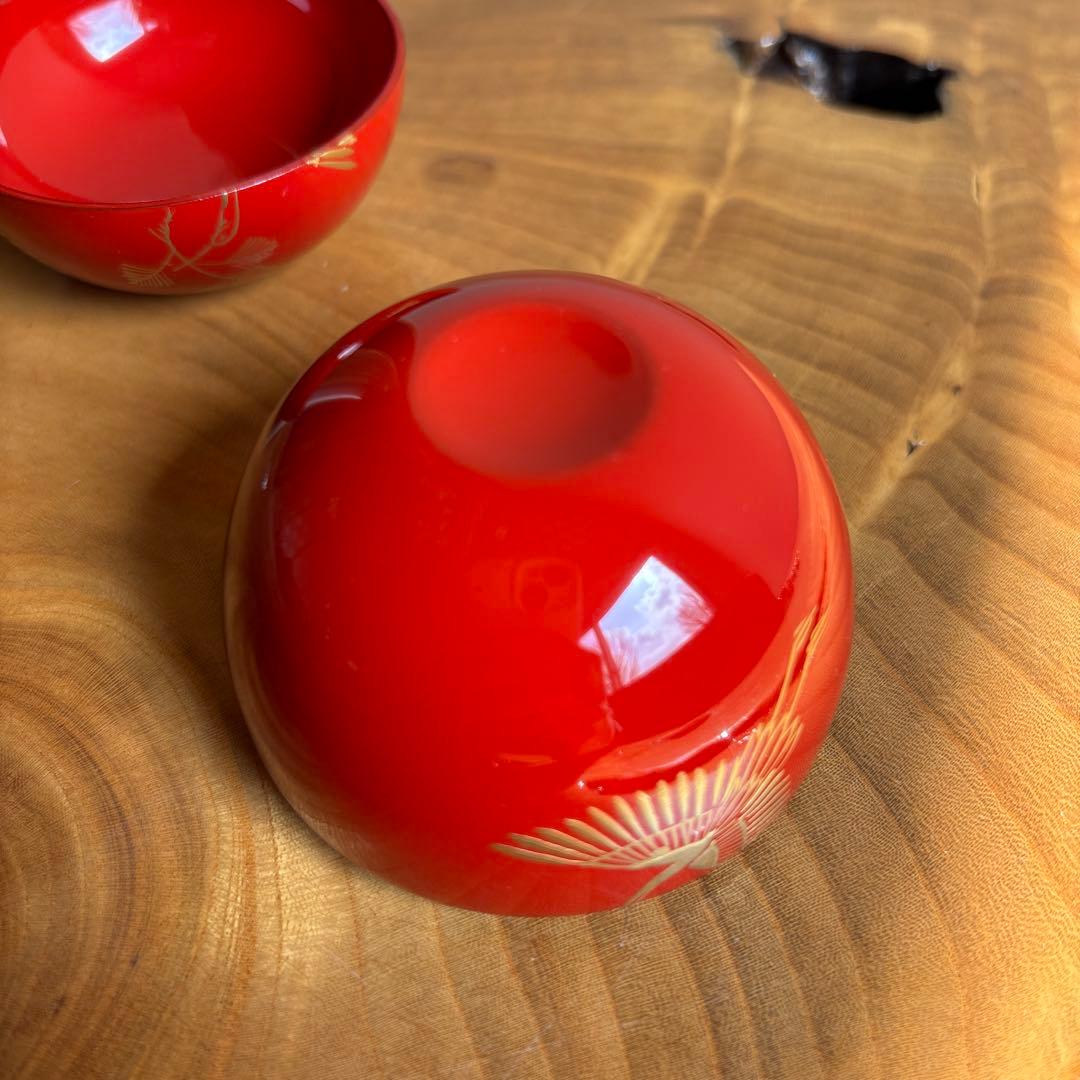
Hinomaru Natsume Tea Caddy Pine-Crane Maki-e by Wada Juho Kyoto
Hinomaru Natsume Tea Caddy Pine-Crane Maki-e by Wada Juho Kyoto
Regular price
Dhs. 871.00 AED
Regular price
Sale price
Dhs. 871.00 AED
Taxes included.
Shipping calculated at checkout.
A sphere of vermilion lacquer — weightless in the palm, dense with intention. Gold cranes rise from pine boughs across the surface, an auspicious choreography sealed in urushi by Kyoto maki-e artist Wada Juho. Accompanied by the artist's signed and sealed tomobako. #natsume #japaneseteaceremony #urushi #makieworks #lacquerart #teacaddy #kyotocraft #matsukuitsuru #teaceremony #chado
🔹 [ BASIC DETAILS ]
- Form: 日の丸棗 / Hinomaru Natsume — spherical tea caddy
- Motif: 松喰鶴 / Matsukui-tsuru — cranes carrying pine branches
- Technique: Gold maki-e on red urushi lacquer over wooden core
- Artist: 和田寿峰 / Wada Juho — Kyoto lacquerware artist
- Dimensions: approx. diameter 6.7 cm / height 7 cm
- Condition: Very good. Minor wear consistent with careful use. Lacquer surface intact with strong gloss throughout.
- Provenance: Accompanied by artist-signed and sealed tomobako (wooden presentation box)
【 日本語解説 — 基本情報 】
- 形状:日の丸棗(球形の薄茶用棗)
- 文様:松喰鶴蒔絵
- 技法:木地に朱漆塗り、金蒔絵
- 作者:和田寿峰(京都漆芸家)
- サイズ:直径約6.7cm/高さ約7cm
- 状態:良好。使用感はごく僅か。漆面の光沢は全面に渡り健在。
- 付属:共箱(作家自筆銘・朱印入り)
🔹 [ CULTURAL & ARTISTIC INSIGHT ]
In the world of chado, the natsume is the vessel closest to the host's hands. Unlike the formal chaire — ceramic, distant, positioned at the far edge of the tatami — the natsume is held, turned, felt. It passes through the host's fingers during the preparation of usucha, thin tea, and its weight, warmth, and surface become part of the gathering's texture.
The 日の丸棗, Hinomaru natsume, takes its name from the rising sun: a perfect sphere, uninterrupted, complete. Among the many forms a natsume can take — tall, low, middle-sized, shouldered — the Hinomaru stands apart for its wholeness. There is no flat base, no angular shoulder, no hierarchical distinction between top and bottom. The sphere simply is.
Across this surface, Wada Juho has placed 松喰鶴 — cranes carrying pine in their beaks. This motif reaches back to the Heian court, appearing in bugaku dance costumes and Yamato-e screen paintings as an emblem of longevity, constancy, and celestial presence. The crane does not merely symbolize long life; in classical imagery, it is said to carry pine to its nest on the back of a great tortoise, weaving together the two most ancient symbols of endurance in Japanese culture. On a natsume, this pairing speaks to the ceremony itself: each gathering held as if it were both the first and the last.
The motif carries particular resonance at the New Year and at weddings — occasions when the wish for continuity becomes a form of prayer.
Gold on vermilion. Constancy in flight.
【 日本語解説 — 文化的背景 】
茶道において、棗は主人の手に最も近い道具である。格式高い茶入とは異なり、棗は点前の中で手に取られ、回され、その重さと温もりが席の気配を形づくる。
「日の丸棗」の名は旭日に由来する。肩のない完全な球形は、上下の区別を持たず、ただ円として存在する。その形そのものが、一期一会の精神を体現している。
松喰鶴の文様は平安時代の宮廷文化に端を発し、舞楽の装束や大和絵の屏風に描かれてきた古典的な吉祥文様である。鶴が松を咥えて飛ぶ姿は、長寿・不変・天上の気品を象徴し、新年の茶事や婚礼の席に特に好まれる。
朱に映える金。飛翔の中に宿る永遠。
🔹 [ DEEP-DIVE COMMENTARY ]
Kyoto has been Japan's center of lacquerware production for more than a millennium, its workshops sustaining techniques that were already considered classical by the Momoyama period. The city's lacquer tradition is inseparable from its tea culture: countless generations of craftsmen shaped their work in direct dialogue with tea masters, calibrating weight, scale, and surface for the specific demands of the tea gathering.
Maki-e — literally "sprinkled picture" — is the defining technique of Japanese lacquerware. Gold or silver powder is sifted onto a surface while the urushi is still tacit, then sealed with additional lacquer coats and burnished. The simplest form, hira maki-e, keeps the decoration flush with the surrounding surface; more elaborate variants — taka maki-e, raden, togidashi — build texture and depth across many layers. On this natsume, Wada Juho has worked in a restrained register suited to the form's intimacy: the cranes and pine are rendered with quiet precision, gold that catches the light without demanding it.
The wooden core beneath the lacquer matters as much as the surface. Urushi is applied coat by coat — sometimes dozens of coats over months — each layer sanded smooth before the next is added. This process is not simply finishing; it is construction. The lacquer becomes the material. The wood, once shaped on a lathe, exists to give the lacquer its structure, its resonance when held.
A well-made natsume accumulates presence with use. The oils of the hands, the warmth of each gathering, the slight patina that develops over decades — these are not signs of deterioration but of participation. This piece, in its vermilion and gold, has already begun that accumulation. To use it is to continue a conversation already in progress.
The tomobako, bearing Juho's own brushwork and red seal, is itself a document: evidence of authorship, of intention, of the specific relationship between maker and object that Japanese craft culture considers inseparable from the work itself. The box is not packaging. It is provenance made tangible.
For the practitioner of chado, a signed natsume with tomobako represents a complete object: form, motif, authorship, and the continuity of care, together in the hand.
【 日本語解説 — 深掘り解説 】
京都は千年以上にわたって漆芸の中心地であり続けてきた。その技術は茶文化と不可分に結びついており、多くの職人が茶人との対話の中で、茶道具としての理想の重さ・寸法・表面を磨き上げてきた。
蒔絵とは「蒔いた絵」の意であり、乾かぬうちの漆面に金粉や銀粉を蒔いて文様を作る技法である。粉を定着させた後、さらに漆を塗り重ねて研ぎ出す。本作の松喰鶴は平蒔絵の端正な技法で描かれており、金は光を主張せず、ただそこに宿っている。
漆の下には轆轤で挽いた木地があり、その上に何十もの漆の層が重ねられる。一層ごとに研ぎ、また塗る。この工程は塗装ではなく、構築である。漆はやがて素材そのものとなり、木地はその骨格として内側に息づく。
使い込まれた棗は、使われるたびに存在感を増す。手の温もり、幾度もの茶事の記憶、時とともに深まる艶——それは劣化ではなく、参加の証である。
共箱に認められた寿峰の自筆銘と朱印は、作者と作品の関係を可視化したものである。箱は容器ではなく、来歴そのものである。
🔹 [ SHIPPING & PACKAGING ]
• Dispatch: Within 1-6 business days
• Carrier: Japan Post EMS / UPS (with tracking)
• Packaging: Carefully wrapped with protective materials
🔹 [ BASIC DETAILS ]
- Form: 日の丸棗 / Hinomaru Natsume — spherical tea caddy
- Motif: 松喰鶴 / Matsukui-tsuru — cranes carrying pine branches
- Technique: Gold maki-e on red urushi lacquer over wooden core
- Artist: 和田寿峰 / Wada Juho — Kyoto lacquerware artist
- Dimensions: approx. diameter 6.7 cm / height 7 cm
- Condition: Very good. Minor wear consistent with careful use. Lacquer surface intact with strong gloss throughout.
- Provenance: Accompanied by artist-signed and sealed tomobako (wooden presentation box)
【 日本語解説 — 基本情報 】
- 形状:日の丸棗(球形の薄茶用棗)
- 文様:松喰鶴蒔絵
- 技法:木地に朱漆塗り、金蒔絵
- 作者:和田寿峰(京都漆芸家)
- サイズ:直径約6.7cm/高さ約7cm
- 状態:良好。使用感はごく僅か。漆面の光沢は全面に渡り健在。
- 付属:共箱(作家自筆銘・朱印入り)
🔹 [ CULTURAL & ARTISTIC INSIGHT ]
In the world of chado, the natsume is the vessel closest to the host's hands. Unlike the formal chaire — ceramic, distant, positioned at the far edge of the tatami — the natsume is held, turned, felt. It passes through the host's fingers during the preparation of usucha, thin tea, and its weight, warmth, and surface become part of the gathering's texture.
The 日の丸棗, Hinomaru natsume, takes its name from the rising sun: a perfect sphere, uninterrupted, complete. Among the many forms a natsume can take — tall, low, middle-sized, shouldered — the Hinomaru stands apart for its wholeness. There is no flat base, no angular shoulder, no hierarchical distinction between top and bottom. The sphere simply is.
Across this surface, Wada Juho has placed 松喰鶴 — cranes carrying pine in their beaks. This motif reaches back to the Heian court, appearing in bugaku dance costumes and Yamato-e screen paintings as an emblem of longevity, constancy, and celestial presence. The crane does not merely symbolize long life; in classical imagery, it is said to carry pine to its nest on the back of a great tortoise, weaving together the two most ancient symbols of endurance in Japanese culture. On a natsume, this pairing speaks to the ceremony itself: each gathering held as if it were both the first and the last.
The motif carries particular resonance at the New Year and at weddings — occasions when the wish for continuity becomes a form of prayer.
Gold on vermilion. Constancy in flight.
【 日本語解説 — 文化的背景 】
茶道において、棗は主人の手に最も近い道具である。格式高い茶入とは異なり、棗は点前の中で手に取られ、回され、その重さと温もりが席の気配を形づくる。
「日の丸棗」の名は旭日に由来する。肩のない完全な球形は、上下の区別を持たず、ただ円として存在する。その形そのものが、一期一会の精神を体現している。
松喰鶴の文様は平安時代の宮廷文化に端を発し、舞楽の装束や大和絵の屏風に描かれてきた古典的な吉祥文様である。鶴が松を咥えて飛ぶ姿は、長寿・不変・天上の気品を象徴し、新年の茶事や婚礼の席に特に好まれる。
朱に映える金。飛翔の中に宿る永遠。
🔹 [ DEEP-DIVE COMMENTARY ]
Kyoto has been Japan's center of lacquerware production for more than a millennium, its workshops sustaining techniques that were already considered classical by the Momoyama period. The city's lacquer tradition is inseparable from its tea culture: countless generations of craftsmen shaped their work in direct dialogue with tea masters, calibrating weight, scale, and surface for the specific demands of the tea gathering.
Maki-e — literally "sprinkled picture" — is the defining technique of Japanese lacquerware. Gold or silver powder is sifted onto a surface while the urushi is still tacit, then sealed with additional lacquer coats and burnished. The simplest form, hira maki-e, keeps the decoration flush with the surrounding surface; more elaborate variants — taka maki-e, raden, togidashi — build texture and depth across many layers. On this natsume, Wada Juho has worked in a restrained register suited to the form's intimacy: the cranes and pine are rendered with quiet precision, gold that catches the light without demanding it.
The wooden core beneath the lacquer matters as much as the surface. Urushi is applied coat by coat — sometimes dozens of coats over months — each layer sanded smooth before the next is added. This process is not simply finishing; it is construction. The lacquer becomes the material. The wood, once shaped on a lathe, exists to give the lacquer its structure, its resonance when held.
A well-made natsume accumulates presence with use. The oils of the hands, the warmth of each gathering, the slight patina that develops over decades — these are not signs of deterioration but of participation. This piece, in its vermilion and gold, has already begun that accumulation. To use it is to continue a conversation already in progress.
The tomobako, bearing Juho's own brushwork and red seal, is itself a document: evidence of authorship, of intention, of the specific relationship between maker and object that Japanese craft culture considers inseparable from the work itself. The box is not packaging. It is provenance made tangible.
For the practitioner of chado, a signed natsume with tomobako represents a complete object: form, motif, authorship, and the continuity of care, together in the hand.
【 日本語解説 — 深掘り解説 】
京都は千年以上にわたって漆芸の中心地であり続けてきた。その技術は茶文化と不可分に結びついており、多くの職人が茶人との対話の中で、茶道具としての理想の重さ・寸法・表面を磨き上げてきた。
蒔絵とは「蒔いた絵」の意であり、乾かぬうちの漆面に金粉や銀粉を蒔いて文様を作る技法である。粉を定着させた後、さらに漆を塗り重ねて研ぎ出す。本作の松喰鶴は平蒔絵の端正な技法で描かれており、金は光を主張せず、ただそこに宿っている。
漆の下には轆轤で挽いた木地があり、その上に何十もの漆の層が重ねられる。一層ごとに研ぎ、また塗る。この工程は塗装ではなく、構築である。漆はやがて素材そのものとなり、木地はその骨格として内側に息づく。
使い込まれた棗は、使われるたびに存在感を増す。手の温もり、幾度もの茶事の記憶、時とともに深まる艶——それは劣化ではなく、参加の証である。
共箱に認められた寿峰の自筆銘と朱印は、作者と作品の関係を可視化したものである。箱は容器ではなく、来歴そのものである。
🔹 [ SHIPPING & PACKAGING ]
• Dispatch: Within 1-6 business days
• Carrier: Japan Post EMS / UPS (with tracking)
• Packaging: Carefully wrapped with protective materials
Quantity
Couldn't load pickup availability
Low stock: 1 left
View full details