1
/
of
12
Haruno Kogo Incense Container by Okamoto Shisendo | Kyoto Tame-nuri Lacquer, Gold-Silver Maki-e Spring Field, Nashiji Interior, Tomobako
Haruno Kogo Incense Container by Okamoto Shisendo | Kyoto Tame-nuri Lacquer, Gold-Silver Maki-e Spring Field, Nashiji Interior, Tomobako
Regular price
Dhs. 1,095.00 AED
Regular price
Sale price
Dhs. 1,095.00 AED
Taxes included.
Shipping calculated at checkout.
Experience Authentic Japan Art with this Kyoto Lacquer Kogo. This Japanese Incense Container serves as a Tame-nuri Kogo and Maki-e Incense Box, featuring Gold Silver Maki-e and Nashiji Interior—a must-have for any Tea Ceremony Collector.
🔹 [ BASIC DETAILS ]
• Artist: Okamoto Shisendō (岡本漆専堂), Kyoto lacquer atelier
• Title: 春野 (Haruno — Spring Field)
• Technique: Tame-nuri ground lacquer, gold and silver maki-e, nashiji interior finish
• Era: Late Showa to early Heisei (estimated 1980s–1990s)
• Origin: Kyoto, Japan — center of classical urushi tradition
• Dimensions: Height approx. 3.8 cm, Diameter approx. 7.3 cm
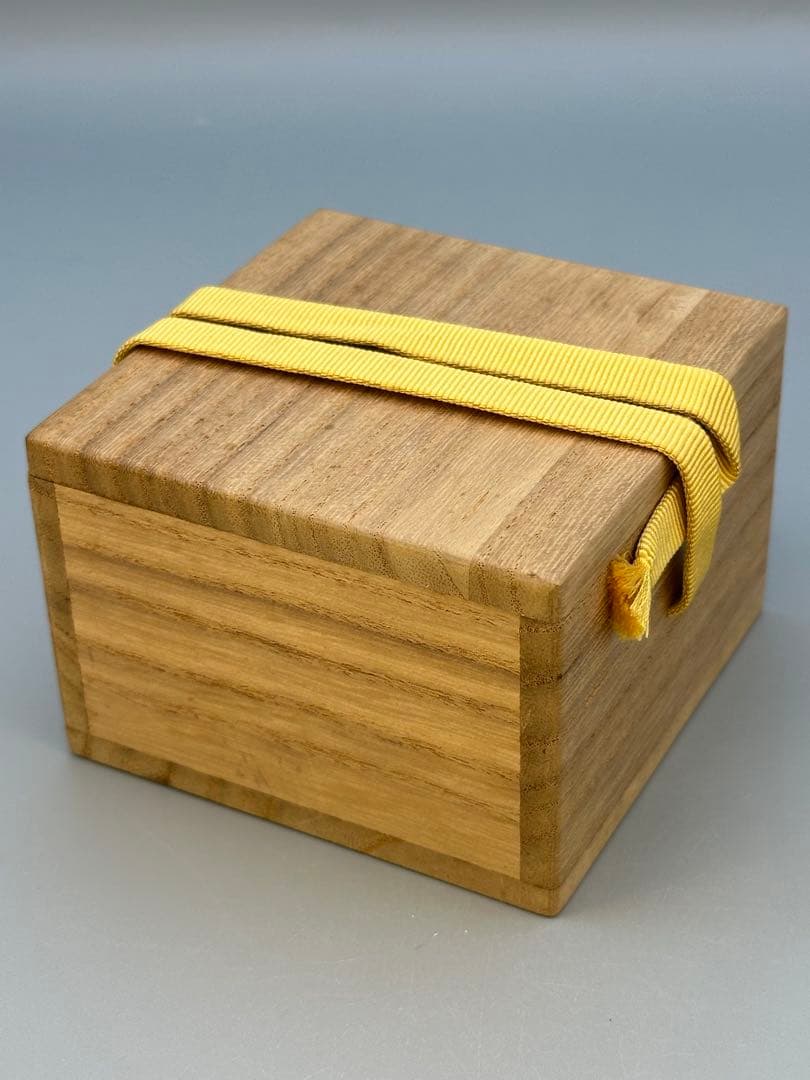
• Box: Tomobako (original signed wooden box) with atelier seal
• Condition: Excellent — no notable scratches or staining; lacquer surface retains full depth and clarity
🔹 [ CULTURAL & ARTISTIC INSIGHT ]
The kogo — the incense container — occupies a singular, almost invisible place within the tea ceremony. Unlike the tea bowl or the kettle, it holds nothing that is drunk or poured. It holds only fragrance: a presence that dissolves into the room and vanishes before it can be named. In the context of chadō, the kogo is chosen by the host with as much care as any utensil, its motif corresponding to the season, the occasion, the spirit of the gathering.
Okamoto Shisendō, working within the Kyoto urushi tradition, has rendered the scene of spring fields — 春野 (haruno) — across the rounded surface of this kogo with a discipline that asks no explanation. The tame-nuri ground, a deep amber-suffused red lacquer built through patient layering, gives the surface its characteristic translucency: light enters, shifts, and returns slightly changed. Against this ground, gold maki-e traces dandelions and spring herbs at the foot of an embankment, while fine silver lines describe the edge of a grassy slope — a quiet field on the cusp of bloom.
The interior is nashiji, a technique in which fine gold powder is suspended between lacquer layers, creating a surface that glitters like evening sand under raking light. Here, within the cavity that receives the incense, the nashiji is inscribed with gentle wave forms — lines that suggest both water and wind, the invisible movement of fragrance itself.
*"Spring does not announce itself — it is already present in the patience of the field."*
🔹 [ DEEP-DIVE COMMENTARY ]
Tame-nuri (溜塗) is among the most restrained and technically demanding finishes in classical Kyoto lacquerwork. The name — tame, meaning to store or to accumulate — refers to the way layers of amber-tinted roiro lacquer are built above a dark base, creating a ground that appears to hold warmth within it rather than project it outward. Depending on how light strikes the surface, the color shifts from deep burgundy to a luminous reddish brown, the underlying structure visible as a kind of interior landscape. This quality — depth without display — is precisely why tame-nuri became favored for tea ceremony utensils.
Maki-e, the art of drawing in lacquer and dusting metallic powder before curing, requires the artist to work with materials that are invisible until the lacquer sets. The image on this kogo — a spring embankment with dandelions and grass — is executed in gold and silver togidashi or hira-maki-e technique, the lines emerging from the dark ground with the quality of morning mist rather than declaration. The motif haruno (春野) is a classical waka and haiku reference: the spring field as a site of seasonal awakening, gentle and without urgency.
Nashiji, the interior finish, takes its name from the pear-skin texture (梨子地) achieved by distributing irregularly sized gold particles within a translucent lacquer layer, then burnishing to reveal a shimmering, granular surface. Here, the interior nashiji is inscribed with linear wave motifs, suggesting both water and air — an invitation for the incense to move.
Okamoto Shisendō represents a Kyoto workshop lineage where classical technique is applied to objects intended for active use in the tea room, not for display alone. The presence of a sealed tomobako confirms attribution and places this piece within a tradition where documentation and material craft are inseparable. For a collector focused on the seasonal vocabulary of chadō, this kogo — spring field, gold on dark lacquer, nashiji within — offers a utensil whose cultural meaning arrives without instruction.
🔹 [ JAPANESE DESCRIPTION / 日本語解説 ]
■ 詳細スペック
• 作家:岡本漆専堂(京都・漆工房)
• 銘:春野
• 技法:溜塗地、金銀蒔絵(春野文)、梨子地内側
• 時代:昭和後期〜平成初期(推定1980〜90年代)
• 産地:京都(日本漆芸の中心地)
• 寸法:高さ約3.8cm、径約7.3cm
• 箱:共箱(工房印あり)
• 状態:良好。目立つ傷・汚れなし。漆面の艶と深みが保たれている
■ 文化的背景と鑑賞の視点
香合は、茶事において最も静かな道具のひとつである。飲まれず、注がれず、ただ香りを内側に収め、炉や風炉の傍らに置かれるのみ。しかしその選択は、茶を点てる者の季節への眼差しを映す。春野を銘とするこの香合は、溜塗の深い琥珀色の地に、土手と蒲公英を金銀蒔絵で静かに描く。春が到来したことを告げるのではなく、野がすでにそこにある、という感覚がある。
溜塗とは、透明感のある飴色漆を黒地の上に幾層も重ねることで、内側から光を蓄えるような深みを生む技法である。光の当たり方によって、深い臙脂から赤みを帯びた褐色へと色が移ろう。この揺らぎこそが、溜塗が茶道具に好まれてきた理由である。蒔絵は、乾く前の漆で絵を描き、金銀の粉を蒔いて定着させる技術であり、春草と土手の線は、宣言ではなく朝霧のように地から浮かび上がる。
内側の梨子地は、不規則な大きさの金粉を透漆の層の中に封じ込め、研磨することで、砂を敷いたような輝きを作り出す。ここでは梨子地の面に波のような線が刻まれており、香が漂い動く様子を示唆している。
■ 深掘り解説
岡本漆専堂は、展示品ではなく茶室での使用を前提とした道具を作り続けてきた京都の漆工房である。共箱に押された印は帰属を明示し、この香合が記録と技術が不可分な伝統の中に位置することを確かにする。春野、溜塗、梨子地という三つの要素が重なるこの香合は、説明を要さずに季節の言葉を運ぶ。
🔹 [ SHIPPING & PACKAGING ]
• Dispatch: Within 1-6 business days
• Carrier: Japan Post EMS / UPS (with tracking)
• Packaging: Carefully wrapped with protective materials
🔹 [ BASIC DETAILS ]
• Artist: Okamoto Shisendō (岡本漆専堂), Kyoto lacquer atelier
• Title: 春野 (Haruno — Spring Field)
• Technique: Tame-nuri ground lacquer, gold and silver maki-e, nashiji interior finish
• Era: Late Showa to early Heisei (estimated 1980s–1990s)
• Origin: Kyoto, Japan — center of classical urushi tradition
• Dimensions: Height approx. 3.8 cm, Diameter approx. 7.3 cm
• Box: Tomobako (original signed wooden box) with atelier seal
• Condition: Excellent — no notable scratches or staining; lacquer surface retains full depth and clarity
🔹 [ CULTURAL & ARTISTIC INSIGHT ]
The kogo — the incense container — occupies a singular, almost invisible place within the tea ceremony. Unlike the tea bowl or the kettle, it holds nothing that is drunk or poured. It holds only fragrance: a presence that dissolves into the room and vanishes before it can be named. In the context of chadō, the kogo is chosen by the host with as much care as any utensil, its motif corresponding to the season, the occasion, the spirit of the gathering.
Okamoto Shisendō, working within the Kyoto urushi tradition, has rendered the scene of spring fields — 春野 (haruno) — across the rounded surface of this kogo with a discipline that asks no explanation. The tame-nuri ground, a deep amber-suffused red lacquer built through patient layering, gives the surface its characteristic translucency: light enters, shifts, and returns slightly changed. Against this ground, gold maki-e traces dandelions and spring herbs at the foot of an embankment, while fine silver lines describe the edge of a grassy slope — a quiet field on the cusp of bloom.
The interior is nashiji, a technique in which fine gold powder is suspended between lacquer layers, creating a surface that glitters like evening sand under raking light. Here, within the cavity that receives the incense, the nashiji is inscribed with gentle wave forms — lines that suggest both water and wind, the invisible movement of fragrance itself.
*"Spring does not announce itself — it is already present in the patience of the field."*
🔹 [ DEEP-DIVE COMMENTARY ]
Tame-nuri (溜塗) is among the most restrained and technically demanding finishes in classical Kyoto lacquerwork. The name — tame, meaning to store or to accumulate — refers to the way layers of amber-tinted roiro lacquer are built above a dark base, creating a ground that appears to hold warmth within it rather than project it outward. Depending on how light strikes the surface, the color shifts from deep burgundy to a luminous reddish brown, the underlying structure visible as a kind of interior landscape. This quality — depth without display — is precisely why tame-nuri became favored for tea ceremony utensils.
Maki-e, the art of drawing in lacquer and dusting metallic powder before curing, requires the artist to work with materials that are invisible until the lacquer sets. The image on this kogo — a spring embankment with dandelions and grass — is executed in gold and silver togidashi or hira-maki-e technique, the lines emerging from the dark ground with the quality of morning mist rather than declaration. The motif haruno (春野) is a classical waka and haiku reference: the spring field as a site of seasonal awakening, gentle and without urgency.
Nashiji, the interior finish, takes its name from the pear-skin texture (梨子地) achieved by distributing irregularly sized gold particles within a translucent lacquer layer, then burnishing to reveal a shimmering, granular surface. Here, the interior nashiji is inscribed with linear wave motifs, suggesting both water and air — an invitation for the incense to move.
Okamoto Shisendō represents a Kyoto workshop lineage where classical technique is applied to objects intended for active use in the tea room, not for display alone. The presence of a sealed tomobako confirms attribution and places this piece within a tradition where documentation and material craft are inseparable. For a collector focused on the seasonal vocabulary of chadō, this kogo — spring field, gold on dark lacquer, nashiji within — offers a utensil whose cultural meaning arrives without instruction.
🔹 [ JAPANESE DESCRIPTION / 日本語解説 ]
■ 詳細スペック
• 作家:岡本漆専堂(京都・漆工房)
• 銘:春野
• 技法:溜塗地、金銀蒔絵(春野文)、梨子地内側
• 時代:昭和後期〜平成初期(推定1980〜90年代)
• 産地:京都(日本漆芸の中心地)
• 寸法:高さ約3.8cm、径約7.3cm
• 箱:共箱(工房印あり)
• 状態:良好。目立つ傷・汚れなし。漆面の艶と深みが保たれている
■ 文化的背景と鑑賞の視点
香合は、茶事において最も静かな道具のひとつである。飲まれず、注がれず、ただ香りを内側に収め、炉や風炉の傍らに置かれるのみ。しかしその選択は、茶を点てる者の季節への眼差しを映す。春野を銘とするこの香合は、溜塗の深い琥珀色の地に、土手と蒲公英を金銀蒔絵で静かに描く。春が到来したことを告げるのではなく、野がすでにそこにある、という感覚がある。
溜塗とは、透明感のある飴色漆を黒地の上に幾層も重ねることで、内側から光を蓄えるような深みを生む技法である。光の当たり方によって、深い臙脂から赤みを帯びた褐色へと色が移ろう。この揺らぎこそが、溜塗が茶道具に好まれてきた理由である。蒔絵は、乾く前の漆で絵を描き、金銀の粉を蒔いて定着させる技術であり、春草と土手の線は、宣言ではなく朝霧のように地から浮かび上がる。
内側の梨子地は、不規則な大きさの金粉を透漆の層の中に封じ込め、研磨することで、砂を敷いたような輝きを作り出す。ここでは梨子地の面に波のような線が刻まれており、香が漂い動く様子を示唆している。
■ 深掘り解説
岡本漆専堂は、展示品ではなく茶室での使用を前提とした道具を作り続けてきた京都の漆工房である。共箱に押された印は帰属を明示し、この香合が記録と技術が不可分な伝統の中に位置することを確かにする。春野、溜塗、梨子地という三つの要素が重なるこの香合は、説明を要さずに季節の言葉を運ぶ。
🔹 [ SHIPPING & PACKAGING ]
• Dispatch: Within 1-6 business days
• Carrier: Japan Post EMS / UPS (with tracking)
• Packaging: Carefully wrapped with protective materials
Quantity
Couldn't load pickup availability
Low stock: 1 left
View full details