1
/
of
11
Hanamaru Maki-e Lacquer Tea Caddy by Ikebata Chiho — Natsume
Hanamaru Maki-e Lacquer Tea Caddy by Ikebata Chiho — Natsume
Regular price
Dhs. 820.00 AED
Regular price
Sale price
Dhs. 820.00 AED
Taxes included.
Shipping calculated at checkout.
Experience authentic hanamaru makie art in this gold makie natsume. This lacquer tea caddy features flower roundel makie and black urushi lacquer with botanical makie art—a signed tomobako art piece from the japan tea ceremony tradition, an enduring tea caddy collector treasure.
🔹 [ Basic Details ]
• Artist: Ikebata Chiho (池端治峰)
• Technique: Gold maki-e (蒔絵) hanamaru (花丸, flower roundels) on black urushi lacquer
• Era: Contemporary (Heisei–Reiwa period)
• Origin: Japan
• Dimensions: Height approx. 6.9 cm, Diameter approx. 6.8 cm
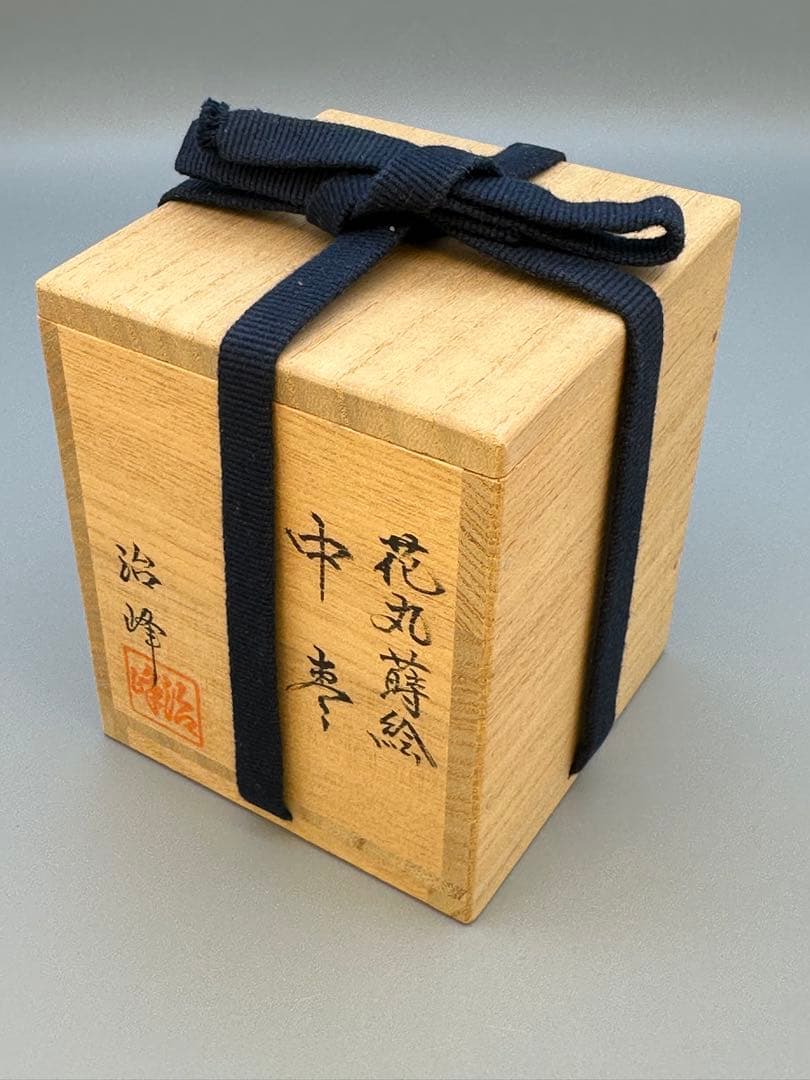
• Box: Signed tomobako (共箱) inscribed "花丸蒔絵 中棗" (Hanamaru Maki-e Chu-natsume), signed 治峰 with red seal
• Condition: Excellent — no notable scratches, chips, or repairs.
🔹 [ Cultural & Artistic Insight ]
The hanamaru (花丸) motif — flower roundels — is one of Japanese lacquer art's most beloved decorative vocabularies. Each circular medallion contains a different botanical subject, creating a miniature garden that rotates through the seasons with each turn of the vessel.
Ikebata Chiho distributes these golden medallions across lid and body with considered spacing. The lid displays bamboo fronds and chrysanthemum clusters within their circular frames, while the body carries plum blossoms and autumn foliage. Each roundel is self-contained yet harmonizes with its neighbors, creating a rhythm of seasonal continuity.
The chu-natsume form — a medium-sized tea caddy — provides an ideal canvas for this distributed composition. The gentle curvature of the vessel allows each roundel to catch light differently as the host handles the piece, revealing new details with each gesture.
"Four seasons rest in circles. The garden never closes."
🔹 [ Deep-Dive Commentary ]
Hanamaru (花丸) composition represents a distinctive approach to seasonal motifs in Japanese decorative arts. Rather than depicting a single seasonal landscape, the artist isolates individual floral subjects within circular frames (丸, maru), allowing multiple seasons to coexist on a single surface. This device has its origins in textile design and was adopted into lacquer art during the Edo period.
The technical execution requires careful calibration of gold powder density within each roundel. The chrysanthemum medallion employs denser gold for the layered petals, while the bamboo roundel uses finer lines to suggest the plant's structural lightness. These tonal variations within a single technique demonstrate the artist's control of material.
In the tea room, a hanamaru natsume communicates versatility — appropriate for any season, it allows the host to present a vessel that transcends temporal limitation. The roundel format also creates a contemplative invitation: each circle becomes a window into a miniature world.
【日本語解説】
🔹 [ 基本情報 ]
・作家:池端治峰
・技法:金蒔絵(花丸文)、黒漆塗
・時代:現代(平成・令和期)
・産地:日本
・寸法:高さ約6.9cm、径約6.8cm
・箱:共箱(「花丸蒔絵 中棗」と墨書、治峰落款・朱印)
・状態:良好 — 目立つ傷や汚れなし。
🔹 [ 文化的・美術的解説 ]
花丸文は日本漆芸における最も愛される装飾語彙の一つである。円形の枠内にそれぞれ異なる植物を配し、器を回すたびに四季を巡る小さな庭園を現出させる。
池端治峰は蓋と胴に金の花丸を考え抜いた間隔で配する。蓋には竹と菊、胴には梅と秋草を各円内に収め、それぞれ自立しながらも隣り合う丸文と呼応するリズムを生む。中棗の緩やかな曲面が各花丸に異なる光を与え、手に取るたびに新たな表情を見せる。
🔹 [ 深掘り解説 ]
花丸構図は季節意匠への独特なアプローチであり、単一の風景ではなく個々の花卉を円形に隔離し複数の季節を共存させる。この手法は染織に端を発し、江戸時代に漆芸へ採り入れられた。
菊の丸には密な金粉で層状の花弁を、竹の丸には細い線で構造的軽やかさを描き分け、一つの技法内での濃淡変化が材料への制御力を示す。茶室において花丸棗は季節を超えた万能性を伝え、各円が小さな世界への窓となる。
🔹 [ SHIPPING & PACKAGING ]
• Dispatch: Within 1-6 business days
• Carrier: Japan Post EMS / UPS (with tracking)
• Packaging: Carefully wrapped with protective materials
🔹 [ Basic Details ]
• Artist: Ikebata Chiho (池端治峰)
• Technique: Gold maki-e (蒔絵) hanamaru (花丸, flower roundels) on black urushi lacquer
• Era: Contemporary (Heisei–Reiwa period)
• Origin: Japan
• Dimensions: Height approx. 6.9 cm, Diameter approx. 6.8 cm
• Box: Signed tomobako (共箱) inscribed "花丸蒔絵 中棗" (Hanamaru Maki-e Chu-natsume), signed 治峰 with red seal
• Condition: Excellent — no notable scratches, chips, or repairs.
🔹 [ Cultural & Artistic Insight ]
The hanamaru (花丸) motif — flower roundels — is one of Japanese lacquer art's most beloved decorative vocabularies. Each circular medallion contains a different botanical subject, creating a miniature garden that rotates through the seasons with each turn of the vessel.
Ikebata Chiho distributes these golden medallions across lid and body with considered spacing. The lid displays bamboo fronds and chrysanthemum clusters within their circular frames, while the body carries plum blossoms and autumn foliage. Each roundel is self-contained yet harmonizes with its neighbors, creating a rhythm of seasonal continuity.
The chu-natsume form — a medium-sized tea caddy — provides an ideal canvas for this distributed composition. The gentle curvature of the vessel allows each roundel to catch light differently as the host handles the piece, revealing new details with each gesture.
"Four seasons rest in circles. The garden never closes."
🔹 [ Deep-Dive Commentary ]
Hanamaru (花丸) composition represents a distinctive approach to seasonal motifs in Japanese decorative arts. Rather than depicting a single seasonal landscape, the artist isolates individual floral subjects within circular frames (丸, maru), allowing multiple seasons to coexist on a single surface. This device has its origins in textile design and was adopted into lacquer art during the Edo period.
The technical execution requires careful calibration of gold powder density within each roundel. The chrysanthemum medallion employs denser gold for the layered petals, while the bamboo roundel uses finer lines to suggest the plant's structural lightness. These tonal variations within a single technique demonstrate the artist's control of material.
In the tea room, a hanamaru natsume communicates versatility — appropriate for any season, it allows the host to present a vessel that transcends temporal limitation. The roundel format also creates a contemplative invitation: each circle becomes a window into a miniature world.
【日本語解説】
🔹 [ 基本情報 ]
・作家:池端治峰
・技法:金蒔絵(花丸文)、黒漆塗
・時代:現代(平成・令和期)
・産地:日本
・寸法:高さ約6.9cm、径約6.8cm
・箱:共箱(「花丸蒔絵 中棗」と墨書、治峰落款・朱印)
・状態:良好 — 目立つ傷や汚れなし。
🔹 [ 文化的・美術的解説 ]
花丸文は日本漆芸における最も愛される装飾語彙の一つである。円形の枠内にそれぞれ異なる植物を配し、器を回すたびに四季を巡る小さな庭園を現出させる。
池端治峰は蓋と胴に金の花丸を考え抜いた間隔で配する。蓋には竹と菊、胴には梅と秋草を各円内に収め、それぞれ自立しながらも隣り合う丸文と呼応するリズムを生む。中棗の緩やかな曲面が各花丸に異なる光を与え、手に取るたびに新たな表情を見せる。
🔹 [ 深掘り解説 ]
花丸構図は季節意匠への独特なアプローチであり、単一の風景ではなく個々の花卉を円形に隔離し複数の季節を共存させる。この手法は染織に端を発し、江戸時代に漆芸へ採り入れられた。
菊の丸には密な金粉で層状の花弁を、竹の丸には細い線で構造的軽やかさを描き分け、一つの技法内での濃淡変化が材料への制御力を示す。茶室において花丸棗は季節を超えた万能性を伝え、各円が小さな世界への窓となる。
🔹 [ SHIPPING & PACKAGING ]
• Dispatch: Within 1-6 business days
• Carrier: Japan Post EMS / UPS (with tracking)
• Packaging: Carefully wrapped with protective materials
Quantity
Couldn't load pickup availability
Low stock: 1 left
View full details