1
/
of
7
Hakeme Matcha Tea Bowl with Tomobako — Japanese Chawan, Grey Iron Clay, White Brush Slip
Hakeme Matcha Tea Bowl with Tomobako — Japanese Chawan, Grey Iron Clay, White Brush Slip
Regular price
Dhs. 455.00 AED
Regular price
Sale price
Dhs. 455.00 AED
Taxes included.
Shipping calculated at checkout.
Experience Authentic Japan Art with this Hakeme Matcha Tea Bowl. This Japanese Chawan serves as a Wabi Tea Ceremony Bowl and Antique Ceramic Gift, featuring White Brush Slip Glazing and Grey Iron Clay Body—a must-have for any Art Collector. The Nezumi Ground Chawan with Tomobako Box and Keshiki Landscape Interior makes this Handmade Stoneware Tea Bowl an essential piece for collectors of Japanese Pottery.
🔹 [ BASIC DETAILS ]
• Artist: Unknown / Unsigned (無銘)
• Technique: Hakeme (刷毛目) — white slip brushwork over iron-rich grey clay body
• Era: Estimated 1980s–2000s
• Origin: Japan (precise kiln unknown; style consistent with regional mingei tradition)
• Dimensions: Diameter approx. 13 cm, Height approx. 7.5 cm
• Box: Tomobako (共箱) — original wooden box with hand-brushed inscription and potter's seal
• Condition: Excellent — no chips, no cracks, no repairs
🔹 [ CULTURAL & ARTISTIC INSIGHT ]
Hakeme is among the most elemental of Japanese ceramic techniques — a thick white slip brushed boldly and freely onto an iron-dark clay body, then allowed to interact with heat in ways no hand can fully control. The term translates literally as "brush-mark," and that directness is the point: the gesture is preserved, the stroke made permanent.
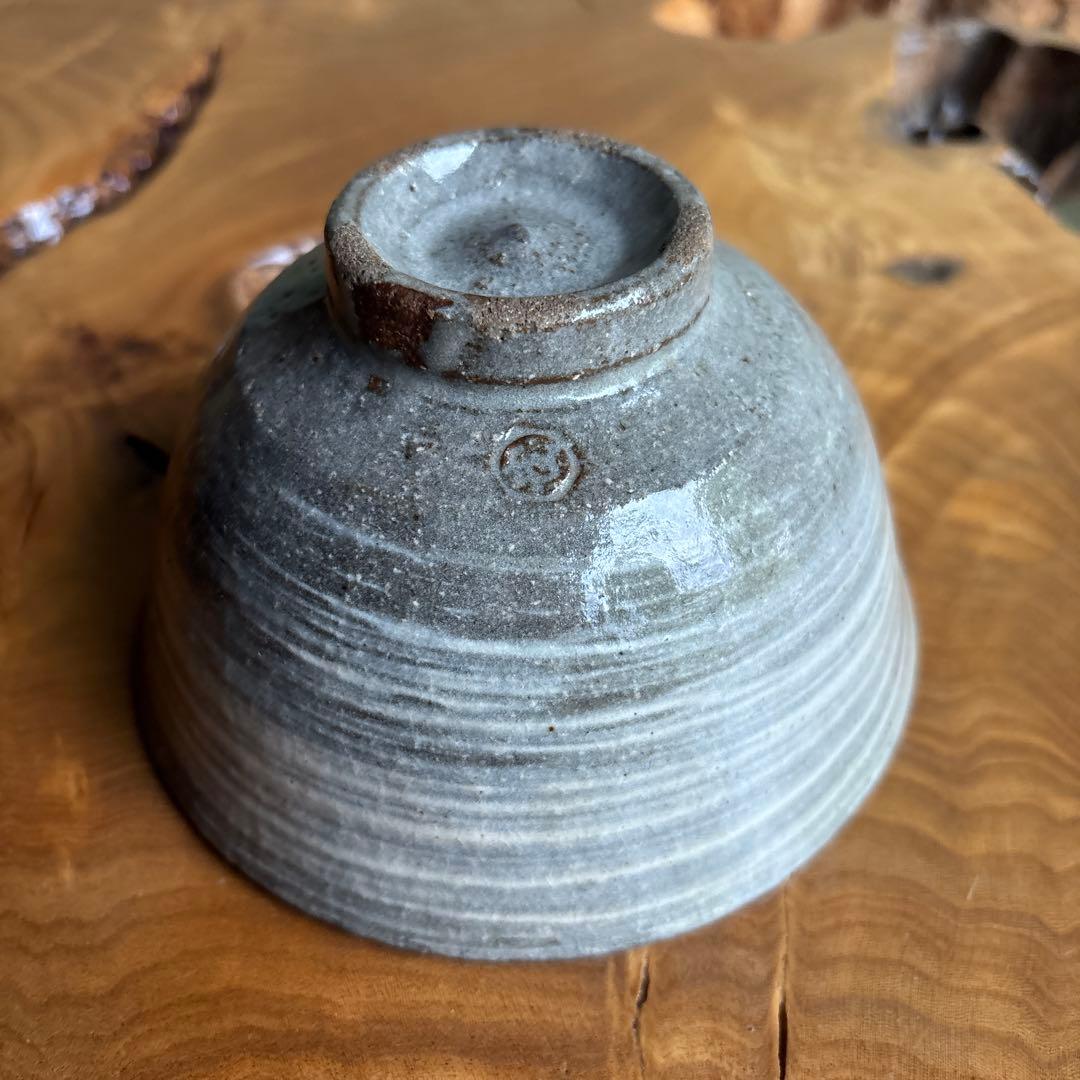
This chawan carries that spirit with quiet conviction. The exterior shows dense, rhythmic horizontal bands of white hakeme over a dark grey-brown nezumi (mouse-grey) ground — each sweep of the brush distinct, unhurried, inevitable. Turning the bowl in hand, the ridged surface catches light like a ploughed field at dusk. The interior deepens into a rich slate-grey, and across the floor appear scattered buff islands — places where glaze thinned and the iron clay surfaced — a keshiki (景色, "landscape") born of fire rather than intention.
The tomobako bears the inscription 刷毛目茶碗 in practiced brushwork alongside a personal seal. Though the maker remains unnamed to the wider world, the care of the box-writing tells its own story: someone believed this bowl worth preserving.
POETIC LINE: "White brushstrokes cross grey clay like frost on a winter field — each mark a breath held, then released."
🔹 [ DEEP-DIVE COMMENTARY ]
Hakeme as a technique arrived in Japan via Korea during the Momoyama period (late 16th century), carried across the sea by potters who had mastered the iron-slip traditions of Joseon ceramics. Japanese tea masters — Sen no Rikyu chief among them — saw in the rough, asymmetric hakeme bowls an embodiment of wabi: beauty found not in perfection but in the unguarded gesture, the imperfection that permits presence.
The process begins with a dark iron-rich clay body, often fired to temperatures that produce the characteristic grey-black ground visible on this chawan. White slip — a liquid clay of contrasting mineral content — is then loaded onto a wide, stiff brush (hake) and swept across the surface in a single pass. The potter does not correct; the first stroke is the final stroke. This commitment to the irreversible moment is itself a philosophical statement aligned with Zen practice.
What distinguishes this particular bowl is its integration of two visual effects: the exterior hakeme brushwork creates horizontal movement, while the interior keshiki — those scattered buff patches where slip receded — creates a sense of stillness, of land seen from above. Together they suggest a landscape in miniature, the kind of contemplative scene a tea host might compose to set the mood of a gathering.
For collectors, unsigned hakeme bowls of this quality represent excellent value relative to their aesthetic weight. The presence of a tomobako elevates provenance and care history; the fact of the inscription — 刷毛目茶碗, brushed by a hand that knew the form — suggests the maker held the piece in sufficient regard to record it properly. In the mingei tradition that informed much 20th-century Japanese folk ceramics, anonymous craftsmanship is not a deficit but a principle.
Modern Japanese potters continue to work in hakeme, particularly in Tamba, Bizen, and various regional folk-kiln traditions. This bowl sits comfortably within that lineage — honest in material, deliberate in technique, and alive to the wabi philosophy that has sustained the Japanese tea ceremony for five centuries.
🔹 [ 日本語解説 ]
■ 基本情報
• 作家:無銘(共箱に印あり)
• 技法:刷毛目——鉄分豊かな灰褐色の鼠地に、白化粧土を刷毛で大胆に施した技法
• 年代:推定 1980〜2000年代
• 産地:日本(窯元不明、民藝的伝統に連なるスタイル)
• サイズ:直径 約13cm、高さ 約7.5cm
• 箱:共箱——「刷毛目茶碗」と記され、作者の印が捺された木製箱
• 状態:良好——ヒビ・欠け・金継ぎなし
■ 文化的・美術的解説
刷毛目は、日本の陶芸技法の中でもとりわけ直截的な美しさを持つ。鉄分を含む暗色の素地に、白化粧土を太い刷毛で一気に引く——その痕跡がそのまま景色となる。修正を加えないことが、この技法の本質だ。
本作の外側には、鼠地の上に白化粧が横方向の帯として幾重にも重なり、緩やかなリズムを刻んでいる。光の当たり方によって、轆轤目と刷毛跡が交差し、冬の田畑のように静かで力強い表情を見せる。内側は深い墨鼠色の釉が広がり、底部には化粧土が退いた箇所に温かみのある黄土色の斑が浮かぶ——これが「景色」と呼ばれる、窯変による自然の模様だ。
共箱には「刷毛目茶碗」の文字と落款が丁寧に記されている。無銘の作であれ、この箱書きは、作者が本作を大切に扱ったことを静かに証言している。
■ 深掘り解説
刷毛目技法は、桃山時代に朝鮮半島から渡来した陶工とともに日本に伝わり、千利休らが重んじた「侘び」の美学と深く結びついた。不完全であること、偶然であること、手の痕跡が残ること——それを美しいとする感覚が、この技法を茶碗として最上の位置に押し上げた。
本作は外側の動き(刷毛の横走り)と内側の静けさ(景色)が好対照をなす。使う者は、茶を点てながら、その変化に自然と目を向けることになる。
20世紀の民藝運動は「無名の職人による誠実な仕事」を再評価したが、この茶碗はその精神を体現している。共箱付きで状態良好な刷毛目茶碗として、茶道愛好家・陶芸コレクターいずれにも実用と鑑賞の両面で応える一碗だ。
🔹 [ SHIPPING & PACKAGING ]
• Dispatch: Within 1-6 business days
• Carrier: Japan Post EMS / UPS (with tracking)
• Packaging: Carefully wrapped with protective materials
🔹 [ BASIC DETAILS ]
• Artist: Unknown / Unsigned (無銘)
• Technique: Hakeme (刷毛目) — white slip brushwork over iron-rich grey clay body
• Era: Estimated 1980s–2000s
• Origin: Japan (precise kiln unknown; style consistent with regional mingei tradition)
• Dimensions: Diameter approx. 13 cm, Height approx. 7.5 cm
• Box: Tomobako (共箱) — original wooden box with hand-brushed inscription and potter's seal
• Condition: Excellent — no chips, no cracks, no repairs
🔹 [ CULTURAL & ARTISTIC INSIGHT ]
Hakeme is among the most elemental of Japanese ceramic techniques — a thick white slip brushed boldly and freely onto an iron-dark clay body, then allowed to interact with heat in ways no hand can fully control. The term translates literally as "brush-mark," and that directness is the point: the gesture is preserved, the stroke made permanent.
This chawan carries that spirit with quiet conviction. The exterior shows dense, rhythmic horizontal bands of white hakeme over a dark grey-brown nezumi (mouse-grey) ground — each sweep of the brush distinct, unhurried, inevitable. Turning the bowl in hand, the ridged surface catches light like a ploughed field at dusk. The interior deepens into a rich slate-grey, and across the floor appear scattered buff islands — places where glaze thinned and the iron clay surfaced — a keshiki (景色, "landscape") born of fire rather than intention.
The tomobako bears the inscription 刷毛目茶碗 in practiced brushwork alongside a personal seal. Though the maker remains unnamed to the wider world, the care of the box-writing tells its own story: someone believed this bowl worth preserving.
POETIC LINE: "White brushstrokes cross grey clay like frost on a winter field — each mark a breath held, then released."
🔹 [ DEEP-DIVE COMMENTARY ]
Hakeme as a technique arrived in Japan via Korea during the Momoyama period (late 16th century), carried across the sea by potters who had mastered the iron-slip traditions of Joseon ceramics. Japanese tea masters — Sen no Rikyu chief among them — saw in the rough, asymmetric hakeme bowls an embodiment of wabi: beauty found not in perfection but in the unguarded gesture, the imperfection that permits presence.
The process begins with a dark iron-rich clay body, often fired to temperatures that produce the characteristic grey-black ground visible on this chawan. White slip — a liquid clay of contrasting mineral content — is then loaded onto a wide, stiff brush (hake) and swept across the surface in a single pass. The potter does not correct; the first stroke is the final stroke. This commitment to the irreversible moment is itself a philosophical statement aligned with Zen practice.
What distinguishes this particular bowl is its integration of two visual effects: the exterior hakeme brushwork creates horizontal movement, while the interior keshiki — those scattered buff patches where slip receded — creates a sense of stillness, of land seen from above. Together they suggest a landscape in miniature, the kind of contemplative scene a tea host might compose to set the mood of a gathering.
For collectors, unsigned hakeme bowls of this quality represent excellent value relative to their aesthetic weight. The presence of a tomobako elevates provenance and care history; the fact of the inscription — 刷毛目茶碗, brushed by a hand that knew the form — suggests the maker held the piece in sufficient regard to record it properly. In the mingei tradition that informed much 20th-century Japanese folk ceramics, anonymous craftsmanship is not a deficit but a principle.
Modern Japanese potters continue to work in hakeme, particularly in Tamba, Bizen, and various regional folk-kiln traditions. This bowl sits comfortably within that lineage — honest in material, deliberate in technique, and alive to the wabi philosophy that has sustained the Japanese tea ceremony for five centuries.
🔹 [ 日本語解説 ]
■ 基本情報
• 作家:無銘(共箱に印あり)
• 技法:刷毛目——鉄分豊かな灰褐色の鼠地に、白化粧土を刷毛で大胆に施した技法
• 年代:推定 1980〜2000年代
• 産地:日本(窯元不明、民藝的伝統に連なるスタイル)
• サイズ:直径 約13cm、高さ 約7.5cm
• 箱:共箱——「刷毛目茶碗」と記され、作者の印が捺された木製箱
• 状態:良好——ヒビ・欠け・金継ぎなし
■ 文化的・美術的解説
刷毛目は、日本の陶芸技法の中でもとりわけ直截的な美しさを持つ。鉄分を含む暗色の素地に、白化粧土を太い刷毛で一気に引く——その痕跡がそのまま景色となる。修正を加えないことが、この技法の本質だ。
本作の外側には、鼠地の上に白化粧が横方向の帯として幾重にも重なり、緩やかなリズムを刻んでいる。光の当たり方によって、轆轤目と刷毛跡が交差し、冬の田畑のように静かで力強い表情を見せる。内側は深い墨鼠色の釉が広がり、底部には化粧土が退いた箇所に温かみのある黄土色の斑が浮かぶ——これが「景色」と呼ばれる、窯変による自然の模様だ。
共箱には「刷毛目茶碗」の文字と落款が丁寧に記されている。無銘の作であれ、この箱書きは、作者が本作を大切に扱ったことを静かに証言している。
■ 深掘り解説
刷毛目技法は、桃山時代に朝鮮半島から渡来した陶工とともに日本に伝わり、千利休らが重んじた「侘び」の美学と深く結びついた。不完全であること、偶然であること、手の痕跡が残ること——それを美しいとする感覚が、この技法を茶碗として最上の位置に押し上げた。
本作は外側の動き(刷毛の横走り)と内側の静けさ(景色)が好対照をなす。使う者は、茶を点てながら、その変化に自然と目を向けることになる。
20世紀の民藝運動は「無名の職人による誠実な仕事」を再評価したが、この茶碗はその精神を体現している。共箱付きで状態良好な刷毛目茶碗として、茶道愛好家・陶芸コレクターいずれにも実用と鑑賞の両面で応える一碗だ。
🔹 [ SHIPPING & PACKAGING ]
• Dispatch: Within 1-6 business days
• Carrier: Japan Post EMS / UPS (with tracking)
• Packaging: Carefully wrapped with protective materials
Quantity
Couldn't load pickup availability
Low stock: 1 left
View full details