1
/
of
10
Hakeme Matcha Tea Bowl by Kisshogama — White Brush Slip Chawan with Signed Wooden Box
Hakeme Matcha Tea Bowl by Kisshogama — White Brush Slip Chawan with Signed Wooden Box
Regular price
Dhs. 494.00 AED
Regular price
Sale price
Dhs. 494.00 AED
Taxes included.
Shipping calculated at checkout.
Experience Authentic Japan Art with this Hakeme Matcha Tea Bowl. This Japanese Tea Ceremony Bowl serves as a Wabi Sabi Tea Bowl and Handmade Chawan, featuring White Brush Slip Glaze and Grey Stoneware Clay—a must-have for any Art Collector seeking a Kisshogama Pottery Gift or Zen Home Decor piece.
🔹 [ BASIC DETAILS ]
• Artist: Kisshogama (吉祥窯) — kiln-stamped seal on box lid
• Technique: Hakeme (刷毛目) — white slip applied with a wide brush over grey stoneware clay body
• Era: 2000s–2010s (contemporary studio pottery)
• Origin: Japan (Kisshogama kiln)
• Dimensions: Height approx. 7.6 cm, Diameter approx. 11.7 cm
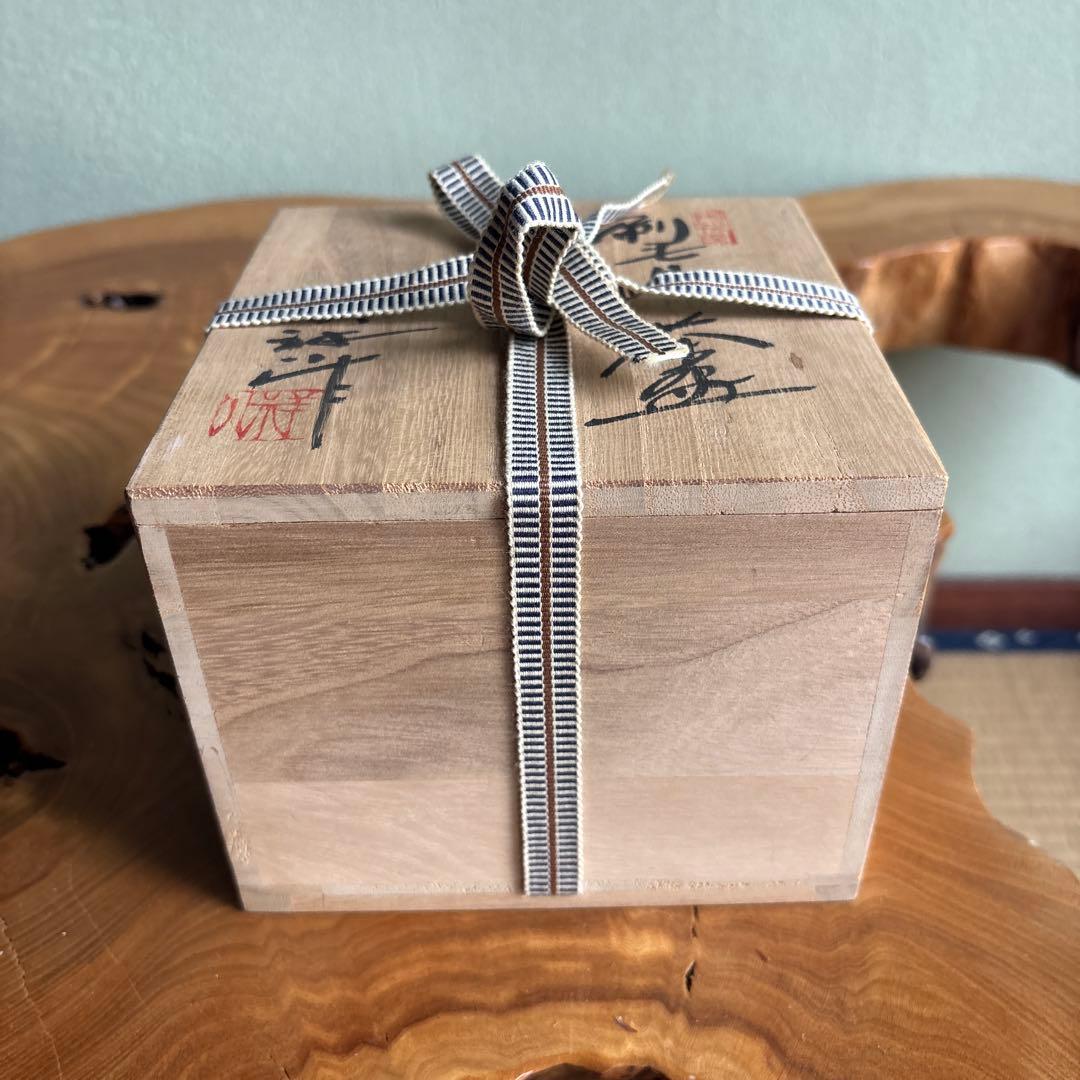
• Box: Signed wooden tomobako (共箱) included — lid bears calligraphy 「刷毛目 茶碗」 with kiln seal
• Condition: Excellent — no chips, cracks, or repairs
🔹 [ CULTURAL & ARTISTIC INSIGHT ]
The hakeme technique — literally "brush-mark" — is one of the most immediate, gestural traditions in Japanese ceramic art. A wide, coarse brush charged with white slip is swept across the raw clay body in a single confident motion, leaving behind rhythmic ridges and soft gradations where the white fades into the underlying grey. No two strokes are ever the same. This particular chawan from Kisshogama captures that spirit with unusual clarity: the white slip bands the belly in broad horizontal sweeps, the dark grey stoneware showing through at the rim and foot to frame the composition like ink margins on washi paper.
The interior is coated in a smooth, glassy white glaze that pools softly at the base — a quiet contrast to the active texture outside. When matcha is whisked within, the deep green of the tea reads brilliantly against the pale interior, a juxtaposition that generations of tea masters have intentionally sought.
The tomobako (shared wooden box) is hand-brushed with the piece's name in confident calligraphy and stamped with the kiln seal — a mark of authorship and provenance that elevates this beyond a production bowl into a named, documented object.
POETIC LINE: "White slip laid like morning frost across grey stone — one brushstroke holds the whole winter sky."
🔹 [ DEEP-DIVE COMMENTARY ]
Hakeme is a technique with roots in Korean Goryeo-period celadon traditions, introduced to Japan during the Momoyama era (late 16th century) when the wabi-cha aesthetic championed by Sen no Rikyu elevated humble, rustic forms over polished Chinese imports. Korean craftsmen working in Japan — particularly in the Karatsu and Hagi kilns — brought the slip-brush technique with them, and it was quickly absorbed into the Japanese tea canon as an expression of quiet, unforced beauty.
The process requires both speed and restraint. A wide, stiff brush (often made of rice straw or coarse fibers) is loaded with white or cream-colored slip and applied to the leather-hard clay in sweeping horizontal strokes. The key variable is timing: applied too early, the slip runs and bleeds; too late, it flakes. The right moment leaves a surface where the brush's individual bristles register as fine parallel ridges, creating a texture that catches light along its ridges while holding shadow in its grooves.
Kisshogama works squarely within this tradition, producing pieces that are functional for actual tea practice while maintaining genuine craft quality. The grey stoneware body is a deliberate choice — it provides the tonal contrast that makes white hakeme most legible, and the unglazed foot ring in the same grey clay grounds the piece visually, keeping the eye moving between the natural clay and the applied slip.
For collectors, hakeme chawan represent an accessible entry into Japanese ceramic history. They are genuinely functional — designed for whisking matcha — yet carry a direct lineage to the Momoyama wabi aesthetic. A signed tomobako further anchors the piece in a specific maker's history, making it a named work rather than an anonymous vessel.
Contemporary studio potters working in the hakeme tradition continue to innovate within its constraints: varying the slip color, combining hakeme with other surface treatments, or working at scales unusual for the form. This Kisshogama example holds close to the classical model — an honest, well-made chawan that asks nothing of its owner except to be used.
🔹 [ 日本語解説 ]
【基本情報】
• 作者:吉祥窯(共箱蓋に刷毛目茶碗と墨書、窯印あり)
• 技法:刷毛目(白化粧土を幅広の刷毛で横一文字に塗り重ねた技法)
• 年代:2000年代〜2010年代頃の現代作
• 産地:吉祥窯(日本)
• 寸法:高さ約7.6cm、直径約11.7cm
• 箱:共箱付き(蓋に「刷毛目 茶碗」と筆書き、窯印捺印)
• 状態:ヒビ・カケなし、良好
【景色と鑑賞】
刷毛目は、生の土に白化粧土を幅広の刷毛でひと息に塗り上げる技法です。刷毛の軌跡がそのまま景色となり、白が滲み広がるところ、土の灰色が透けるところ——その偶然と意志の境界に、この技法の魅力があります。本作の外壁には、鼠地の上に白化粧が横方向に大らかに流れ、腰から高台際にかけて土地が顔をのぞかせます。内側は滑らかな白い釉薬で仕上げられており、点てた抹茶の翠との対比が茶席の静けさを引き立てます。共箱の蓋に刻まれた毅然とした墨書と窯印は、この茶碗がひとつの作として命名・記録された証しです。
「白化粧、灰の地に落ちて——刷毛ひと息、冬空を写す。」
【深掘り解説】
刷毛目の源流は朝鮮高麗青磁の時代に求められ、桃山期(16世紀末)に侘び茶の美学が隆盛するなかで日本へと根を下ろしました。唐津・萩などの窯で朝鮮の陶工たちが伝えた技法は、やがて日本の茶道具の美意識に深く織り込まれ、装飾よりも素材の声を聞く「見立て」の精神と結びつきました。
施釉のタイミングが命です。生乾きの状態で幅広の刷毛を一気に走らせることで、刷毛の毛先の痕跡が細かな畝となって器面に残り、光と影が交差する独特の陰影を生み出します。早過ぎれば化粧土が垂れ、遅過ぎれば剥落する——その際どい一点でのみ、正しい刷毛目が生まれます。
吉祥窯はこの古典的な刷毛目の様式を真正面から継承しています。鼠色の炻器を素地に選んだことで白化粧の輝きが最も映え、無釉の高台がその色合いを自然な形で受け止めます。実際の点前にも使えるしっかりとした作りでありながら、侘びの美学を息づかせた茶碗として、コレクションにも茶席にも相応しい一椀です。
共箱付きの刷毛目茶碗は、桃山以来の日本陶芸の系譜に直接触れることができる、コレクターにとって誠実な一点です。
🔹 [ SHIPPING & PACKAGING ]
• Dispatch: Within 1-6 business days
• Carrier: Japan Post EMS / UPS (with tracking)
• Packaging: Carefully wrapped with protective materials
🔹 [ BASIC DETAILS ]
• Artist: Kisshogama (吉祥窯) — kiln-stamped seal on box lid
• Technique: Hakeme (刷毛目) — white slip applied with a wide brush over grey stoneware clay body
• Era: 2000s–2010s (contemporary studio pottery)
• Origin: Japan (Kisshogama kiln)
• Dimensions: Height approx. 7.6 cm, Diameter approx. 11.7 cm
• Box: Signed wooden tomobako (共箱) included — lid bears calligraphy 「刷毛目 茶碗」 with kiln seal
• Condition: Excellent — no chips, cracks, or repairs
🔹 [ CULTURAL & ARTISTIC INSIGHT ]
The hakeme technique — literally "brush-mark" — is one of the most immediate, gestural traditions in Japanese ceramic art. A wide, coarse brush charged with white slip is swept across the raw clay body in a single confident motion, leaving behind rhythmic ridges and soft gradations where the white fades into the underlying grey. No two strokes are ever the same. This particular chawan from Kisshogama captures that spirit with unusual clarity: the white slip bands the belly in broad horizontal sweeps, the dark grey stoneware showing through at the rim and foot to frame the composition like ink margins on washi paper.
The interior is coated in a smooth, glassy white glaze that pools softly at the base — a quiet contrast to the active texture outside. When matcha is whisked within, the deep green of the tea reads brilliantly against the pale interior, a juxtaposition that generations of tea masters have intentionally sought.
The tomobako (shared wooden box) is hand-brushed with the piece's name in confident calligraphy and stamped with the kiln seal — a mark of authorship and provenance that elevates this beyond a production bowl into a named, documented object.
POETIC LINE: "White slip laid like morning frost across grey stone — one brushstroke holds the whole winter sky."
🔹 [ DEEP-DIVE COMMENTARY ]
Hakeme is a technique with roots in Korean Goryeo-period celadon traditions, introduced to Japan during the Momoyama era (late 16th century) when the wabi-cha aesthetic championed by Sen no Rikyu elevated humble, rustic forms over polished Chinese imports. Korean craftsmen working in Japan — particularly in the Karatsu and Hagi kilns — brought the slip-brush technique with them, and it was quickly absorbed into the Japanese tea canon as an expression of quiet, unforced beauty.
The process requires both speed and restraint. A wide, stiff brush (often made of rice straw or coarse fibers) is loaded with white or cream-colored slip and applied to the leather-hard clay in sweeping horizontal strokes. The key variable is timing: applied too early, the slip runs and bleeds; too late, it flakes. The right moment leaves a surface where the brush's individual bristles register as fine parallel ridges, creating a texture that catches light along its ridges while holding shadow in its grooves.
Kisshogama works squarely within this tradition, producing pieces that are functional for actual tea practice while maintaining genuine craft quality. The grey stoneware body is a deliberate choice — it provides the tonal contrast that makes white hakeme most legible, and the unglazed foot ring in the same grey clay grounds the piece visually, keeping the eye moving between the natural clay and the applied slip.
For collectors, hakeme chawan represent an accessible entry into Japanese ceramic history. They are genuinely functional — designed for whisking matcha — yet carry a direct lineage to the Momoyama wabi aesthetic. A signed tomobako further anchors the piece in a specific maker's history, making it a named work rather than an anonymous vessel.
Contemporary studio potters working in the hakeme tradition continue to innovate within its constraints: varying the slip color, combining hakeme with other surface treatments, or working at scales unusual for the form. This Kisshogama example holds close to the classical model — an honest, well-made chawan that asks nothing of its owner except to be used.
🔹 [ 日本語解説 ]
【基本情報】
• 作者:吉祥窯(共箱蓋に刷毛目茶碗と墨書、窯印あり)
• 技法:刷毛目(白化粧土を幅広の刷毛で横一文字に塗り重ねた技法)
• 年代:2000年代〜2010年代頃の現代作
• 産地:吉祥窯(日本)
• 寸法:高さ約7.6cm、直径約11.7cm
• 箱:共箱付き(蓋に「刷毛目 茶碗」と筆書き、窯印捺印)
• 状態:ヒビ・カケなし、良好
【景色と鑑賞】
刷毛目は、生の土に白化粧土を幅広の刷毛でひと息に塗り上げる技法です。刷毛の軌跡がそのまま景色となり、白が滲み広がるところ、土の灰色が透けるところ——その偶然と意志の境界に、この技法の魅力があります。本作の外壁には、鼠地の上に白化粧が横方向に大らかに流れ、腰から高台際にかけて土地が顔をのぞかせます。内側は滑らかな白い釉薬で仕上げられており、点てた抹茶の翠との対比が茶席の静けさを引き立てます。共箱の蓋に刻まれた毅然とした墨書と窯印は、この茶碗がひとつの作として命名・記録された証しです。
「白化粧、灰の地に落ちて——刷毛ひと息、冬空を写す。」
【深掘り解説】
刷毛目の源流は朝鮮高麗青磁の時代に求められ、桃山期(16世紀末)に侘び茶の美学が隆盛するなかで日本へと根を下ろしました。唐津・萩などの窯で朝鮮の陶工たちが伝えた技法は、やがて日本の茶道具の美意識に深く織り込まれ、装飾よりも素材の声を聞く「見立て」の精神と結びつきました。
施釉のタイミングが命です。生乾きの状態で幅広の刷毛を一気に走らせることで、刷毛の毛先の痕跡が細かな畝となって器面に残り、光と影が交差する独特の陰影を生み出します。早過ぎれば化粧土が垂れ、遅過ぎれば剥落する——その際どい一点でのみ、正しい刷毛目が生まれます。
吉祥窯はこの古典的な刷毛目の様式を真正面から継承しています。鼠色の炻器を素地に選んだことで白化粧の輝きが最も映え、無釉の高台がその色合いを自然な形で受け止めます。実際の点前にも使えるしっかりとした作りでありながら、侘びの美学を息づかせた茶碗として、コレクションにも茶席にも相応しい一椀です。
共箱付きの刷毛目茶碗は、桃山以来の日本陶芸の系譜に直接触れることができる、コレクターにとって誠実な一点です。
🔹 [ SHIPPING & PACKAGING ]
• Dispatch: Within 1-6 business days
• Carrier: Japan Post EMS / UPS (with tracking)
• Packaging: Carefully wrapped with protective materials
Quantity
Couldn't load pickup availability
Low stock: 1 left
View full details