1
/
of
8
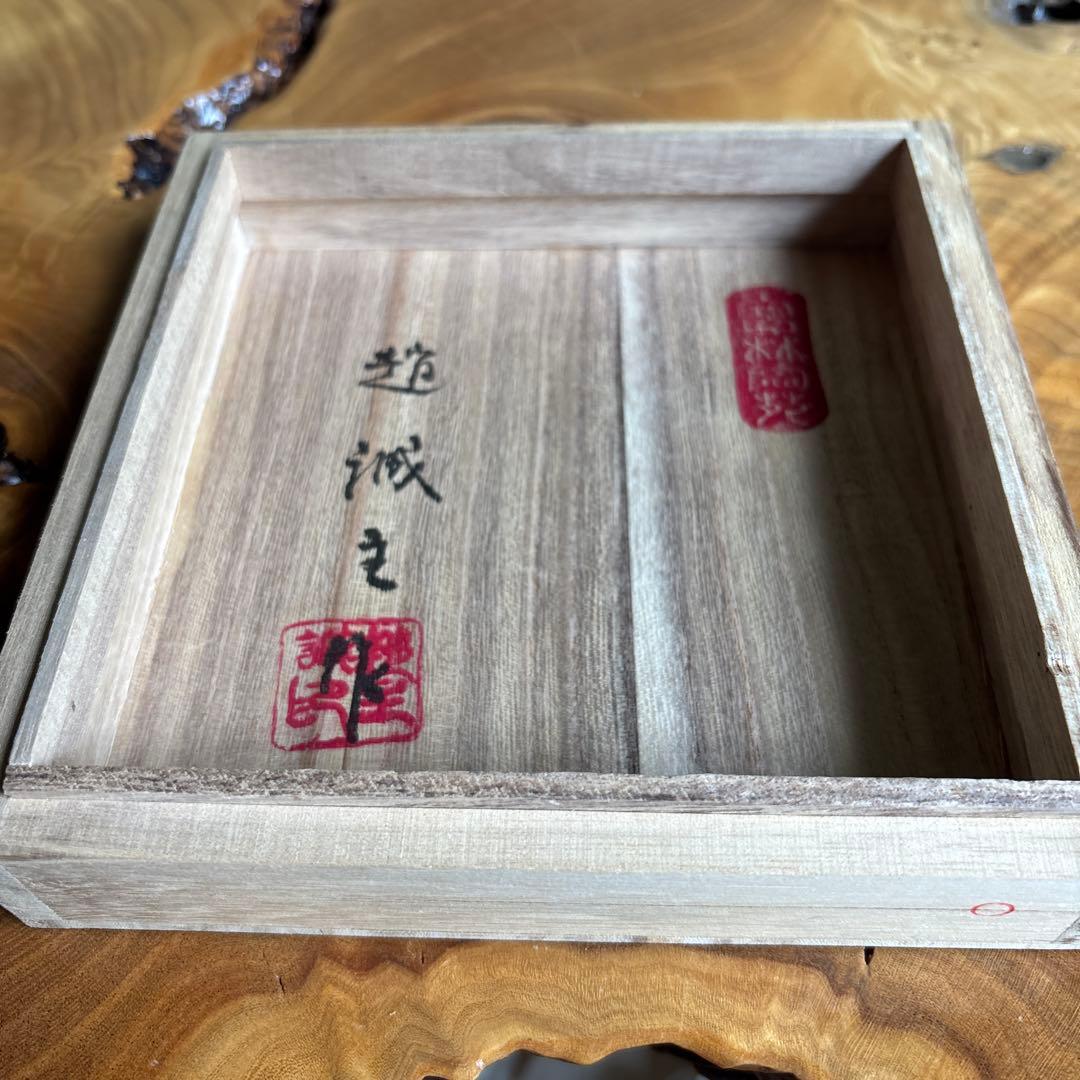
Hakeme Matcha Bowl by Cho Seongju — Korean-Style Brushwork Tea Bowl with Signed Box
Hakeme Matcha Bowl by Cho Seongju — Korean-Style Brushwork Tea Bowl with Signed Box
Regular price
Dhs. 611.00 AED
Regular price
Sale price
Dhs. 611.00 AED
Taxes included.
Shipping calculated at checkout.
Experience Authentic Japan Art with this Hakeme Tea Bowl. This Korean Style Matcha Bowl serves as a Handmade Chawan and Wabi Sabi Tea Ceremony Bowl, featuring Bold Brushwork Glaze and Ido Style Foot Ring—a must-have for any Art Collector seeking a Signed Wooden Box Tea Bowl with Goryeo Ceramic Aesthetic and Japanese Tea Ceremony Gift.
🔹 [ BASIC DETAILS ]
• Artist: Cho Seongju (趙誠主) — contemporary Korean-Japanese ceramic artist working in the Goryeo hakeme tradition
• Technique: Hakeme (刷毛目) — bold white slip applied with a coarse brush over iron-rich stoneware clay
• Era: 2010 – 2019 (contemporary, signed work)
• Origin: Japan (Korean-influenced tradition; Joseon/Goryeo style)
• Dimensions: Diameter approx. 13.5 cm, Height approx. 7.5 cm
• Box: Tomobako (signed original wooden box) included
• Condition: Excellent — no chips, no cracks, no repairs. Me-ato (kiln spur mark) visible in the well of the bowl interior, a natural firing characteristic, not a defect.
🔹 [ CULTURAL & ARTISTIC INSIGHT ]
The hakeme technique traces its origins to the Joseon Dynasty (1392–1897) of Korea, where potters applied rice-straw brushes loaded with pale slip over dark clay bodies to create the luminous, striated surfaces that so captivated the Japanese tea masters of the sixteenth century. Sen no Rikyu and his contemporaries recognized in these Korean peasant wares — rough, asymmetrical, alive with the texture of the hand — the very essence of wabi: an aesthetic of intentional imperfection and quiet presence.
Cho Seongju's bowl carries this lineage forward with unmistakable authority. The exterior brushwork is forceful and unbroken — wide, sweeping horizontal strokes that reveal the coarse iron-bearing clay beneath in irregular flashes of warm gray-brown. The interior is where the bowl truly opens: concentric arcs of white slip, applied in a single uninterrupted motion, spiral outward from the iron-dark me-ato at the center well, creating a visual field as meditative as raked sand in a Zen garden. Fine craquelure laces the glaze surface — the natural crazing that develops as glaze and clay respond differently to heat and time.
The foot (kodai) is deliberately high and dark, unglazed, showing raw iron-clay in deep umber. This elevated, slightly narrowed base — reminiscent of classic Ko-Ido chawan — gives the bowl a sense of upright presence, as though it is standing at attention for the whisking of tea.
POETIC LINE: "The brush passed once, and the clay remembered everything — the speed of the hand, the weight of the slip, the silence between strokes."
🔹 [ DEEP-DIVE COMMENTARY ]
Hakeme is among the most technically demanding of all slip-decoration techniques precisely because it allows no revision. The potter loads a bundle of coarse straw or hemp fibers — not a painter's brush, but an instrument closer to a broom — with liquid white slip (a clay-and-water suspension) and applies it to the leather-hard pot in a single, committed gesture. The resulting texture is both gestural and structural: each bristle leaves a discrete channel in the slip, and these channels catch light differently from the raised ridges between them, producing the characteristic shimmering, striated surface.
The Ko-Ido (古井戸) reference in this bowl lies primarily in its proportions and foot treatment. Ido-type bowls — originally Korean rice bowls appropriated by Japanese tea masters — are characterized by a large open mouth relative to the base, a conical body, and a high narrow foot that often shows kiln adhesions or deliberate texturing. The me-ato visible in Cho Seongju's interior is precisely this kind of kiln spur mark: a deliberate preservation of the trace left by the small clay prop used to support the bowl during firing. In the Japanese tea aesthetic, such marks are considered landscape elements (景色, keshiki), adding biographical depth to the object.
For collectors, works in this tradition hold particular value for several reasons. First, the hakeme technique is unforgiving — the best examples are produced in a state of total absorption, and that absorption is legible in the final object. Second, the Korean-Japanese cross-cultural transmission represented here is historically significant: the tea masters who brought Joseon ceramics to Japan were not merely importing objects but importing an aesthetic philosophy, and contemporary artists like Cho Seongju who work in this lineage are participants in that ongoing dialogue. Third, the tomobako (signed original wooden box) provides authentication and provenance, an important marker for serious collectors.
In daily use, the wide mouth and open form of this bowl are ideally suited to both thin tea (usucha) and thick tea (koicha), and the hakeme interior provides just enough surface texture to assist the chasen (tea whisk) in creating a smooth, stable foam.
🔹 [ 日本語解説 ]
【基本情報】
・作家:趙誠主(チョ・ソンジュ)— 高麗刷毛目の伝統を継ぐ、現代の陶芸家
・技法:刷毛目(はけめ)— 荒い刷毛で白化粧土を大胆に施した鉄質炻器
・制作年代:2010年代(現代作)
・産地:日本制作(高麗・朝鮮王朝様式の影響を色濃く受ける)
・寸法:直径 約13.5cm、高さ 約7.5cm
・付属品:共箱(作家署名入り)
・状態:良好 — 割れ・欠け・補修なし。見込みに目跡あり(焼成時の自然な痕跡)。
【文化的・芸術的解説】
刷毛目技法のルーツは、朝鮮王朝時代(1392〜1897年)の李朝陶磁にさかのぼります。陶工たちは稲藁の束を刷毛として、白化粧土を粗い鉄質の素地に大らかな筆致で塗り重ねました。この素朴にして力強い表情が、十六世紀の茶人——とりわけ千利休——の心を深く捉えました。朝鮮の日用雑器に、利休は侘びの本質を見出したのです。
趙誠主のこの茶碗は、その系譜を誠実に継ぎながら、作家自身の力強い個性を宿しています。外面には途切れることのない横方向の刷毛目が走り、素地の鉄灰色が要所で顔を覗かせます。見込みには、白化粧土が螺旋状に刷き回され、中心の目跡から外縁へと広がる同心円の筆跡が、枯山水の砂紋を思わせる静謐な景色を生み出しています。釉薬には細やかな貫入(ひび)が入り、焼成後に素地と釉の収縮差が生んだ自然の結晶です。
高台は高く削り出され、施釉なしの鉄素地がそのまま露わになっています。古井戸茶碗を彷彿とさせるこの高台の佇まいが、碗全体に凛とした緊張感を与えています。
【作家・技法について(上級コレクター向け解説)】
刷毛目はすべての化粧技法の中でも、もっとも修正が利かない技法のひとつです。陶工は稲藁や麻の束に白化粧土を含ませ、革硬(かわかわき)の素地に一気に塗り付けます。刷毛の一本一本が素地に溝を刻み、その溝と稜との光の受け方の違いが、刷毛目独特のシマ模様と輝きを生み出します。
本作における「古井戸」的な要素は、碗の比率と高台の造形にあります。井戸茶碗は——本来、朝鮮の飯碗が日本の茶人によって見出されたものですが——大振りな口径と茶筅通りを意識した傾斜した内壁、そして高い高台を特徴とします。見込みの目跡は、焼成時に碗を支えた小さな粘土棒(目土)の痕跡であり、日本の茶の美学においては「景色」として愛でられる要素です。
コレクターにとって、この作品が価値を持つ理由はいくつかあります。第一に、刷毛目は一発勝負の技法であり、優品には作陶時の集中と緊張がそのまま宿ります。第二に、高麗・朝鮮から日本へと伝わった刷毛目の系譜を現代に継ぐ作家は限られており、趙誠主はその数少ない作陶者のひとりです。第三に、共箱付きであることが作品の真正性と来歴を保証します。
日常使いにおいては、広い口径と開いた形状が薄茶・濃茶いずれにも適しており、刷毛目の内面がほどよい摩擦を生み、茶筅による点て(たて)を助けます。
🔹 [ SHIPPING & PACKAGING ]
• Dispatch: Within 1-6 business days
• Carrier: Japan Post EMS / UPS (with tracking)
• Packaging: Carefully wrapped with protective materials
🔹 [ BASIC DETAILS ]
• Artist: Cho Seongju (趙誠主) — contemporary Korean-Japanese ceramic artist working in the Goryeo hakeme tradition
• Technique: Hakeme (刷毛目) — bold white slip applied with a coarse brush over iron-rich stoneware clay
• Era: 2010 – 2019 (contemporary, signed work)
• Origin: Japan (Korean-influenced tradition; Joseon/Goryeo style)
• Dimensions: Diameter approx. 13.5 cm, Height approx. 7.5 cm
• Box: Tomobako (signed original wooden box) included
• Condition: Excellent — no chips, no cracks, no repairs. Me-ato (kiln spur mark) visible in the well of the bowl interior, a natural firing characteristic, not a defect.
🔹 [ CULTURAL & ARTISTIC INSIGHT ]
The hakeme technique traces its origins to the Joseon Dynasty (1392–1897) of Korea, where potters applied rice-straw brushes loaded with pale slip over dark clay bodies to create the luminous, striated surfaces that so captivated the Japanese tea masters of the sixteenth century. Sen no Rikyu and his contemporaries recognized in these Korean peasant wares — rough, asymmetrical, alive with the texture of the hand — the very essence of wabi: an aesthetic of intentional imperfection and quiet presence.
Cho Seongju's bowl carries this lineage forward with unmistakable authority. The exterior brushwork is forceful and unbroken — wide, sweeping horizontal strokes that reveal the coarse iron-bearing clay beneath in irregular flashes of warm gray-brown. The interior is where the bowl truly opens: concentric arcs of white slip, applied in a single uninterrupted motion, spiral outward from the iron-dark me-ato at the center well, creating a visual field as meditative as raked sand in a Zen garden. Fine craquelure laces the glaze surface — the natural crazing that develops as glaze and clay respond differently to heat and time.
The foot (kodai) is deliberately high and dark, unglazed, showing raw iron-clay in deep umber. This elevated, slightly narrowed base — reminiscent of classic Ko-Ido chawan — gives the bowl a sense of upright presence, as though it is standing at attention for the whisking of tea.
POETIC LINE: "The brush passed once, and the clay remembered everything — the speed of the hand, the weight of the slip, the silence between strokes."
🔹 [ DEEP-DIVE COMMENTARY ]
Hakeme is among the most technically demanding of all slip-decoration techniques precisely because it allows no revision. The potter loads a bundle of coarse straw or hemp fibers — not a painter's brush, but an instrument closer to a broom — with liquid white slip (a clay-and-water suspension) and applies it to the leather-hard pot in a single, committed gesture. The resulting texture is both gestural and structural: each bristle leaves a discrete channel in the slip, and these channels catch light differently from the raised ridges between them, producing the characteristic shimmering, striated surface.
The Ko-Ido (古井戸) reference in this bowl lies primarily in its proportions and foot treatment. Ido-type bowls — originally Korean rice bowls appropriated by Japanese tea masters — are characterized by a large open mouth relative to the base, a conical body, and a high narrow foot that often shows kiln adhesions or deliberate texturing. The me-ato visible in Cho Seongju's interior is precisely this kind of kiln spur mark: a deliberate preservation of the trace left by the small clay prop used to support the bowl during firing. In the Japanese tea aesthetic, such marks are considered landscape elements (景色, keshiki), adding biographical depth to the object.
For collectors, works in this tradition hold particular value for several reasons. First, the hakeme technique is unforgiving — the best examples are produced in a state of total absorption, and that absorption is legible in the final object. Second, the Korean-Japanese cross-cultural transmission represented here is historically significant: the tea masters who brought Joseon ceramics to Japan were not merely importing objects but importing an aesthetic philosophy, and contemporary artists like Cho Seongju who work in this lineage are participants in that ongoing dialogue. Third, the tomobako (signed original wooden box) provides authentication and provenance, an important marker for serious collectors.
In daily use, the wide mouth and open form of this bowl are ideally suited to both thin tea (usucha) and thick tea (koicha), and the hakeme interior provides just enough surface texture to assist the chasen (tea whisk) in creating a smooth, stable foam.
🔹 [ 日本語解説 ]
【基本情報】
・作家:趙誠主(チョ・ソンジュ)— 高麗刷毛目の伝統を継ぐ、現代の陶芸家
・技法:刷毛目(はけめ)— 荒い刷毛で白化粧土を大胆に施した鉄質炻器
・制作年代:2010年代(現代作)
・産地:日本制作(高麗・朝鮮王朝様式の影響を色濃く受ける)
・寸法:直径 約13.5cm、高さ 約7.5cm
・付属品:共箱(作家署名入り)
・状態:良好 — 割れ・欠け・補修なし。見込みに目跡あり(焼成時の自然な痕跡)。
【文化的・芸術的解説】
刷毛目技法のルーツは、朝鮮王朝時代(1392〜1897年)の李朝陶磁にさかのぼります。陶工たちは稲藁の束を刷毛として、白化粧土を粗い鉄質の素地に大らかな筆致で塗り重ねました。この素朴にして力強い表情が、十六世紀の茶人——とりわけ千利休——の心を深く捉えました。朝鮮の日用雑器に、利休は侘びの本質を見出したのです。
趙誠主のこの茶碗は、その系譜を誠実に継ぎながら、作家自身の力強い個性を宿しています。外面には途切れることのない横方向の刷毛目が走り、素地の鉄灰色が要所で顔を覗かせます。見込みには、白化粧土が螺旋状に刷き回され、中心の目跡から外縁へと広がる同心円の筆跡が、枯山水の砂紋を思わせる静謐な景色を生み出しています。釉薬には細やかな貫入(ひび)が入り、焼成後に素地と釉の収縮差が生んだ自然の結晶です。
高台は高く削り出され、施釉なしの鉄素地がそのまま露わになっています。古井戸茶碗を彷彿とさせるこの高台の佇まいが、碗全体に凛とした緊張感を与えています。
【作家・技法について(上級コレクター向け解説)】
刷毛目はすべての化粧技法の中でも、もっとも修正が利かない技法のひとつです。陶工は稲藁や麻の束に白化粧土を含ませ、革硬(かわかわき)の素地に一気に塗り付けます。刷毛の一本一本が素地に溝を刻み、その溝と稜との光の受け方の違いが、刷毛目独特のシマ模様と輝きを生み出します。
本作における「古井戸」的な要素は、碗の比率と高台の造形にあります。井戸茶碗は——本来、朝鮮の飯碗が日本の茶人によって見出されたものですが——大振りな口径と茶筅通りを意識した傾斜した内壁、そして高い高台を特徴とします。見込みの目跡は、焼成時に碗を支えた小さな粘土棒(目土)の痕跡であり、日本の茶の美学においては「景色」として愛でられる要素です。
コレクターにとって、この作品が価値を持つ理由はいくつかあります。第一に、刷毛目は一発勝負の技法であり、優品には作陶時の集中と緊張がそのまま宿ります。第二に、高麗・朝鮮から日本へと伝わった刷毛目の系譜を現代に継ぐ作家は限られており、趙誠主はその数少ない作陶者のひとりです。第三に、共箱付きであることが作品の真正性と来歴を保証します。
日常使いにおいては、広い口径と開いた形状が薄茶・濃茶いずれにも適しており、刷毛目の内面がほどよい摩擦を生み、茶筅による点て(たて)を助けます。
🔹 [ SHIPPING & PACKAGING ]
• Dispatch: Within 1-6 business days
• Carrier: Japan Post EMS / UPS (with tracking)
• Packaging: Carefully wrapped with protective materials
Quantity
Couldn't load pickup availability
Low stock: 1 left
View full details