1
/
of
10
Hagi-yaki Yunomi by Hirose Tanga — Tenpouzan Kiln Large Tea Cup with Box
Hagi-yaki Yunomi by Hirose Tanga — Tenpouzan Kiln Large Tea Cup with Box
Regular price
Dhs. 759.00 AED
Regular price
Sale price
Dhs. 759.00 AED
Taxes included.
Shipping calculated at checkout.
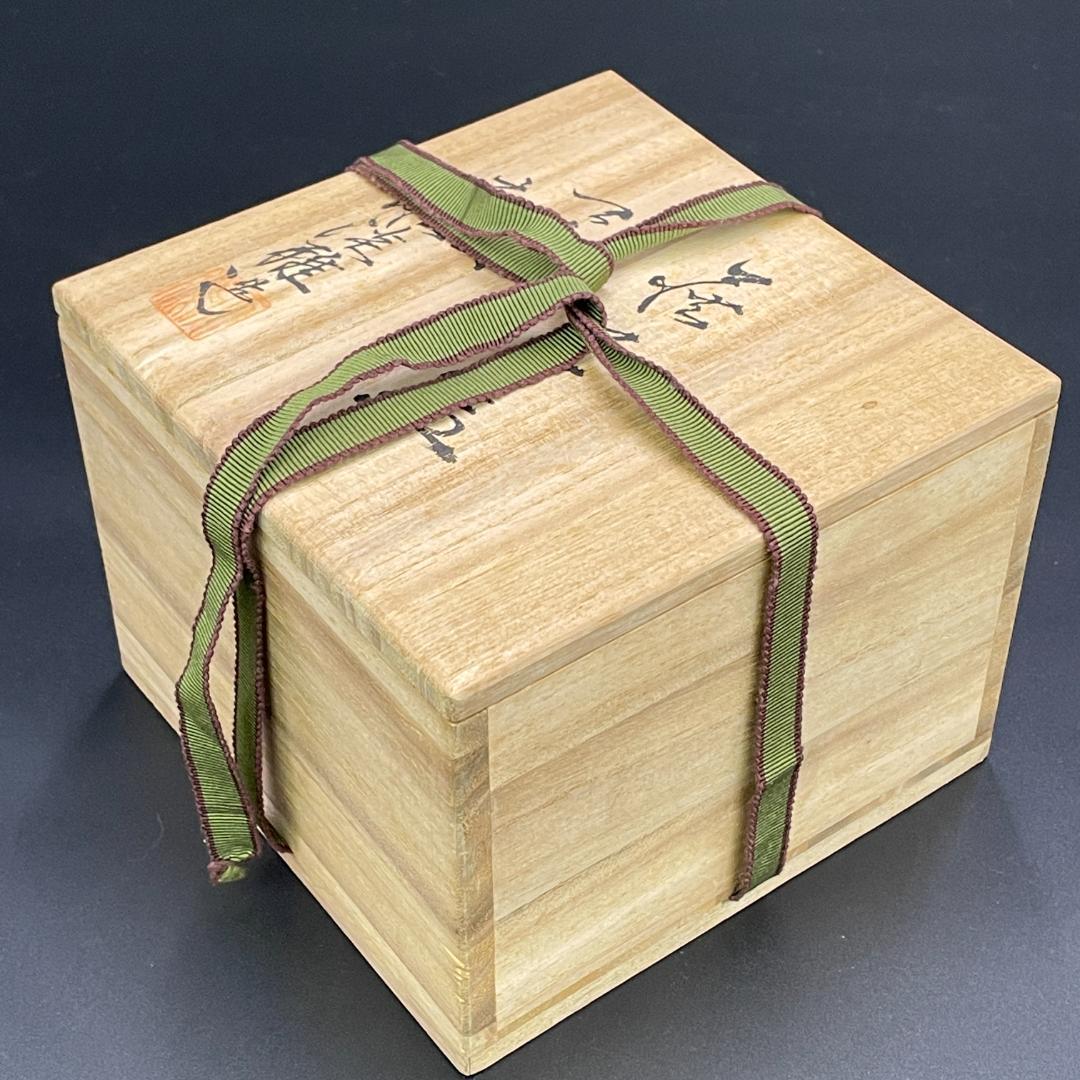
A hagi-yaki yunomi by Hirose Tanga of Tenpouzan Kiln — a generous, straight-sided vessel whose white hagi glaze is animated by kairagi (shell-pattern crazing), fire-scarring, and the warm orange-brown of exposed clay at the foot. The glaze surface appears to move as the light changes: dense crazing maps itself across a ground that shifts from milky celadon to warm blush, the visual complexity achieved through subtraction rather than addition. Large enough to serve as a matcha bowl, this yunomi comes with its original wood box, yellow fukusa, and maker's bookmark.
🔹 [ BASIC DETAILS ]
• Artist: Hirose Tanga (廣瀬淡雅), Tenpouzan Kiln (天鵬山窯)
• Technique: Hagi-yaki (萩焼), Shiro-hagi (白萩) glaze with kairagi
• Era: Contemporary (Heisei–Reiwa)
• Origin: Hagi, Yamaguchi Prefecture, Japan
• Dimensions: H approx. 10.5 cm, Rim diameter approx. 11 cm
• Box: Original wood box (共箱) inscribed 天鵬山 廣瀬淡雅造
• Accessories: Fukusa cloth (yellow), maker's bookmark (栞)
• Condition: Excellent. No chips, cracks, or repairs. Crazing, fire marks, and clay exposure at foot are inherent characteristics of Hagi-yaki and markers of authenticity.
🔹 [ CULTURAL & ARTISTIC INSIGHT ]
Hagi-yaki is one of the three great wares of the Japanese tea ceremony — placed alongside Raku and Karatsu in the canonical ranking ichi-raku, ni-hagi, san-karatsu (first raku, second hagi, third karatsu). Its distinction lies in what happens over time: hagi glaze crazes gradually, and through repeated use, tea and water seep into the fine cracks, progressively darkening and warming the appearance of the glaze in a process called hagi no nanake (hagi's seven changes). A well-used hagi piece over decades becomes something its maker could not have foreseen — and this openness to transformation is precisely what the tea tradition values.
The kairagi (貝裂ぎ) visible in this piece — dense, shell-like surface crazing — is particularly prized as a scenic quality (景色, keishiki). It is not a flaw; it is the equivalent of age rings in wood, the visible record of the kiln's thermal journey.
🔹 [ DEEP-DIVE COMMENTARY ]
Hirose Tanga's Tenpouzan Kiln works within the Hagi tradition's core aesthetic while producing forms of particular structural confidence. The yunomi here is cylindrical — straight-sided, with a rim that is slightly irregular, the mark of hand-throwing without trimming to mechanical perfection. This irregularity is the artist's signature as much as the seal pressed into the base.
The foot, visible in the base image, shows the characteristic hagi feature: unglazed or thinly glazed orange-red clay, with the swirling mark of the wheel-cut trimming tool. The artist's seal is pressed clearly into the side of the foot — not stamped for authentication after the fact, but placed during making, before firing, when the clay was soft. The seal fired with the bowl is part of its body.
At 11 cm rim diameter and 10.5 cm height, this yunomi sits at the boundary between large tea cup and tea bowl — it can be used comfortably for thick tea (koicha) as well as everyday tea. The generous interior volume means that the green of matcha, pooled at the base against the milky-white glaze, produces a particular landscape. This dual functionality — both yunomi and chawan — is a quality that practical collectors in the tea world actively seek.
The well (idodachi) shape referenced in the product note — the deep cylindrical form associated with Korean Ido ware — positions this piece within a specific aesthetic lineage: the warlord-era fascination with Korean peasant ware that Rikyu and his circle elevated to the highest tea objects. Tenpouzan Kiln's version is a considered homage to this tradition, not a reproduction of it.
[ JAPANESE DESCRIPTION / 日本語解説 ]
天鵬山窯・廣瀬淡雅による萩焼湯呑。白萩釉に貝裂ぎ(カイラギ)の景色が美しく、高台には橙色の土見せが現れる。井戸手風の直胴形、口径11cm・高さ10.5cmと大ぶりで、抹茶碗としても十分な容量を持つ。
萩焼は「一楽・二萩・三唐津」と称される三大茶陶の一つ。萩の七変化(繰り返し使うことで釉調が変化する)は他の焼物にない独特の魅力であり、年月とともに育てる陶器として愛好家に深く支持されている。カイラギの貫入は窯変の証であり、本作の景色の核心をなす。
共箱に「天鵬山 廣瀬淡雅造」の銘あり。高台に作家印確認済み。黄福紗・栞付属。
🔹 [ SHIPPING & PACKAGING ]
• Dispatch: Within 1-6 business days
• Carrier: Japan Post EMS / UPS (with tracking)
• Packaging: Carefully wrapped with protective materials
🔹 [ BASIC DETAILS ]
• Artist: Hirose Tanga (廣瀬淡雅), Tenpouzan Kiln (天鵬山窯)
• Technique: Hagi-yaki (萩焼), Shiro-hagi (白萩) glaze with kairagi
• Era: Contemporary (Heisei–Reiwa)
• Origin: Hagi, Yamaguchi Prefecture, Japan
• Dimensions: H approx. 10.5 cm, Rim diameter approx. 11 cm
• Box: Original wood box (共箱) inscribed 天鵬山 廣瀬淡雅造
• Accessories: Fukusa cloth (yellow), maker's bookmark (栞)
• Condition: Excellent. No chips, cracks, or repairs. Crazing, fire marks, and clay exposure at foot are inherent characteristics of Hagi-yaki and markers of authenticity.
🔹 [ CULTURAL & ARTISTIC INSIGHT ]
Hagi-yaki is one of the three great wares of the Japanese tea ceremony — placed alongside Raku and Karatsu in the canonical ranking ichi-raku, ni-hagi, san-karatsu (first raku, second hagi, third karatsu). Its distinction lies in what happens over time: hagi glaze crazes gradually, and through repeated use, tea and water seep into the fine cracks, progressively darkening and warming the appearance of the glaze in a process called hagi no nanake (hagi's seven changes). A well-used hagi piece over decades becomes something its maker could not have foreseen — and this openness to transformation is precisely what the tea tradition values.
The kairagi (貝裂ぎ) visible in this piece — dense, shell-like surface crazing — is particularly prized as a scenic quality (景色, keishiki). It is not a flaw; it is the equivalent of age rings in wood, the visible record of the kiln's thermal journey.
🔹 [ DEEP-DIVE COMMENTARY ]
Hirose Tanga's Tenpouzan Kiln works within the Hagi tradition's core aesthetic while producing forms of particular structural confidence. The yunomi here is cylindrical — straight-sided, with a rim that is slightly irregular, the mark of hand-throwing without trimming to mechanical perfection. This irregularity is the artist's signature as much as the seal pressed into the base.
The foot, visible in the base image, shows the characteristic hagi feature: unglazed or thinly glazed orange-red clay, with the swirling mark of the wheel-cut trimming tool. The artist's seal is pressed clearly into the side of the foot — not stamped for authentication after the fact, but placed during making, before firing, when the clay was soft. The seal fired with the bowl is part of its body.
At 11 cm rim diameter and 10.5 cm height, this yunomi sits at the boundary between large tea cup and tea bowl — it can be used comfortably for thick tea (koicha) as well as everyday tea. The generous interior volume means that the green of matcha, pooled at the base against the milky-white glaze, produces a particular landscape. This dual functionality — both yunomi and chawan — is a quality that practical collectors in the tea world actively seek.
The well (idodachi) shape referenced in the product note — the deep cylindrical form associated with Korean Ido ware — positions this piece within a specific aesthetic lineage: the warlord-era fascination with Korean peasant ware that Rikyu and his circle elevated to the highest tea objects. Tenpouzan Kiln's version is a considered homage to this tradition, not a reproduction of it.
[ JAPANESE DESCRIPTION / 日本語解説 ]
天鵬山窯・廣瀬淡雅による萩焼湯呑。白萩釉に貝裂ぎ(カイラギ)の景色が美しく、高台には橙色の土見せが現れる。井戸手風の直胴形、口径11cm・高さ10.5cmと大ぶりで、抹茶碗としても十分な容量を持つ。
萩焼は「一楽・二萩・三唐津」と称される三大茶陶の一つ。萩の七変化(繰り返し使うことで釉調が変化する)は他の焼物にない独特の魅力であり、年月とともに育てる陶器として愛好家に深く支持されている。カイラギの貫入は窯変の証であり、本作の景色の核心をなす。
共箱に「天鵬山 廣瀬淡雅造」の銘あり。高台に作家印確認済み。黄福紗・栞付属。
🔹 [ SHIPPING & PACKAGING ]
• Dispatch: Within 1-6 business days
• Carrier: Japan Post EMS / UPS (with tracking)
• Packaging: Carefully wrapped with protective materials
Quantity
Couldn't load pickup availability
Low stock: 1 left
View full details