1
/
of
9
Hagi Ware Yunomi Tea Cup | Shiroyama Kiln | Pink Feldspathic Glaze | Tomobako | Yamaguchi Japan
Hagi Ware Yunomi Tea Cup | Shiroyama Kiln | Pink Feldspathic Glaze | Tomobako | Yamaguchi Japan
Regular price
Dhs. 407.00 AED
Regular price
Sale price
Dhs. 407.00 AED
Taxes included.
Shipping calculated at checkout.
A cylindrical yunomi from Shiroyama-gama, Hagi — its blush-pink feldspathic glaze drifting from pale chalk at the shoulder into warm rose-grey at the body. Horizontal throwing rings surface through the glaze like memory. Comes in its original signed tomobako. #hagiyaki #hagaware #yunomi #japaneseteacup #shiryoamagama #stoneware #japaneseceramics #wabisabi #teaceremony
🔹 [ BASIC DETAILS ]
- Form: Yunomi (湯呑) — cylindrical Japanese everyday tea cup
- Kiln: Shiroyama-gama (城山窯), Hagi, Yamaguchi Prefecture
- Glaze: Feldspathic pink-blush glaze — pale at the rim, warming to rose-grey at the body
- Clay: Hagi stoneware — soft, porous, with visible throwing rings
- Dimensions: Diameter approx. 7.8 cm / Height approx. 10.5 cm
- Condition: Very good. No chips, cracks, or repairs. Natural glaze variation throughout.
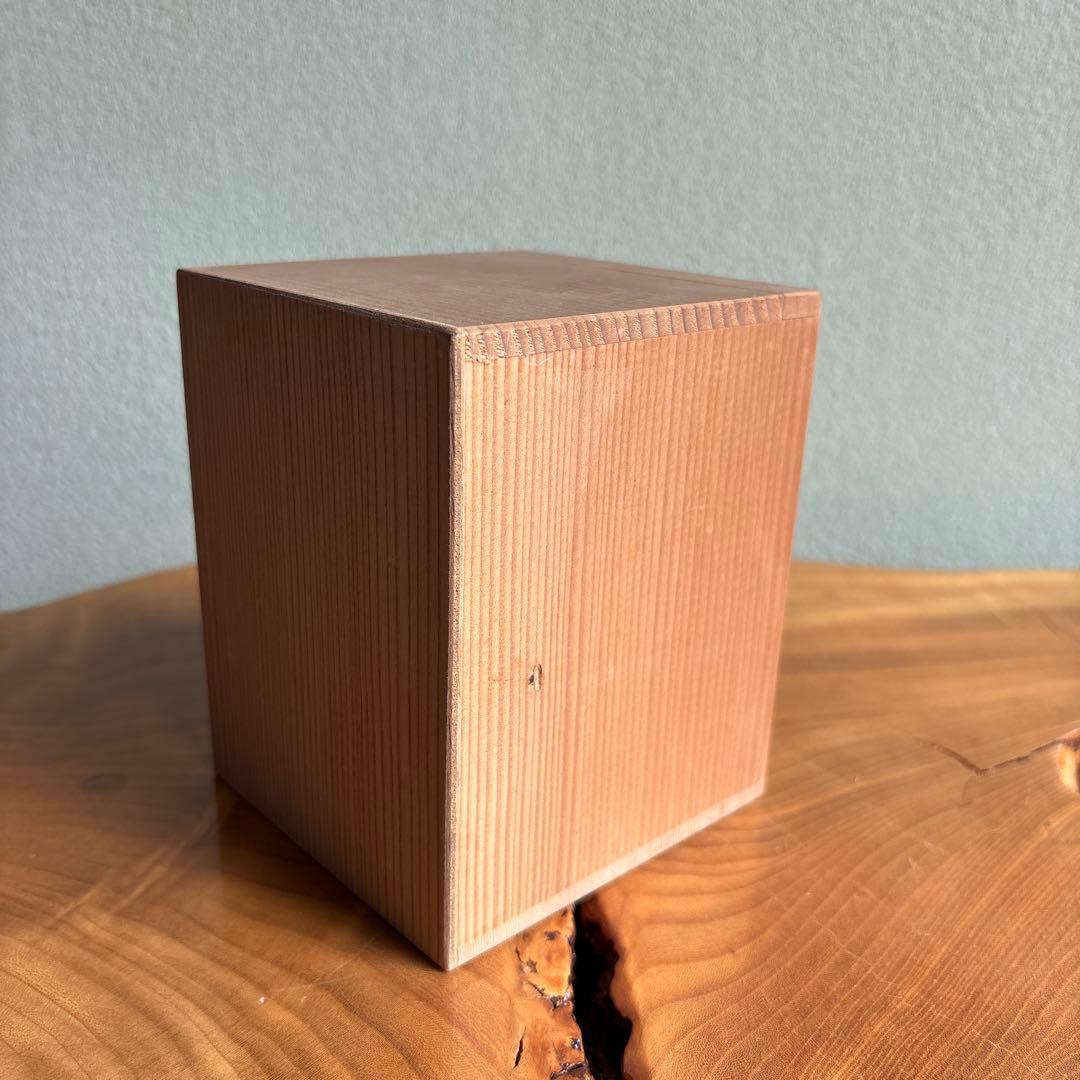
- Box: Original signed tomobako (桐箱) with brushwork inscription 萩焼 湯呑 城山
- Era: Showa–Heisei period
🔹 [ Basic Details / 基本情報 ]
- 形式:湯呑(日常使いの茶器)
- 窯元:城山窯(山口県萩市)
- 釉薬:長石釉 淡いピンク〜ローズグレーのグラデーション
- 素地:萩焼特有の多孔質土、轆轤跡が釉薬越しに透けて見える
- サイズ:直径約7.8cm / 高さ約10.5cm
- 状態:良好。欠け・ひび・修復なし。釉薬のゆらぎは自然なものです。
- 箱:共箱(桐箱)付き。蓋に「萩焼 湯呑 城山」の墨書き
🔹 [ CULTURAL & ARTISTIC INSIGHT ]
Hagi ware carries a lineage that reaches back to the Korean peninsula. When Mōri Terumoto returned from the Imjin War in the late sixteenth century, he brought with him potters from the Joseon dynasty — among them the brothers Ri Shakko and Ri Kei — who settled on the western coast of Honshū and founded what would become one of Japan's most celebrated ceramic traditions. That origin is not footnote; it is felt in every Hagi piece. The loose, giving quality of the clay, the deliberate imperfection of the form, the feldspathic glaze that drinks tea rather than deflects it — these are inheritances from a Korean aesthetic that Japan absorbed and then quietly called its own.
The tea masters knew it. The old hierarchy — *Ichi-raku, Ni-Hagi, San-Karatsu* (first Raku, second Hagi, third Karatsu) — placed Hagi in the highest tier of wares suitable for the tea ceremony. Raku's hand-formed softness claimed the top position; Hagi's warmth and unpredictability earned second. But the yunomi is not a chawan. It does not live on the shelf between ceremonies. A yunomi is held every morning, poured into without formality, warmed by sencha and bancha season after season. That is its specific dignity: not ceremony, but constancy.
And then there is *Hagi-no-nanabake* — the seven transformations. Because Hagi clay is porous and the feldspathic glaze retains micro-fissures, the cup changes color as tea seeps slowly into the body over years of use. A pale blush deepens. The interior warms from grey to amber. The transformation is not damage; it is accumulation — evidence that the cup has been present, repeatedly, in the life of its owner. This yunomi already carries a quiet blush. Continued use will deepen it further, into something that cannot be purchased new.
The tomobako brushwork — bold, unhurried, confident — speaks of a kiln that signs its work without anxiety.
🔹 [ Cultural & Artistic Insight / 文化的背景 ]
萩焼のルーツは朝鮮半島に辿り着く。文禄・慶長の役の後、毛利輝元が連れ帰った李朝の陶工たちが山口の地に根を下ろし、やがて「一楽・二萩・三唐津」という茶の湯の格付けで最上位に位置する窯業を築いた。その系譜は、土の柔らかさ、釉薬の呼吸、形の揺らぎのなかに今も息づいている。
湯呑は茶碗ではない。棚に飾られるのではなく、毎朝手に取られ、煎茶や番茶とともに日常を刻む器だ。その反復こそが湯呑の格であり、萩焼の湯呑が持つ静かな存在感の源でもある。
「萩の七化け」——萩の多孔質な土と長石釉の微細な貫入によって、使い込むほどに器の色が変わっていく。今この湯呑が帯びる淡いピンクは、これからの歳月でさらに深く、あたたかみのある色調へと育っていく。それは傷みではなく、積層だ。
🔹 [ DEEP-DIVE COMMENTARY ]
Hagi clay is not dense. Dig beneath the surface of a Hagi piece and you find something closer to compressed earth than to the tight, glassy stoneware of Arita or the iron-rich body of Bizen. The feldspar content is high and the firing temperature comparatively low, which means the clay remains slightly porous after the kiln — an open, receptive body that absorbs the mineral content of tea over time. This is not a flaw that craftsmen tolerate; it is a quality they cultivate. The clay is chosen and prepared precisely because of its porosity. The resulting cup is, in a technical sense, alive — its surface continuing to shift long after it has left the kiln.
This yunomi from Shiroyama-gama demonstrates the aesthetic that Hagi potters have refined across generations: a smooth but not slick surface, a glaze that sits on the body with the quality of mist rather than enamel, and a form that holds the hand without announcing itself. The pink-blush coloring is characteristic of the feldspar-rich glaze under oxidation — not applied for ornament but arrived at through the chemistry of the firing. The horizontal throwing rings, visible through the glaze at the mid-body, are not smoothed away. They are left as a record of the hand on the wheel, the speed of the throw, the particular morning the piece was made.
The yunomi occupies a specific place in Japanese ceramic culture that distinguishes it from the chawan. A chawan is a ceremonial object; its use is bounded by ritual, its handling governed by form. A yunomi asks for none of that. It is the cup a tea practitioner reaches for when the ceremony is over and they want tea — just tea, quietly, at their own table. This is why some collectors find that a Hagi yunomi becomes, over years, a more intimate object than any formal chawan in their collection. It accumulates presence through use rather than through display.
Shiroyama-gama (城山窯) operates within the Hagi tradition while maintaining its own quiet identity. The kiln's output is not prolific for the sake of volume; the signed tomobako that accompanies this yunomi reflects the care given to individual pieces — a piece considered complete enough to certify and box is one the kiln stands behind. The brushwork on the lid — 萩焼 湯呑 城山 — is confident and unhurried, written by someone who has signed many boxes and still takes the moment seriously. That signature is not marketing. It is accountability.
🔹 [ Deep-Dive Commentary / 詳細解説 ]
萩の土は密でない。長石の比率が高く、焼成温度が比較的低いため、焼成後も微細な気孔が残る。この多孔質性こそが萩焼の本質であり、欠点として許容されるのではなく、意図的に育てられる特質だ。年月をかけて茶の成分が土に浸透し、器は使われるほどに変化していく——萩の七化けが指すのはこの現象である。
湯呑という形式は、茶碗とは異なる日常の重力を持つ。茶碗が儀礼の中で生きるとすれば、湯呑は反復の中で生きる。毎朝手に取られ、温度を帯び、茶の色を吸い込んでいく。その積み重なりが、やがてどのような美術品よりも親密な存在へと器を変える。
城山窯は萩焼の伝統の中に静かに立っている。量産を目的とせず、共箱に墨書きで署名する姿勢は、一点一点を確かめながら世に出す窯の自意識を示している。
🔹 [ 日本語解説 ]
【萩焼 湯呑み 城山窯 共箱】
山口県萩市・城山窯による萩焼の湯呑。淡いピンクから温かみのあるローズグレーへと変化する長石釉が美しく、轆轤の跡が釉薬越しに透ける。共箱(桐箱)に「萩焼 湯呑 城山」の墨書き入り。使い込むほどに味わいが増す「萩の七化け」を体験できる一碗。
・サイズ:直径約7.8cm / 高さ約10.5cm。状態良好、欠け・ひびなし。共箱付き。東京より発送、追跡番号あり。
🔹 [ SHIPPING & PACKAGING ]
• Dispatch: Within 1-6 business days
• Carrier: Japan Post EMS / UPS (with tracking)
• Packaging: Carefully wrapped with protective materials
🔹 [ BASIC DETAILS ]
- Form: Yunomi (湯呑) — cylindrical Japanese everyday tea cup
- Kiln: Shiroyama-gama (城山窯), Hagi, Yamaguchi Prefecture
- Glaze: Feldspathic pink-blush glaze — pale at the rim, warming to rose-grey at the body
- Clay: Hagi stoneware — soft, porous, with visible throwing rings
- Dimensions: Diameter approx. 7.8 cm / Height approx. 10.5 cm
- Condition: Very good. No chips, cracks, or repairs. Natural glaze variation throughout.
- Box: Original signed tomobako (桐箱) with brushwork inscription 萩焼 湯呑 城山
- Era: Showa–Heisei period
🔹 [ Basic Details / 基本情報 ]
- 形式:湯呑(日常使いの茶器)
- 窯元:城山窯(山口県萩市)
- 釉薬:長石釉 淡いピンク〜ローズグレーのグラデーション
- 素地:萩焼特有の多孔質土、轆轤跡が釉薬越しに透けて見える
- サイズ:直径約7.8cm / 高さ約10.5cm
- 状態:良好。欠け・ひび・修復なし。釉薬のゆらぎは自然なものです。
- 箱:共箱(桐箱)付き。蓋に「萩焼 湯呑 城山」の墨書き
🔹 [ CULTURAL & ARTISTIC INSIGHT ]
Hagi ware carries a lineage that reaches back to the Korean peninsula. When Mōri Terumoto returned from the Imjin War in the late sixteenth century, he brought with him potters from the Joseon dynasty — among them the brothers Ri Shakko and Ri Kei — who settled on the western coast of Honshū and founded what would become one of Japan's most celebrated ceramic traditions. That origin is not footnote; it is felt in every Hagi piece. The loose, giving quality of the clay, the deliberate imperfection of the form, the feldspathic glaze that drinks tea rather than deflects it — these are inheritances from a Korean aesthetic that Japan absorbed and then quietly called its own.
The tea masters knew it. The old hierarchy — *Ichi-raku, Ni-Hagi, San-Karatsu* (first Raku, second Hagi, third Karatsu) — placed Hagi in the highest tier of wares suitable for the tea ceremony. Raku's hand-formed softness claimed the top position; Hagi's warmth and unpredictability earned second. But the yunomi is not a chawan. It does not live on the shelf between ceremonies. A yunomi is held every morning, poured into without formality, warmed by sencha and bancha season after season. That is its specific dignity: not ceremony, but constancy.
And then there is *Hagi-no-nanabake* — the seven transformations. Because Hagi clay is porous and the feldspathic glaze retains micro-fissures, the cup changes color as tea seeps slowly into the body over years of use. A pale blush deepens. The interior warms from grey to amber. The transformation is not damage; it is accumulation — evidence that the cup has been present, repeatedly, in the life of its owner. This yunomi already carries a quiet blush. Continued use will deepen it further, into something that cannot be purchased new.
The tomobako brushwork — bold, unhurried, confident — speaks of a kiln that signs its work without anxiety.
🔹 [ Cultural & Artistic Insight / 文化的背景 ]
萩焼のルーツは朝鮮半島に辿り着く。文禄・慶長の役の後、毛利輝元が連れ帰った李朝の陶工たちが山口の地に根を下ろし、やがて「一楽・二萩・三唐津」という茶の湯の格付けで最上位に位置する窯業を築いた。その系譜は、土の柔らかさ、釉薬の呼吸、形の揺らぎのなかに今も息づいている。
湯呑は茶碗ではない。棚に飾られるのではなく、毎朝手に取られ、煎茶や番茶とともに日常を刻む器だ。その反復こそが湯呑の格であり、萩焼の湯呑が持つ静かな存在感の源でもある。
「萩の七化け」——萩の多孔質な土と長石釉の微細な貫入によって、使い込むほどに器の色が変わっていく。今この湯呑が帯びる淡いピンクは、これからの歳月でさらに深く、あたたかみのある色調へと育っていく。それは傷みではなく、積層だ。
🔹 [ DEEP-DIVE COMMENTARY ]
Hagi clay is not dense. Dig beneath the surface of a Hagi piece and you find something closer to compressed earth than to the tight, glassy stoneware of Arita or the iron-rich body of Bizen. The feldspar content is high and the firing temperature comparatively low, which means the clay remains slightly porous after the kiln — an open, receptive body that absorbs the mineral content of tea over time. This is not a flaw that craftsmen tolerate; it is a quality they cultivate. The clay is chosen and prepared precisely because of its porosity. The resulting cup is, in a technical sense, alive — its surface continuing to shift long after it has left the kiln.
This yunomi from Shiroyama-gama demonstrates the aesthetic that Hagi potters have refined across generations: a smooth but not slick surface, a glaze that sits on the body with the quality of mist rather than enamel, and a form that holds the hand without announcing itself. The pink-blush coloring is characteristic of the feldspar-rich glaze under oxidation — not applied for ornament but arrived at through the chemistry of the firing. The horizontal throwing rings, visible through the glaze at the mid-body, are not smoothed away. They are left as a record of the hand on the wheel, the speed of the throw, the particular morning the piece was made.
The yunomi occupies a specific place in Japanese ceramic culture that distinguishes it from the chawan. A chawan is a ceremonial object; its use is bounded by ritual, its handling governed by form. A yunomi asks for none of that. It is the cup a tea practitioner reaches for when the ceremony is over and they want tea — just tea, quietly, at their own table. This is why some collectors find that a Hagi yunomi becomes, over years, a more intimate object than any formal chawan in their collection. It accumulates presence through use rather than through display.
Shiroyama-gama (城山窯) operates within the Hagi tradition while maintaining its own quiet identity. The kiln's output is not prolific for the sake of volume; the signed tomobako that accompanies this yunomi reflects the care given to individual pieces — a piece considered complete enough to certify and box is one the kiln stands behind. The brushwork on the lid — 萩焼 湯呑 城山 — is confident and unhurried, written by someone who has signed many boxes and still takes the moment seriously. That signature is not marketing. It is accountability.
🔹 [ Deep-Dive Commentary / 詳細解説 ]
萩の土は密でない。長石の比率が高く、焼成温度が比較的低いため、焼成後も微細な気孔が残る。この多孔質性こそが萩焼の本質であり、欠点として許容されるのではなく、意図的に育てられる特質だ。年月をかけて茶の成分が土に浸透し、器は使われるほどに変化していく——萩の七化けが指すのはこの現象である。
湯呑という形式は、茶碗とは異なる日常の重力を持つ。茶碗が儀礼の中で生きるとすれば、湯呑は反復の中で生きる。毎朝手に取られ、温度を帯び、茶の色を吸い込んでいく。その積み重なりが、やがてどのような美術品よりも親密な存在へと器を変える。
城山窯は萩焼の伝統の中に静かに立っている。量産を目的とせず、共箱に墨書きで署名する姿勢は、一点一点を確かめながら世に出す窯の自意識を示している。
🔹 [ 日本語解説 ]
【萩焼 湯呑み 城山窯 共箱】
山口県萩市・城山窯による萩焼の湯呑。淡いピンクから温かみのあるローズグレーへと変化する長石釉が美しく、轆轤の跡が釉薬越しに透ける。共箱(桐箱)に「萩焼 湯呑 城山」の墨書き入り。使い込むほどに味わいが増す「萩の七化け」を体験できる一碗。
・サイズ:直径約7.8cm / 高さ約10.5cm。状態良好、欠け・ひびなし。共箱付き。東京より発送、追跡番号あり。
🔹 [ SHIPPING & PACKAGING ]
• Dispatch: Within 1-6 business days
• Carrier: Japan Post EMS / UPS (with tracking)
• Packaging: Carefully wrapped with protective materials
Quantity
Couldn't load pickup availability
Out of stock
View full details