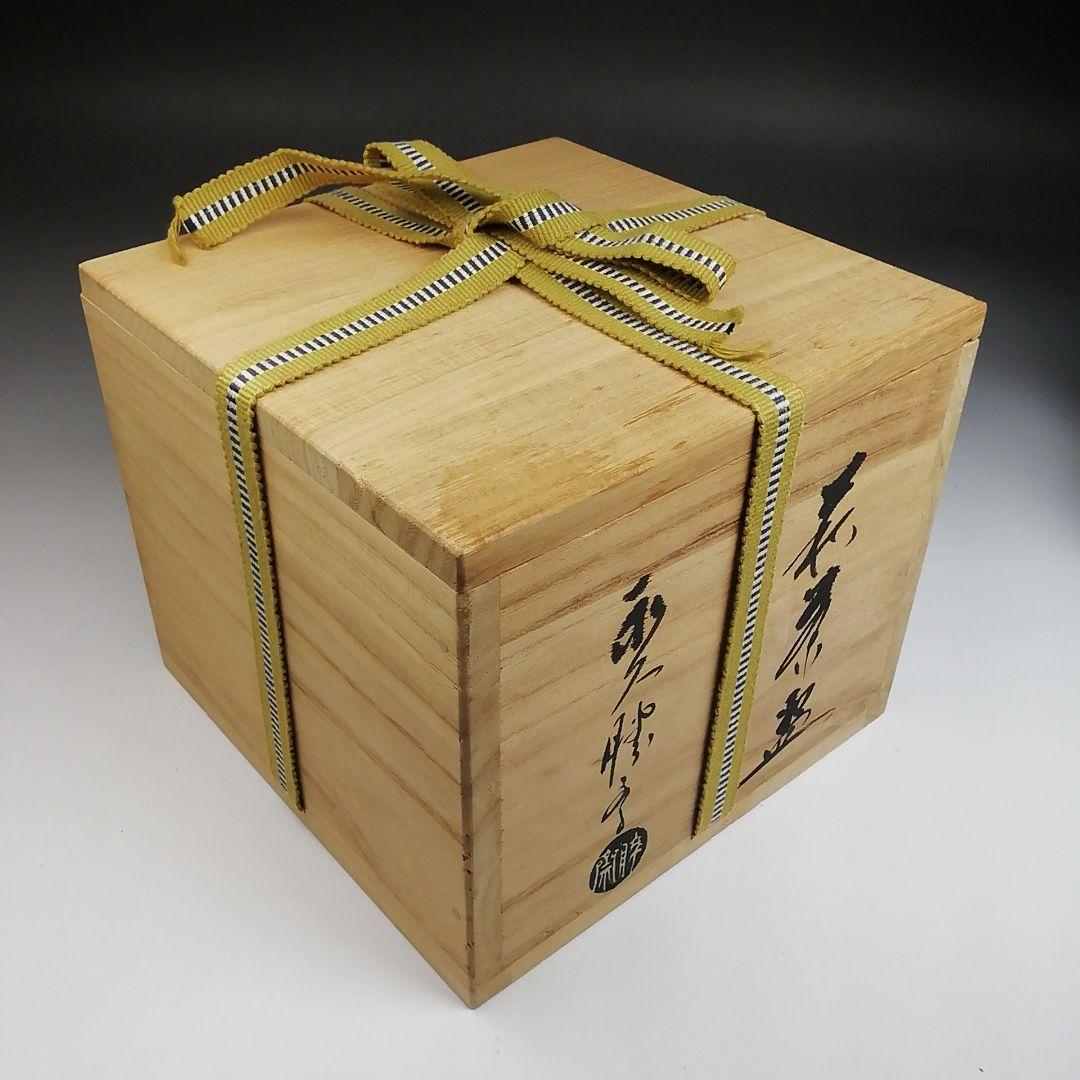
Experience authentic Japanese tea culture with this Hagi Ware Tea Bowl. This Japanese Chawan serves as an Eikyu Shosai Pottery and Toshoan Studio Ceramic, featuring White Hagi Glaze artistry and Kannyu Crackling tradition—a must-have for any Art Collector seeking Yamaguchi Prefecture Art and Wabi Sabi Tea Bowl.
━━━━━━━━━━━━━━━━━━━━
🔹 [ BASIC DETAILS ]
• Artist: Eikyu Shosai (永久勝斎), studio name Toshoan (陶勝庵) • Technique: White Hagi glaze with natural kannyu crackling • Era: Contemporary (Heisei–Reiwa period) • Origin: Hagi, Yamaguchi Prefecture, Japan • Dimensions: Height approx. 8 cm, Diameter approx. 12 cm (3.1" × 4.7") • Box: Signed tomobako with artist signature and Toshoan seal • Condition: Excellent — no chips, cracks, or repairs
━━━━━━━━━━━━━━━━━━━━
🔹 [ CULTURAL & ARTISTIC INSIGHT ]
Hagi ware holds a singular position in the hierarchy of Japanese tea ceramics, traditionally ranked second only to Raku in the saying "ichi Raku, ni Hagi, san Karatsu." What distinguishes Hagi from all other wares is the phenomenon known as "Hagi no nanabake" — the seven transformations. Over years of use with matcha, tea gradually seeps through the porous glaze and its crazing network, causing the bowl's color to shift and deepen in ways unique to each owner's hand.
This bowl by Eikyu Shosai exemplifies the aesthetic. The white Hagi glaze is applied generously, pooling in the interior and thinning at the rim to reveal the warm, iron-rich clay body. The kannyu crackling that covers the entire surface is not a defect but the very mechanism through which time will write its story onto this vessel.
*"Each session of tea leaves an invisible trace — accumulated over years, the bowl becomes a diary written in matcha."*
━━━━━━━━━━━━━━━━━━━━
🔹 [ DEEP-DIVE COMMENTARY ]
**The Hagi Tradition**: Hagi ware traces its origins to Korean potters brought to Japan in the early 1600s. The porous Daido clay and translucent white glaze create a surface uniquely receptive to change, making Hagi the only major Japanese ceramic tradition that actively improves through daily use.
**Technical Achievement**: The hand-formed quality is immediately apparent in the gentle undulation of the rim — no two points along the lip sit at the same height. This irregularity reflects the wabi-cha philosophy that prizes the imperfect and unrepeatable. The base is left unglazed in the tsuchimise style, exposing the sandy, coarse-grained Daido clay.
**Collector Significance**: The tomobako carries the inscription "永久勝斎" alongside the Toshoan studio seal, confirming provenance. Eikyu Shosai works within the established Hagi tradition while bringing a restrained personal touch — the glaze application is neither too thick nor too thin.
**Contemporary Practice**: This bowl's size and form make it ideal for daily tea practice. Its transformation will be most visible after six months to a year of regular use, as tea stains gradually fill the crackling network.
🔹 [ SHIPPING & PACKAGING ] • Dispatch: Within 1-6 business days • Carrier: Japan Post EMS / UPS (with tracking) • Packaging: Carefully wrapped with protective materials
*A tea bowl that will continue its transformation long after it reaches you — each session adding another layer to its quiet biography.*