1
/
of
8
Hagi Ware Matcha Bowl — Tamago-de Glaze with Gohon Blush, Artist Signed Tomobako
Hagi Ware Matcha Bowl — Tamago-de Glaze with Gohon Blush, Artist Signed Tomobako
Regular price
Dhs. 509.00 AED
Regular price
Sale price
Dhs. 509.00 AED
Taxes included.
Shipping calculated at checkout.
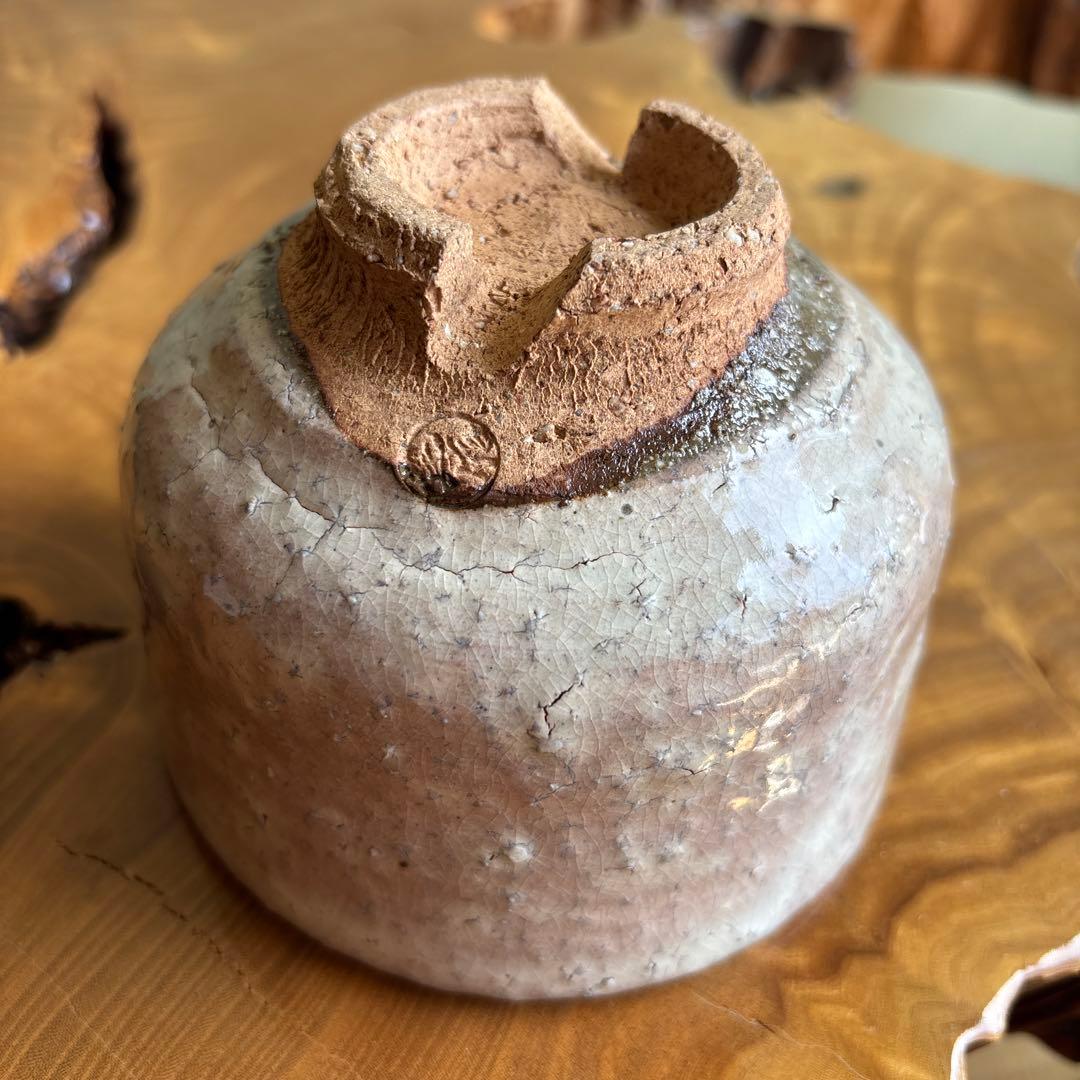
A chawan by a Hagi kiln artist — soft white glaze with blush-pink御本 (gohon) markings that appear and recede across the surface like breath on glass. The bowl arrives in its original signed wooden box (tomobako), the maker's seal pressed in red on the side panel.
🔹 [ BASIC DETAILS ]
• Ware: Hagi-yaki (萩焼), Yamaguchi Prefecture, Japan
• Form: Chawan — matcha tea bowl
• Glaze: Tamago-de (egg-white) white glaze with gohon blush and fine crackle (kan'nyū)
• Dimensions: Diameter approx. 12 cm / Height approx. 8.6 cm
• Condition: No cracks, no chips — excellent
• Provenance: Original artist-signed wooden box (tomobako) included
• Box inscription: 「萩」one-character lid title; artist seal in red ink on side
• SKU: 260515_a_2840
🔹 [ CULTURAL & ARTISTIC INSIGHT ]
Hagi ware holds a singular place in Japanese tea culture. Of the three great wares ranked by tea masters — Ichi Raku, Ni Hagi, San Karatsu (一楽二萩三唐津) — Hagi sits second, prized not for visual spectacle but for the quality of presence it offers the drinker's hand.
The tamago-de (egg-white) glaze tradition within Hagi is one of its quieter lineages. Where some Hagi bowls assert themselves with raw, iron-stained shoulders, tamago-de pieces hold their color close — a pale warm white that softens over years of use, absorbing the tannins of tea through its fine network of crackle. That network, kan'nyū, is not a flaw but a feature: each hairline is a record of the glaze contracting faster than the clay beneath it, a tension preserved in stillness.
The gohon (御本) blush — warm pink-to-rose tones migrating across the white field — originates in a technique brought back from Korea during the Momoyama period. The name literally means "honorable book" or "model," referring to the ceramic pattern books exchanged between Japanese and Korean kilns. A bowl that carries this coloration carries that history quietly, without declaring it.
🔹 [ DEEP-DIVE COMMENTARY ]
What distinguishes this bowl is the conversation between restraint and warmth. The rim reads almost cream-white in direct light, then shifts toward rose where the glaze pools along the curve of the body. The kan'nyū is dense but not aggressive — a fine mesh that gives the surface visual depth without texture.
The foot (kōdai) is hand-trimmed, slightly irregular, showing the exposed clay in a warm terracotta tone characteristic of Hagi's local feldspar-rich clay. This exposure is intentional: over years of use, the unglazed foot and the crackled body slowly change color together as they absorb iron and tannin from tea — a process called Hagi no nanabake, the "seven transformations of Hagi." A bowl like this is, in the strictest sense, unfinished at the time of purchase. It continues in the hands of whoever uses it.
The signed tomobako is cedar, with a single-character 「萩」 brushed on the lid and the maker's name and seal on the side panel. The box is in clean condition. The silk cord is olive-brown, tied in a simple flat bow — details that suggest this was presented, not stored.
For a tea practitioner, a bowl of this type carries a specific kind of cultural weight: it is not decorative ware. Its proportions — 12 cm across, 8.6 cm tall — fall within the range considered suited for thick tea (koicha), where the wide interior allows the whisk to move freely and the depth holds heat. The slightly inward-curved rim slows the steam. These are not accidents.
🔹 [ 日本語解説 ]
山口県を代表する萩焼の作家物茶碗です。卵手(たまごで)と呼ばれる柔らかな白釉に、御本(ごほん)の淡いピンク〜赤紫の斑が全体に広がります。細かな貫入が釉面に刻まれ、しっとりとした落ち着きのある肌合いが茶人好みの上品な姿を形成しています。
共箱(とともばこ)付き。蓋には「萩」の一文字、側面には作家銘と朱印が入っています。桐の木箱に収められ、保存状態は良好です。高台は手削りの素朴な仕上がりで、萩焼特有の赤みのある素地が覗きます。ひび・欠けなし。
茶道具として実際にお使いいただけるほか、棚の上に置いて眺めるだけでも季節感と静けさをもたらす一碗です。長く使うほど変化し、育つ萩焼の性質が、この碗にも備わっています。
🔹 [ SHIPPING & PACKAGING ]
• Dispatch: Within 1-6 business days
• Carrier: Japan Post EMS / UPS (with tracking)
• Packaging: Carefully wrapped with protective materials
🔹 [ BASIC DETAILS ]
• Ware: Hagi-yaki (萩焼), Yamaguchi Prefecture, Japan
• Form: Chawan — matcha tea bowl
• Glaze: Tamago-de (egg-white) white glaze with gohon blush and fine crackle (kan'nyū)
• Dimensions: Diameter approx. 12 cm / Height approx. 8.6 cm
• Condition: No cracks, no chips — excellent
• Provenance: Original artist-signed wooden box (tomobako) included
• Box inscription: 「萩」one-character lid title; artist seal in red ink on side
• SKU: 260515_a_2840
🔹 [ CULTURAL & ARTISTIC INSIGHT ]
Hagi ware holds a singular place in Japanese tea culture. Of the three great wares ranked by tea masters — Ichi Raku, Ni Hagi, San Karatsu (一楽二萩三唐津) — Hagi sits second, prized not for visual spectacle but for the quality of presence it offers the drinker's hand.
The tamago-de (egg-white) glaze tradition within Hagi is one of its quieter lineages. Where some Hagi bowls assert themselves with raw, iron-stained shoulders, tamago-de pieces hold their color close — a pale warm white that softens over years of use, absorbing the tannins of tea through its fine network of crackle. That network, kan'nyū, is not a flaw but a feature: each hairline is a record of the glaze contracting faster than the clay beneath it, a tension preserved in stillness.
The gohon (御本) blush — warm pink-to-rose tones migrating across the white field — originates in a technique brought back from Korea during the Momoyama period. The name literally means "honorable book" or "model," referring to the ceramic pattern books exchanged between Japanese and Korean kilns. A bowl that carries this coloration carries that history quietly, without declaring it.
🔹 [ DEEP-DIVE COMMENTARY ]
What distinguishes this bowl is the conversation between restraint and warmth. The rim reads almost cream-white in direct light, then shifts toward rose where the glaze pools along the curve of the body. The kan'nyū is dense but not aggressive — a fine mesh that gives the surface visual depth without texture.
The foot (kōdai) is hand-trimmed, slightly irregular, showing the exposed clay in a warm terracotta tone characteristic of Hagi's local feldspar-rich clay. This exposure is intentional: over years of use, the unglazed foot and the crackled body slowly change color together as they absorb iron and tannin from tea — a process called Hagi no nanabake, the "seven transformations of Hagi." A bowl like this is, in the strictest sense, unfinished at the time of purchase. It continues in the hands of whoever uses it.
The signed tomobako is cedar, with a single-character 「萩」 brushed on the lid and the maker's name and seal on the side panel. The box is in clean condition. The silk cord is olive-brown, tied in a simple flat bow — details that suggest this was presented, not stored.
For a tea practitioner, a bowl of this type carries a specific kind of cultural weight: it is not decorative ware. Its proportions — 12 cm across, 8.6 cm tall — fall within the range considered suited for thick tea (koicha), where the wide interior allows the whisk to move freely and the depth holds heat. The slightly inward-curved rim slows the steam. These are not accidents.
🔹 [ 日本語解説 ]
山口県を代表する萩焼の作家物茶碗です。卵手(たまごで)と呼ばれる柔らかな白釉に、御本(ごほん)の淡いピンク〜赤紫の斑が全体に広がります。細かな貫入が釉面に刻まれ、しっとりとした落ち着きのある肌合いが茶人好みの上品な姿を形成しています。
共箱(とともばこ)付き。蓋には「萩」の一文字、側面には作家銘と朱印が入っています。桐の木箱に収められ、保存状態は良好です。高台は手削りの素朴な仕上がりで、萩焼特有の赤みのある素地が覗きます。ひび・欠けなし。
茶道具として実際にお使いいただけるほか、棚の上に置いて眺めるだけでも季節感と静けさをもたらす一碗です。長く使うほど変化し、育つ萩焼の性質が、この碗にも備わっています。
🔹 [ SHIPPING & PACKAGING ]
• Dispatch: Within 1-6 business days
• Carrier: Japan Post EMS / UPS (with tracking)
• Packaging: Carefully wrapped with protective materials
Quantity
Couldn't load pickup availability
Low stock: 1 left
View full details