1
/
of
8
Hagi Ware Matcha Bowl by Hirose Tanga — Tsubaki Kiln, Signed Box
Hagi Ware Matcha Bowl by Hirose Tanga — Tsubaki Kiln, Signed Box
Regular price
Dhs. 610.00 AED
Regular price
Sale price
Dhs. 610.00 AED
Taxes included.
Shipping calculated at checkout.
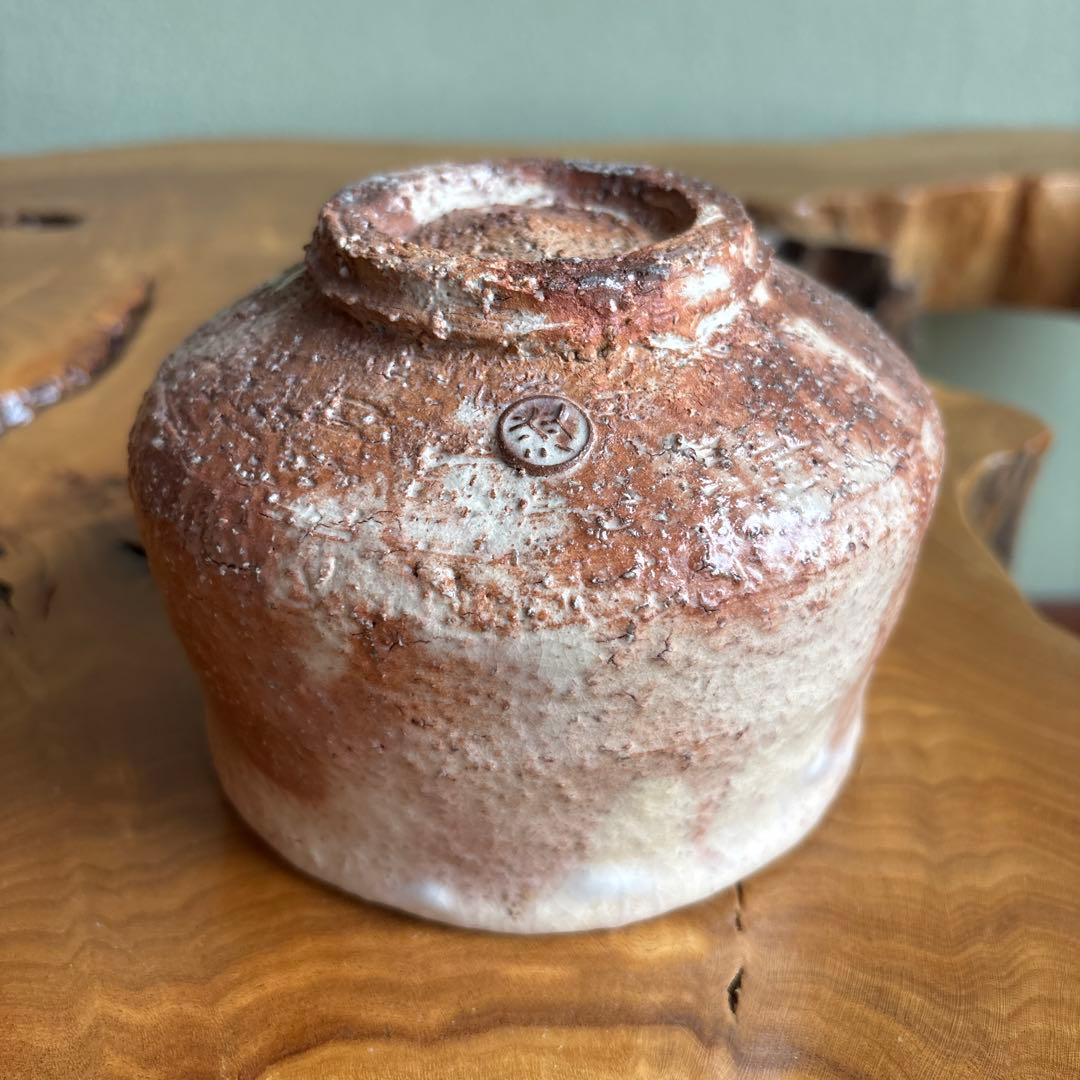
A matcha bowl by Hirose Tanga of the Tsubaki Kiln, Yamaguchi — thrown from the iron-rich feldspathic clay of Hagi and fired to reveal the full character that the tradition demands. Across the warm reddish-brown body, white feldspar glaze pools and breaks into kairaigi — the rough, cratered skin that forms when glaze and clay separate at tension — while gohon, those soft reddish-pink flushes born of reduction firing, drift across the surface like breath on cold mornings. The two faces of this bowl present a quiet dialogue: one side carries the white glaze in a mountain-ridge wave; the other shows the bare Hagi clay, darkened and open. Both are the same bowl. Both are necessary.
🔹 [ BASIC DETAILS ]
• Artist: Hirose Tanga (廣瀬淡雅), Tsubaki Kiln (椿窯), Tenhouzan (天鵬山)
• Technique: Hagi-yaki (萩焼) — wheel-thrown, reduction-fired, white feldspar glaze with kairaigi and gohon
• Era: Contemporary (2010s)
• Origin: Hagi, Yamaguchi Prefecture, Japan
• Dimensions: Diameter approx. 12 cm / Height approx. 9 cm
• Box: Artist-signed tomobako (共箱) with seal — some age staining on exterior
• Condition: No cracks, no chips — sound and stable throughout
🔹 [ CULTURAL & ARTISTIC INSIGHT ]
• Historical Context: Hagi ware traces its origin to Korean potters brought to Yamaguchi domain following the 1597 invasions under Mōri Terumoto. The clay from Hagi — porous, iron-bearing, slow to shed its history — became favored in the tea ceremony world precisely because it changes over decades of use, taking on the stain of tea in a process called nanasake (seven disguises). A Hagi bowl is not finished when it leaves the kiln; it continues to become.
• Technique & Aesthetic: Kairaigi is not a flaw corrected in later Hagi production — it is sought. The rough, mineral cratering occurs when a high-feldspar glaze resists full adhesion to the coarse Hagi body, pulling back at the surface as temperature drops. Gohon — the soft blush of pink and rose — emerges where iron in the clay responds to the reduction atmosphere of the kiln. Neither effect can be precisely controlled; both are received rather than made.
• Philosophical Reflection: The bowl holds what it holds — and asks nothing in return for the holding.
🔹 [ DEEP-DIVE COMMENTARY ]
Hagi ware occupies an unusual position in the Japanese ceramic hierarchy: it is considered second only to Raku in the classical tea ceremony ranking (ichi-Raku, ni-Hagi, san-Karatsu), yet it remains more accessible in its warmth and weight than Raku's deliberate austerity. Where Raku bowls are formed by hand-pinching and shaped without the wheel, Hagi bowls like this one are wheel-thrown — the movement of the potter's hands legible in the gentle asymmetry of the rim and the slight give of the form.
Hirose Tanga works under the kiln name Tsubaki (椿, camellia), under the mountain designation Tenhouzan (天鵬山), a name that carries classical resonance — tenpō meaning something close to 'great bird in flight,' invoking scale and freedom within a tradition of careful restraint. The tomobako carries his signature and seal in confident brushwork, marking this as a named, accountable work.
The surface of this bowl rewards sustained attention. On one face, the white glaze runs in a jagged mountain-range line across the mid-body — a gesture that appears almost calligraphic, as if drawn deliberately, though it is the result of controlled pouring and the physics of descent. Below the glaze line, the reddish clay body is exposed, and the gohon blushes are densest here, warming the lower third of the bowl with a concentration of color that softens toward the foot. On the reverse, the glaze recedes further, and the iron-spotted clay body dominates — darker, more mineral, recording the heat of the kiln with less mediation.
The foot ring (kodai) is cut simply, and the base carries the characteristic roughness of Hagi ware — left unglazed, showing the raw clay in its original color. This unglazed foot is part of the tradition's design: it allows the bowl to breathe, to absorb, to change over time. A Hagi bowl owned and used across decades develops a patina that is understood as a form of biography — evidence of time and tea and the people who held it.
This piece comes with its original tomobako — the wooden box bearing the artist's inscription and seal — providing both authentication and a physical record of the object's provenance. The box shows some staining on the exterior, consistent with age; the bowl itself is without damage.
🔹 [ 日本語解説 ]
廣瀬淡雅、椿窯・天鵬山による萩茶碗。山口萩の鉄分を含む長石質の土から轆轤で引き上げられ、還元焼成によってこの器が持つすべての表情を引き出している。温かみのある赤褐色の胴体には白長石釉が流れ、梅花皮——釉と素地の緊張が表面で分離するときに生まれる荒い凹凸——が明瞭に現れる。御本と呼ばれる柔らかなピンクの発色が、還元雰囲気に応じた鉄分の変化として全体に漂っている。この碗の二つの面は静かな対話をなしている。一方には山形に流れる白釉。もう一方には素地の赤褐色が広がる。どちらも同じ碗のすがたであり、どちらも必要な面だ。
【基本情報】作家:廣瀬淡雅(椿窯・天鵬山)/技法:萩焼(轆轤成形・還元焼成・白長石釉・梅花皮・御本)/制作年代:現代(2010年代)/産地:山口県萩市/寸法:口径約12cm・高さ約9cm/箱:共箱(箱外側にシミあり)/状態:ヒビ・欠けなし、健全。
【文化的背景と鑑賞の視点】萩焼は、慶長の役(1597年)ののち毛利輝元によって山口に招かれた朝鮮人陶工に起源を持つ。萩の土——多孔質で鉄分を含み、歴史をゆっくりと手放す土——は、使い込むほどに茶の色を取り込む「七化け」の器として茶の湯の世界で愛されてきた。萩茶碗は窯を出た瞬間に完成するのではなく、使われながら変わり続ける。梅花皮は後から補正される欠陥ではなく、萩焼においては積極的に求められる表情である。高長石釉が粗い萩土に十全には密着しきれず、冷却過程で表面を引いていくとき、あの荒い肌理が生まれる。御本もまた制御の産物ではなく、窯の還元雰囲気と素地の鉄の対話から受け取るものだ。この碗は何かを主張しない——ただ、持つべきものを静かに持つ。
【詳細解説】萩焼は「一楽、二萩、三唐津」という茶碗格付けの伝統において、楽焼に次ぐ高い位置に置かれてきた。楽焼が手捏ねで形成されるのに対し、この碗は轆轤成形——口縁の微妙な歪みと器形の柔らかな揺らぎに、轆轤を引いた手の動きが読める。廣瀬淡雅は椿窯(椿の字が示す優雅さ)のもとで制作し、天鵬山の号を持つ。共箱の箱書きには確信に満ちた筆致で署名と朱印が施され、これが記名された作品であることを示す。器の一面では白釉が胴中央を山脈のように横断し、その下の赤褐色の素地に御本が最も濃く発色している。反対面では釉薬が引き、鉄斑を帯びた素地が支配的になる——より暗く、より鉱物的に、釉の媒介を少なくして窯の熱を記録している。糸切り高台は簡潔に削られ、底部は無釉のまま。この無釉の高台が萩茶碗の設計の一部であり、呼吸し、吸収し、時間とともに変化することを可能にする。共箱は外側にシミがあるが、碗本体には損傷なし。
🔹 [ SHIPPING & PACKAGING ]
• Dispatch: Within 1-6 business days
• Carrier: Japan Post EMS / UPS (with tracking)
• Packaging: Carefully wrapped with protective materials
🔹 [ BASIC DETAILS ]
• Artist: Hirose Tanga (廣瀬淡雅), Tsubaki Kiln (椿窯), Tenhouzan (天鵬山)
• Technique: Hagi-yaki (萩焼) — wheel-thrown, reduction-fired, white feldspar glaze with kairaigi and gohon
• Era: Contemporary (2010s)
• Origin: Hagi, Yamaguchi Prefecture, Japan
• Dimensions: Diameter approx. 12 cm / Height approx. 9 cm
• Box: Artist-signed tomobako (共箱) with seal — some age staining on exterior
• Condition: No cracks, no chips — sound and stable throughout
🔹 [ CULTURAL & ARTISTIC INSIGHT ]
• Historical Context: Hagi ware traces its origin to Korean potters brought to Yamaguchi domain following the 1597 invasions under Mōri Terumoto. The clay from Hagi — porous, iron-bearing, slow to shed its history — became favored in the tea ceremony world precisely because it changes over decades of use, taking on the stain of tea in a process called nanasake (seven disguises). A Hagi bowl is not finished when it leaves the kiln; it continues to become.
• Technique & Aesthetic: Kairaigi is not a flaw corrected in later Hagi production — it is sought. The rough, mineral cratering occurs when a high-feldspar glaze resists full adhesion to the coarse Hagi body, pulling back at the surface as temperature drops. Gohon — the soft blush of pink and rose — emerges where iron in the clay responds to the reduction atmosphere of the kiln. Neither effect can be precisely controlled; both are received rather than made.
• Philosophical Reflection: The bowl holds what it holds — and asks nothing in return for the holding.
🔹 [ DEEP-DIVE COMMENTARY ]
Hagi ware occupies an unusual position in the Japanese ceramic hierarchy: it is considered second only to Raku in the classical tea ceremony ranking (ichi-Raku, ni-Hagi, san-Karatsu), yet it remains more accessible in its warmth and weight than Raku's deliberate austerity. Where Raku bowls are formed by hand-pinching and shaped without the wheel, Hagi bowls like this one are wheel-thrown — the movement of the potter's hands legible in the gentle asymmetry of the rim and the slight give of the form.
Hirose Tanga works under the kiln name Tsubaki (椿, camellia), under the mountain designation Tenhouzan (天鵬山), a name that carries classical resonance — tenpō meaning something close to 'great bird in flight,' invoking scale and freedom within a tradition of careful restraint. The tomobako carries his signature and seal in confident brushwork, marking this as a named, accountable work.
The surface of this bowl rewards sustained attention. On one face, the white glaze runs in a jagged mountain-range line across the mid-body — a gesture that appears almost calligraphic, as if drawn deliberately, though it is the result of controlled pouring and the physics of descent. Below the glaze line, the reddish clay body is exposed, and the gohon blushes are densest here, warming the lower third of the bowl with a concentration of color that softens toward the foot. On the reverse, the glaze recedes further, and the iron-spotted clay body dominates — darker, more mineral, recording the heat of the kiln with less mediation.
The foot ring (kodai) is cut simply, and the base carries the characteristic roughness of Hagi ware — left unglazed, showing the raw clay in its original color. This unglazed foot is part of the tradition's design: it allows the bowl to breathe, to absorb, to change over time. A Hagi bowl owned and used across decades develops a patina that is understood as a form of biography — evidence of time and tea and the people who held it.
This piece comes with its original tomobako — the wooden box bearing the artist's inscription and seal — providing both authentication and a physical record of the object's provenance. The box shows some staining on the exterior, consistent with age; the bowl itself is without damage.
🔹 [ 日本語解説 ]
廣瀬淡雅、椿窯・天鵬山による萩茶碗。山口萩の鉄分を含む長石質の土から轆轤で引き上げられ、還元焼成によってこの器が持つすべての表情を引き出している。温かみのある赤褐色の胴体には白長石釉が流れ、梅花皮——釉と素地の緊張が表面で分離するときに生まれる荒い凹凸——が明瞭に現れる。御本と呼ばれる柔らかなピンクの発色が、還元雰囲気に応じた鉄分の変化として全体に漂っている。この碗の二つの面は静かな対話をなしている。一方には山形に流れる白釉。もう一方には素地の赤褐色が広がる。どちらも同じ碗のすがたであり、どちらも必要な面だ。
【基本情報】作家:廣瀬淡雅(椿窯・天鵬山)/技法:萩焼(轆轤成形・還元焼成・白長石釉・梅花皮・御本)/制作年代:現代(2010年代)/産地:山口県萩市/寸法:口径約12cm・高さ約9cm/箱:共箱(箱外側にシミあり)/状態:ヒビ・欠けなし、健全。
【文化的背景と鑑賞の視点】萩焼は、慶長の役(1597年)ののち毛利輝元によって山口に招かれた朝鮮人陶工に起源を持つ。萩の土——多孔質で鉄分を含み、歴史をゆっくりと手放す土——は、使い込むほどに茶の色を取り込む「七化け」の器として茶の湯の世界で愛されてきた。萩茶碗は窯を出た瞬間に完成するのではなく、使われながら変わり続ける。梅花皮は後から補正される欠陥ではなく、萩焼においては積極的に求められる表情である。高長石釉が粗い萩土に十全には密着しきれず、冷却過程で表面を引いていくとき、あの荒い肌理が生まれる。御本もまた制御の産物ではなく、窯の還元雰囲気と素地の鉄の対話から受け取るものだ。この碗は何かを主張しない——ただ、持つべきものを静かに持つ。
【詳細解説】萩焼は「一楽、二萩、三唐津」という茶碗格付けの伝統において、楽焼に次ぐ高い位置に置かれてきた。楽焼が手捏ねで形成されるのに対し、この碗は轆轤成形——口縁の微妙な歪みと器形の柔らかな揺らぎに、轆轤を引いた手の動きが読める。廣瀬淡雅は椿窯(椿の字が示す優雅さ)のもとで制作し、天鵬山の号を持つ。共箱の箱書きには確信に満ちた筆致で署名と朱印が施され、これが記名された作品であることを示す。器の一面では白釉が胴中央を山脈のように横断し、その下の赤褐色の素地に御本が最も濃く発色している。反対面では釉薬が引き、鉄斑を帯びた素地が支配的になる——より暗く、より鉱物的に、釉の媒介を少なくして窯の熱を記録している。糸切り高台は簡潔に削られ、底部は無釉のまま。この無釉の高台が萩茶碗の設計の一部であり、呼吸し、吸収し、時間とともに変化することを可能にする。共箱は外側にシミがあるが、碗本体には損傷なし。
🔹 [ SHIPPING & PACKAGING ]
• Dispatch: Within 1-6 business days
• Carrier: Japan Post EMS / UPS (with tracking)
• Packaging: Carefully wrapped with protective materials
Quantity
Couldn't load pickup availability
Low stock: 1 left
View full details