1
/
of
8
Hagi Ware Kinutoku Kogei-an Chawan — Blush Pink Crackle Glaze Matcha Bowl by Kinuya Tokubei
Hagi Ware Kinutoku Kogei-an Chawan — Blush Pink Crackle Glaze Matcha Bowl by Kinuya Tokubei
Regular price
Dhs. 477.00 AED
Regular price
Sale price
Dhs. 477.00 AED
Taxes included.
Shipping calculated at checkout.
Experience Authentic Japan Art with this Hagi Ware Matcha Bowl by Kinuya Tokubei. This Japanese Pottery Chawan serves as a Tea Ceremony Bowl and Wabi Sabi Tea Bowl, featuring Blush Pink Crackle Glaze and Hagi Kiln Heritage—a must-have for any Art Collector seeking Handmade Japanese Ceramics and Vintage Japanese Tea Bowl with authentic Kinuya Studio provenance.
🔹 [ BASIC DETAILS ]
• Artist: Kinuya Tokubei (絹屋徳兵衛) — Kinutoku Kogei-an studio (絹徳工藝庵), Hagi
• Technique: Wheel-thrown, Hagi-yaki, milky white crackle glaze over pink-orange clay body
• Era: Showa period, mid-to-late 20th century
• Origin: Hagi, Yamaguchi Prefecture, Japan
• Dimensions: Approx. 12 cm diameter × 8.5 cm height
• Box: Tomobako (original wooden box) included — good condition, sealed with blue ribbon
• Condition: No cracks, no chips — excellent
🔹 [ Cultural & Artistic Insight ]
Historical Context — Hagi-yaki is ranked among Japan's top three tea wares—alongside Raku and Karatsu—in the classical tea world hierarchy: "One Raku, Two Hagi, Three Karatsu" (一楽二萩三唐津). Its origins trace to Korean ceramic masters brought to Yamaguchi by the Mōri clan lords in the late 16th century, following the Imjin War. From those immigrant kiln masters, Hagi developed a sensibility of deliberate imperfection: soft clay bodies, open pores, and layered glazes that change over years of use.
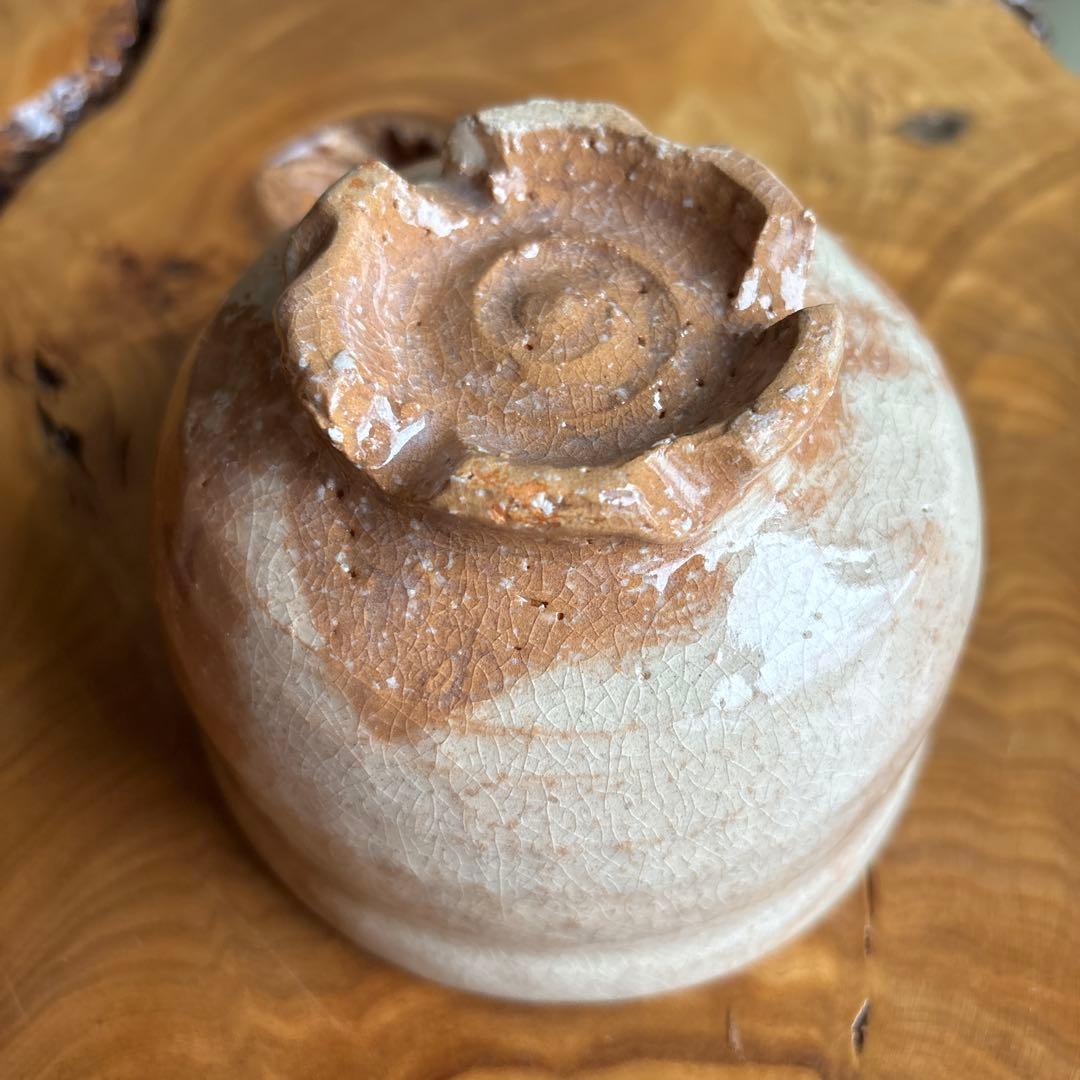
Technique & Aesthetic — The defining characteristic of Hagi-yaki is its dense crackle glaze (貫入, kan'nyū): a network of fine fracture lines covering the surface like a topographic map of the earth's skin. In this bowl, a milky white glaze blankets the rosy-orange clay body, and the crackle pattern is especially pronounced and well-developed—each fissure a tiny channel where tea stains will settle over time, gradually transforming the bowl's appearance. This transformation is called "Hagi no Nanabake" (萩の七化け) — the Seven Changes of Hagi — one of the most celebrated processes in Japanese ceramics.
Philosophical Reflection — Hagi ware invites the concept of impermanence into daily use. Unlike hard, dense porcelain that resists change, Hagi's porous clay body absorbs the tannins and oils of every tea session, slowly deepening in color and character. The collector who uses this bowl is, in a real sense, co-creating it—adding their own temporal layer to the work begun by Kinuya Tokubei.
🔹 [ Deep-Dive Commentary ]
Kinuya Tokubei and the Kinutoku Kogei-an studio represent the artisan tier of Hagi production: studio potters working within the classical tradition but with individual creative voice. The studio name (絹徳工藝庵) implies a refined workshop dedicated to craft excellence, and the execution of this bowl's glaze—the evenness of the crackle, the subtle blush beneath—reflects disciplined kiln control.
The form is a slightly upright hirachawan variant with a pinched foot ring that gives the base a distinctive three-point stance—a deliberate design choice evoking classical Hagi forms and providing stability on tatami during temae. At 8.5 cm, it is a generous bowl suited for both usucha (thin tea) and koicha (thick tea) practice.
The tomobako is in good condition and sealed with a navy blue ribbon, suggesting this piece was gifted or stored as a collectible rather than a daily-use item. The box lid carries the studio name in brushwork.
For collectors entering the Hagi market, Kinuya Tokubei represents an accessible but authentic studio tradition. The dramatic crackle development and the warmth of the pink clay body visible through the glaze make this bowl visually compelling and tactilely rewarding—a piece that rewards prolonged handling.
Hagi ware's documented tradition of transforming with use makes it uniquely appropriate as a gift: the recipient becomes part of its ongoing creation.
━━━━━━━━━━━━━━━━━━━━━━━━━━━━━━━
[ JAPANESE DESCRIPTION / 日本語解説 ]
━━━━━━━━━━━━━━━━━━━━━━━━━━━━━━━
【基本情報】
• 作者:絹屋徳兵衛(絹徳工藝庵) — 山口・萩
• 技法:轆轤成形、萩焼、白濁釉・貫入
• 時代:昭和中期〜後期
• 産地:山口県萩市
• サイズ:口径約12cm、高さ約8.5cm
• 付属:共箱(紺色リボン付き、良好)
• 状態:ヒビ・カケなし、良好
【文化・芸術的背景】
「一楽二萩三唐津」—茶の湯の世界で最高位に数えられる萩焼は、16世紀末に毛利藩が朝鮮半島から招いた陶工によって萩に根付いた伝統です。その最大の特徴である「貫入」は、釉薬の細かな亀裂網が全面を覆い、使用を重ねるごとに茶の色素が沁み込んで器が変容していく「萩の七化け」として知られます。
本茶碗は桃色の土肌の上に白濁釉をかけ、貫入が均一かつ美しく発達しています。使い込むほどに釉のひび割れが色づき、持ち主だけの景色へと育っていく—まさに萩焼の醍醐味を体現した一碗です。
【作家・窯について】
絹屋徳兵衛は「絹徳工藝庵」を主宰する萩焼の職人陶芸家。工房名は精緻な技への献身を示します。高台は三点支持の特徴的な削り出しで、畳の上での安定性と古典的萩焼の形式美を両立しています。8.5cmの高さは薄茶・濃茶の双方に対応する使いやすい寸法です。
共箱は状態良好で紺色の紐が残り、贈答品あるいはコレクション品として丁寧に保管されてきた一碗であることが伺えます。萩焼入門にふさわしく、かつ本格的な工藝の美しさを備えた茶碗です。
🔹 [ SHIPPING & PACKAGING ]
• Dispatch: Within 1-6 business days
• Carrier: Japan Post EMS / UPS (with tracking)
• Packaging: Carefully wrapped with protective materials
🔹 [ BASIC DETAILS ]
• Artist: Kinuya Tokubei (絹屋徳兵衛) — Kinutoku Kogei-an studio (絹徳工藝庵), Hagi
• Technique: Wheel-thrown, Hagi-yaki, milky white crackle glaze over pink-orange clay body
• Era: Showa period, mid-to-late 20th century
• Origin: Hagi, Yamaguchi Prefecture, Japan
• Dimensions: Approx. 12 cm diameter × 8.5 cm height
• Box: Tomobako (original wooden box) included — good condition, sealed with blue ribbon
• Condition: No cracks, no chips — excellent
🔹 [ Cultural & Artistic Insight ]
Historical Context — Hagi-yaki is ranked among Japan's top three tea wares—alongside Raku and Karatsu—in the classical tea world hierarchy: "One Raku, Two Hagi, Three Karatsu" (一楽二萩三唐津). Its origins trace to Korean ceramic masters brought to Yamaguchi by the Mōri clan lords in the late 16th century, following the Imjin War. From those immigrant kiln masters, Hagi developed a sensibility of deliberate imperfection: soft clay bodies, open pores, and layered glazes that change over years of use.
Technique & Aesthetic — The defining characteristic of Hagi-yaki is its dense crackle glaze (貫入, kan'nyū): a network of fine fracture lines covering the surface like a topographic map of the earth's skin. In this bowl, a milky white glaze blankets the rosy-orange clay body, and the crackle pattern is especially pronounced and well-developed—each fissure a tiny channel where tea stains will settle over time, gradually transforming the bowl's appearance. This transformation is called "Hagi no Nanabake" (萩の七化け) — the Seven Changes of Hagi — one of the most celebrated processes in Japanese ceramics.
Philosophical Reflection — Hagi ware invites the concept of impermanence into daily use. Unlike hard, dense porcelain that resists change, Hagi's porous clay body absorbs the tannins and oils of every tea session, slowly deepening in color and character. The collector who uses this bowl is, in a real sense, co-creating it—adding their own temporal layer to the work begun by Kinuya Tokubei.
🔹 [ Deep-Dive Commentary ]
Kinuya Tokubei and the Kinutoku Kogei-an studio represent the artisan tier of Hagi production: studio potters working within the classical tradition but with individual creative voice. The studio name (絹徳工藝庵) implies a refined workshop dedicated to craft excellence, and the execution of this bowl's glaze—the evenness of the crackle, the subtle blush beneath—reflects disciplined kiln control.
The form is a slightly upright hirachawan variant with a pinched foot ring that gives the base a distinctive three-point stance—a deliberate design choice evoking classical Hagi forms and providing stability on tatami during temae. At 8.5 cm, it is a generous bowl suited for both usucha (thin tea) and koicha (thick tea) practice.
The tomobako is in good condition and sealed with a navy blue ribbon, suggesting this piece was gifted or stored as a collectible rather than a daily-use item. The box lid carries the studio name in brushwork.
For collectors entering the Hagi market, Kinuya Tokubei represents an accessible but authentic studio tradition. The dramatic crackle development and the warmth of the pink clay body visible through the glaze make this bowl visually compelling and tactilely rewarding—a piece that rewards prolonged handling.
Hagi ware's documented tradition of transforming with use makes it uniquely appropriate as a gift: the recipient becomes part of its ongoing creation.
━━━━━━━━━━━━━━━━━━━━━━━━━━━━━━━
[ JAPANESE DESCRIPTION / 日本語解説 ]
━━━━━━━━━━━━━━━━━━━━━━━━━━━━━━━
【基本情報】
• 作者:絹屋徳兵衛(絹徳工藝庵) — 山口・萩
• 技法:轆轤成形、萩焼、白濁釉・貫入
• 時代:昭和中期〜後期
• 産地:山口県萩市
• サイズ:口径約12cm、高さ約8.5cm
• 付属:共箱(紺色リボン付き、良好)
• 状態:ヒビ・カケなし、良好
【文化・芸術的背景】
「一楽二萩三唐津」—茶の湯の世界で最高位に数えられる萩焼は、16世紀末に毛利藩が朝鮮半島から招いた陶工によって萩に根付いた伝統です。その最大の特徴である「貫入」は、釉薬の細かな亀裂網が全面を覆い、使用を重ねるごとに茶の色素が沁み込んで器が変容していく「萩の七化け」として知られます。
本茶碗は桃色の土肌の上に白濁釉をかけ、貫入が均一かつ美しく発達しています。使い込むほどに釉のひび割れが色づき、持ち主だけの景色へと育っていく—まさに萩焼の醍醐味を体現した一碗です。
【作家・窯について】
絹屋徳兵衛は「絹徳工藝庵」を主宰する萩焼の職人陶芸家。工房名は精緻な技への献身を示します。高台は三点支持の特徴的な削り出しで、畳の上での安定性と古典的萩焼の形式美を両立しています。8.5cmの高さは薄茶・濃茶の双方に対応する使いやすい寸法です。
共箱は状態良好で紺色の紐が残り、贈答品あるいはコレクション品として丁寧に保管されてきた一碗であることが伺えます。萩焼入門にふさわしく、かつ本格的な工藝の美しさを備えた茶碗です。
🔹 [ SHIPPING & PACKAGING ]
• Dispatch: Within 1-6 business days
• Carrier: Japan Post EMS / UPS (with tracking)
• Packaging: Carefully wrapped with protective materials
Quantity
Couldn't load pickup availability
Low stock: 1 left
View full details