1
/
of
7
Hagi Ware Ido Chawan by Nakahara Kunisuke — Classic Korean-Form Tea Bowl
Hagi Ware Ido Chawan by Nakahara Kunisuke — Classic Korean-Form Tea Bowl
Regular price
Dhs. 796.00 AED
Regular price
Sale price
Dhs. 796.00 AED
Taxes included.
Shipping calculated at checkout.
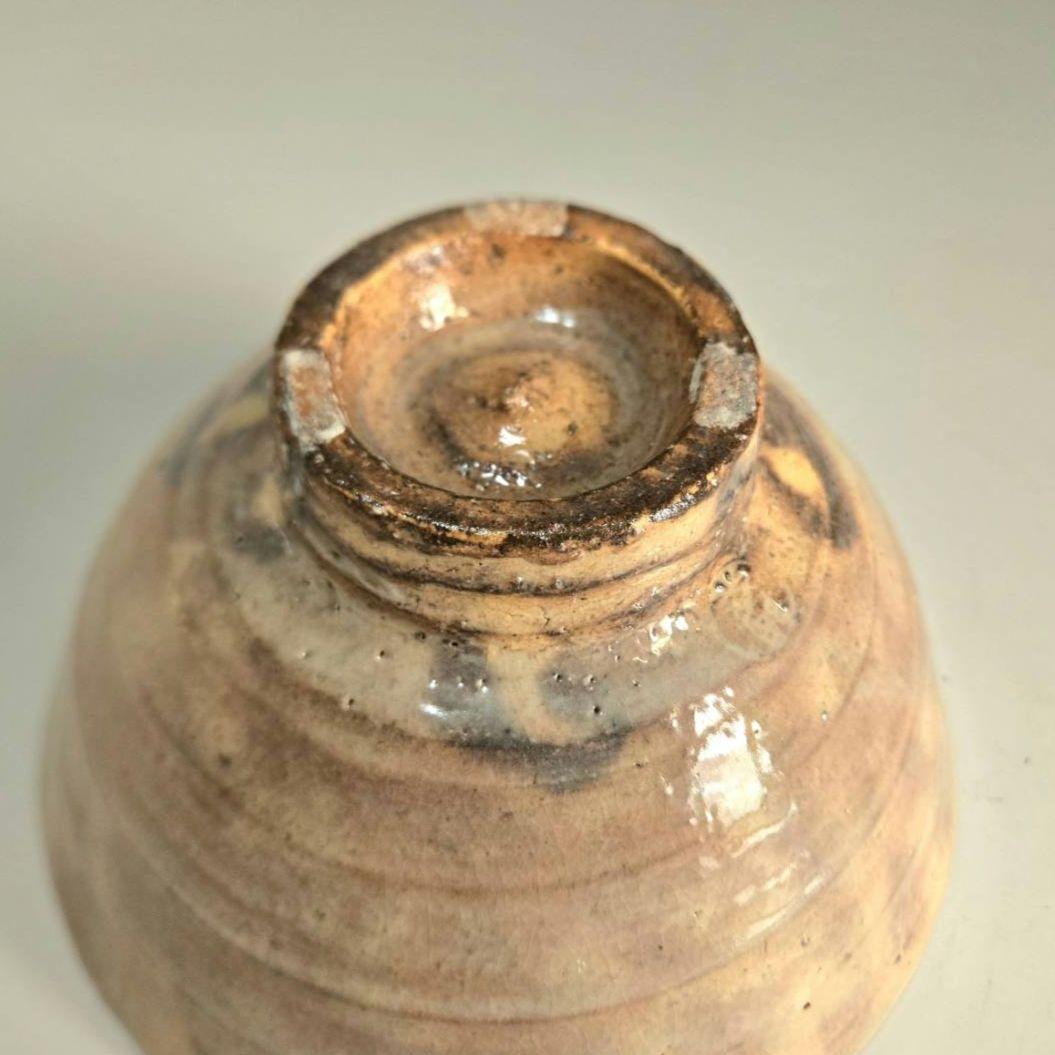
A Hagi ware Ido chawan by Nakahara Kunisuke — shaped in the Korean-inspired form that defined early Japanese tea culture. This handmade Japanese pottery carries the warmth of Hagi clay beneath a pinkish-beige glaze that shifts through peach and amber where it pools. The matcha tea bowl shows visible wheel marks and a bamboo-node foot ring (take-kodai), signatures of the Ido tea bowl tradition. A wabi-sabi ceramic from Yamaguchi pottery lineage, presented in its signed tomobako box with red seal. An ash glaze tea bowl that holds the density of intention in a single vessel.
🔹 [ Basic Details ]
• Artist: Nakahara Kunisuke (中原國輔)
• Technique: Hagi ware (萩焼) — hand-thrown on the wheel
• Era: Contemporary
• Origin: Hagi, Yamaguchi Prefecture, Japan
• Dimensions: Diameter 13.7 cm × Height 8.0 cm
• Box: Tomobako (signed wooden box, yohōsan / four-post style) with artist signature and red seal
• Condition: New, unused
🔹 [ Cultural & Artistic Insight ]
The Ido chawan occupies a singular place in Japanese tea culture. Originally produced in Korea during the Joseon dynasty, these bowls were embraced by early tea masters who recognized in their unassuming forms a depth that more refined ceramics could not reach. The deep conical profile, the warmth radiating from within — these are not decorative choices but functional ones, shaped by the act of holding tea between both hands.
Hagi ware itself transforms with use. The porous clay absorbs tea over years of practice, gradually deepening in color — a phenomenon known as "the seven changes of Hagi" (萩の七化け). Each session leaves its trace.
In the hierarchy of tea ceramics — "First Raku, second Hagi, third Karatsu" — Hagi holds a position earned through centuries of quiet service.
🔹 [ Deep-Dive Commentary ]
Nakahara Kunisuke works within the Hagi tradition with a steady, unhurried hand. This bowl demonstrates his command of the Ido vocabulary: the proportioned depth, the gentle flare of the rim, and the take-kodai foot that lifts the form with quiet authority.
The glaze is characteristic Hagi — a soft curtain of pinkish-beige that refuses uniformity. Where the glaze runs thin near the rim, the clay beneath surfaces like a whisper. Where it gathers inside, it deepens into warm amber. This tonal gradation is not applied but allowed — the kiln decides.
The rokuro-me (wheel marks) remain visible along the exterior, preserving the memory of the maker's hands. In Hagi tradition, these marks are not imperfections but signatures of process, evidence that a human being stood at the wheel and shaped earth into vessel.
The tomobako bears the inscription "萩茶碗" alongside the artist's signature and seal — a quiet contract between maker and bowl.
[ JAPANESE DESCRIPTION / 日本語解説 ]
🔹 [ 基本情報 ]
• 作家:中原國輔
• 技法:萩焼・轆轤成形
• 時代:現代
• 産地:山口県萩市
• 寸法:口径 13.7cm × 高さ 8.0cm
• 箱:共箱(四方桟)署名・落款あり
• 状態:新品・未使用
🔹 [ 文化的背景 ]
井戸茶碗は、日本茶道史において特別な位置を占める器形です。李朝期の朝鮮半島で生まれたこの形を、日本の茶人たちは「見立て」の眼で茶の湯に迎え入れました。深い碗形、竹の節高台、柔らかな釉調——すべてが茶を点て、手に包むための必然から生まれた造形です。
萩焼は使い込むほどに表情を変える「萩の七化け」で知られます。貫入から茶が沁み、歳月とともに器が育つ。それは使い手と器の間に交わされる静かな対話です。
🔹 [ 鑑賞のために ]
中原國輔による本作は、井戸形の伝統を丁寧に踏襲しながらも、萩土の温かみを存分に活かした一碗です。桃灰色から琥珀色へと移ろう釉景、轆轤目が刻む制作の記憶、そして竹節高台の端正な仕上がり——いずれも作り手の誠実さを物語っています。
共箱には「萩茶碗」の箱書きと落款が据えられ、作家と器との静かな約束が記されています。
🔹 [ SHIPPING & PACKAGING ]
• Dispatch: Within 1-6 business days
• Carrier: Japan Post EMS / UPS (with tracking)
• Packaging: Carefully wrapped with protective materials
🔹 [ Basic Details ]
• Artist: Nakahara Kunisuke (中原國輔)
• Technique: Hagi ware (萩焼) — hand-thrown on the wheel
• Era: Contemporary
• Origin: Hagi, Yamaguchi Prefecture, Japan
• Dimensions: Diameter 13.7 cm × Height 8.0 cm
• Box: Tomobako (signed wooden box, yohōsan / four-post style) with artist signature and red seal
• Condition: New, unused
🔹 [ Cultural & Artistic Insight ]
The Ido chawan occupies a singular place in Japanese tea culture. Originally produced in Korea during the Joseon dynasty, these bowls were embraced by early tea masters who recognized in their unassuming forms a depth that more refined ceramics could not reach. The deep conical profile, the warmth radiating from within — these are not decorative choices but functional ones, shaped by the act of holding tea between both hands.
Hagi ware itself transforms with use. The porous clay absorbs tea over years of practice, gradually deepening in color — a phenomenon known as "the seven changes of Hagi" (萩の七化け). Each session leaves its trace.
In the hierarchy of tea ceramics — "First Raku, second Hagi, third Karatsu" — Hagi holds a position earned through centuries of quiet service.
🔹 [ Deep-Dive Commentary ]
Nakahara Kunisuke works within the Hagi tradition with a steady, unhurried hand. This bowl demonstrates his command of the Ido vocabulary: the proportioned depth, the gentle flare of the rim, and the take-kodai foot that lifts the form with quiet authority.
The glaze is characteristic Hagi — a soft curtain of pinkish-beige that refuses uniformity. Where the glaze runs thin near the rim, the clay beneath surfaces like a whisper. Where it gathers inside, it deepens into warm amber. This tonal gradation is not applied but allowed — the kiln decides.
The rokuro-me (wheel marks) remain visible along the exterior, preserving the memory of the maker's hands. In Hagi tradition, these marks are not imperfections but signatures of process, evidence that a human being stood at the wheel and shaped earth into vessel.
The tomobako bears the inscription "萩茶碗" alongside the artist's signature and seal — a quiet contract between maker and bowl.
[ JAPANESE DESCRIPTION / 日本語解説 ]
🔹 [ 基本情報 ]
• 作家:中原國輔
• 技法:萩焼・轆轤成形
• 時代:現代
• 産地:山口県萩市
• 寸法:口径 13.7cm × 高さ 8.0cm
• 箱:共箱(四方桟)署名・落款あり
• 状態:新品・未使用
🔹 [ 文化的背景 ]
井戸茶碗は、日本茶道史において特別な位置を占める器形です。李朝期の朝鮮半島で生まれたこの形を、日本の茶人たちは「見立て」の眼で茶の湯に迎え入れました。深い碗形、竹の節高台、柔らかな釉調——すべてが茶を点て、手に包むための必然から生まれた造形です。
萩焼は使い込むほどに表情を変える「萩の七化け」で知られます。貫入から茶が沁み、歳月とともに器が育つ。それは使い手と器の間に交わされる静かな対話です。
🔹 [ 鑑賞のために ]
中原國輔による本作は、井戸形の伝統を丁寧に踏襲しながらも、萩土の温かみを存分に活かした一碗です。桃灰色から琥珀色へと移ろう釉景、轆轤目が刻む制作の記憶、そして竹節高台の端正な仕上がり——いずれも作り手の誠実さを物語っています。
共箱には「萩茶碗」の箱書きと落款が据えられ、作家と器との静かな約束が記されています。
🔹 [ SHIPPING & PACKAGING ]
• Dispatch: Within 1-6 business days
• Carrier: Japan Post EMS / UPS (with tracking)
• Packaging: Carefully wrapped with protective materials
Quantity
Couldn't load pickup availability
Low stock: 1 left
View full details