1
/
of
7
Hagi Ware Chawan — Wari-Kodai Feldspar Glaze, Studio Potter, Signed Tomobako
Hagi Ware Chawan — Wari-Kodai Feldspar Glaze, Studio Potter, Signed Tomobako
Regular price
Dhs. 509.00 AED
Regular price
Sale price
Dhs. 509.00 AED
Taxes included.
Shipping calculated at checkout.
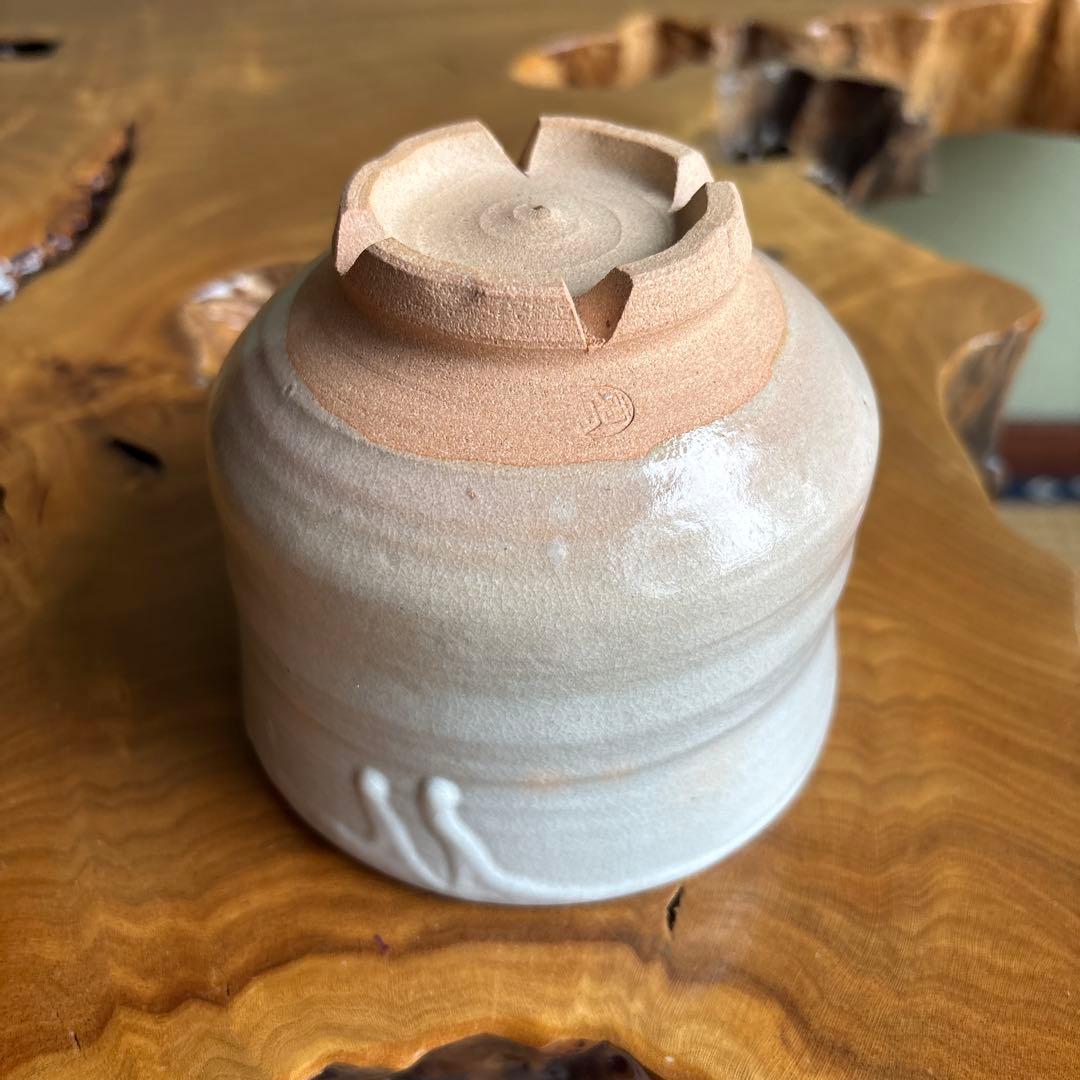
Experience Authentic Japan Art with this Hagi Ware Chawan, a Japanese Tea Bowl shaped by the wari-kodai cleft-foot construction. This Studio Hagi Potter work serves as a Matcha Tea Bowl and Wabi Sabi Pottery, featuring a feldspar glaze with glaze drip detail and signed tomobako—a distinguished piece for any Art Collector drawn to Hagi Yamaguchi ceramics and Japanese Tea Ceremony.
🔹 [ BASIC DETAILS ]
• Artist: Studio Hagi potter with signed tomobako
• Technique: Loquat-pale feldspar glaze (shironeri); wari-kōdai (cleft-foot construction); intentional glaze drip (tare)
• Era: 1990s – 2000s
• Origin: Hagi, Yamaguchi, Japan
• Dimensions: Height approx. 9.2 cm, Diameter approx. 10.5 cm
• Box: Tomobako — signed wooden box with brushwork and red artist seal
• Condition: Good. Glaze rivulets on the shoulder are deliberate design. No chips or cracks. Natural unglazed clay character at foot ring.
🔹 [ CULTURAL & ARTISTIC INSIGHT ]
Hagi ware carries one of the most storied lineages in Japanese ceramics. When Korean potters of the Ri family settled in Yamaguchi in the early seventeenth century under the patronage of the Mōri clan, they brought with them a sensibility for coarse, porous clay and soft feldspathic glazes that would define Hagi for four centuries. The tradition places the hand at the center: form is never mechanically perfect, and the glaze is never fully controlled. It is allowed to move.
This chawan embodies that inheritance. The loquat-pale glaze — quiet at the rim, thinning to warm terracotta near the foot — reads differently in each light. The wari-kōdai, a foot ring deliberately cleft into segments, is a Hagi invention that softens the visual weight of the base and echoes the roughness of the clay beneath. Two glaze rivulets descend the shoulder like arrested rain: not accidents, but authorship. The tomobako, sealed and brushed by the potter's own hand, closes the provenance loop.
There is a saying in tea culture — ichi-go ichi-e, one encounter, one time — and a well-chosen chawan holds that idea in its clay. This bowl does not announce itself. It waits.
🔹 [ DEEP-DIVE COMMENTARY ]
Wari-kōdai (割高台) translates literally as "cleft" or "divided" foot ring. Rather than a continuous ring, the foot is incised with one or more cuts, creating separate feet that echo the roughened, organic quality of Hagi's coarse clay body. The technique softens the transition between the glazed body and the bare earth of the foot, reinforcing Hagi's aesthetic of incompleteness as completion.
The feldspar glaze used in Hagi ware — derived primarily from local Daido stone and wood ash — fires to a soft, matte-to-satin surface in the warm white-to-pale grey range. Unlike the high-gloss glazes of Arita or Kyoto, Hagi glaze retains a slight porosity. Over years of use with tea, the clay and glaze absorb tannins gradually, shifting in color: a phenomenon known as Hagi no nanabake, the seven transformations of Hagi. A bowl used in daily tea practice becomes, over time, a record of those encounters.
The glaze tare — the two rivulets frozen mid-descent on the shoulder — is among the most valued surface events in Hagi aesthetics. A glaze that moves confirms that the firing was alive, that the kiln's heat was sufficient and the application generous enough to flow. It is not decorative in the conventional sense; it is evidence of process.
Collectors of Japanese tea wares often speak of the concept of te-no-kioku — the memory held in the hand. A chawan's weight, its rim thickness, the slight roughness of the foot against the palm of the supporting hand: these are the metrics that determine whether a bowl is merely observed or genuinely used. This bowl invites use.
The signed tomobako, executed with confident brushwork and sealed in red, places this work squarely within the studio pottery tradition of postwar Hagi — artists who trained within the lineage but developed individual voices, distinguishable from production ware by the presence of personal inscription and the specificity of their formal decisions.
[ JAPANESE DESCRIPTION / 日本語解説 ]
萩焼の茶碗というものは、形が整いすぎていない方が、かえって正直だという感覚がある。17世紀初頭、朝鮮から渡来した李(り)一族の陶工たちが萩の地に根を下ろし、毛利家の庇護のもとで築いた窯の系譜は、以来四百年にわたって同じ問いを繰り返してきた。土を、釉を、炎を、どこまで制御し、どこから手を離すか。
この茶碗は、その問いに対するひとつの静かな答えである。淡い白萩釉は轆轤目をやわらかく包みながら、高台に近づくにつれて薄れ、萩特有の橙みを帯びた素地の地肌を覗かせる。肩部に流れ下る二筋の釉だれは偶然ではなく、釉の厚みと焼成温度の選択が生んだ必然であり、それ自体が作者の判断の痕跡である。割高台は一本の切り込みによって足を分節し、重さを解体し、器を地面に軽やかに置かせる。
共箱には太い筆致と朱印が添えられ、作者の手が確かにここを通ったことを伝えている。萩の七化けという言葉がある。使い込まれた萩焼は、茶の渋が釉の細孔に沁み込み、年月とともに色と表情を変えていく。この茶碗もまた、これから出会う一服一服を、少しずつ自分の中に刻んでいく。
• 作家:萩の作家作・共箱入り(詳細銘不明)
• 技法:白萩釉(長石釉)、割高台、釉だれ
• 時代:1990年代〜2000年代
• 産地:山口県萩市
• サイズ:高さ約9.2cm、口径約10.5cm
• 箱:共箱(作家自筆・朱印入り)
• 状態:良好。釉だれは意匠的表現。欠け・ひびなし。高台部に自然な萩土の素地あり。
🔹 [ SHIPPING & PACKAGING ]
• Dispatch: Within 1-6 business days
• Carrier: Japan Post EMS / UPS (with tracking)
• Packaging: Carefully wrapped with protective materials
🔹 [ BASIC DETAILS ]
• Artist: Studio Hagi potter with signed tomobako
• Technique: Loquat-pale feldspar glaze (shironeri); wari-kōdai (cleft-foot construction); intentional glaze drip (tare)
• Era: 1990s – 2000s
• Origin: Hagi, Yamaguchi, Japan
• Dimensions: Height approx. 9.2 cm, Diameter approx. 10.5 cm
• Box: Tomobako — signed wooden box with brushwork and red artist seal
• Condition: Good. Glaze rivulets on the shoulder are deliberate design. No chips or cracks. Natural unglazed clay character at foot ring.
🔹 [ CULTURAL & ARTISTIC INSIGHT ]
Hagi ware carries one of the most storied lineages in Japanese ceramics. When Korean potters of the Ri family settled in Yamaguchi in the early seventeenth century under the patronage of the Mōri clan, they brought with them a sensibility for coarse, porous clay and soft feldspathic glazes that would define Hagi for four centuries. The tradition places the hand at the center: form is never mechanically perfect, and the glaze is never fully controlled. It is allowed to move.
This chawan embodies that inheritance. The loquat-pale glaze — quiet at the rim, thinning to warm terracotta near the foot — reads differently in each light. The wari-kōdai, a foot ring deliberately cleft into segments, is a Hagi invention that softens the visual weight of the base and echoes the roughness of the clay beneath. Two glaze rivulets descend the shoulder like arrested rain: not accidents, but authorship. The tomobako, sealed and brushed by the potter's own hand, closes the provenance loop.
There is a saying in tea culture — ichi-go ichi-e, one encounter, one time — and a well-chosen chawan holds that idea in its clay. This bowl does not announce itself. It waits.
🔹 [ DEEP-DIVE COMMENTARY ]
Wari-kōdai (割高台) translates literally as "cleft" or "divided" foot ring. Rather than a continuous ring, the foot is incised with one or more cuts, creating separate feet that echo the roughened, organic quality of Hagi's coarse clay body. The technique softens the transition between the glazed body and the bare earth of the foot, reinforcing Hagi's aesthetic of incompleteness as completion.
The feldspar glaze used in Hagi ware — derived primarily from local Daido stone and wood ash — fires to a soft, matte-to-satin surface in the warm white-to-pale grey range. Unlike the high-gloss glazes of Arita or Kyoto, Hagi glaze retains a slight porosity. Over years of use with tea, the clay and glaze absorb tannins gradually, shifting in color: a phenomenon known as Hagi no nanabake, the seven transformations of Hagi. A bowl used in daily tea practice becomes, over time, a record of those encounters.
The glaze tare — the two rivulets frozen mid-descent on the shoulder — is among the most valued surface events in Hagi aesthetics. A glaze that moves confirms that the firing was alive, that the kiln's heat was sufficient and the application generous enough to flow. It is not decorative in the conventional sense; it is evidence of process.
Collectors of Japanese tea wares often speak of the concept of te-no-kioku — the memory held in the hand. A chawan's weight, its rim thickness, the slight roughness of the foot against the palm of the supporting hand: these are the metrics that determine whether a bowl is merely observed or genuinely used. This bowl invites use.
The signed tomobako, executed with confident brushwork and sealed in red, places this work squarely within the studio pottery tradition of postwar Hagi — artists who trained within the lineage but developed individual voices, distinguishable from production ware by the presence of personal inscription and the specificity of their formal decisions.
[ JAPANESE DESCRIPTION / 日本語解説 ]
萩焼の茶碗というものは、形が整いすぎていない方が、かえって正直だという感覚がある。17世紀初頭、朝鮮から渡来した李(り)一族の陶工たちが萩の地に根を下ろし、毛利家の庇護のもとで築いた窯の系譜は、以来四百年にわたって同じ問いを繰り返してきた。土を、釉を、炎を、どこまで制御し、どこから手を離すか。
この茶碗は、その問いに対するひとつの静かな答えである。淡い白萩釉は轆轤目をやわらかく包みながら、高台に近づくにつれて薄れ、萩特有の橙みを帯びた素地の地肌を覗かせる。肩部に流れ下る二筋の釉だれは偶然ではなく、釉の厚みと焼成温度の選択が生んだ必然であり、それ自体が作者の判断の痕跡である。割高台は一本の切り込みによって足を分節し、重さを解体し、器を地面に軽やかに置かせる。
共箱には太い筆致と朱印が添えられ、作者の手が確かにここを通ったことを伝えている。萩の七化けという言葉がある。使い込まれた萩焼は、茶の渋が釉の細孔に沁み込み、年月とともに色と表情を変えていく。この茶碗もまた、これから出会う一服一服を、少しずつ自分の中に刻んでいく。
• 作家:萩の作家作・共箱入り(詳細銘不明)
• 技法:白萩釉(長石釉)、割高台、釉だれ
• 時代:1990年代〜2000年代
• 産地:山口県萩市
• サイズ:高さ約9.2cm、口径約10.5cm
• 箱:共箱(作家自筆・朱印入り)
• 状態:良好。釉だれは意匠的表現。欠け・ひびなし。高台部に自然な萩土の素地あり。
🔹 [ SHIPPING & PACKAGING ]
• Dispatch: Within 1-6 business days
• Carrier: Japan Post EMS / UPS (with tracking)
• Packaging: Carefully wrapped with protective materials
Quantity
Couldn't load pickup availability
Low stock: 1 left
View full details