1
/
of
6
Hagi Ware Chawan — Artist Piece, Soft Pink Glaze, Signed Box
Hagi Ware Chawan — Artist Piece, Soft Pink Glaze, Signed Box
Regular price
Dhs. 629.00 AED
Regular price
Sale price
Dhs. 629.00 AED
Taxes included.
Shipping calculated at checkout.
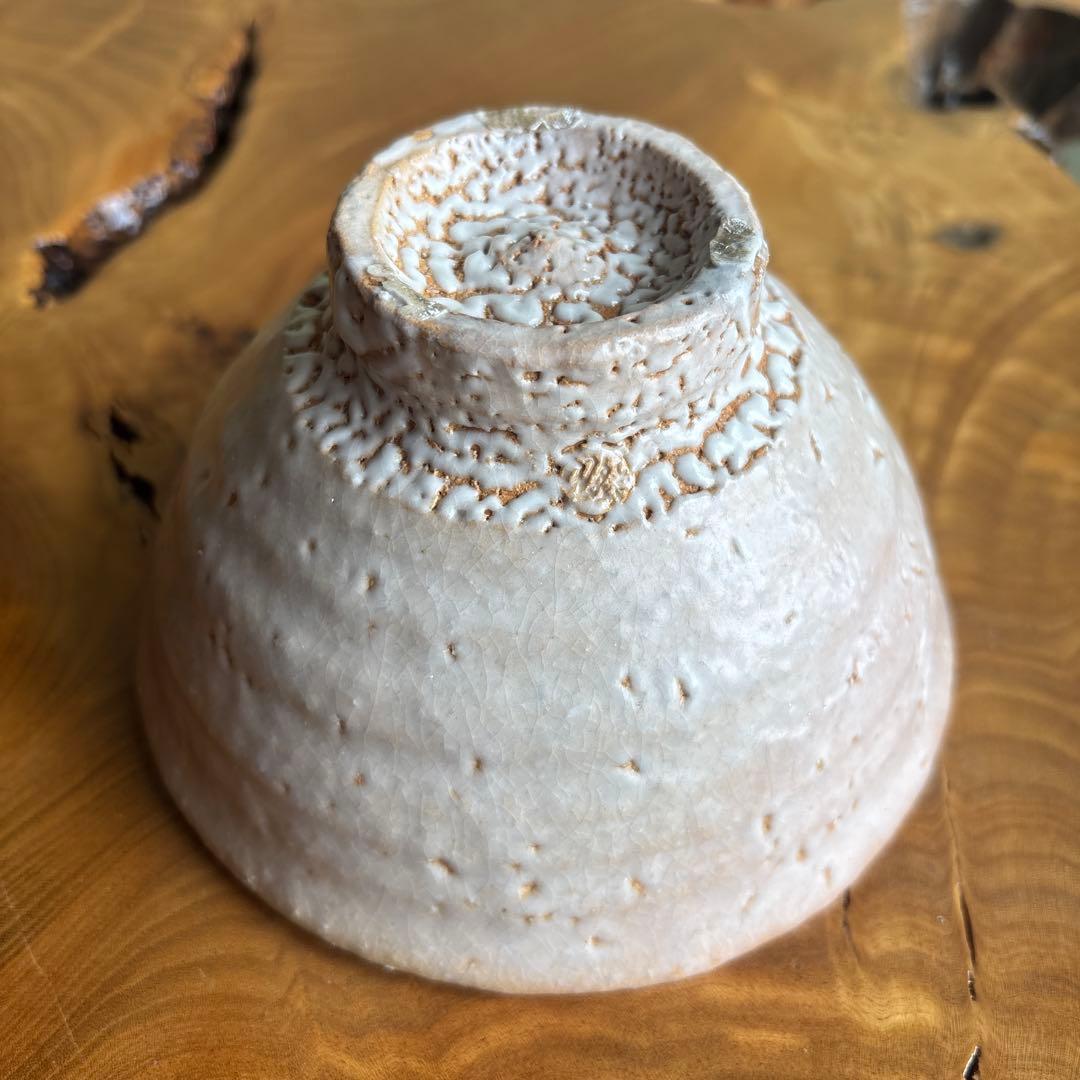
Hagi ware matcha bowl by a named artist. Soft pink-beige glaze with crawling surface texture, flared form, rough foot ring. Signed box with purple-cord binding. A wabi-sabi chawan of understated presence.
Collectors seeking Hagi chawan, wabi-sabi tea bowl, Japanese stoneware matcha bowl, pink glaze chawan, or Hagi ware with signed box will find this bowl holds the quiet of its tradition.
【 DETAILS 】
• Technique: Hagi-yaki (Hagi ware) — feldspathic glaze with crawling surface
• Form: Classic Hagi form — wide mouth, flared walls, rough tatami-cut foot
• Glaze: Soft pink-beige with surface crawling (yure); characteristic Hagi wabi surface
• Condition: Excellent. No chips, cracks, or restoration
• Provenance: Signed wooden tomobako with purple-cord binding
• Dimensions: Diameter approx. 14.2 cm / Height approx. 8.5 cm
【 CULTURAL INSIGHT 】
Among the ceramics beloved by tea masters, Hagi ware holds a singular place. The ranking — Ichi-Raku, Ni-Hagi, San-Karatsu (First Raku, Second Hagi, Third Karatsu) — is not merely historical preference but a statement about what tea values in a vessel: porous clay that holds warmth; surfaces that change with use; glazes that neither compete nor retreat. The pink-beige tone of Hagi is not decorative — it is structural, the result of local Mishima and Daido clay combined with straw ash glaze, fired to a temperature where the glaze retreats into islands of crawling texture.
【 DEEP DIVE 】
The crawling glaze effect on this bowl — where the surface breaks into a fine textured pattern — is the result of differential shrinkage between clay body and glaze during cooling. In Hagi ware, this is not a flaw but a cultivated outcome, a surface that records the thermal event of the kiln. Over years of tea use, Hagi bowls develop a phenomenon called nanahake no kise: the tea stains the porous clay through the glaze, shifting the color toward amber and rust in a transformation unique to each bowl's use. A Hagi chawan is not finished when it leaves the kiln. It is finished when it is used.
---
【 萩焼 作家物 抹茶碗 】
萩焼の作家物茶碗。ピンク萩釉に景色あるわび碗。荒削りな高台と釉薬の景色が茶の湯の美意識を体現。紫紐の共箱付き。直径約14.2cm、高さ約8.5cm。
🔹 [ SHIPPING & PACKAGING ]
• Dispatch: Within 1-6 business days
• Carrier: Japan Post EMS / UPS (with tracking)
• Packaging: Carefully wrapped with protective materials
Collectors seeking Hagi chawan, wabi-sabi tea bowl, Japanese stoneware matcha bowl, pink glaze chawan, or Hagi ware with signed box will find this bowl holds the quiet of its tradition.
【 DETAILS 】
• Technique: Hagi-yaki (Hagi ware) — feldspathic glaze with crawling surface
• Form: Classic Hagi form — wide mouth, flared walls, rough tatami-cut foot
• Glaze: Soft pink-beige with surface crawling (yure); characteristic Hagi wabi surface
• Condition: Excellent. No chips, cracks, or restoration
• Provenance: Signed wooden tomobako with purple-cord binding
• Dimensions: Diameter approx. 14.2 cm / Height approx. 8.5 cm
【 CULTURAL INSIGHT 】
Among the ceramics beloved by tea masters, Hagi ware holds a singular place. The ranking — Ichi-Raku, Ni-Hagi, San-Karatsu (First Raku, Second Hagi, Third Karatsu) — is not merely historical preference but a statement about what tea values in a vessel: porous clay that holds warmth; surfaces that change with use; glazes that neither compete nor retreat. The pink-beige tone of Hagi is not decorative — it is structural, the result of local Mishima and Daido clay combined with straw ash glaze, fired to a temperature where the glaze retreats into islands of crawling texture.
【 DEEP DIVE 】
The crawling glaze effect on this bowl — where the surface breaks into a fine textured pattern — is the result of differential shrinkage between clay body and glaze during cooling. In Hagi ware, this is not a flaw but a cultivated outcome, a surface that records the thermal event of the kiln. Over years of tea use, Hagi bowls develop a phenomenon called nanahake no kise: the tea stains the porous clay through the glaze, shifting the color toward amber and rust in a transformation unique to each bowl's use. A Hagi chawan is not finished when it leaves the kiln. It is finished when it is used.
---
【 萩焼 作家物 抹茶碗 】
萩焼の作家物茶碗。ピンク萩釉に景色あるわび碗。荒削りな高台と釉薬の景色が茶の湯の美意識を体現。紫紐の共箱付き。直径約14.2cm、高さ約8.5cm。
🔹 [ SHIPPING & PACKAGING ]
• Dispatch: Within 1-6 business days
• Carrier: Japan Post EMS / UPS (with tracking)
• Packaging: Carefully wrapped with protective materials
Quantity
Couldn't load pickup availability
Low stock: 1 left
View full details