1
/
of
12
Hagi Chawan by Yoshida Hagien, Gyokuryūzan Kiln — Onihagi, Gohonde, Signed
Hagi Chawan by Yoshida Hagien, Gyokuryūzan Kiln — Onihagi, Gohonde, Signed
Regular price
Dhs. 828.00 AED
Regular price
Sale price
Dhs. 828.00 AED
Taxes included.
Shipping calculated at checkout.
Hagi-yaki originates on the western tip of Honshū, in Hagi, Yamaguchi. For four centuries its potters have worked a single conviction: that a bowl should age alongside the person who holds it.
This chawan was made at the Gyokuryūzan (玉隆山) kiln by Yoshida Hagien (吉田萩苑). It carries the maker's mark — zaimei, signed — and arrives in its original wooden box.
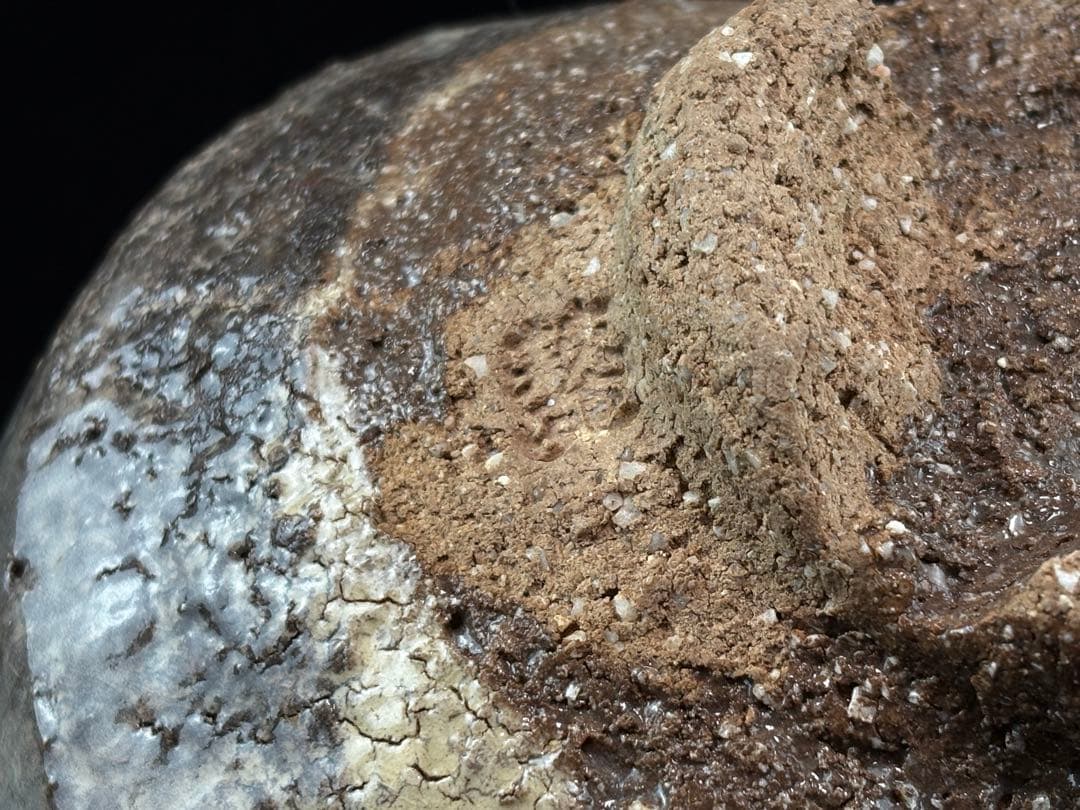
The form is Onihagi — "demon Hagi" — distinguished from smoother Hagi ware by a surface of pronounced crater-like pitting and rough, almost geological texture. The wall reads less like a thrown vessel and more like a section of hillside: grey-white feldspar glaze breaking into islands over a warm clay beneath, the seams between them tracing dark crazing lines that the camera cannot fully capture. Hold it in filtered afternoon light and the surface breathes.
Scattered across the exterior and pooling more warmly in the interior well are gohonde (御本手) blushes — reddish-amber flecks produced when iron compounds in the local Hagi clay migrate toward the surface during reduction firing. They are not painted on. They are the clay itself, speaking through heat.
At the foot, the warikōdai: a split foot-ring, deliberately notched through the base ring before firing. This detail is not decorative. In formal tea-ceremony tradition, a complete unbroken foot-ring can hold standing water after rinsing, an inconvenience during temae. The split allows water to drain. It is a solution that became a signature. Today the warikōdai is understood as a mark of tea-ceremony intention — the bowl was made to be used.
The glaze surface shows prominent crazing — a dense web of fine lines where the glaze contracted slightly differently from the clay body during cooling. In Hagi, this is not a flaw. Over years and decades of use, green tea finds these lines and stains them. The pale grey exterior slowly warms. The interior deepens. The white becomes cream, then amber. Collectors call this nanabake — the "seven changes" of Hagi. No two bowls change identically. After a decade of daily use, a Hagi chawan is a record of its relationship with one person.
This piece has not yet begun that journey. The glaze is still pale. The gohonde blushes are still distinct. It waits.
Dimensions: H 9.6–10 cm × Dia 14.2 cm. Signed (zaimei). Original wooden box included.
━━━━━━━━━━━━━━━━━━━━━━━━━━━━━━━━━━━━
🔹 [ BASIC DETAILS ]
🔹 [ CULTURAL & ARTISTIC INSIGHT ]
🔹 [ DEEP-DIVE COMMENTARY ]
🔹 [ 日本語解説 ]
萩焼の中でも鬼萩の荒々しい肌合いと御本手の赤みが印象的な一碗。割高台、在銘、木箱付きで茶道具としての格を持つ。使い込むほどに七化けが育つ、育てる楽しみのある茶碗。
🔹 [ SHIPPING & PACKAGING ]
• Dispatch: Within 1-6 business days
• Carrier: Japan Post EMS / UPS (with tracking)
• Packaging: Carefully wrapped with protective materials
This chawan was made at the Gyokuryūzan (玉隆山) kiln by Yoshida Hagien (吉田萩苑). It carries the maker's mark — zaimei, signed — and arrives in its original wooden box.
The form is Onihagi — "demon Hagi" — distinguished from smoother Hagi ware by a surface of pronounced crater-like pitting and rough, almost geological texture. The wall reads less like a thrown vessel and more like a section of hillside: grey-white feldspar glaze breaking into islands over a warm clay beneath, the seams between them tracing dark crazing lines that the camera cannot fully capture. Hold it in filtered afternoon light and the surface breathes.
Scattered across the exterior and pooling more warmly in the interior well are gohonde (御本手) blushes — reddish-amber flecks produced when iron compounds in the local Hagi clay migrate toward the surface during reduction firing. They are not painted on. They are the clay itself, speaking through heat.
At the foot, the warikōdai: a split foot-ring, deliberately notched through the base ring before firing. This detail is not decorative. In formal tea-ceremony tradition, a complete unbroken foot-ring can hold standing water after rinsing, an inconvenience during temae. The split allows water to drain. It is a solution that became a signature. Today the warikōdai is understood as a mark of tea-ceremony intention — the bowl was made to be used.
The glaze surface shows prominent crazing — a dense web of fine lines where the glaze contracted slightly differently from the clay body during cooling. In Hagi, this is not a flaw. Over years and decades of use, green tea finds these lines and stains them. The pale grey exterior slowly warms. The interior deepens. The white becomes cream, then amber. Collectors call this nanabake — the "seven changes" of Hagi. No two bowls change identically. After a decade of daily use, a Hagi chawan is a record of its relationship with one person.
This piece has not yet begun that journey. The glaze is still pale. The gohonde blushes are still distinct. It waits.
Dimensions: H 9.6–10 cm × Dia 14.2 cm. Signed (zaimei). Original wooden box included.
━━━━━━━━━━━━━━━━━━━━━━━━━━━━━━━━━━━━
🔹 [ BASIC DETAILS ]
🔹 [ CULTURAL & ARTISTIC INSIGHT ]
🔹 [ DEEP-DIVE COMMENTARY ]
🔹 [ 日本語解説 ]
萩焼の中でも鬼萩の荒々しい肌合いと御本手の赤みが印象的な一碗。割高台、在銘、木箱付きで茶道具としての格を持つ。使い込むほどに七化けが育つ、育てる楽しみのある茶碗。
🔹 [ SHIPPING & PACKAGING ]
• Dispatch: Within 1-6 business days
• Carrier: Japan Post EMS / UPS (with tracking)
• Packaging: Carefully wrapped with protective materials
Quantity
Couldn't load pickup availability
Out of stock
View full details