1
/
of
6
Gyeongju Wan-yo Korean Koryo Tea Bowl — Salmon-Pink Crazing Chawan with Tall Foot and Tomobako
Gyeongju Wan-yo Korean Koryo Tea Bowl — Salmon-Pink Crazing Chawan with Tall Foot and Tomobako
Regular price
Dhs. 616.00 AED
Regular price
Sale price
Dhs. 616.00 AED
Taxes included.
Shipping calculated at checkout.
Warm salmon-pink clay. Fine crazing across the surface. An elegant foot ring that lifts the bowl with quiet authority.
This is the Korean chawan tradition — unadorned and complete. Not a bowl awaiting decoration. A bowl that has arrived.
Made at the Gyeongju kiln, in the ancient Silla capital — a place where ceramics have been made for longer than the tea ceremony itself has existed. The crazing, kannyu, was not a flaw to be corrected. It is how the glaze and body negotiate their different rates of contraction. Over time, it deepens.
Japanese tea masters of the 16th century did not choose Korean ceramics despite their simplicity. They chose them because of it. Sen no Rikyu's wabi aesthetic found in these bowls something that the most refined Japanese kilns could not produce on demand — an absence of striving. The warmth of this body, the height of this foot ring, the monochrome completeness — these are the qualities that tea masters have revered for centuries.
The bowl does not perform. It simply holds.
Dimensions: 14.5cm diameter × 9cm height
Condition: Good — no chips, no cracks
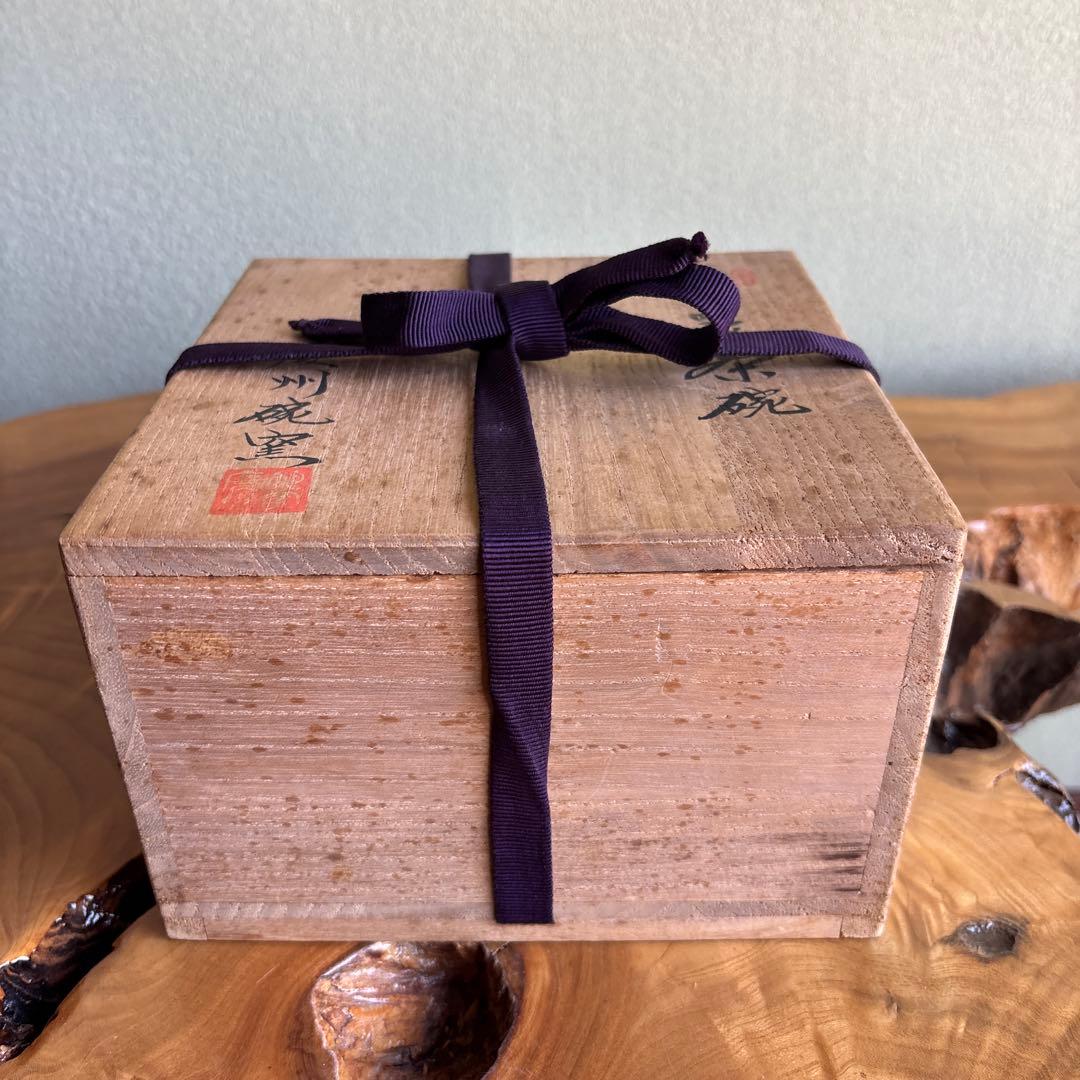
Includes: Tomobako (original wooden box)
For the collector who understands that restraint is not the absence of intention. For the practitioner drawn to the source.
🔹 [ BASIC DETAILS ]
• Dimensions: 14.5 cm diameter x 9 cm height
• Condition: Good condition. No chips or cracks.
• Includes: Tomobako (artist-signed box)
🔹 [ SHIPPING & PACKAGING ]
• Dispatch: Within 1-6 business days
• Carrier: Japan Post EMS / UPS (with tracking)
• Packaging: Carefully wrapped with protective materials
This is the Korean chawan tradition — unadorned and complete. Not a bowl awaiting decoration. A bowl that has arrived.
Made at the Gyeongju kiln, in the ancient Silla capital — a place where ceramics have been made for longer than the tea ceremony itself has existed. The crazing, kannyu, was not a flaw to be corrected. It is how the glaze and body negotiate their different rates of contraction. Over time, it deepens.
Japanese tea masters of the 16th century did not choose Korean ceramics despite their simplicity. They chose them because of it. Sen no Rikyu's wabi aesthetic found in these bowls something that the most refined Japanese kilns could not produce on demand — an absence of striving. The warmth of this body, the height of this foot ring, the monochrome completeness — these are the qualities that tea masters have revered for centuries.
The bowl does not perform. It simply holds.
Dimensions: 14.5cm diameter × 9cm height
Condition: Good — no chips, no cracks
Includes: Tomobako (original wooden box)
For the collector who understands that restraint is not the absence of intention. For the practitioner drawn to the source.
🔹 [ BASIC DETAILS ]
• Dimensions: 14.5 cm diameter x 9 cm height
• Condition: Good condition. No chips or cracks.
• Includes: Tomobako (artist-signed box)
🔹 [ SHIPPING & PACKAGING ]
• Dispatch: Within 1-6 business days
• Carrier: Japan Post EMS / UPS (with tracking)
• Packaging: Carefully wrapped with protective materials
Quantity
Couldn't load pickup availability
Low stock: 1 left
View full details