1
/
of
10
Gosho-maru Style Tea Bowl 'Kankyo' by Oka Shoichiro — Daitokuji Kakitsuke, Black White Two-Glaze
Gosho-maru Style Tea Bowl 'Kankyo' by Oka Shoichiro — Daitokuji Kakitsuke, Black White Two-Glaze
Regular price
Dhs. 1,481.00 AED
Regular price
Sale price
Dhs. 1,481.00 AED
Taxes included.
Shipping calculated at checkout.
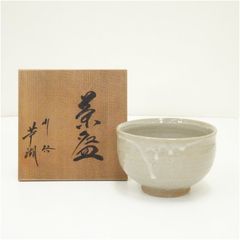
Experience Authentic Japan Art with this Gosho-maru Style Tea Bowl. This Daitokuji Kakitsuke Chawan serves as a Japanese Tea Ceremony Bowl and Named Tea Bowl Gift, featuring Black White Two-Glaze and Faceted Wall Construction—a must-have for any Art Collector seeking Oka Shoichiro Pottery with Signed Wooden Box and Wabi Sabi Aesthetic from a prestigious Zen Temple Endorsement.
🔹 [ BASIC DETAILS ]
• Artist: Oka Shoichiro (岡正一郎) — contemporary Japanese potter working in the Gosho-maru style
• Kakitsuke (box inscription by Buddhist authority): 細合喝堂 (Hosomi Katsudo), Daitokuji temple, Kyoto — one of Japan's most prestigious Rinzai Zen monastery inscriptions
• Name (銘): 閑居 (Kankyo — "Tranquil Dwelling" / "Quiet Solitude")
• Technique: Gosho-maru style (御所丸写) — bold black iron-oxide glaze cascading from rim over lower white feldspathic glaze; faceted (multiple-plane) wall construction; stark two-tone landscape composition
• Era: Heisei period (c. 1990s–2000s)
• Origin: Japan (Gosho-maru tradition, referencing Karatsu-ware heritage)
• Dimensions: Mouth diameter approx. 12.9 cm (outer) / 11 cm (inner), Height approx. 7.3 cm, Foot diameter approx. 7 cm
• Box: Original signed wooden box (tomobako) with lid inscribed "御所丸写茶盌 銘 閑居" and side inscribed by Hosomi Katsudo (大徳寺)
• Condition: No cracks or chips
🔹 [ CULTURAL & ARTISTIC INSIGHT ]
The Gosho-maru (御所丸) style of tea bowl occupies a singular place in Japanese ceramic history. Its origins trace to the late sixteenth and early seventeenth centuries, when Japanese aristocrats and tea masters commissioned Korean potters working in the Karatsu region to produce bowls with a distinctive two-tone aesthetic: a stark black iron glaze applied in bold, irregular masses over a contrasting white or grey feldspathic ground. The name itself — "Gosho" meaning imperial palace, "maru" referring to a type of ship that carried goods between Korea and Japan — carries the weight of cultural exchange and aristocratic taste intertwined.
This bowl by Oka Shoichiro distills that tradition into a form of extraordinary presence. The images reveal a strongly architectural object: the walls are faceted — worked into multiple flat planes that catch light at different angles, creating an almost sculptural surface texture. Over these facets, the two-glaze composition plays out with full confidence. A large white feldspathic zone dominates the lower body and sweeps up in a cloud-like mass, while the black iron glaze drapes from the rim in heavy, fluid movements — not dripping but cascading, arrested in mid-flow by the kiln's heat.
What elevates this bowl beyond fine craft is the Daitokuji kakitsuke. When a Rinzai Zen priest of authority writes the box inscription for a tea bowl, he is not merely authenticating the object — he is endorsing its spiritual suitability for use in chado. The mei (銘) 閑居 — "Tranquil Dwelling" — chosen by the priest Hosomi Katsudo is perfectly matched to the bowl's visual character: the white zone as silence, the black as the frame that defines that silence.
Poetic line: "Tranquil dwelling — the white field holds its breath, and the black arrives like a thought one did not plan to have."
🔹 [ DEEP-DIVE COMMENTARY ]
Gosho-maru ware represents one of the most striking aesthetic departures within the broader Karatsu tradition. Unlike E-Karatsu (with its iron brushwork motifs) or plain Karatsu (with its restrained monochrome gravity), Gosho-maru is defined by maximalist contrast: two glazes deployed in large, boldly demarcated zones that create a near-abstract composition on the surface of the bowl. The technique requires significant skill — the two glazes must be applied and fired in a sequence that allows each to achieve its intended character without compromising the other.
The black iron glaze used in Gosho-maru work is typically a high-iron slip or glaze fired in reduction to achieve a dark, dense, slightly glossy surface. The white glaze — often a lime-rich feldspathic formula — fires to a matte or semi-matte off-white with a dry, stone-like texture. The interaction zone between the two, where the black intrudes into the white or vice versa, is where the technical mastery becomes visible: the boundaries are never mechanical, always living.
The faceted wall construction on this bowl adds a further dimension of aesthetic intention. By pressing or cutting the thrown form into multiple flat planes before glazing, the potter ensures that the glaze behaves differently on each facet — pooling in the valleys, thinning on the ridges — creating a surface that is never the same twice from any two viewing angles. This is a conscious dialogue with the Zen aesthetic of non-repetition and present-moment perception.
The Daitokuji kakitsuke is among the most significant forms of cultural endorsement available in the Japanese tea world. Daitokuji temple in Kyoto has been the spiritual home of the tea ceremony since the Muromachi period — Sen no Rikyu himself is buried there, and the temple's abbots and senior priests have maintained their connection to chado through generations. A kakitsuke from a Daitokuji priest is not an advertisement; it is a statement of spiritual and aesthetic kinship between the object and the tradition.
For the collector, this bowl represents an unusual convergence of conditions: a technically accomplished work in a historically significant style, a meaningful name (銘) that resonates with the bowl's visual character, and a Daitokuji inscription that places it firmly within the lineage of Japan's most serious tea culture.
🔹 [ SHIPPING & PACKAGING ]
• Dispatch: Within 1-6 business days
• Carrier: Japan Post EMS / UPS (with tracking)
• Packaging: Carefully wrapped with protective materials
🔹 [ 日本語解説 ]
【詳細スペック】
・作家:岡正一郎(御所丸写)
・書付:大徳寺・細合喝堂(箱側面に署名・押印)
・銘:閑居
・技法:御所丸写茶碗 — 白長石釉と黒鉄釉の大胆な二色対比、多面体(鎬)成形、大樋焼的なスケール感
・年代:平成(1990〜2000年代)
・産地:日本(御所丸伝統、唐津焼を参照)
・寸法:口径約12.9cm(外)/ 11cm(内)、高さ約7.3cm、高台径約7cm
・付属:共箱(蓋表:「御所丸写茶盌 銘 閑居」/ 蓋裏:細合喝堂書付)
・状態:割れ・欠けなし
【文化・芸術的解説】
御所丸茶碗は、十六〜十七世紀に日朝交流の中で生まれた極めて個性的な茶碗様式である。黒鉄釉と白長石釉を大胆な塊として対比させる二色の構成が最大の特徴であり、その視覚的インパクトは茶道具の中でも際立って強い。名称の「御所丸」は、朝鮮から日本へ陶工と陶磁器を運んだ特定の船に由来するとされ、文化交流の歴史そのものを名前に内包している。
岡正一郎作の本作は、鎬成形(多面体の壁面)により光の当たり方が面ごとに異なり、見る角度によって表情が変わる。白の景色が下半を占め、黒鉄釉が口辺から重く流れ落ちる構成は、沈黙と言葉の対話のように読める。銘「閑居」——大徳寺・細合喝堂師が選んだこの名は、白の静寂と黒の縁取りが生む視覚的な「閑かな居所」と完璧に呼応している。
詩的一言:「閑居——白い野は息を潜め、黒は計らずも訪れた思考のように来る。」
【上級コレクター向け解説】
御所丸様式の技法的核心は、黒と白の施釉と焼成のシーケンス管理にある。高鉄分の黒釉は還元焼成で深い密度を持つ漆黒に仕上がり、石灰質の白長石釉はやや乾いた石のような質感に落ち着く。二色の境界面は機械的でなく、常に生きた輪郭を持つ——ここに作家の技量が如実に現れる。
鎬成形は、轆轤で成形した後に平面を作り込むことで実現され、面ごとに釉薬の流れが変わる。この「繰り返さない表面」は、禅の「不二」の美学と連続している。
大徳寺の書付は、日本の茶の湯においてもっとも重みを持つ文化的承認の一つである。利休の墓所でもある大徳寺の住職・僧侶による書付は、その器が茶道の精神的系譜に属することを示す——これは単なる鑑定書ではなく、伝統との霊的な連帯の証である。銘・書付・作家の揃った本作は、茶道具コレクターとして本格的に取り組む人にとって、揺るぎない軸となる一点である。
🔹 [ BASIC DETAILS ]
• Artist: Oka Shoichiro (岡正一郎) — contemporary Japanese potter working in the Gosho-maru style
• Kakitsuke (box inscription by Buddhist authority): 細合喝堂 (Hosomi Katsudo), Daitokuji temple, Kyoto — one of Japan's most prestigious Rinzai Zen monastery inscriptions
• Name (銘): 閑居 (Kankyo — "Tranquil Dwelling" / "Quiet Solitude")
• Technique: Gosho-maru style (御所丸写) — bold black iron-oxide glaze cascading from rim over lower white feldspathic glaze; faceted (multiple-plane) wall construction; stark two-tone landscape composition
• Era: Heisei period (c. 1990s–2000s)
• Origin: Japan (Gosho-maru tradition, referencing Karatsu-ware heritage)
• Dimensions: Mouth diameter approx. 12.9 cm (outer) / 11 cm (inner), Height approx. 7.3 cm, Foot diameter approx. 7 cm
• Box: Original signed wooden box (tomobako) with lid inscribed "御所丸写茶盌 銘 閑居" and side inscribed by Hosomi Katsudo (大徳寺)
• Condition: No cracks or chips
🔹 [ CULTURAL & ARTISTIC INSIGHT ]
The Gosho-maru (御所丸) style of tea bowl occupies a singular place in Japanese ceramic history. Its origins trace to the late sixteenth and early seventeenth centuries, when Japanese aristocrats and tea masters commissioned Korean potters working in the Karatsu region to produce bowls with a distinctive two-tone aesthetic: a stark black iron glaze applied in bold, irregular masses over a contrasting white or grey feldspathic ground. The name itself — "Gosho" meaning imperial palace, "maru" referring to a type of ship that carried goods between Korea and Japan — carries the weight of cultural exchange and aristocratic taste intertwined.
This bowl by Oka Shoichiro distills that tradition into a form of extraordinary presence. The images reveal a strongly architectural object: the walls are faceted — worked into multiple flat planes that catch light at different angles, creating an almost sculptural surface texture. Over these facets, the two-glaze composition plays out with full confidence. A large white feldspathic zone dominates the lower body and sweeps up in a cloud-like mass, while the black iron glaze drapes from the rim in heavy, fluid movements — not dripping but cascading, arrested in mid-flow by the kiln's heat.
What elevates this bowl beyond fine craft is the Daitokuji kakitsuke. When a Rinzai Zen priest of authority writes the box inscription for a tea bowl, he is not merely authenticating the object — he is endorsing its spiritual suitability for use in chado. The mei (銘) 閑居 — "Tranquil Dwelling" — chosen by the priest Hosomi Katsudo is perfectly matched to the bowl's visual character: the white zone as silence, the black as the frame that defines that silence.
Poetic line: "Tranquil dwelling — the white field holds its breath, and the black arrives like a thought one did not plan to have."
🔹 [ DEEP-DIVE COMMENTARY ]
Gosho-maru ware represents one of the most striking aesthetic departures within the broader Karatsu tradition. Unlike E-Karatsu (with its iron brushwork motifs) or plain Karatsu (with its restrained monochrome gravity), Gosho-maru is defined by maximalist contrast: two glazes deployed in large, boldly demarcated zones that create a near-abstract composition on the surface of the bowl. The technique requires significant skill — the two glazes must be applied and fired in a sequence that allows each to achieve its intended character without compromising the other.
The black iron glaze used in Gosho-maru work is typically a high-iron slip or glaze fired in reduction to achieve a dark, dense, slightly glossy surface. The white glaze — often a lime-rich feldspathic formula — fires to a matte or semi-matte off-white with a dry, stone-like texture. The interaction zone between the two, where the black intrudes into the white or vice versa, is where the technical mastery becomes visible: the boundaries are never mechanical, always living.
The faceted wall construction on this bowl adds a further dimension of aesthetic intention. By pressing or cutting the thrown form into multiple flat planes before glazing, the potter ensures that the glaze behaves differently on each facet — pooling in the valleys, thinning on the ridges — creating a surface that is never the same twice from any two viewing angles. This is a conscious dialogue with the Zen aesthetic of non-repetition and present-moment perception.
The Daitokuji kakitsuke is among the most significant forms of cultural endorsement available in the Japanese tea world. Daitokuji temple in Kyoto has been the spiritual home of the tea ceremony since the Muromachi period — Sen no Rikyu himself is buried there, and the temple's abbots and senior priests have maintained their connection to chado through generations. A kakitsuke from a Daitokuji priest is not an advertisement; it is a statement of spiritual and aesthetic kinship between the object and the tradition.
For the collector, this bowl represents an unusual convergence of conditions: a technically accomplished work in a historically significant style, a meaningful name (銘) that resonates with the bowl's visual character, and a Daitokuji inscription that places it firmly within the lineage of Japan's most serious tea culture.
🔹 [ SHIPPING & PACKAGING ]
• Dispatch: Within 1-6 business days
• Carrier: Japan Post EMS / UPS (with tracking)
• Packaging: Carefully wrapped with protective materials
🔹 [ 日本語解説 ]
【詳細スペック】
・作家:岡正一郎(御所丸写)
・書付:大徳寺・細合喝堂(箱側面に署名・押印)
・銘:閑居
・技法:御所丸写茶碗 — 白長石釉と黒鉄釉の大胆な二色対比、多面体(鎬)成形、大樋焼的なスケール感
・年代:平成(1990〜2000年代)
・産地:日本(御所丸伝統、唐津焼を参照)
・寸法:口径約12.9cm(外)/ 11cm(内)、高さ約7.3cm、高台径約7cm
・付属:共箱(蓋表:「御所丸写茶盌 銘 閑居」/ 蓋裏:細合喝堂書付)
・状態:割れ・欠けなし
【文化・芸術的解説】
御所丸茶碗は、十六〜十七世紀に日朝交流の中で生まれた極めて個性的な茶碗様式である。黒鉄釉と白長石釉を大胆な塊として対比させる二色の構成が最大の特徴であり、その視覚的インパクトは茶道具の中でも際立って強い。名称の「御所丸」は、朝鮮から日本へ陶工と陶磁器を運んだ特定の船に由来するとされ、文化交流の歴史そのものを名前に内包している。
岡正一郎作の本作は、鎬成形(多面体の壁面)により光の当たり方が面ごとに異なり、見る角度によって表情が変わる。白の景色が下半を占め、黒鉄釉が口辺から重く流れ落ちる構成は、沈黙と言葉の対話のように読める。銘「閑居」——大徳寺・細合喝堂師が選んだこの名は、白の静寂と黒の縁取りが生む視覚的な「閑かな居所」と完璧に呼応している。
詩的一言:「閑居——白い野は息を潜め、黒は計らずも訪れた思考のように来る。」
【上級コレクター向け解説】
御所丸様式の技法的核心は、黒と白の施釉と焼成のシーケンス管理にある。高鉄分の黒釉は還元焼成で深い密度を持つ漆黒に仕上がり、石灰質の白長石釉はやや乾いた石のような質感に落ち着く。二色の境界面は機械的でなく、常に生きた輪郭を持つ——ここに作家の技量が如実に現れる。
鎬成形は、轆轤で成形した後に平面を作り込むことで実現され、面ごとに釉薬の流れが変わる。この「繰り返さない表面」は、禅の「不二」の美学と連続している。
大徳寺の書付は、日本の茶の湯においてもっとも重みを持つ文化的承認の一つである。利休の墓所でもある大徳寺の住職・僧侶による書付は、その器が茶道の精神的系譜に属することを示す——これは単なる鑑定書ではなく、伝統との霊的な連帯の証である。銘・書付・作家の揃った本作は、茶道具コレクターとして本格的に取り組む人にとって、揺るぎない軸となる一点である。
Quantity
Couldn't load pickup availability
Low stock: 1 left
View full details