1
/
of
11
Gold Maki-e Lacquer Natsume Tea Caddy — Waves and Plovers by Tsuji Sekisai, Kyoto Lacquer, Signed Box
Gold Maki-e Lacquer Natsume Tea Caddy — Waves and Plovers by Tsuji Sekisai, Kyoto Lacquer, Signed Box
Regular price
Dhs. 1,635.00 AED
Regular price
Sale price
Dhs. 1,635.00 AED
Taxes included.
Shipping calculated at checkout.
Experience Authentic Japan Art with this Japanese Lacquer Tea Caddy. This Gold Maki-e Natsume serves as a Kyoto Lacquerware Collectible and Chado Tea Ceremony Accessory, featuring Waves and Plovers Maki-e and Black Urushi Lacquer Natsume—a must-have for any Art Collector. Crafted by Tsuji Sekisai Lacquer Artist in the revered Kyo-nuri tradition, this Antique Japanese Natsume belongs among the finest Signed Tea Ceremony Objects available.
🔹 [ BASIC DETAILS ]
• Artist: Tsuji Sekisai (辻石斎) — hereditary master title of Kyoto lacquer (Kyo-nuri)
• Technique: Gold maki-e (sprinkled gold powder lacquer) on deep black urushi ground; yakki (medicine container) form natsume
• Era: Late Showa / Heisei, estimated 1980s–2000s
• Origin: Kyoto, Japan (Kyo-nuri lineage)
• Dimensions: Height approx. 7.5 cm, Diameter approx. 6.7 cm
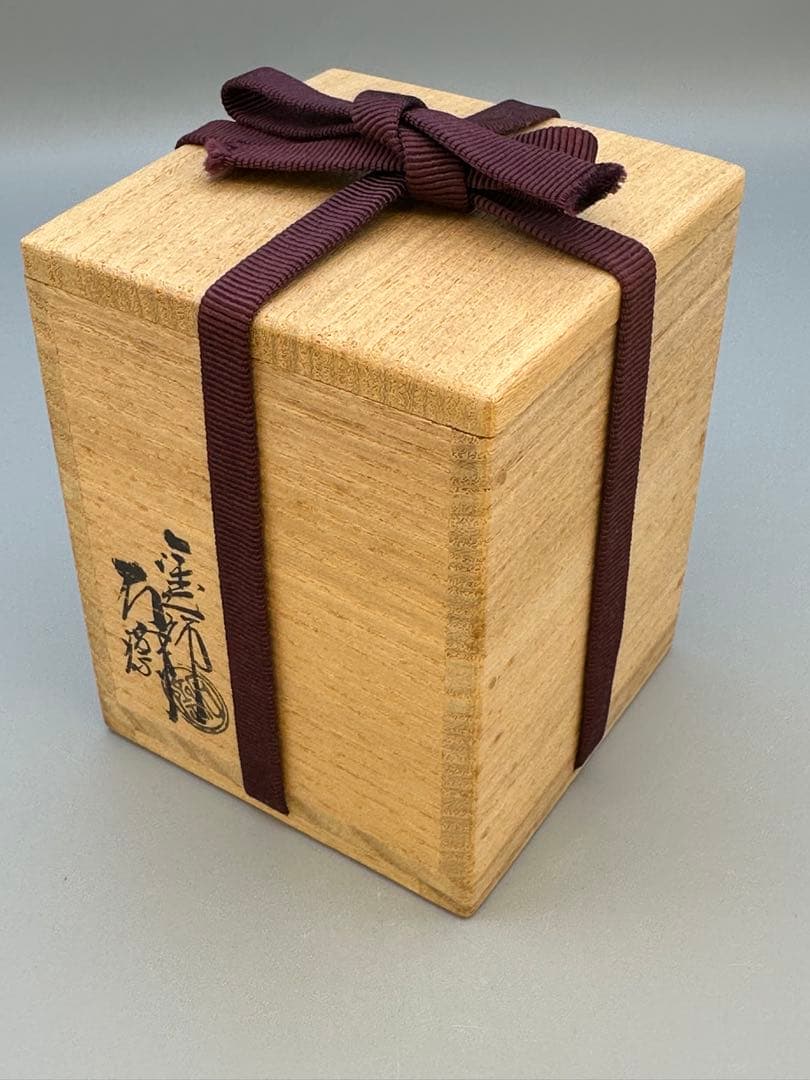
• Box: Original signed paulownia wood tomobako with calligraphic inscription and red seal by the artist
• Condition: Excellent — no notable scratches or soiling on the piece; tomobako shows minor natural aging (light yellowing and faint staining consistent with age)
🔹 [ CULTURAL & ARTISTIC INSIGHT ]
The motif of waves crashing beneath a flock of plovers in flight — known in classical Japanese aesthetics as nami-ni-chidori (波に千鳥) — is one of the most beloved and enduring design lexicons in Japanese decorative art. Drawn from waka poetry and the imagery of Ogura Hyakunin Isshu, this pairing evokes the paradox of fragility and resilience: the tiny plover navigating storm-tossed seas with utter composure. On this natsume, the waves are rendered with dense, rhythmic parallel hachure lines (ariso-nami style), each crest layered to suggest movement and depth, while a dozen plovers scatter across the vessel's body and lid in varying attitudes of flight — some banking low, others ascending, creating a sense of three-dimensional space on a curved black surface.
The ground is deep kuro-urushi (black lacquer), polished to a mirror depth that seems to absorb and amplify the surrounding gold. The gold maki-e is applied with fine-ground gold powder (fun-kin) using the hiramaki-e technique — raised slightly from the surface — giving the birds and waves a tactile luminosity that shifts under changing light. Opening the lid reveals a warm, burnished gold-dust interior, a moment of quiet revelation characteristic of the finest Kyo-nuri pieces.
Philosophical Reflection: "The plover asks no permission of the wave. It simply flies — and in flying, makes the storm irrelevant."
🔹 [ DEEP-DIVE COMMENTARY ]
Kyo-nuri (京塗, Kyoto lacquer) encompasses the full range of lacquerwork traditions that developed in and around the imperial capital across many centuries. Unlike regional schools defined by a single technique, Kyo-nuri is an umbrella designation for work executed to the refined aesthetic sensibilities of Kyoto — prioritizing elegance, literary allusion, and impeccable surface quality over bold rusticity. The Sekisai title (石斎) within this tradition represents one of the hereditary master names, passed from teacher to chosen successor in a system (iemoto) paralleling that of tea or flower ceremony schools. Holders of such names carry the technical memory and aesthetic vocabulary of generations.
Maki-e — the art of applying metallic powders to wet urushi before it cures — is among the most technically demanding forms of Japanese craft. The process requires absolute command of timing: the lacquer must be in precisely the right state of dryness to accept the powder without bleeding or clumping. For hiramaki-e (flat maki-e), the design is drawn in lacquer with a fine brush, powdered, sealed, and polished repeatedly until the surface achieves perfect planarity. The result on this natsume — where wave lines as fine as a hair resolve into a continuous, flowing mass — speaks to extraordinary brush control and decades of disciplined practice.
The yakki (薬器, medicine container) form — a cylindrical body slightly wider than tall, with a close-fitting flat lid — is a classical natsume variant that entered tea ceremony use from the world of pharmaceutical containers. Its compact proportions and firm lid-seal made it ideal for storing powdered matcha, and the restrained cylindrical silhouette allows decorative programs to read as continuous panoramas. On this piece, the nami-ni-chidori design wraps seamlessly around the full circumference, rewarding the viewer who turns the vessel slowly.
For collectors, three factors converge to distinguish this piece: first, the literary and aesthetic weight of the nami-ni-chidori iconography — a motif that signals deep fluency in Japanese classical culture; second, the technical refinement of the maki-e execution, where the interplay of dense wave hachure and lively, individuated bird forms demonstrates mastery rather than formula; and third, the presence of a signed tomobako establishing direct attribution to the Sekisai lineage, providing provenance and authentication in the tradition of the Japanese art market.
🔹 [ 日本語解説 ]
【基本情報】
• 作家:辻石斎(京塗の伝統的塗師名跡)
• 技法:黒漆地に金蒔絵(平蒔絵)— 薬器形棗
• 年代:昭和後期〜平成期(1980年代〜2000年代頃)
• 産地:京都(京塗系統)
• 寸法:高さ約7.5センチ、径約6.7センチ
• 箱:共箱(桐製)— 作家による毛筆署名・朱印入り
• 状態:良好。本体に目立つ傷・汚れなし。共箱には経年による僅かなヤケ・シミあり
【文化的・美術的解説】
「波に千鳥」は、日本の古典美術においてもっとも深く愛されてきた意匠の一つです。百人一首に謳われた景物であり、荒海を渡る小さな千鳥の姿は、繊細さと強靭さの共存という日本美学の核心を体現しています。本作では、荒磯波の意匠が精緻な線描によって器面全体に展開され、その上を数羽の千鳥が自在に飛び交う構図が、360度どの角度から見ても破綻なく続きます。
漆黒の地は磨き上げられ鏡面の深みをたたえており、金蒔絵の輝きをひときわ際立たせています。蓋を開くと内部は金粉研ぎ出しの暖かい金色が広がり、この静かな驚きもまた京塗の美意識の一端です。
詩的な一句:「千鳥は波に問わない。ただ飛ぶ。その姿の中で、嵐は意味を失う。」
【上級コレクター向け解説】
京塗とは京都を中心に発展した漆芸の総称であり、特定の技法ではなく、宮廷文化に磨かれた精緻な美意識を指す概念です。石斎という塗師名は代々継承される名跡であり、その継承者は技術と美の記憶を一身に担います。
蒔絵の制作は漆工芸の中でも最も高度な技術を要します。乾き途中の漆面に絵漆で文様を描き、金粉を蒔き、固まった後に研ぎ出すという工程を幾重にも繰り返します。本作の波の線描は毛筆一本で引かれており、その細さと連続性が職人の長年の修練を物語っています。
薬器形棗は、元来薬を収めた円筒形の容器が茶道具として転用されたもので、蓋の密閉性と簡潔な造形が茶席の用途に合致します。本作の波に千鳥の文様は器面を一周し、回しながら眺めることで構図の全体像が現れます。
コレクターにとって本作の価値は三点に集約されます。第一に、古典文学を背景とする「波に千鳥」という意匠の重み。第二に、細密な波の線描と生き生きした千鳥の造形が共存する蒔絵の技術的完成度。第三に、石斎作と明記された共箱による確かな来歴です。
🔹 [ SHIPPING & PACKAGING ]
• Dispatch: Within 1-6 business days
• Carrier: Japan Post EMS / UPS (with tracking)
• Packaging: Carefully wrapped with protective materials
🔹 [ BASIC DETAILS ]
• Artist: Tsuji Sekisai (辻石斎) — hereditary master title of Kyoto lacquer (Kyo-nuri)
• Technique: Gold maki-e (sprinkled gold powder lacquer) on deep black urushi ground; yakki (medicine container) form natsume
• Era: Late Showa / Heisei, estimated 1980s–2000s
• Origin: Kyoto, Japan (Kyo-nuri lineage)
• Dimensions: Height approx. 7.5 cm, Diameter approx. 6.7 cm
• Box: Original signed paulownia wood tomobako with calligraphic inscription and red seal by the artist
• Condition: Excellent — no notable scratches or soiling on the piece; tomobako shows minor natural aging (light yellowing and faint staining consistent with age)
🔹 [ CULTURAL & ARTISTIC INSIGHT ]
The motif of waves crashing beneath a flock of plovers in flight — known in classical Japanese aesthetics as nami-ni-chidori (波に千鳥) — is one of the most beloved and enduring design lexicons in Japanese decorative art. Drawn from waka poetry and the imagery of Ogura Hyakunin Isshu, this pairing evokes the paradox of fragility and resilience: the tiny plover navigating storm-tossed seas with utter composure. On this natsume, the waves are rendered with dense, rhythmic parallel hachure lines (ariso-nami style), each crest layered to suggest movement and depth, while a dozen plovers scatter across the vessel's body and lid in varying attitudes of flight — some banking low, others ascending, creating a sense of three-dimensional space on a curved black surface.
The ground is deep kuro-urushi (black lacquer), polished to a mirror depth that seems to absorb and amplify the surrounding gold. The gold maki-e is applied with fine-ground gold powder (fun-kin) using the hiramaki-e technique — raised slightly from the surface — giving the birds and waves a tactile luminosity that shifts under changing light. Opening the lid reveals a warm, burnished gold-dust interior, a moment of quiet revelation characteristic of the finest Kyo-nuri pieces.
Philosophical Reflection: "The plover asks no permission of the wave. It simply flies — and in flying, makes the storm irrelevant."
🔹 [ DEEP-DIVE COMMENTARY ]
Kyo-nuri (京塗, Kyoto lacquer) encompasses the full range of lacquerwork traditions that developed in and around the imperial capital across many centuries. Unlike regional schools defined by a single technique, Kyo-nuri is an umbrella designation for work executed to the refined aesthetic sensibilities of Kyoto — prioritizing elegance, literary allusion, and impeccable surface quality over bold rusticity. The Sekisai title (石斎) within this tradition represents one of the hereditary master names, passed from teacher to chosen successor in a system (iemoto) paralleling that of tea or flower ceremony schools. Holders of such names carry the technical memory and aesthetic vocabulary of generations.
Maki-e — the art of applying metallic powders to wet urushi before it cures — is among the most technically demanding forms of Japanese craft. The process requires absolute command of timing: the lacquer must be in precisely the right state of dryness to accept the powder without bleeding or clumping. For hiramaki-e (flat maki-e), the design is drawn in lacquer with a fine brush, powdered, sealed, and polished repeatedly until the surface achieves perfect planarity. The result on this natsume — where wave lines as fine as a hair resolve into a continuous, flowing mass — speaks to extraordinary brush control and decades of disciplined practice.
The yakki (薬器, medicine container) form — a cylindrical body slightly wider than tall, with a close-fitting flat lid — is a classical natsume variant that entered tea ceremony use from the world of pharmaceutical containers. Its compact proportions and firm lid-seal made it ideal for storing powdered matcha, and the restrained cylindrical silhouette allows decorative programs to read as continuous panoramas. On this piece, the nami-ni-chidori design wraps seamlessly around the full circumference, rewarding the viewer who turns the vessel slowly.
For collectors, three factors converge to distinguish this piece: first, the literary and aesthetic weight of the nami-ni-chidori iconography — a motif that signals deep fluency in Japanese classical culture; second, the technical refinement of the maki-e execution, where the interplay of dense wave hachure and lively, individuated bird forms demonstrates mastery rather than formula; and third, the presence of a signed tomobako establishing direct attribution to the Sekisai lineage, providing provenance and authentication in the tradition of the Japanese art market.
🔹 [ 日本語解説 ]
【基本情報】
• 作家:辻石斎(京塗の伝統的塗師名跡)
• 技法:黒漆地に金蒔絵(平蒔絵)— 薬器形棗
• 年代:昭和後期〜平成期(1980年代〜2000年代頃)
• 産地:京都(京塗系統)
• 寸法:高さ約7.5センチ、径約6.7センチ
• 箱:共箱(桐製)— 作家による毛筆署名・朱印入り
• 状態:良好。本体に目立つ傷・汚れなし。共箱には経年による僅かなヤケ・シミあり
【文化的・美術的解説】
「波に千鳥」は、日本の古典美術においてもっとも深く愛されてきた意匠の一つです。百人一首に謳われた景物であり、荒海を渡る小さな千鳥の姿は、繊細さと強靭さの共存という日本美学の核心を体現しています。本作では、荒磯波の意匠が精緻な線描によって器面全体に展開され、その上を数羽の千鳥が自在に飛び交う構図が、360度どの角度から見ても破綻なく続きます。
漆黒の地は磨き上げられ鏡面の深みをたたえており、金蒔絵の輝きをひときわ際立たせています。蓋を開くと内部は金粉研ぎ出しの暖かい金色が広がり、この静かな驚きもまた京塗の美意識の一端です。
詩的な一句:「千鳥は波に問わない。ただ飛ぶ。その姿の中で、嵐は意味を失う。」
【上級コレクター向け解説】
京塗とは京都を中心に発展した漆芸の総称であり、特定の技法ではなく、宮廷文化に磨かれた精緻な美意識を指す概念です。石斎という塗師名は代々継承される名跡であり、その継承者は技術と美の記憶を一身に担います。
蒔絵の制作は漆工芸の中でも最も高度な技術を要します。乾き途中の漆面に絵漆で文様を描き、金粉を蒔き、固まった後に研ぎ出すという工程を幾重にも繰り返します。本作の波の線描は毛筆一本で引かれており、その細さと連続性が職人の長年の修練を物語っています。
薬器形棗は、元来薬を収めた円筒形の容器が茶道具として転用されたもので、蓋の密閉性と簡潔な造形が茶席の用途に合致します。本作の波に千鳥の文様は器面を一周し、回しながら眺めることで構図の全体像が現れます。
コレクターにとって本作の価値は三点に集約されます。第一に、古典文学を背景とする「波に千鳥」という意匠の重み。第二に、細密な波の線描と生き生きした千鳥の造形が共存する蒔絵の技術的完成度。第三に、石斎作と明記された共箱による確かな来歴です。
🔹 [ SHIPPING & PACKAGING ]
• Dispatch: Within 1-6 business days
• Carrier: Japan Post EMS / UPS (with tracking)
• Packaging: Carefully wrapped with protective materials
Quantity
Couldn't load pickup availability
Low stock: 1 left
View full details