1
/
of
17
Gohonte Rooster Tea Bowl by Hayashi Eijin | Momoyama-gama Mino | Kiridate Kōdai | Signed Box
Gohonte Rooster Tea Bowl by Hayashi Eijin | Momoyama-gama Mino | Kiridate Kōdai | Signed Box
Regular price
Dhs. 853.00 AED
Regular price
Sale price
Dhs. 853.00 AED
Taxes included.
Shipping calculated at checkout.
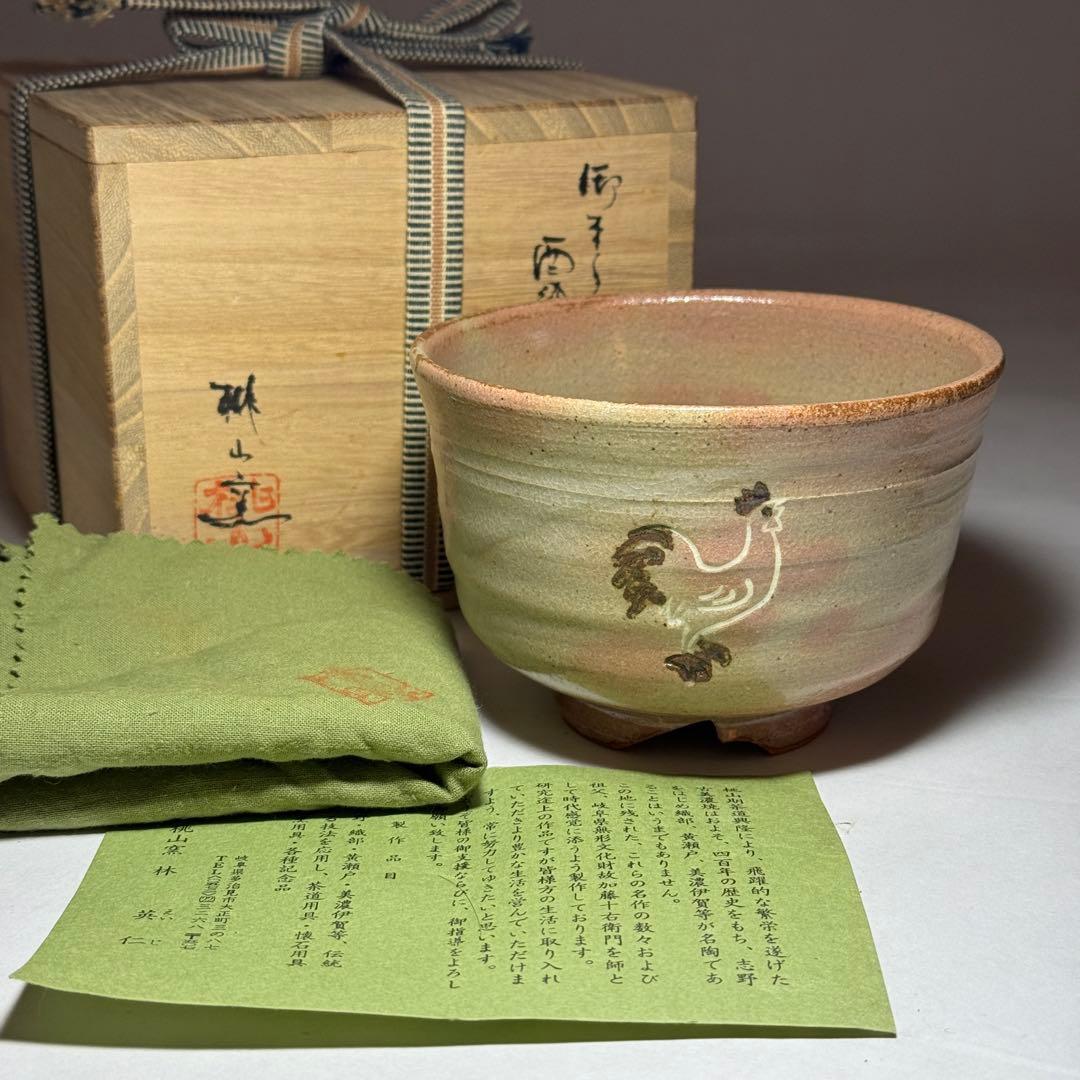
Experience Authentic Japan Art with this Gohonte Tea Bowl. This Japanese Ceramic Tea Bowl serves as a Mino Pottery Collectible and Wabi Sabi Tea Ceremony Bowl, featuring Rooster Motif Chawan and Gohonte Pink Flamework—a must-have for any Art Collector.
🔹 [ BASIC DETAILS ]
• Artist: Hayashi Eijin (林英仁) — Mino potter, Momoyama-gama
• Technique: Gohonte (御本手) flamework with iron painting (鉄絵) and white slip (白化粧); kiridate-kōdai (割高台) foot
• Era: 2010 – 2019
• Origin: Mino, Gifu Prefecture, Japan
• Dimensions: Height approx. 8.0 cm, Diameter approx. 11.8 cm, Weight 269 g
• Box: Signed shimosan wooden box (四方桟共箱) with matching cloth (共布) and booklet (栞)
• Condition: Unused storage piece; no chips, cracks, or restoration
🔹 [ CULTURAL & ARTISTIC INSIGHT ]
Gohonte — literally "go-hon (御本) hand" — describes the blush-pink flamework that appears when a bowl absorbs minerals from the saggar during firing. No two gohonte patterns are the same; each is a record of the kiln's inner atmosphere at a single moment. On this bowl, the pink mottling pools quietly inside the viewing area (見込み), while a boldly brushed rooster in iron pigment and white slip occupies the exterior. The rooster has marked time in East Asian art for centuries — the tori (酉) of the zodiac, guardian of dawn, presence before sound. Hayashi Eijin holds the tension between these two registers — the soft, atmospheric interior and the decisive, almost folk-art exterior — without releasing it.
Poetic line: "The rooster crows into silence. The bowl receives the morning before the morning arrives."
🔹 [ DEEP-DIVE COMMENTARY ]
Mino ceramics have a paradox at their center. Historically the kilns of Mino — Oribe, Shino, Ki-Seto — were defined by their willingness to break the formal rules of Chinese-influenced pottery. Asymmetry, deliberate roughness, and unexpected glazing became not flaws but signatures. Hayashi Eijin, working under the Momoyama-gama studio name, continues in that lineage: controlled irregularity as conscious aesthetic position.
The kiridate-kōdai (割高台) — a foot ring deliberately split or shaved at an angle — is one of the most recognizable marks of the Mino Momoyama revival style. It prevents the bowl from sitting "too perfectly," keeping a slight tilt that shifts the relationship between object and hand with every rotation during the tea gathering (chakai). It is a small engineering choice with a large philosophical consequence.
Gohonte flamework developed when Korean-style saggar firing introduced new mineral environments into Japanese kilns in the late Muromachi period. The pink blush that results is not a glaze; it is a residue, a conversation between clay body, atmosphere, and temperature. Collectors prize gohonte because it cannot be fully manufactured — the kiln itself must cooperate.
Iron painting on white slip is the vocabulary of Shino and Oribe ware transposed into a single composition. The rooster here is drawn with economy: a few confident strokes, no shading, no outline filled in. That directness — what Japanese connoisseurship calls te no kioku (手の記憶, the memory of the hand) — is what separates a skilled ceramic painter from a merely competent one.
Complete with signed box, matching cloth, and booklet, this bowl arrives as a self-contained archive. It has never been used. It holds its full potential.
🔹 [ JAPANESE DESCRIPTION / 日本語解説 ]
【作品詳細】
• 作家: 林英仁(桃山窯 / 美濃)
• 技法: 御本手(窯変ピンク斑)、鉄絵・白化粧、割高台
• 年代: 2010年代
• 産地: 岐阜県 美濃
• 寸法: 高さ約8.0cm、径約11.8cm、重量269g
• 付属: 四方桟共箱・共布・栞付
• 状態: 未使用保管品。疵・割れ・金継ぎなし。
【景色と技法について】
御本手とは、匣鉢の内部で素地が鉱物を吸収することで生じるピンクの窯変である。同じ模様は二つとない——それは一回きりの焼成の記録だ。見込みには御本斑が静かに広がり、外壁には鉄絵と白化粧で描かれた酉(鶏)が力強く走る。酉は東洋美術において長く時間を刻んできた象徴——干支の守護者であり、夜明けを呼ぶ声の持ち主。林英仁はその緊張——柔らかな内景と決然とした外の絵——を解放せず、保持したまま仕上げている。
詩的な一文: 「鶏は沈黙の中に鳴く。椀は、夜明けの前に朝を受け取る。」
【上級コレクター向け解説】
美濃陶芸はその中心に逆説を抱えている。志野・黄瀬戸・織部といった美濃の窯は、中国陶磁の形式的な規律をあえて破ることで独自の様式を確立した。非対称、意図的な粗さ、意外な施釉——それらは欠点ではなく署名だった。桃山窯の屋号のもと制作する林英仁は、その系譜に連なる。意識的な不完全さを美学的立場として選んでいる作家だ。
割高台は、高台を意図的に割りまたは傾けて削り出す技法で、器が「完璧に」座ることを防ぐ。茶会において碗を手のひらで回すたびに、その微妙な傾きが物と手の関係を変化させる。小さな造形の選択が、大きな哲学的結果をもたらす。
御本手の窯変は、室町末期に朝鮮式の匣鉢焼成が日本に導入されたことで生まれた。この淡い赤みは釉薬ではない——素地と雰囲気と温度の対話の痕跡だ。再現性が完全には保証されないがゆえに、コレクターが珍重する。
白化粧上の鉄絵は、志野・織部の語彙を一つの構図に凝縮したものだ。酉の描き方は経済的で——迷いのない数本の筆跡、陰影なし、輪郭の充填なし。その直接性こそが、技巧ある陶画師と単なる熟練者を分かつ「手の記憶」である。
四方桟共箱・共布・栞が揃い、この椀は一個の完結した記録として届く。未使用。可能性を帯びたまま、ここにある。
🔹 [ SHIPPING & PACKAGING ]
• Dispatch: Within 1-6 business days
• Carrier: Japan Post EMS / UPS (with tracking)
• Packaging: Carefully wrapped with protective materials
🔹 [ BASIC DETAILS ]
• Artist: Hayashi Eijin (林英仁) — Mino potter, Momoyama-gama
• Technique: Gohonte (御本手) flamework with iron painting (鉄絵) and white slip (白化粧); kiridate-kōdai (割高台) foot
• Era: 2010 – 2019
• Origin: Mino, Gifu Prefecture, Japan
• Dimensions: Height approx. 8.0 cm, Diameter approx. 11.8 cm, Weight 269 g
• Box: Signed shimosan wooden box (四方桟共箱) with matching cloth (共布) and booklet (栞)
• Condition: Unused storage piece; no chips, cracks, or restoration
🔹 [ CULTURAL & ARTISTIC INSIGHT ]
Gohonte — literally "go-hon (御本) hand" — describes the blush-pink flamework that appears when a bowl absorbs minerals from the saggar during firing. No two gohonte patterns are the same; each is a record of the kiln's inner atmosphere at a single moment. On this bowl, the pink mottling pools quietly inside the viewing area (見込み), while a boldly brushed rooster in iron pigment and white slip occupies the exterior. The rooster has marked time in East Asian art for centuries — the tori (酉) of the zodiac, guardian of dawn, presence before sound. Hayashi Eijin holds the tension between these two registers — the soft, atmospheric interior and the decisive, almost folk-art exterior — without releasing it.
Poetic line: "The rooster crows into silence. The bowl receives the morning before the morning arrives."
🔹 [ DEEP-DIVE COMMENTARY ]
Mino ceramics have a paradox at their center. Historically the kilns of Mino — Oribe, Shino, Ki-Seto — were defined by their willingness to break the formal rules of Chinese-influenced pottery. Asymmetry, deliberate roughness, and unexpected glazing became not flaws but signatures. Hayashi Eijin, working under the Momoyama-gama studio name, continues in that lineage: controlled irregularity as conscious aesthetic position.
The kiridate-kōdai (割高台) — a foot ring deliberately split or shaved at an angle — is one of the most recognizable marks of the Mino Momoyama revival style. It prevents the bowl from sitting "too perfectly," keeping a slight tilt that shifts the relationship between object and hand with every rotation during the tea gathering (chakai). It is a small engineering choice with a large philosophical consequence.
Gohonte flamework developed when Korean-style saggar firing introduced new mineral environments into Japanese kilns in the late Muromachi period. The pink blush that results is not a glaze; it is a residue, a conversation between clay body, atmosphere, and temperature. Collectors prize gohonte because it cannot be fully manufactured — the kiln itself must cooperate.
Iron painting on white slip is the vocabulary of Shino and Oribe ware transposed into a single composition. The rooster here is drawn with economy: a few confident strokes, no shading, no outline filled in. That directness — what Japanese connoisseurship calls te no kioku (手の記憶, the memory of the hand) — is what separates a skilled ceramic painter from a merely competent one.
Complete with signed box, matching cloth, and booklet, this bowl arrives as a self-contained archive. It has never been used. It holds its full potential.
🔹 [ JAPANESE DESCRIPTION / 日本語解説 ]
【作品詳細】
• 作家: 林英仁(桃山窯 / 美濃)
• 技法: 御本手(窯変ピンク斑)、鉄絵・白化粧、割高台
• 年代: 2010年代
• 産地: 岐阜県 美濃
• 寸法: 高さ約8.0cm、径約11.8cm、重量269g
• 付属: 四方桟共箱・共布・栞付
• 状態: 未使用保管品。疵・割れ・金継ぎなし。
【景色と技法について】
御本手とは、匣鉢の内部で素地が鉱物を吸収することで生じるピンクの窯変である。同じ模様は二つとない——それは一回きりの焼成の記録だ。見込みには御本斑が静かに広がり、外壁には鉄絵と白化粧で描かれた酉(鶏)が力強く走る。酉は東洋美術において長く時間を刻んできた象徴——干支の守護者であり、夜明けを呼ぶ声の持ち主。林英仁はその緊張——柔らかな内景と決然とした外の絵——を解放せず、保持したまま仕上げている。
詩的な一文: 「鶏は沈黙の中に鳴く。椀は、夜明けの前に朝を受け取る。」
【上級コレクター向け解説】
美濃陶芸はその中心に逆説を抱えている。志野・黄瀬戸・織部といった美濃の窯は、中国陶磁の形式的な規律をあえて破ることで独自の様式を確立した。非対称、意図的な粗さ、意外な施釉——それらは欠点ではなく署名だった。桃山窯の屋号のもと制作する林英仁は、その系譜に連なる。意識的な不完全さを美学的立場として選んでいる作家だ。
割高台は、高台を意図的に割りまたは傾けて削り出す技法で、器が「完璧に」座ることを防ぐ。茶会において碗を手のひらで回すたびに、その微妙な傾きが物と手の関係を変化させる。小さな造形の選択が、大きな哲学的結果をもたらす。
御本手の窯変は、室町末期に朝鮮式の匣鉢焼成が日本に導入されたことで生まれた。この淡い赤みは釉薬ではない——素地と雰囲気と温度の対話の痕跡だ。再現性が完全には保証されないがゆえに、コレクターが珍重する。
白化粧上の鉄絵は、志野・織部の語彙を一つの構図に凝縮したものだ。酉の描き方は経済的で——迷いのない数本の筆跡、陰影なし、輪郭の充填なし。その直接性こそが、技巧ある陶画師と単なる熟練者を分かつ「手の記憶」である。
四方桟共箱・共布・栞が揃い、この椀は一個の完結した記録として届く。未使用。可能性を帯びたまま、ここにある。
🔹 [ SHIPPING & PACKAGING ]
• Dispatch: Within 1-6 business days
• Carrier: Japan Post EMS / UPS (with tracking)
• Packaging: Carefully wrapped with protective materials
Quantity
Couldn't load pickup availability
Low stock: 1 left
View full details