1
/
of
9
Gohon-de Matcha Bowl by Kaike-gama, Yonago — Warm Pink Crackle Glaze with Tomobako
Gohon-de Matcha Bowl by Kaike-gama, Yonago — Warm Pink Crackle Glaze with Tomobako
Regular price
Dhs. 650.00 AED
Regular price
Sale price
Dhs. 650.00 AED
Taxes included.
Shipping calculated at checkout.
Experience Authentic Japan Art with this Gohon-de Matcha Bowl. This Japanese Tea Bowl serves as a Handmade Ceramic Bowl and Chawan Tea Bowl, featuring Crackle Glaze Pottery and Wheel Thrown Ceramics—a must-have for any Art Collector.
🔹 [ BASIC DETAILS ]
• Artist: Kaike-gama (皆生窯), Yonago, Tottori Prefecture
• Technique: Gohon-de (御本手) — warm pink slip-glaze with full-body craquelure (kan'nyu / 貫入)
• Era: 2010 – 2019
• Origin: Yonago, Tottori, Japan (San'in coast ceramic tradition)
• Dimensions: Diameter approx. 14 cm, Height approx. 8 cm
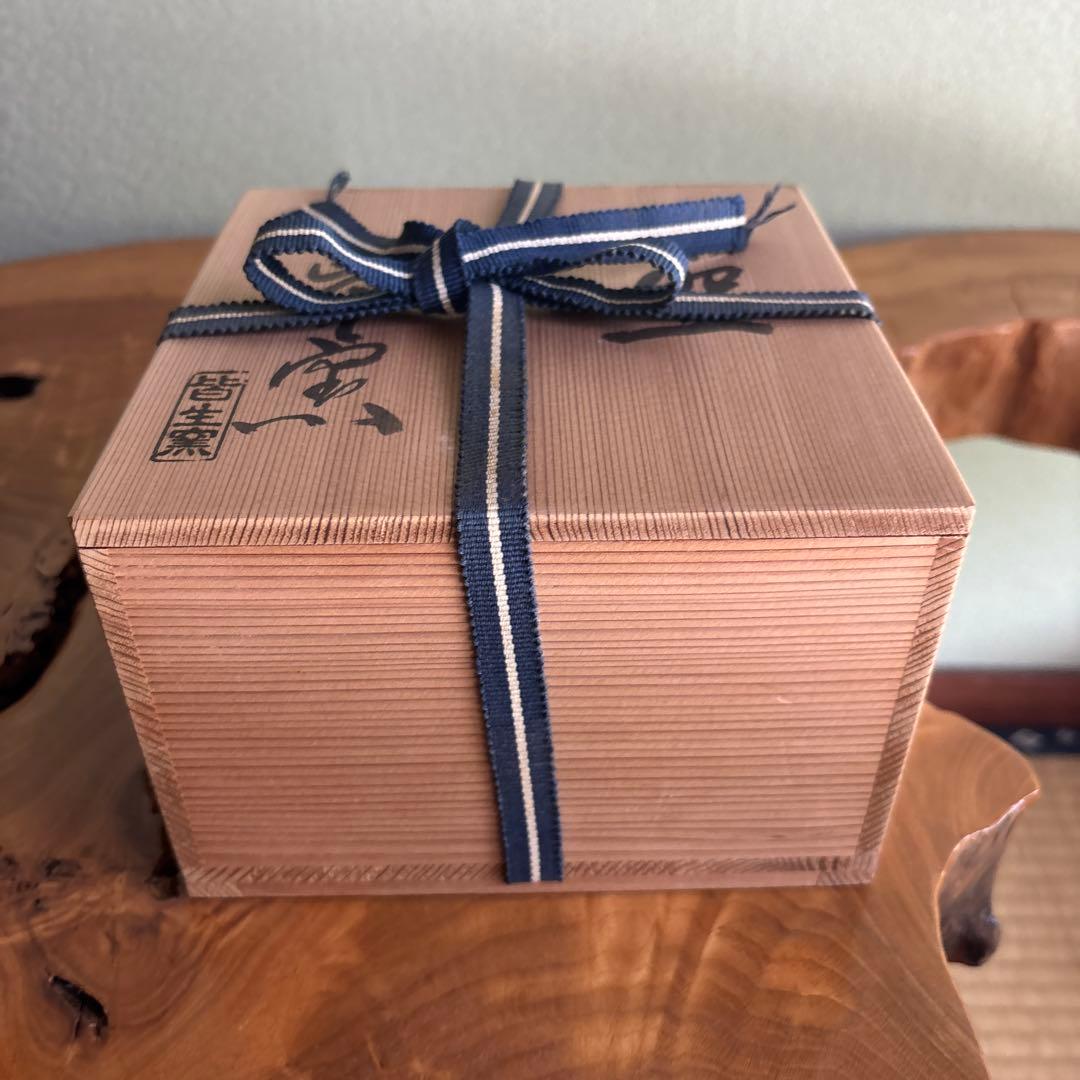
• Box: Tomobako (共箱) — signed wooden box with kiln seal
• Condition: No chips, no cracks, no repairs — excellent
🔹 [ CULTURAL & ARTISTIC INSIGHT ]
Kaike-gama takes its name from the Kaike Onsen district along the San'in coast, where the Japan Sea climate shapes a quieter, more introverted sensibility than the famous kiln towns of Kyushu or Mino. The gohon-de tradition it draws from is centuries old — originating in Joseon Dynasty Korea and later absorbed into Japanese tea culture during the Momoyama era, when tea masters prized its unassuming warmth above courtly opulence.
What the camera captures here is the defining characteristic of gohon-de: a blush-to-mauve ground, neither fully pink nor grey, that shifts in quality under different light — warmer in morning sun, cooler at dusk. Draped over this field is a web of craquelure so complete and fine that it reads almost like compressed parchment, the glaze having contracted at a different rate than the clay body beneath. The wheel marks — horizontal ridges left deliberately by the potter's hands — travel beneath this crackle net, giving the surface a layered depth: you sense the clay's motion even through the still, settled glaze.
*The bowl holds the warmth of the kiln's memory. The pink does not announce itself — it simply remains, the way old things remain: quietly, without argument.*
🔹 [ DEEP-DIVE COMMENTARY ]
Gohon-de (御本手, literally "honorable book-style") is a porcelaneous stoneware technique in which a buff or grey clay body is covered with a white slip that fires to a characteristic blush — the pink or coral tones arising from iron oxide migration during firing, influenced by the reducing or neutral atmosphere of the kiln. The name refers to the pattern books (gohon) that Edo-period Japanese tea masters sent to Korean kilns as templates, underlining that this aesthetic was imported, adapted, and eventually naturalized into the Japanese tea tradition.
The craquelure (貫入, kan'nyu) seen on this bowl is not a defect but an intended consequence: the glaze is formulated to have a higher coefficient of thermal contraction than the clay body, so as the piece cools it settles into this fine mosaic of hairline fissures. Over years of use in the tea room, tea liquor and minerals migrate into these channels, darkening them and creating a patina unique to each bowl — a process tea practitioners call "seasoning" and consider a mark of the bowl maturing into itself.
The wheel-throwing marks (rokuro-me / 轆轤目) are deliberately preserved rather than smoothed out. This is an aesthetic choice aligned with the Kaike-gama sensibility: the evidence of process is not erased but honored. In Zen-inflected tea philosophy, the visible hand of the maker is a form of honesty — the bowl does not pretend to be otherwise than it is.
Tottori's San'in coast ceramic tradition remains less internationally documented than Bizen, Hagi, or Shigaraki, which means that kilns like Kaike-gama operate with relative freedom from the weight of canonical expectation. The work is earnest, grounded in deep technique, and entirely without posture.
This bowl comes in its original tomobako — the signed wooden box confirms direct provenance from the kiln and is the standard of authenticity for collector-grade Japanese tea wares.
🔹 [ JAPANESE DESCRIPTION / 日本語解説 ]
■ 詳細スペック
• 作家: 皆生窯(鳥取県米子市)
• 技法: 御本手(ごほんで)— 温かみのあるピンクの土灰釉薬、全面に広がる貫入
• 時代: 2010年代
• 産地: 鳥取県米子市・山陰海岸の窯業伝統
• サイズ: 口径約14cm、高さ約8cm
• 箱: 共箱(窯元の印入り)
• 状態: ヒビ・カケ・修復なし、良好
■ 文化的・芸術的解説
皆生窯はその名を米子の皆生温泉の地名に由来し、山陰の日本海気候が育む、内省的で静謐な感性を体現しています。御本手の伝統は朝鮮王朝陶磁に源を発し、桃山期の茶人たちが宮廷的華やかさよりも素朴な温もりを尊んだことで日本の茶文化に定着した、深い歴史を持つ技法です。
この茶碗が示す御本手の真骨頂は、光の条件によって表情を変えるほのかなピンク〜モーヴの地肌にあります。それを覆う貫入の網目は、釉薬と素地の収縮率の差によって生まれたもので、まるで古い羊皮紙を圧縮したかのような緻密さで広がっています。その貫入の下には轆轤目の横筋が透けて見え、静かに収まりながらも、土を引き上げた手の動きを内包している作品です。
*この茶碗は窯の記憶の温もりを宿している。ピンクは自らを主張しない——古いものが残るように、静かに、議論なしに。*
■ 深掘り解説
御本手(ごほんで)は、鉄分の多い白化粧土が中性〜還元炎の焼成雰囲気下でほのかなピンクや珊瑚色に変化する、磁器質炻器の技法です。江戸時代の茶人たちが注文書(御本)を朝鮮半島の窯元に送り作らせたことに名称の由来があり、輸入された美が日本文化に深く根付いた様子を今に伝えています。
貫入は欠陥ではなく意図された現象です。釉薬の収縮率を素地より高く設計することで冷却時に細かい亀裂が走り、独特のモザイク模様を形成します。使い込むほどに茶液が浸透し、個性的な景色が育まれていく「育つ器」として、茶道愛好家に長く親しまれてきました。
轆轤目を残す仕上げは、皆生窯の美意識を象徴する選択です。作る過程の痕跡を消さず、むしろ誠実さとして提示する——禅に影響を受けた茶の哲学に通じる姿勢です。山陰の窯業伝統は備前・萩・信楽ほど国際的に知られていませんが、それゆえに皆生窯は規範の重さから自由に、技法に誠実な仕事を続けています。共箱付きで窯元からの直接の出所が確認でき、コレクター品として申し分のない一碗です。
🔹 [ SHIPPING & PACKAGING ]
• Dispatch: Within 1-6 business days
• Carrier: Japan Post EMS / UPS (with tracking)
• Packaging: Carefully wrapped with protective materials
🔹 [ BASIC DETAILS ]
• Artist: Kaike-gama (皆生窯), Yonago, Tottori Prefecture
• Technique: Gohon-de (御本手) — warm pink slip-glaze with full-body craquelure (kan'nyu / 貫入)
• Era: 2010 – 2019
• Origin: Yonago, Tottori, Japan (San'in coast ceramic tradition)
• Dimensions: Diameter approx. 14 cm, Height approx. 8 cm
• Box: Tomobako (共箱) — signed wooden box with kiln seal
• Condition: No chips, no cracks, no repairs — excellent
🔹 [ CULTURAL & ARTISTIC INSIGHT ]
Kaike-gama takes its name from the Kaike Onsen district along the San'in coast, where the Japan Sea climate shapes a quieter, more introverted sensibility than the famous kiln towns of Kyushu or Mino. The gohon-de tradition it draws from is centuries old — originating in Joseon Dynasty Korea and later absorbed into Japanese tea culture during the Momoyama era, when tea masters prized its unassuming warmth above courtly opulence.
What the camera captures here is the defining characteristic of gohon-de: a blush-to-mauve ground, neither fully pink nor grey, that shifts in quality under different light — warmer in morning sun, cooler at dusk. Draped over this field is a web of craquelure so complete and fine that it reads almost like compressed parchment, the glaze having contracted at a different rate than the clay body beneath. The wheel marks — horizontal ridges left deliberately by the potter's hands — travel beneath this crackle net, giving the surface a layered depth: you sense the clay's motion even through the still, settled glaze.
*The bowl holds the warmth of the kiln's memory. The pink does not announce itself — it simply remains, the way old things remain: quietly, without argument.*
🔹 [ DEEP-DIVE COMMENTARY ]
Gohon-de (御本手, literally "honorable book-style") is a porcelaneous stoneware technique in which a buff or grey clay body is covered with a white slip that fires to a characteristic blush — the pink or coral tones arising from iron oxide migration during firing, influenced by the reducing or neutral atmosphere of the kiln. The name refers to the pattern books (gohon) that Edo-period Japanese tea masters sent to Korean kilns as templates, underlining that this aesthetic was imported, adapted, and eventually naturalized into the Japanese tea tradition.
The craquelure (貫入, kan'nyu) seen on this bowl is not a defect but an intended consequence: the glaze is formulated to have a higher coefficient of thermal contraction than the clay body, so as the piece cools it settles into this fine mosaic of hairline fissures. Over years of use in the tea room, tea liquor and minerals migrate into these channels, darkening them and creating a patina unique to each bowl — a process tea practitioners call "seasoning" and consider a mark of the bowl maturing into itself.
The wheel-throwing marks (rokuro-me / 轆轤目) are deliberately preserved rather than smoothed out. This is an aesthetic choice aligned with the Kaike-gama sensibility: the evidence of process is not erased but honored. In Zen-inflected tea philosophy, the visible hand of the maker is a form of honesty — the bowl does not pretend to be otherwise than it is.
Tottori's San'in coast ceramic tradition remains less internationally documented than Bizen, Hagi, or Shigaraki, which means that kilns like Kaike-gama operate with relative freedom from the weight of canonical expectation. The work is earnest, grounded in deep technique, and entirely without posture.
This bowl comes in its original tomobako — the signed wooden box confirms direct provenance from the kiln and is the standard of authenticity for collector-grade Japanese tea wares.
🔹 [ JAPANESE DESCRIPTION / 日本語解説 ]
■ 詳細スペック
• 作家: 皆生窯(鳥取県米子市)
• 技法: 御本手(ごほんで)— 温かみのあるピンクの土灰釉薬、全面に広がる貫入
• 時代: 2010年代
• 産地: 鳥取県米子市・山陰海岸の窯業伝統
• サイズ: 口径約14cm、高さ約8cm
• 箱: 共箱(窯元の印入り)
• 状態: ヒビ・カケ・修復なし、良好
■ 文化的・芸術的解説
皆生窯はその名を米子の皆生温泉の地名に由来し、山陰の日本海気候が育む、内省的で静謐な感性を体現しています。御本手の伝統は朝鮮王朝陶磁に源を発し、桃山期の茶人たちが宮廷的華やかさよりも素朴な温もりを尊んだことで日本の茶文化に定着した、深い歴史を持つ技法です。
この茶碗が示す御本手の真骨頂は、光の条件によって表情を変えるほのかなピンク〜モーヴの地肌にあります。それを覆う貫入の網目は、釉薬と素地の収縮率の差によって生まれたもので、まるで古い羊皮紙を圧縮したかのような緻密さで広がっています。その貫入の下には轆轤目の横筋が透けて見え、静かに収まりながらも、土を引き上げた手の動きを内包している作品です。
*この茶碗は窯の記憶の温もりを宿している。ピンクは自らを主張しない——古いものが残るように、静かに、議論なしに。*
■ 深掘り解説
御本手(ごほんで)は、鉄分の多い白化粧土が中性〜還元炎の焼成雰囲気下でほのかなピンクや珊瑚色に変化する、磁器質炻器の技法です。江戸時代の茶人たちが注文書(御本)を朝鮮半島の窯元に送り作らせたことに名称の由来があり、輸入された美が日本文化に深く根付いた様子を今に伝えています。
貫入は欠陥ではなく意図された現象です。釉薬の収縮率を素地より高く設計することで冷却時に細かい亀裂が走り、独特のモザイク模様を形成します。使い込むほどに茶液が浸透し、個性的な景色が育まれていく「育つ器」として、茶道愛好家に長く親しまれてきました。
轆轤目を残す仕上げは、皆生窯の美意識を象徴する選択です。作る過程の痕跡を消さず、むしろ誠実さとして提示する——禅に影響を受けた茶の哲学に通じる姿勢です。山陰の窯業伝統は備前・萩・信楽ほど国際的に知られていませんが、それゆえに皆生窯は規範の重さから自由に、技法に誠実な仕事を続けています。共箱付きで窯元からの直接の出所が確認でき、コレクター品として申し分のない一碗です。
🔹 [ SHIPPING & PACKAGING ]
• Dispatch: Within 1-6 business days
• Carrier: Japan Post EMS / UPS (with tracking)
• Packaging: Carefully wrapped with protective materials
Quantity
Couldn't load pickup availability
Low stock: 1 left
View full details