1
/
of
9
Furoen Antique Hagi Style Nezumi Matcha Bowl — Year of Rat Eto Chawan, Signed Box
Furoen Antique Hagi Style Nezumi Matcha Bowl — Year of Rat Eto Chawan, Signed Box
Regular price
Dhs. 597.00 AED
Regular price
Sale price
Dhs. 597.00 AED
Taxes included.
Shipping calculated at checkout.
Experience Authentic Japan Art with this Antique Hagi Style Tea Bowl. This Japanese Zodiac Chawan serves as a Wabi Tea Ceremony Bowl and Collector Ceramics Gift, featuring Engraved Rat Motif and Crackle Glaze—a must-have for any Art Collector.
🔹 [ BASIC DETAILS ]
• Artist / Kiln: Furoen (不老園造) — Hagi-style studio ware
• Style: Ko-Hagi utsushi (古萩写し — faithful reproduction of ancient Hagi ware aesthetic)
• Theme: Eto chawan, Year of Rat (Ne-doshi / 子年)
• Technique: Wheel-thrown, incised rat figure (nezumi-e), feldspar glaze with natural crazing
• Era: Late Showa–Heisei period (20th–21st century)
• Origin: Japan
• Dimensions: Diameter approx. 11.5 cm / Height approx. 8 cm
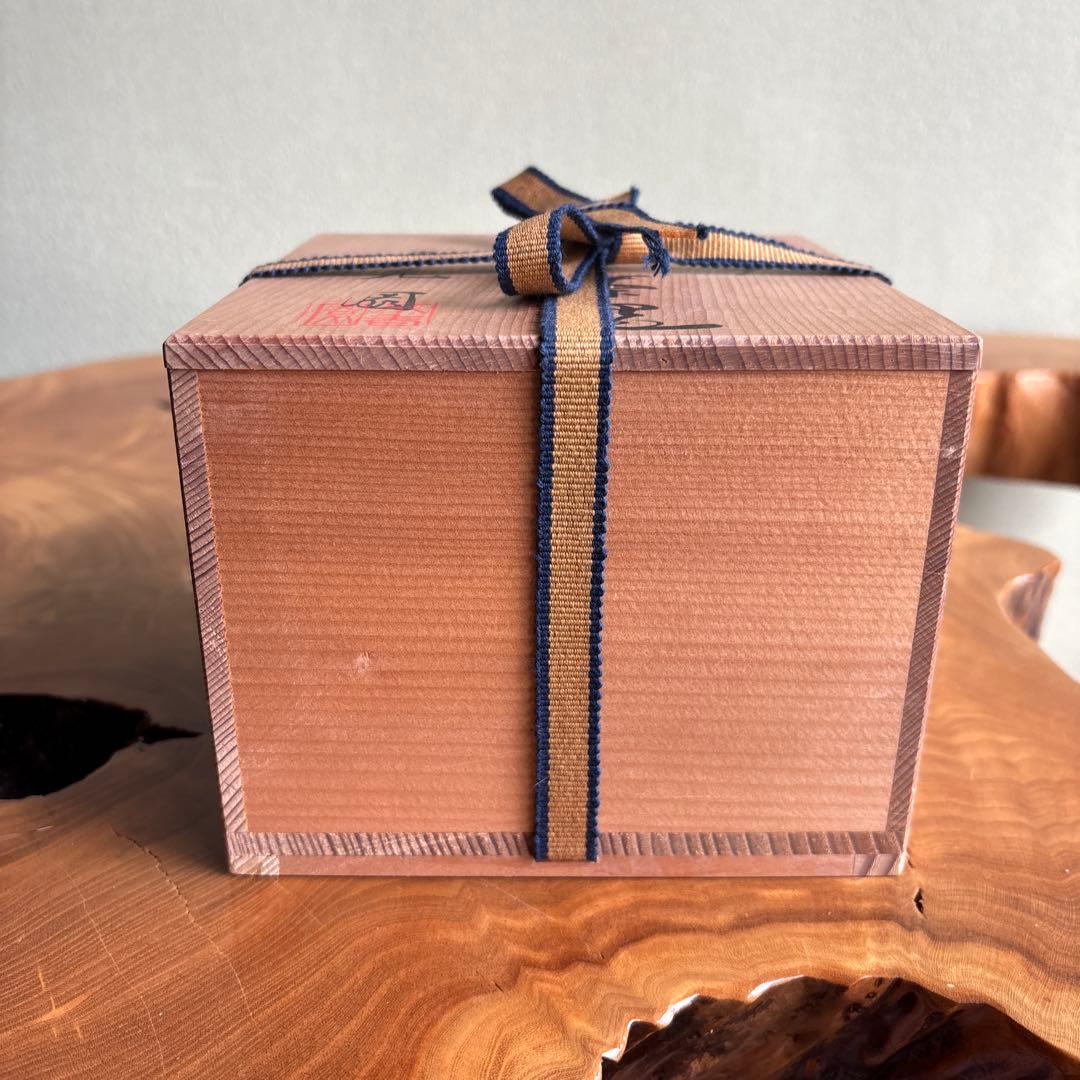
• Box: Original tomobako (共箱) with artist inscription: 古萩写 子茶碗 不老園
• Condition: No chips or cracks; crazing is inherent to the glaze — excellent
🔹 [ Cultural & Artistic Insight ]
Hagi ware (萩焼) is among the most celebrated kiln traditions in the Japanese tea ceremony canon, famously ranked second only to Raku in the classic hierarchy of tea bowls. Its hallmark is the feldspar glaze—pale, warm, and shot through with fine cracks called kannyu—which deepens and shifts in color over decades of use, a phenomenon called nanahake, "seven changes." Collectors prize aged Hagi bowls precisely because time collaborates with the clay.
Furoen's Ko-Hagi utsushi pays homage to this lineage with honest craftsmanship: the coiling wheel marks left visible on the exterior, the gently uneven rim, the warm grey-biscuit slip all speak a familiar Hagi language. What distinguishes this piece is the delicate nezumi—a plump mouse, ears alert, rendered in a few economical incised lines on the bowl's shoulder. In the twelve-year cycle of the Japanese zodiac, the Rat stands first: a symbol of cleverness, prosperity, and the turning of a new cycle. To receive tea in this bowl during a Year of Rat new-year ceremony would carry quiet, auspicious weight.
🔹 [ Deep-Dive Commentary ]
The palette of this chawan is immediately meditative. The glaze sits in a band of muted rose-grey, the warmth of the underlying clay bleeding through the feldspar skin in soft patches—neither white nor beige nor grey, but all three at once. In the right morning light it reads almost blush. This tonal ambiguity is precisely what Hagi aesthetics prize: color that refuses to settle, that asks the viewer to keep looking.
The nezumi incision is modest yet assured. A single scratched line traces the outline of the animal—body curved in a posture of watchful stillness, small forepaws raised as if holding something precious. There is no shading, no fuss. In Japanese ceramics, this kind of pictographic restraint (え絵 or eto-e motifs on zodiac ware) relies entirely on the viewer's imaginative completion. The image is a starting point, not an endpoint.
The foot-ring (kōdai) is hand-trimmed in classic Hagi style: slightly irregular, showing the reddish body clay where the glaze does not reach. This unpainted foot is itself a signature—a zone of raw earth that anchors the bowl's relationship to ground and gravity.
As a collector object, this piece occupies a precise niche: it is zodiac ware fine enough to use in tea ceremony, humble enough to live on a desk or display shelf without demanding reverence, and specific enough in its date-marking (Ne-doshi) to read as a meaningful acquisition for anyone born in the Year of Rat (1936, 1948, 1960, 1972, 1984, 1996, 2008, 2020).
---
[ JAPANESE DESCRIPTION / 日本語解説 ]
【基本情報】
作者:不老園造(古萩写し)
技法:轆轤成形・鼠線刻・長石釉・貫入
干支:子年(ねずみ年)
寸法:径 約11.5cm / 高さ 約8cm
共箱:「古萩写 子茶碗 不老園」墨書
状態:ヒビ・カケなし。貫入は釉薬の本来の表情。
【文化的背景・作品解説】
萩焼は「一楽二萩三唐津」と称される茶陶の名窯。長石釉の温かみある肌と、使い込むほど変化する「七化け」が茶人に長く愛されてきた。本作は古萩の意匠を忠実に写した「古萩写し」であり、素朴なろくろ目、手仕事の温かさ、そして肩に刻まれた愛らしい鼠の線刻が見どころ。干支の筆頭に位置する子年の茶碗は、新たな十二年のサイクルを祝う縁起物として、初釜や歳暮の贈り物にも適している。
釉薬はローズグレーとも灰白ともつかぬ曖昧な美しさを持ち、光の加減で表情が変わる。鼠の線刻は簡潔で迷いがなく、干支絵付の伝統的な省略美を体現している。高台は削り出しのまま、土の赤みが覗く——これもまた萩焼の証。子年生まれの方への贈り物としても、茶道の道具としても、静かな存在感を放つ一碗である。
🔹 [ SHIPPING & PACKAGING ]
• Dispatch: Within 1-6 business days
• Carrier: Japan Post EMS / UPS (with tracking)
• Packaging: Carefully wrapped with protective materials
🔹 [ BASIC DETAILS ]
• Artist / Kiln: Furoen (不老園造) — Hagi-style studio ware
• Style: Ko-Hagi utsushi (古萩写し — faithful reproduction of ancient Hagi ware aesthetic)
• Theme: Eto chawan, Year of Rat (Ne-doshi / 子年)
• Technique: Wheel-thrown, incised rat figure (nezumi-e), feldspar glaze with natural crazing
• Era: Late Showa–Heisei period (20th–21st century)
• Origin: Japan
• Dimensions: Diameter approx. 11.5 cm / Height approx. 8 cm
• Box: Original tomobako (共箱) with artist inscription: 古萩写 子茶碗 不老園
• Condition: No chips or cracks; crazing is inherent to the glaze — excellent
🔹 [ Cultural & Artistic Insight ]
Hagi ware (萩焼) is among the most celebrated kiln traditions in the Japanese tea ceremony canon, famously ranked second only to Raku in the classic hierarchy of tea bowls. Its hallmark is the feldspar glaze—pale, warm, and shot through with fine cracks called kannyu—which deepens and shifts in color over decades of use, a phenomenon called nanahake, "seven changes." Collectors prize aged Hagi bowls precisely because time collaborates with the clay.
Furoen's Ko-Hagi utsushi pays homage to this lineage with honest craftsmanship: the coiling wheel marks left visible on the exterior, the gently uneven rim, the warm grey-biscuit slip all speak a familiar Hagi language. What distinguishes this piece is the delicate nezumi—a plump mouse, ears alert, rendered in a few economical incised lines on the bowl's shoulder. In the twelve-year cycle of the Japanese zodiac, the Rat stands first: a symbol of cleverness, prosperity, and the turning of a new cycle. To receive tea in this bowl during a Year of Rat new-year ceremony would carry quiet, auspicious weight.
🔹 [ Deep-Dive Commentary ]
The palette of this chawan is immediately meditative. The glaze sits in a band of muted rose-grey, the warmth of the underlying clay bleeding through the feldspar skin in soft patches—neither white nor beige nor grey, but all three at once. In the right morning light it reads almost blush. This tonal ambiguity is precisely what Hagi aesthetics prize: color that refuses to settle, that asks the viewer to keep looking.
The nezumi incision is modest yet assured. A single scratched line traces the outline of the animal—body curved in a posture of watchful stillness, small forepaws raised as if holding something precious. There is no shading, no fuss. In Japanese ceramics, this kind of pictographic restraint (え絵 or eto-e motifs on zodiac ware) relies entirely on the viewer's imaginative completion. The image is a starting point, not an endpoint.
The foot-ring (kōdai) is hand-trimmed in classic Hagi style: slightly irregular, showing the reddish body clay where the glaze does not reach. This unpainted foot is itself a signature—a zone of raw earth that anchors the bowl's relationship to ground and gravity.
As a collector object, this piece occupies a precise niche: it is zodiac ware fine enough to use in tea ceremony, humble enough to live on a desk or display shelf without demanding reverence, and specific enough in its date-marking (Ne-doshi) to read as a meaningful acquisition for anyone born in the Year of Rat (1936, 1948, 1960, 1972, 1984, 1996, 2008, 2020).
---
[ JAPANESE DESCRIPTION / 日本語解説 ]
【基本情報】
作者:不老園造(古萩写し)
技法:轆轤成形・鼠線刻・長石釉・貫入
干支:子年(ねずみ年)
寸法:径 約11.5cm / 高さ 約8cm
共箱:「古萩写 子茶碗 不老園」墨書
状態:ヒビ・カケなし。貫入は釉薬の本来の表情。
【文化的背景・作品解説】
萩焼は「一楽二萩三唐津」と称される茶陶の名窯。長石釉の温かみある肌と、使い込むほど変化する「七化け」が茶人に長く愛されてきた。本作は古萩の意匠を忠実に写した「古萩写し」であり、素朴なろくろ目、手仕事の温かさ、そして肩に刻まれた愛らしい鼠の線刻が見どころ。干支の筆頭に位置する子年の茶碗は、新たな十二年のサイクルを祝う縁起物として、初釜や歳暮の贈り物にも適している。
釉薬はローズグレーとも灰白ともつかぬ曖昧な美しさを持ち、光の加減で表情が変わる。鼠の線刻は簡潔で迷いがなく、干支絵付の伝統的な省略美を体現している。高台は削り出しのまま、土の赤みが覗く——これもまた萩焼の証。子年生まれの方への贈り物としても、茶道の道具としても、静かな存在感を放つ一碗である。
🔹 [ SHIPPING & PACKAGING ]
• Dispatch: Within 1-6 business days
• Carrier: Japan Post EMS / UPS (with tracking)
• Packaging: Carefully wrapped with protective materials
Quantity
Couldn't load pickup availability
Low stock: 1 left
View full details