1
/
of
20
Fujitani Yoshiya Kenzan Tea Bowl | Iron-Rust Sabi-e Gold Autumn Chawan | Mizunatsuki Kiln
Regular price
Dhs. 1,188.00 AED
Regular price
Sale price
Dhs. 1,188.00 AED
Taxes included.
Shipping calculated at checkout.
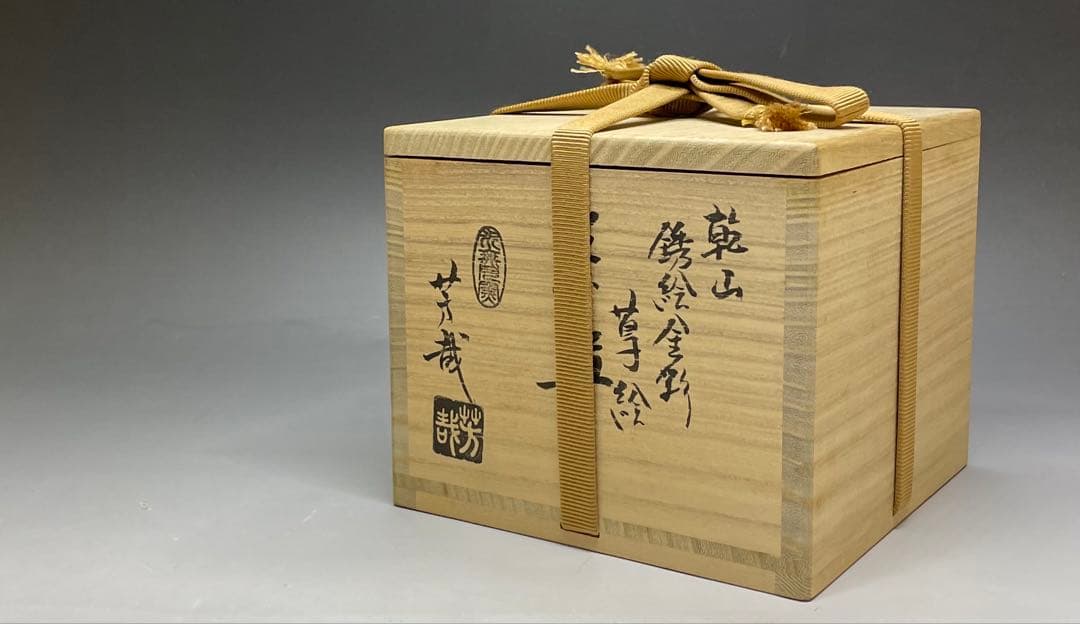
Autumn rendered in iron and gold — leaves and vine traced across cream clay with the directness of a scholar's brush. A Kenzan-style tea bowl by Fujitani Yoshiya, Mizunatsuki Kiln. Iron-rust painting with gold accents. Complete with signed box, silk cord, cloth wrapper, and pamphlet. Condition: exceptional. Professional photography confirms what the hand will verify.
This is a piece in full command of its tradition. Kenzan-style sabi-e — iron-rust picture painting — traces its lineage to Ogata Kenzan (1663–1743), the ceramicist-calligrapher whose fusion of painting and pottery redefined what a tea bowl could carry. In Fujitani's work, that inheritance is handled with both fidelity and personal vision: the golden accents are not decorative afterthoughts but structural elements that hold the composition's weight.
[ ITEM DETAILS ]
• Form: Chawan (tea bowl)
• Dimensions: Height approx. 8.8 cm, Mouth diameter approx. 11.2 cm, Foot diameter approx. 5.4 cm
• Decoration: Sabi-e (iron-rust painting) with gold-leaf accents, autumn leaf and vine motif
• Base: Cream-white clay body
• Kiln: Mizunatsuki-gama (水無月窯)
• Artist: Fujitani Yoshiya (藤谷芳哉)
• Box: Signed wooden box (四方桟共箱) with silk cord
• Accessories: Cloth wrapper (共布), pamphlet (栞)
• Condition: Exceptional (極上 — as confirmed by professional photography)
[ CULTURAL CONTEXT ]
Ogata Kenzan brought the vocabulary of ink painting into ceramic decoration — not as imitation, but as translation. The sabi-e technique uses iron oxide to paint directly on unfired clay, the lines fixed in the kiln with a permanence that freehand brushwork on paper can never achieve. The motifs are seasonal: autumn leaves, grasses, winter plum — a calendar of transience. To use such a bowl in tea is to hold the season in both hands.
Fujitani Yoshiya's Mizunatsuki Kiln works within this lineage with scholarly attention. The gold accents — kin-sai — add a register of formality that elevates the autumn theme without overstating it. This is a bowl for significant occasions, or for the practitioner who understands that every occasion is significant.
[ FOR THE COLLECTOR ]
A complete set — bowl, signed box, cloth, pamphlet — in exceptional condition is the standard that serious tea collectors demand. Fujitani Yoshiya's Kenzan-style work represents a living continuation of one of Japanese ceramics' most intellectually rich traditions. The gold and iron combination on cream clay photographs beautifully, but the real reward is the weight of the piece in hand.
【日本語説明】
藤谷芳哉作、乾山銹絵金彩草絵茶碗。水無月窯。クリーム地に鉄絵と金彩で秋の草花を描いた、格調高い一碗です。高さ約8.8cm、口径約11.2cm、高台約5.4cm。四方桟共箱・共布・栞付き。状態極上、プロ撮影品。
🔹 [ SHIPPING & PACKAGING ]
• Dispatch: Within 1-6 business days
• Carrier: Japan Post EMS / UPS (with tracking)
• Packaging: Carefully wrapped with protective materials
This is a piece in full command of its tradition. Kenzan-style sabi-e — iron-rust picture painting — traces its lineage to Ogata Kenzan (1663–1743), the ceramicist-calligrapher whose fusion of painting and pottery redefined what a tea bowl could carry. In Fujitani's work, that inheritance is handled with both fidelity and personal vision: the golden accents are not decorative afterthoughts but structural elements that hold the composition's weight.
[ ITEM DETAILS ]
• Form: Chawan (tea bowl)
• Dimensions: Height approx. 8.8 cm, Mouth diameter approx. 11.2 cm, Foot diameter approx. 5.4 cm
• Decoration: Sabi-e (iron-rust painting) with gold-leaf accents, autumn leaf and vine motif
• Base: Cream-white clay body
• Kiln: Mizunatsuki-gama (水無月窯)
• Artist: Fujitani Yoshiya (藤谷芳哉)
• Box: Signed wooden box (四方桟共箱) with silk cord
• Accessories: Cloth wrapper (共布), pamphlet (栞)
• Condition: Exceptional (極上 — as confirmed by professional photography)
[ CULTURAL CONTEXT ]
Ogata Kenzan brought the vocabulary of ink painting into ceramic decoration — not as imitation, but as translation. The sabi-e technique uses iron oxide to paint directly on unfired clay, the lines fixed in the kiln with a permanence that freehand brushwork on paper can never achieve. The motifs are seasonal: autumn leaves, grasses, winter plum — a calendar of transience. To use such a bowl in tea is to hold the season in both hands.
Fujitani Yoshiya's Mizunatsuki Kiln works within this lineage with scholarly attention. The gold accents — kin-sai — add a register of formality that elevates the autumn theme without overstating it. This is a bowl for significant occasions, or for the practitioner who understands that every occasion is significant.
[ FOR THE COLLECTOR ]
A complete set — bowl, signed box, cloth, pamphlet — in exceptional condition is the standard that serious tea collectors demand. Fujitani Yoshiya's Kenzan-style work represents a living continuation of one of Japanese ceramics' most intellectually rich traditions. The gold and iron combination on cream clay photographs beautifully, but the real reward is the weight of the piece in hand.
【日本語説明】
藤谷芳哉作、乾山銹絵金彩草絵茶碗。水無月窯。クリーム地に鉄絵と金彩で秋の草花を描いた、格調高い一碗です。高さ約8.8cm、口径約11.2cm、高台約5.4cm。四方桟共箱・共布・栞付き。状態極上、プロ撮影品。
🔹 [ SHIPPING & PACKAGING ]
• Dispatch: Within 1-6 business days
• Carrier: Japan Post EMS / UPS (with tracking)
• Packaging: Carefully wrapped with protective materials
Quantity
Couldn't load pickup availability
Low stock: 1 left
View full details