Each season arrives at the rim — cherry in spring, grasses bowing in autumn, the pale ash ground holding them all without preference.
🔹 [ Cultural & Artistic Insight ]
The four seasons motif in Japanese art is not ornamental. It is a philosophical position: that impermanence, witnessed fully across the year, is the ground of appreciation. Shiki-souka — four seasons flowers — brings the entire cycle into a single vessel. To choose this bowl for spring ceremony is to carry winter and autumn within the act. The seasons do not take turns here; they coexist.
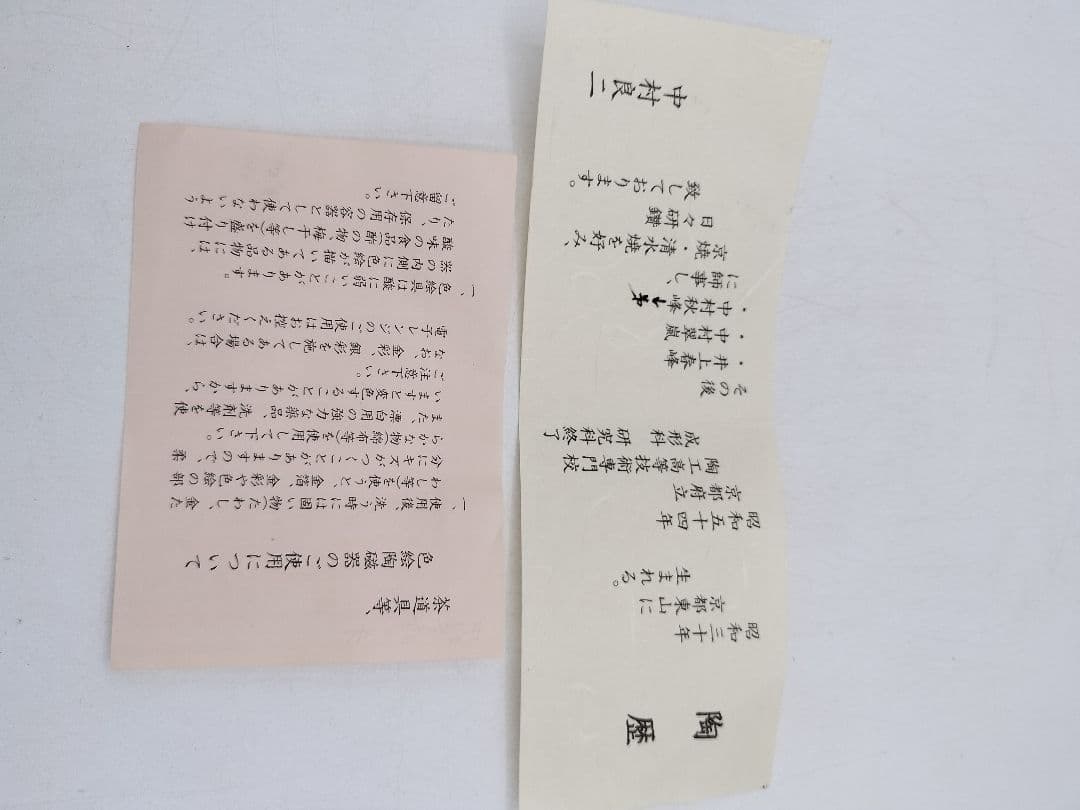
Nakamura Ryōji works within the Kyoto ceramic tradition, a lineage that elevated decorative painting on pottery to a form of lyric expression. Where Bizen or Hagi sought revelation through reduction and accident, Kyoto ware — kyo-yaki — sought it through control, through the painter's deliberate hand laying color over glaze. The pale blue-grey ash ground of this bowl is itself a quiet statement: subdued enough to support, present enough to be felt.
Overglaze enamel painting requires a second firing at lower temperature. The colors applied after the base glaze — the greens of spring stems, the gold of autumn grasses — sit slightly above the surface, visible in raking light. This layering is what distinguishes Kyoto decorative ware: depth achieved through accumulation, not through a single moment of fire.
🔹 [ Deep-Dive Commentary ]
The year-round usability of a four seasons bowl is practical as well as philosophical. In tea ceremony, seasonal appropriateness governs nearly every choice — scroll, flowers, incense, and equipment. A bowl depicting all four seasons frees the host from restriction; it meets any gathering without apology. This is the quiet utility of the motif beneath its beauty.
The ash glaze base — haiyu — has its own history in Japanese ceramics, predating most decorative traditions by centuries. Natural ash settling on pots in anagama kilns created the first accidental glazes. The blue-grey palette here references that ancient process while delivering a surface refined enough to support the painter's work above it. The tension between the raw origin of ash glaze and the cultivated elegance of overglaze enamel is part of what Kyoto ware has always held.
- Maker: Nakamura Ryōji (中村良二), Kyoto tradition - Glaze: Ash glaze (haiyu) base, overglaze enamel painting - Motif: Four seasons flowers — spring cherry, summer flowers, autumn grasses, winter pine - Condition: Good condition; please review all photos - Box: Wooden box included
🔹 [ Includes ]
- Tea bowl (chawan) - Wooden box
🔹 [ SHIPPING & PACKAGING ] • Dispatch: Within 1-6 business days • Carrier: Japan Post EMS / UPS (with tracking) • Packaging: Carefully wrapped with protective materials