1
/
of
11
Firefly Maki-e Raden Kogo by Takeuchi Kosai, Black Persimmon Incense Box
Firefly Maki-e Raden Kogo by Takeuchi Kosai, Black Persimmon Incense Box
Regular price
Dhs. 1,237.00 AED
Regular price
Sale price
Dhs. 1,237.00 AED
Taxes included.
Shipping calculated at checkout.
Experience Authentic Japan Art with this Japanese Incense container. This Maki E Lacquer kogo features Raden Shell Inlay and serves as refined Tea Ceremony Art by Takeuchi Kosai. Crafted from Black Persimmon Wood with Urushi Lacquer and Kyoto Lacquerware traditions, this Firefly Art piece comes with a Signed Tomobako Box—a distinguished Kogo Incense Box for the discerning collector.
━━━━━━━━━━━━━━━━━━━━━━━━━━━━━━━
🔹 [ Basic Details ]
• Artist: Takeuchi Kosai (竹内幸斎)
• Technique: Maki-e, raden (mother-of-pearl inlay), urushi lacquer
• Material: Kurogaki (black persimmon wood)
• Dimensions: H 2.5 cm × W 7 cm × D 5.8 cm
• Weight: 46 g
• Condition: Excellent, with original tomobako and silk wrapper
• Origin: Kyoto tradition, Japan
• Era: 2010s
━━━━━━━━━━━━━━━━━━━━━━━━━━━━━━━
🔹 [ Cultural & Artistic Insight ]
The kogo serves as the centerpiece of the tea ceremony's incense ritual, holding fragrant wood chips burned before guests arrive. This example transforms a utilitarian object into a meditation on summer evenings — fireflies drifting above a mountain stream, their cold light captured in turquoise shell that catches candlelight exactly as the insects themselves do.
Takeuchi Kosai works in Kyoto's tradition of narrative lacquerware, where seasonal imagery speaks to the host's awareness of time and place. The firefly (hotaru) references the sixth month of the lunar calendar, evoking coolness during humid summer gatherings. The cascading blue waterfall adds kinetic energy to the composition while providing visual balance to the floating insects.
Kurogaki — black persimmon wood — provides the substrate. This material exhibits irregular dark striations that add visual depth beneath the lacquer surface, visible where the artist has allowed the wood grain to show through. The combination of organic substrate and refined surface treatment embodies the tea aesthetic's negotiation between rusticity and cultivation.
"Two points of cold fire above a summer stream — the firefly does not explain its light."
━━━━━━━━━━━━━━━━━━━━━━━━━━━━━━━
🔹 [ Deep-Dive Commentary ]
The technical achievement here lies in Kosai's integration of three distinct lacquer traditions:
First, maki-e (sprinkled picture) — gold and colored metallic powders applied to wet lacquer, building up the reeds, grasses, and firefly bodies through multiple layers. The artist controls particle size and application density to create tonal variation, suggesting depth and atmosphere.
Second, raden (shell inlay) — thin slices of turquoise-tinted abalone shell cut and embedded into the lacquer surface for the fireflies' glowing abdomens. The shell's natural iridescence creates the optical effect of bioluminescence, shifting color as the viewer's angle changes. This technique requires cutting shell fragments to precise shapes, then setting them flush with the lacquer surface.
Third, iro-urushi (colored lacquer) for the waterfall motif — blue lacquer mixed with pigments, applied in flowing strokes that suggest movement and transparency. The contrast between opaque maki-e gold and translucent blue lacquer creates spatial recession.
The rounded rectangular form follows kogo conventions while the scale — palm-sized — suits both formal and informal tea settings. The lid fits precisely, creating an airtight seal that preserves incense wood fragrance between uses.
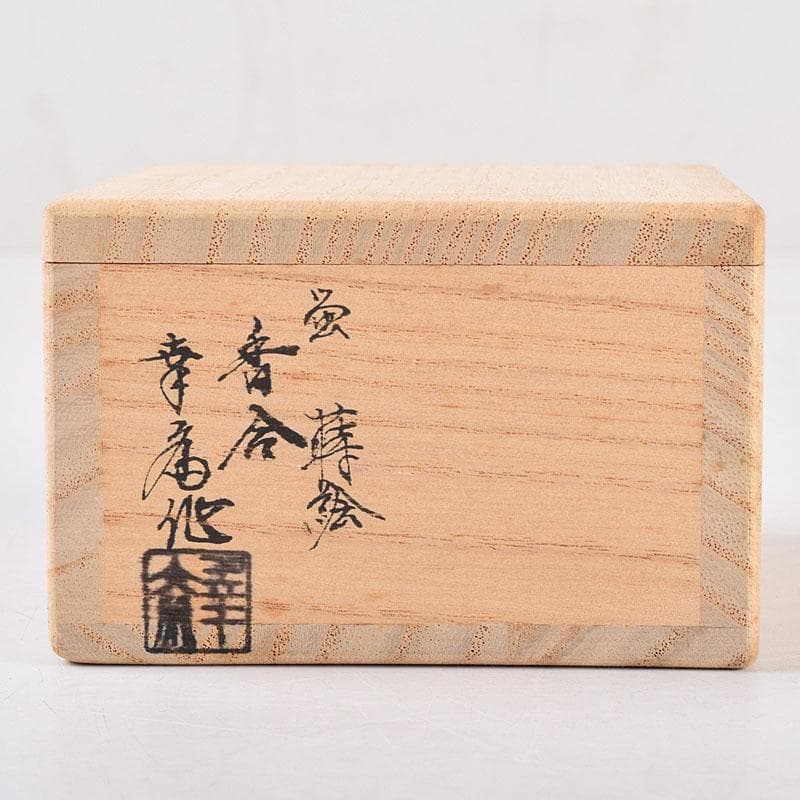
Tomobako authentication by the artist confirms both authorship and the piece's status as a finished artwork rather than commercial production. The inscription provides the artist's name, the work's title, and his seal — documentation valued in Japanese collecting traditions.
For practitioners and collectors, this kogo offers: (1) seasonal summer imagery appropriate for ro (sunken hearth) season; (2) technical virtuosity in combining maki-e, raden, and iro-urushi; (3) authorship documentation from a recognized contemporary artist; (4) compact scale suitable for various tearoom configurations; (5) thematic resonance with classical Japanese poetry celebrating fireflies and summer water.
━━━━━━━━━━━━━━━━━━━━━━━━━━━━━━━
[ JAPANESE DESCRIPTION / 日本語解説 ]
竹内幸斎作による黒柿の香合です。蛍の蒔絵に螺鈿細工を組み合わせ、滝の流れを背景とした夏の情景を描いています。
🔹 [ 基本情報 ]
• 作者:竹内幸斎
• 技法:蒔絵、螺鈿(貝入れ)、漆塗り
• 素材:黒柿(くろがき)
• 寸法:高さ約2.5cm × 幅約7cm × 奥行約5.8cm
• 重量:約46g
• 状態:良好、共箱・布付き
• 制作年代:2010年代
🔹 [ 文化的・芸術的背景 ]
香合は茶席において香木を納める器です。この作品は、夏の夜の川辺を舞う蛍を、青緑色の螺鈿と金の蒔絵で表現しています。蛍の光を貝殻の真珠層で再現する技法は、光の角度によって色が変化し、実際の蛍の発光を想起させます。
竹内幸斎は京都の漆芸伝統を継ぐ作家であり、季節感を重視した作品で知られます。この香合は陰暦六月(新暦七月頃)の茶事に用いることで、暑気の中に涼を感じさせる演出となります。
黒柿材は不規則な黒い縞模様を持ち、漆を通して木地の表情が見える部分があります。素材の素朴さと蒔絵の精緻さの対比が、茶道美学における「わびさび」の感覚と響き合います。
🔹 [ 技術解説 ]
この作品は三つの漆芸技法を統合しています:
蒔絵:金粉・色粉を湿った漆面に蒔いて絵柄を描く技法。葦、草、蛍の体部を複数層の蒔絵で立体的に表現しています。
螺鈿:青貝(あおがい)の薄片を切り出し、漆面に埋め込む技法。蛍の発光部分に使用し、角度により色が変化する効果を生んでいます。
色漆:青色顔料を混ぜた漆で滝の流れを描画。金蒔絵の不透明感と色漆の透明感の対比により、空間的な奥行きを創出しています。
共箱の箱書きは作者自身によるもので、作品の真正性を保証します。日本の工芸品において、作者銘入りの共箱は作品の格を高める重要な要素です。
━━━━━━━━━━━━━━━━━━━━━━━━━━━━━━━
🔹 [ SHIPPING & PACKAGING ]
• Dispatch: Within 1-6 business days
• Carrier: Japan Post EMS / UPS (with tracking)
• Packaging: Carefully wrapped with protective materials
━━━━━━━━━━━━━━━━━━━━━━━━━━━━━━━
🔹 [ Basic Details ]
• Artist: Takeuchi Kosai (竹内幸斎)
• Technique: Maki-e, raden (mother-of-pearl inlay), urushi lacquer
• Material: Kurogaki (black persimmon wood)
• Dimensions: H 2.5 cm × W 7 cm × D 5.8 cm
• Weight: 46 g
• Condition: Excellent, with original tomobako and silk wrapper
• Origin: Kyoto tradition, Japan
• Era: 2010s
━━━━━━━━━━━━━━━━━━━━━━━━━━━━━━━
🔹 [ Cultural & Artistic Insight ]
The kogo serves as the centerpiece of the tea ceremony's incense ritual, holding fragrant wood chips burned before guests arrive. This example transforms a utilitarian object into a meditation on summer evenings — fireflies drifting above a mountain stream, their cold light captured in turquoise shell that catches candlelight exactly as the insects themselves do.
Takeuchi Kosai works in Kyoto's tradition of narrative lacquerware, where seasonal imagery speaks to the host's awareness of time and place. The firefly (hotaru) references the sixth month of the lunar calendar, evoking coolness during humid summer gatherings. The cascading blue waterfall adds kinetic energy to the composition while providing visual balance to the floating insects.
Kurogaki — black persimmon wood — provides the substrate. This material exhibits irregular dark striations that add visual depth beneath the lacquer surface, visible where the artist has allowed the wood grain to show through. The combination of organic substrate and refined surface treatment embodies the tea aesthetic's negotiation between rusticity and cultivation.
"Two points of cold fire above a summer stream — the firefly does not explain its light."
━━━━━━━━━━━━━━━━━━━━━━━━━━━━━━━
🔹 [ Deep-Dive Commentary ]
The technical achievement here lies in Kosai's integration of three distinct lacquer traditions:
First, maki-e (sprinkled picture) — gold and colored metallic powders applied to wet lacquer, building up the reeds, grasses, and firefly bodies through multiple layers. The artist controls particle size and application density to create tonal variation, suggesting depth and atmosphere.
Second, raden (shell inlay) — thin slices of turquoise-tinted abalone shell cut and embedded into the lacquer surface for the fireflies' glowing abdomens. The shell's natural iridescence creates the optical effect of bioluminescence, shifting color as the viewer's angle changes. This technique requires cutting shell fragments to precise shapes, then setting them flush with the lacquer surface.
Third, iro-urushi (colored lacquer) for the waterfall motif — blue lacquer mixed with pigments, applied in flowing strokes that suggest movement and transparency. The contrast between opaque maki-e gold and translucent blue lacquer creates spatial recession.
The rounded rectangular form follows kogo conventions while the scale — palm-sized — suits both formal and informal tea settings. The lid fits precisely, creating an airtight seal that preserves incense wood fragrance between uses.
Tomobako authentication by the artist confirms both authorship and the piece's status as a finished artwork rather than commercial production. The inscription provides the artist's name, the work's title, and his seal — documentation valued in Japanese collecting traditions.
For practitioners and collectors, this kogo offers: (1) seasonal summer imagery appropriate for ro (sunken hearth) season; (2) technical virtuosity in combining maki-e, raden, and iro-urushi; (3) authorship documentation from a recognized contemporary artist; (4) compact scale suitable for various tearoom configurations; (5) thematic resonance with classical Japanese poetry celebrating fireflies and summer water.
━━━━━━━━━━━━━━━━━━━━━━━━━━━━━━━
[ JAPANESE DESCRIPTION / 日本語解説 ]
竹内幸斎作による黒柿の香合です。蛍の蒔絵に螺鈿細工を組み合わせ、滝の流れを背景とした夏の情景を描いています。
🔹 [ 基本情報 ]
• 作者:竹内幸斎
• 技法:蒔絵、螺鈿(貝入れ)、漆塗り
• 素材:黒柿(くろがき)
• 寸法:高さ約2.5cm × 幅約7cm × 奥行約5.8cm
• 重量:約46g
• 状態:良好、共箱・布付き
• 制作年代:2010年代
🔹 [ 文化的・芸術的背景 ]
香合は茶席において香木を納める器です。この作品は、夏の夜の川辺を舞う蛍を、青緑色の螺鈿と金の蒔絵で表現しています。蛍の光を貝殻の真珠層で再現する技法は、光の角度によって色が変化し、実際の蛍の発光を想起させます。
竹内幸斎は京都の漆芸伝統を継ぐ作家であり、季節感を重視した作品で知られます。この香合は陰暦六月(新暦七月頃)の茶事に用いることで、暑気の中に涼を感じさせる演出となります。
黒柿材は不規則な黒い縞模様を持ち、漆を通して木地の表情が見える部分があります。素材の素朴さと蒔絵の精緻さの対比が、茶道美学における「わびさび」の感覚と響き合います。
🔹 [ 技術解説 ]
この作品は三つの漆芸技法を統合しています:
蒔絵:金粉・色粉を湿った漆面に蒔いて絵柄を描く技法。葦、草、蛍の体部を複数層の蒔絵で立体的に表現しています。
螺鈿:青貝(あおがい)の薄片を切り出し、漆面に埋め込む技法。蛍の発光部分に使用し、角度により色が変化する効果を生んでいます。
色漆:青色顔料を混ぜた漆で滝の流れを描画。金蒔絵の不透明感と色漆の透明感の対比により、空間的な奥行きを創出しています。
共箱の箱書きは作者自身によるもので、作品の真正性を保証します。日本の工芸品において、作者銘入りの共箱は作品の格を高める重要な要素です。
━━━━━━━━━━━━━━━━━━━━━━━━━━━━━━━
🔹 [ SHIPPING & PACKAGING ]
• Dispatch: Within 1-6 business days
• Carrier: Japan Post EMS / UPS (with tracking)
• Packaging: Carefully wrapped with protective materials
Quantity
Couldn't load pickup availability
Low stock: 1 left
View full details