1
/
of
9
Feldspar Glaze Matcha Bowl with Hi-Iro Fire Blush — Tsutsu-gata Chawan by Sakata Tanpū, Shafū Kiln
Feldspar Glaze Matcha Bowl with Hi-Iro Fire Blush — Tsutsu-gata Chawan by Sakata Tanpū, Shafū Kiln
Regular price
Dhs. 509.00 AED
Regular price
Sale price
Dhs. 509.00 AED
Taxes included.
Shipping calculated at checkout.
Experience Authentic Japan Art with this Japanese Tea Ceremony Chawan. This Feldspar Glaze Chawan serves as a Matcha Bowl and Wabi Tea Bowl, featuring Hi-Iro Fire Blush and Kan-Nyu Crackle Glaze—a must-have for any Art Collector seeking a Sakata Tanpu Chawan, Shafu Kiln Pottery, or Tsutsu-gata Tea Bowl with a signed Tomobako Box.
🔹 [ BASIC DETAILS ]
• Artist: Sakata Tanpū (坂田丹風), Shafū Kiln (社風窯)
• Technique: Feldspar long-stone glaze (chōseki-yū) with hi-iro fire-color blush; tsutsu-gata (cylindrical) form; exposed clay foot (tsuchi-mi kodai)
• Era: 2000 – 2006
• Origin: Shafū Kiln, Japan
• Dimensions: Height approx. 8 cm, Diameter approx. 12 cm
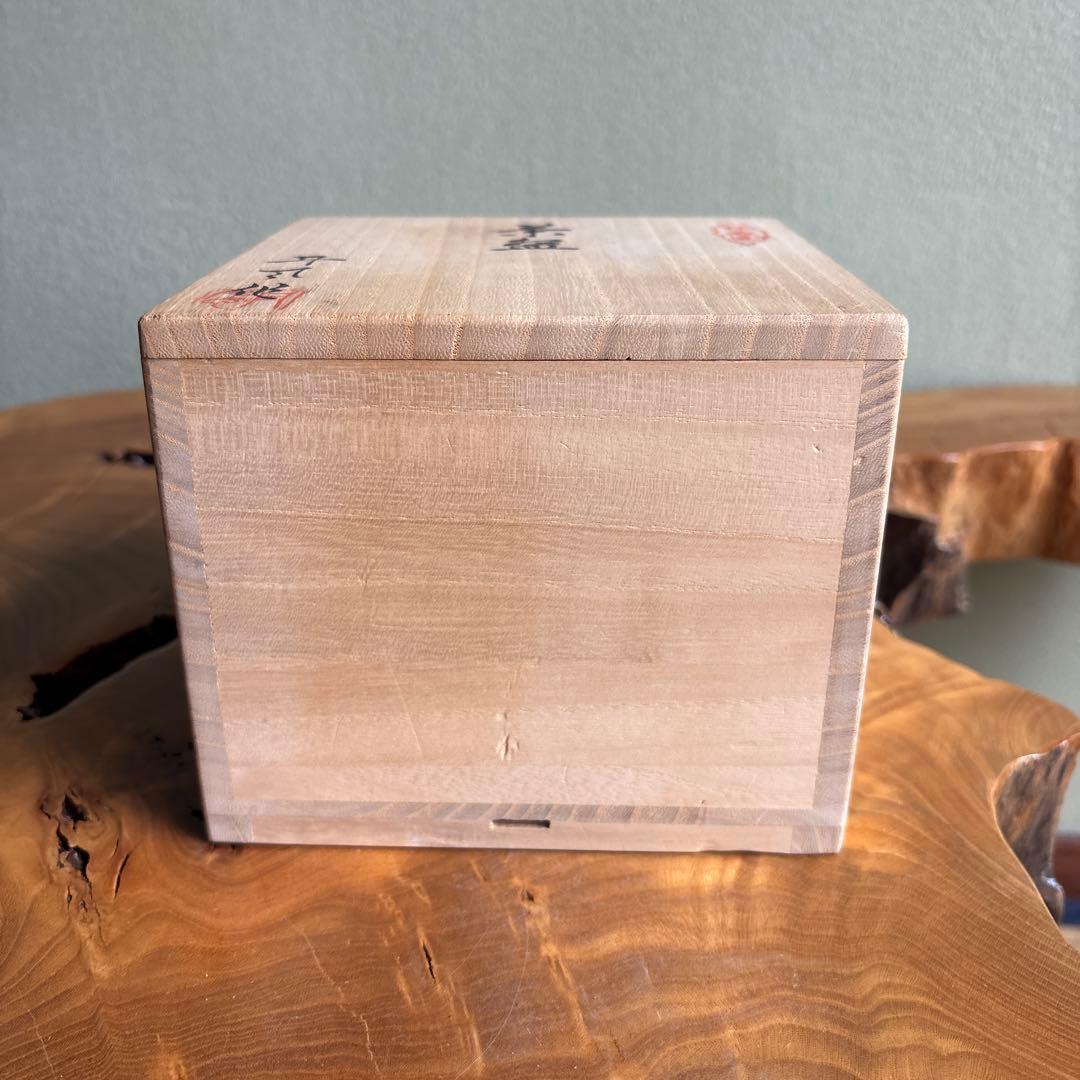
• Box: Tomobako (signed wooden box) — lid inscribed 茶盌 丹風作, red kiln seal
• Condition: Very good. No chips, no hairline cracks. Kan-nyū crackle is intentional glaze movement. Single tetsuhan (iron spot) on lower exterior — a natural kiln event. Interior throwing rings visible through thin glaze wash.
🔹 [ CULTURAL & ARTISTIC INSIGHT ]
The pale grey-white of Tanpū's feldspar glaze holds the eye first — then the warmth breaks through. Where the glaze thins toward the foot, the salmon terracotta clay asserts itself as hi-iro (火色), a fire-color blush that kilns produce when heat and clay meet without intervention. It is not applied; it is revealed. Sakata Tanpū trained within the Shafū Kiln lineage and worked in a quiet tradition that places making over display. The tomobako lid — brushed in his own hand — carries the same economy: three characters, a seal, nothing more.
The tsutsu-gata form is a practitioner's choice. Its straight cylindrical wall keeps whisked matcha from cooling too quickly and steadies the hand during chakin (cloth wiping). This is a bowl designed from the inside out — functional authority that happens to be beautiful.
The kan-nyū crackle network, visible as a fine web across the body, will continue to deepen with use. Each session leaves a faint tea-stain trace in the finest channels. Presence accumulates. The bowl records its history without announcing it.
🔹 [ DEEP-DIVE COMMENTARY ]
Chōseki-yū (長石釉) — feldspar glaze — is among the oldest and most demanding of Japanese glaze traditions. Feldspar, a primary silicate mineral, melts at high temperatures into a matt-to-semi-gloss surface that is unforgiving of inconsistency. The result here is a glaze that reads differently under every light: cool and grey-white in shade, shifting toward warmth in raking morning light.
Hi-iro (火色) is not a colorant added to the clay body. It is a reduction-adjacent phenomenon: where the glaze layer is thinnest — typically near the foot or on exposed ridges — atmospheric carbon and iron in the clay body react during firing to produce a warm salmon or terracotta blush. Tanpū's hi-iro sits in a narrow register, soft rather than vivid, entirely integrated with the glaze above it.
The tetsuhan (鉄斑点) — a single iron spot on the lower exterior — is a suspended iron particle in the clay body that migrated to the surface during the firing. In Japanese ceramic aesthetics, such marks are received as evidence of the kiln's own authorship. They are not corrected.
Kan-nyū (貫入) describes the network of fine cracks that form as glaze and clay body cool at slightly different rates after firing. In this bowl the crackle is dense and uniform, a sign of controlled clay-glaze fit. Over years of use the network takes on depth — matcha oils, minerals from water, time itself — producing what collectors call yo-iri (窯入り), the patina of use. A bowl's character is not fixed at the moment of firing. It continues.
The tsutsu-gata (筒形) form — compact cylinder, slightly tapered — occupies a distinct place in the chawan taxonomy alongside the wide-mouthed hirazukuri (used in summer) and the hemispherical Raku form. Its upright walls retain heat, making it the practitioner's choice for winter and formal koicha (thick tea). The low, unglazed foot ring here is hand-trimmed and shows the salmon clay body in cross-section — a quiet disclosure of material at the base of the form.
[ JAPANESE DESCRIPTION / 日本語解説 ]
坂田丹風は社風窯を拠点に、静かな仕事を重ねてきた陶芸家です。この茶碗は、長石釉の淡い灰白色が器全体を包み、釉が薄くなる腰から高台にかけて、火色の温かみが染み出すように現れます。火色は絵の具ではなく、焼成の過程で粘土中の鉄分が大気と反応して生まれる自然の発色です。塗り足すのではなく、引き出す。丹風の仕事はその一点に収まっています。
筒形は実践者の形です。直立した壁は抹茶を冷めにくくし、帛紗捌きや茶巾での拭き取りに安定した持ちやすさをもたらします。美しさは機能から先に来る——この茶碗はその順序を忠実に守っています。
器面に広がる貫入は、釉と土の収縮率の微妙な差が生む必然の網目です。使い重ねるごとに茶渋や水の成分が細かな罅に入り込み、景色が深まっていきます。火への入り方を記録する器。丹風の茶碗は、使う人とともに時間を刻んでいきます。
共箱の蓋表には「茶盌 丹風作」と筆書きされ、赤い窯印が押されています。三文字と一印——それ以上を語らない潔さが、器そのものの姿勢と重なります。
🔹 [ SHIPPING & PACKAGING ]
• Dispatch: Within 1-6 business days
• Carrier: Japan Post EMS / UPS (with tracking)
• Packaging: Carefully wrapped with protective materials
🔹 [ BASIC DETAILS ]
• Artist: Sakata Tanpū (坂田丹風), Shafū Kiln (社風窯)
• Technique: Feldspar long-stone glaze (chōseki-yū) with hi-iro fire-color blush; tsutsu-gata (cylindrical) form; exposed clay foot (tsuchi-mi kodai)
• Era: 2000 – 2006
• Origin: Shafū Kiln, Japan
• Dimensions: Height approx. 8 cm, Diameter approx. 12 cm
• Box: Tomobako (signed wooden box) — lid inscribed 茶盌 丹風作, red kiln seal
• Condition: Very good. No chips, no hairline cracks. Kan-nyū crackle is intentional glaze movement. Single tetsuhan (iron spot) on lower exterior — a natural kiln event. Interior throwing rings visible through thin glaze wash.
🔹 [ CULTURAL & ARTISTIC INSIGHT ]
The pale grey-white of Tanpū's feldspar glaze holds the eye first — then the warmth breaks through. Where the glaze thins toward the foot, the salmon terracotta clay asserts itself as hi-iro (火色), a fire-color blush that kilns produce when heat and clay meet without intervention. It is not applied; it is revealed. Sakata Tanpū trained within the Shafū Kiln lineage and worked in a quiet tradition that places making over display. The tomobako lid — brushed in his own hand — carries the same economy: three characters, a seal, nothing more.
The tsutsu-gata form is a practitioner's choice. Its straight cylindrical wall keeps whisked matcha from cooling too quickly and steadies the hand during chakin (cloth wiping). This is a bowl designed from the inside out — functional authority that happens to be beautiful.
The kan-nyū crackle network, visible as a fine web across the body, will continue to deepen with use. Each session leaves a faint tea-stain trace in the finest channels. Presence accumulates. The bowl records its history without announcing it.
🔹 [ DEEP-DIVE COMMENTARY ]
Chōseki-yū (長石釉) — feldspar glaze — is among the oldest and most demanding of Japanese glaze traditions. Feldspar, a primary silicate mineral, melts at high temperatures into a matt-to-semi-gloss surface that is unforgiving of inconsistency. The result here is a glaze that reads differently under every light: cool and grey-white in shade, shifting toward warmth in raking morning light.
Hi-iro (火色) is not a colorant added to the clay body. It is a reduction-adjacent phenomenon: where the glaze layer is thinnest — typically near the foot or on exposed ridges — atmospheric carbon and iron in the clay body react during firing to produce a warm salmon or terracotta blush. Tanpū's hi-iro sits in a narrow register, soft rather than vivid, entirely integrated with the glaze above it.
The tetsuhan (鉄斑点) — a single iron spot on the lower exterior — is a suspended iron particle in the clay body that migrated to the surface during the firing. In Japanese ceramic aesthetics, such marks are received as evidence of the kiln's own authorship. They are not corrected.
Kan-nyū (貫入) describes the network of fine cracks that form as glaze and clay body cool at slightly different rates after firing. In this bowl the crackle is dense and uniform, a sign of controlled clay-glaze fit. Over years of use the network takes on depth — matcha oils, minerals from water, time itself — producing what collectors call yo-iri (窯入り), the patina of use. A bowl's character is not fixed at the moment of firing. It continues.
The tsutsu-gata (筒形) form — compact cylinder, slightly tapered — occupies a distinct place in the chawan taxonomy alongside the wide-mouthed hirazukuri (used in summer) and the hemispherical Raku form. Its upright walls retain heat, making it the practitioner's choice for winter and formal koicha (thick tea). The low, unglazed foot ring here is hand-trimmed and shows the salmon clay body in cross-section — a quiet disclosure of material at the base of the form.
[ JAPANESE DESCRIPTION / 日本語解説 ]
坂田丹風は社風窯を拠点に、静かな仕事を重ねてきた陶芸家です。この茶碗は、長石釉の淡い灰白色が器全体を包み、釉が薄くなる腰から高台にかけて、火色の温かみが染み出すように現れます。火色は絵の具ではなく、焼成の過程で粘土中の鉄分が大気と反応して生まれる自然の発色です。塗り足すのではなく、引き出す。丹風の仕事はその一点に収まっています。
筒形は実践者の形です。直立した壁は抹茶を冷めにくくし、帛紗捌きや茶巾での拭き取りに安定した持ちやすさをもたらします。美しさは機能から先に来る——この茶碗はその順序を忠実に守っています。
器面に広がる貫入は、釉と土の収縮率の微妙な差が生む必然の網目です。使い重ねるごとに茶渋や水の成分が細かな罅に入り込み、景色が深まっていきます。火への入り方を記録する器。丹風の茶碗は、使う人とともに時間を刻んでいきます。
共箱の蓋表には「茶盌 丹風作」と筆書きされ、赤い窯印が押されています。三文字と一印——それ以上を語らない潔さが、器そのものの姿勢と重なります。
🔹 [ SHIPPING & PACKAGING ]
• Dispatch: Within 1-6 business days
• Carrier: Japan Post EMS / UPS (with tracking)
• Packaging: Carefully wrapped with protective materials
Quantity
Couldn't load pickup availability
Low stock: 1 left
View full details