1
/
of
10
Edo Yashima-yaki Nagashi-gusuri Matcha Chawan by Mitani Rinzo — Published in Kinsei no Chawan Vol. 6, with Kuroda Totoan Sai-sei-bako
Edo Yashima-yaki Nagashi-gusuri Matcha Chawan by Mitani Rinzo — Published in Kinsei no Chawan Vol. 6, with Kuroda Totoan Sai-sei-bako
Regular price
Dhs. 4,166.00 AED
Regular price
Sale price
Dhs. 4,166.00 AED
Taxes included.
Shipping calculated at checkout.
Edo-period Yashima-yaki nagashi-gusuri chawan by Mitani Rinzo — catalogued in Kinsei no Chawan Vol. 6, with a Kuroda Totoan re-certified tomobako. An antique Japanese tea bowl, drip-glazed stoneware, Sanuki province, mid-to-late Edo, published reference piece, scholarly provenance, vermilion Totoan seal, iron drip glaze, museum-grade matcha chawan.
🔹 [ BASIC DETAILS ]
• Artist: 三谷林造 (Mitani Rinzo) — founding master of 屋島焼 (Yashima-yaki), Sanuki province
• Era: mid-to-late Edo period (circa 1750–1850)
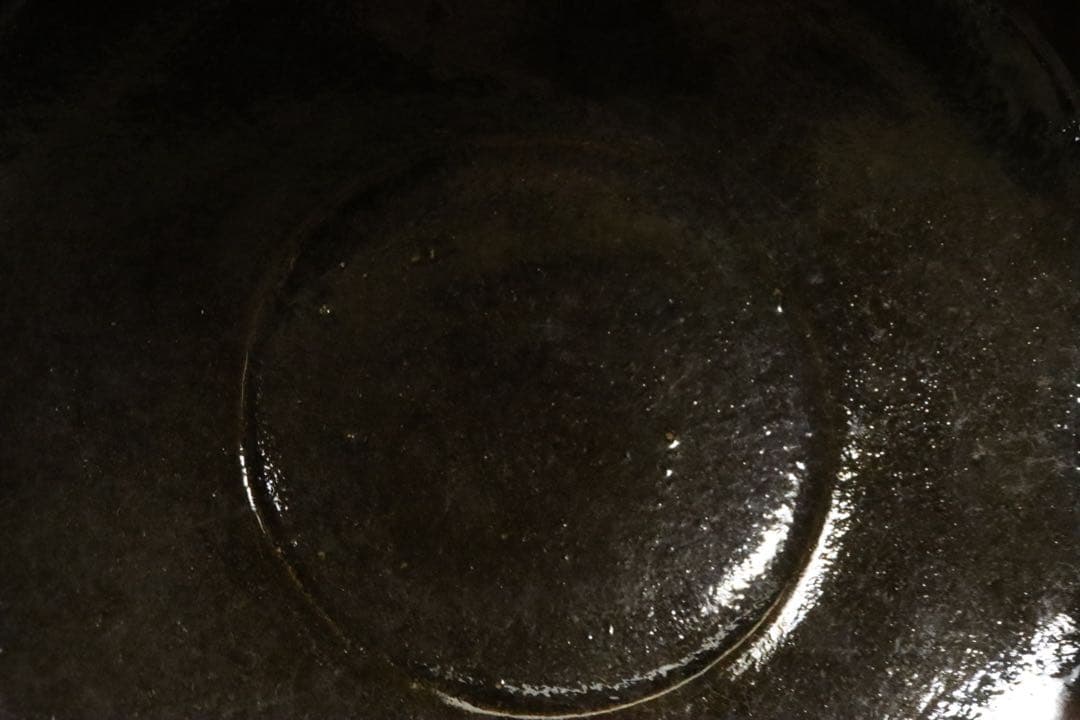
• Style: 流釉 (nagashi-gusuri) drip-glazed chawan, iron-black body with greenish iron rivers
• Dimensions: H 7.4 cm × W 12.4 cm
• Box: Paulownia tomobako, 再成箱 (sai-sei-bako) written and sealed by 黒田陶々庵 (Kuroda Totoan). Lid inscription: 「屋島焼 三谷林造 屋島銘印 / 再成 陶々庵」with vermilion Totoan seal
• Provenance: 所載品 — published in 『近世の茶碗 六』 (Kinsei no Chawan Vol. 6), an authoritative reference work on Edo-period tea bowls
• Condition: Excellent antique condition for its age; surface and glaze intact, no restoration observed
🔹 [ CULTURAL & ARTISTIC INSIGHT ]
Yashima-yaki was established on the Yashima peninsula in Sanuki province — the same stretch of shoreline remembered for the 1185 sea-and-land battle of the Genpei War — and operated under the patronage of the local Matsudaira daimyo of Takamatsu. The kiln had a short but distinguished Edo-period life, producing tea ware for regional tea culture before declining into the Meiji era. Surviving Edo pieces are uncommon; those with documented authorship and published references sit at the quiet top of the category.
三谷林造 (Mitani Rinzo) is counted among the founding masters who gave Yashima-yaki its voice. His signature is the bold nagashi-gusuri drip chawan — an iron-black ground crossed by vertical streaks of greenish, cooling iron glaze. He does not decorate the bowl; he tilts it, pours, and lets gravity and fire finish the drawing. What remains on the body is a landscape that could not have been painted.
The technique itself — 流釉, literally "flowing glaze" — is a conversation between glaze chemistry, gravity, and kiln atmosphere. An iron-rich upper glaze is poured from the rim and allowed to run down the wall of the bowl. Where the glaze pools thickly, the iron cools into a green-black curtain; where it thins and breaks, it burns through to russet and ochre. Mitani Rinzo's hand pulls the streaks almost calligraphically, and the glaze terminates in a wavering hem just above the foot — a horizon line the fire chose.
The paulownia tomobako accompanying this bowl is a 再成箱 (sai-sei-bako) — a re-certified box, written by a connoisseur to re-authenticate a piece whose original box has been lost or damaged — by 黒田陶々庵 (Kuroda Totoan), a 20th-century authority on Japanese tea utensils and antique ceramics. In the world of Japanese tea, a Totoan box is itself an attestation: his lid inscriptions and vermilion seal are weighed in the same way a museum label is weighed. The box reads 「屋島焼 三谷林造 屋島銘印 / 再成 陶々庵」.
More telling still, this bowl is 所載品 — a catalogued piece, published in 『近世の茶碗 六』 (Kinsei no Chawan Vol. 6), one of the standing reference works on early-modern Japanese tea bowls. Published reference provenance is the form of authorship that cannot be reconstructed after the fact: the piece is already inside the scholarly conversation.
A quiet line, where green iron runs and the fire draws the horizon.
🔹 [ DEEP-DIVE COMMENTARY ]
Yashima-yaki occupies a specific corner of Edo-period regional ceramic history. Founded on the Yashima peninsula of Sanuki province (modern-day Takamatsu, Kagawa, Shikoku) under the patronage of the Takamatsu Matsudaira daimyo family, the kiln grew up in the shadow of a landscape already saturated with cultural memory — the Genpei War battleground of 1185, sung in the Heike Monogatari. Edo-period production focused on tea ware for regional consumption and for the daimyo's circle. The kiln declined through the Meiji era as many regional domainal kilns did, leaving a comparatively small body of surviving work. Genuine Edo-period Yashima-yaki chawan, with documentable authorship, are not plentiful in the market.
Within that tradition, 三谷林造 (Mitani Rinzo) is one of the names that carries weight. He worked in the mid-to-late Edo generation that defined what a Yashima-yaki chawan should look like, and his stylistic fingerprint is precisely the kind of drip-glazed tea bowl seen here — an iron-black body with a poured upper glaze that runs in vertical rivers down the wall. The aesthetic is closer to northern Edo iron chawan traditions than to the softer, more pictorial Kyoto wares of the same period; it is a tea bowl that expects to be held in a winter hand. His treatment is confident and spare: no brushwork, no overglaze painting, no carved decoration — the bowl's voice is entirely in the glaze fall.
The technical story of nagashi-gusuri rewards attention. The bowl is thrown, trimmed, and first coated in a dark iron-rich base glaze that will become the near-black ground. A second, lighter, iron-and-wood-ash glaze is then poured from the rim and tipped down the wall; the potter controls the pour by the angle of his wrist and the speed of the tilt. In the kiln, the upper glaze melts, runs, and partially dissolves into the base glaze. Where the upper glaze remains thick, its iron cools into the characteristic greenish tone one sees here; where it thins and streaks, it turns warm brown and russet; where the two glazes stop cleanly against the foot, the wavering edge records the exact moment the glaze stopped moving. No two chawan finish the same way. The landscape is written once and cannot be rehearsed.
The institutional weight of the Kuroda Totoan box deserves its own paragraph. In the Japanese tea-utensil world, the box is not packaging — it is part of the object's identity. A tomobako written by the artist is a 共箱. A box written and sealed later by a recognised connoisseur, re-authenticating a piece whose original box has been lost or damaged, is a 再成箱 (sai-sei-bako). Kuroda Totoan was a 20th-century authority on Japanese ceramics and tea utensils, and his re-certifications are themselves valued in the way a museum attribution is valued: his name on the lid is a witnessed statement that this bowl is what it claims to be. The inscription here reads 「屋島焼 三谷林造 屋島銘印 / 再成 陶々庵」with his vermilion seal in the lower corner of the lid. The box does not merely store the bowl; it speaks for it.
Above all of that sits the single most decisive line in this piece's provenance: 所載品 — catalogued piece — in 『近世の茶碗 六』 (Kinsei no Chawan Vol. 6). Published reference provenance operates on a different plane from unpublished attribution. Once a bowl is reproduced and discussed inside a scholarly reference work, it has entered the permanent bibliography of the field; later researchers cite it, other pieces are compared against it, and its authorship is no longer a question that has to be re-opened with every change of hand. Kinsei no Chawan is one of the standing reference series on Edo-period tea bowls, and inclusion in it is a form of authorship that cannot be added retroactively. The combination here — a Mitani Rinzo chawan, a Kuroda Totoan sai-sei-bako, and 所載品 status in Kinsei no Chawan Vol. 6 — is the reason this bowl is presented as a catalog entry rather than as an object for persuasion.
🔹 [ 日本語解説 ]
本作は、江戸時代中期〜後期(18世紀後半〜19世紀前半頃)、讃岐国屋島の地で興った屋島焼を代表する作家、三谷林造による流釉茶碗である。寸法は高さ約7.4cm、口径約12.4cm。鉄黒地に、緑がかった鉄釉が口縁から裾に向けて縦に流れ下り、高台際でわずかに波打つように止まる。筆を置かず、釉と重力と火に景色を任せた、近世讃岐陶の典型的な手である。
屋島焼は、源平合戦の古戦場として名高い屋島の地に、高松松平家の庇護のもとに開かれ、江戸期に短いながらも充実した歩みを残した地方窯である。三谷林造はその黎明を担った作家の一人とされ、大胆な流釉技法を得意とした。鉄を含む下釉の上から鉄・灰混じりの上釉を口縁より流し掛けし、焼成中に釉が溶け落ち、重なり、分かれながら景色を結ぶ。上釉が厚くたまった部分は緑黒色に冷え、薄く切れた部分は鳶色・茶褐色にぬけ、高台ぎわで釉が停止した波打つ縁は「火がそこで終わった瞬間」を記録している。塗りではなく、流れが景である。
付属する桐共箱は、20世紀の茶道具・古陶磁の数寄者として知られる黒田陶々庵による再成箱である。箱書は「屋島焼 三谷林造 屋島銘印 / 再成 陶々庵」、蓋裏に陶々庵の朱印が押される。再成箱とは、原箱を失ったり損傷した器物に対し、鑑識ある人物が改めて箱書を記して作を保証する箱のことであり、茶道具の世界では単なる収納具ではなく「証」として扱われる。陶々庵の箱書は、その名が付されること自体が一つの鑑定意見として重みを持つ。
さらに本碗は、江戸期茶碗研究における基本文献の一つ『近世の茶碗 六』の所載品である。所載品とは、刊行された参考資料に掲載・言及された器のことであり、研究の系譜にすでに組み込まれた個体であることを意味する。未掲載の伝来品とは異なり、出版という公的な場に一度姿を現した作は、後から差し替えの効かない種類の来歴を持つ。三谷林造による屋島焼流釉茶碗に、陶々庵再成箱と『近世の茶碗 六』所載という二重の裏付けが備わっていることこそ、本作を単なる古陶器ではなく、文献に登場する一碗として扱うべき理由である。
🔹 [ SHIPPING & PACKAGING ]
• Dispatch: Within 1-6 business days
• Carrier: Japan Post EMS / UPS (with tracking)
• Packaging: Carefully wrapped with protective materials
🔹 [ BASIC DETAILS ]
• Artist: 三谷林造 (Mitani Rinzo) — founding master of 屋島焼 (Yashima-yaki), Sanuki province
• Era: mid-to-late Edo period (circa 1750–1850)
• Style: 流釉 (nagashi-gusuri) drip-glazed chawan, iron-black body with greenish iron rivers
• Dimensions: H 7.4 cm × W 12.4 cm
• Box: Paulownia tomobako, 再成箱 (sai-sei-bako) written and sealed by 黒田陶々庵 (Kuroda Totoan). Lid inscription: 「屋島焼 三谷林造 屋島銘印 / 再成 陶々庵」with vermilion Totoan seal
• Provenance: 所載品 — published in 『近世の茶碗 六』 (Kinsei no Chawan Vol. 6), an authoritative reference work on Edo-period tea bowls
• Condition: Excellent antique condition for its age; surface and glaze intact, no restoration observed
🔹 [ CULTURAL & ARTISTIC INSIGHT ]
Yashima-yaki was established on the Yashima peninsula in Sanuki province — the same stretch of shoreline remembered for the 1185 sea-and-land battle of the Genpei War — and operated under the patronage of the local Matsudaira daimyo of Takamatsu. The kiln had a short but distinguished Edo-period life, producing tea ware for regional tea culture before declining into the Meiji era. Surviving Edo pieces are uncommon; those with documented authorship and published references sit at the quiet top of the category.
三谷林造 (Mitani Rinzo) is counted among the founding masters who gave Yashima-yaki its voice. His signature is the bold nagashi-gusuri drip chawan — an iron-black ground crossed by vertical streaks of greenish, cooling iron glaze. He does not decorate the bowl; he tilts it, pours, and lets gravity and fire finish the drawing. What remains on the body is a landscape that could not have been painted.
The technique itself — 流釉, literally "flowing glaze" — is a conversation between glaze chemistry, gravity, and kiln atmosphere. An iron-rich upper glaze is poured from the rim and allowed to run down the wall of the bowl. Where the glaze pools thickly, the iron cools into a green-black curtain; where it thins and breaks, it burns through to russet and ochre. Mitani Rinzo's hand pulls the streaks almost calligraphically, and the glaze terminates in a wavering hem just above the foot — a horizon line the fire chose.
The paulownia tomobako accompanying this bowl is a 再成箱 (sai-sei-bako) — a re-certified box, written by a connoisseur to re-authenticate a piece whose original box has been lost or damaged — by 黒田陶々庵 (Kuroda Totoan), a 20th-century authority on Japanese tea utensils and antique ceramics. In the world of Japanese tea, a Totoan box is itself an attestation: his lid inscriptions and vermilion seal are weighed in the same way a museum label is weighed. The box reads 「屋島焼 三谷林造 屋島銘印 / 再成 陶々庵」.
More telling still, this bowl is 所載品 — a catalogued piece, published in 『近世の茶碗 六』 (Kinsei no Chawan Vol. 6), one of the standing reference works on early-modern Japanese tea bowls. Published reference provenance is the form of authorship that cannot be reconstructed after the fact: the piece is already inside the scholarly conversation.
A quiet line, where green iron runs and the fire draws the horizon.
🔹 [ DEEP-DIVE COMMENTARY ]
Yashima-yaki occupies a specific corner of Edo-period regional ceramic history. Founded on the Yashima peninsula of Sanuki province (modern-day Takamatsu, Kagawa, Shikoku) under the patronage of the Takamatsu Matsudaira daimyo family, the kiln grew up in the shadow of a landscape already saturated with cultural memory — the Genpei War battleground of 1185, sung in the Heike Monogatari. Edo-period production focused on tea ware for regional consumption and for the daimyo's circle. The kiln declined through the Meiji era as many regional domainal kilns did, leaving a comparatively small body of surviving work. Genuine Edo-period Yashima-yaki chawan, with documentable authorship, are not plentiful in the market.
Within that tradition, 三谷林造 (Mitani Rinzo) is one of the names that carries weight. He worked in the mid-to-late Edo generation that defined what a Yashima-yaki chawan should look like, and his stylistic fingerprint is precisely the kind of drip-glazed tea bowl seen here — an iron-black body with a poured upper glaze that runs in vertical rivers down the wall. The aesthetic is closer to northern Edo iron chawan traditions than to the softer, more pictorial Kyoto wares of the same period; it is a tea bowl that expects to be held in a winter hand. His treatment is confident and spare: no brushwork, no overglaze painting, no carved decoration — the bowl's voice is entirely in the glaze fall.
The technical story of nagashi-gusuri rewards attention. The bowl is thrown, trimmed, and first coated in a dark iron-rich base glaze that will become the near-black ground. A second, lighter, iron-and-wood-ash glaze is then poured from the rim and tipped down the wall; the potter controls the pour by the angle of his wrist and the speed of the tilt. In the kiln, the upper glaze melts, runs, and partially dissolves into the base glaze. Where the upper glaze remains thick, its iron cools into the characteristic greenish tone one sees here; where it thins and streaks, it turns warm brown and russet; where the two glazes stop cleanly against the foot, the wavering edge records the exact moment the glaze stopped moving. No two chawan finish the same way. The landscape is written once and cannot be rehearsed.
The institutional weight of the Kuroda Totoan box deserves its own paragraph. In the Japanese tea-utensil world, the box is not packaging — it is part of the object's identity. A tomobako written by the artist is a 共箱. A box written and sealed later by a recognised connoisseur, re-authenticating a piece whose original box has been lost or damaged, is a 再成箱 (sai-sei-bako). Kuroda Totoan was a 20th-century authority on Japanese ceramics and tea utensils, and his re-certifications are themselves valued in the way a museum attribution is valued: his name on the lid is a witnessed statement that this bowl is what it claims to be. The inscription here reads 「屋島焼 三谷林造 屋島銘印 / 再成 陶々庵」with his vermilion seal in the lower corner of the lid. The box does not merely store the bowl; it speaks for it.
Above all of that sits the single most decisive line in this piece's provenance: 所載品 — catalogued piece — in 『近世の茶碗 六』 (Kinsei no Chawan Vol. 6). Published reference provenance operates on a different plane from unpublished attribution. Once a bowl is reproduced and discussed inside a scholarly reference work, it has entered the permanent bibliography of the field; later researchers cite it, other pieces are compared against it, and its authorship is no longer a question that has to be re-opened with every change of hand. Kinsei no Chawan is one of the standing reference series on Edo-period tea bowls, and inclusion in it is a form of authorship that cannot be added retroactively. The combination here — a Mitani Rinzo chawan, a Kuroda Totoan sai-sei-bako, and 所載品 status in Kinsei no Chawan Vol. 6 — is the reason this bowl is presented as a catalog entry rather than as an object for persuasion.
🔹 [ 日本語解説 ]
本作は、江戸時代中期〜後期(18世紀後半〜19世紀前半頃)、讃岐国屋島の地で興った屋島焼を代表する作家、三谷林造による流釉茶碗である。寸法は高さ約7.4cm、口径約12.4cm。鉄黒地に、緑がかった鉄釉が口縁から裾に向けて縦に流れ下り、高台際でわずかに波打つように止まる。筆を置かず、釉と重力と火に景色を任せた、近世讃岐陶の典型的な手である。
屋島焼は、源平合戦の古戦場として名高い屋島の地に、高松松平家の庇護のもとに開かれ、江戸期に短いながらも充実した歩みを残した地方窯である。三谷林造はその黎明を担った作家の一人とされ、大胆な流釉技法を得意とした。鉄を含む下釉の上から鉄・灰混じりの上釉を口縁より流し掛けし、焼成中に釉が溶け落ち、重なり、分かれながら景色を結ぶ。上釉が厚くたまった部分は緑黒色に冷え、薄く切れた部分は鳶色・茶褐色にぬけ、高台ぎわで釉が停止した波打つ縁は「火がそこで終わった瞬間」を記録している。塗りではなく、流れが景である。
付属する桐共箱は、20世紀の茶道具・古陶磁の数寄者として知られる黒田陶々庵による再成箱である。箱書は「屋島焼 三谷林造 屋島銘印 / 再成 陶々庵」、蓋裏に陶々庵の朱印が押される。再成箱とは、原箱を失ったり損傷した器物に対し、鑑識ある人物が改めて箱書を記して作を保証する箱のことであり、茶道具の世界では単なる収納具ではなく「証」として扱われる。陶々庵の箱書は、その名が付されること自体が一つの鑑定意見として重みを持つ。
さらに本碗は、江戸期茶碗研究における基本文献の一つ『近世の茶碗 六』の所載品である。所載品とは、刊行された参考資料に掲載・言及された器のことであり、研究の系譜にすでに組み込まれた個体であることを意味する。未掲載の伝来品とは異なり、出版という公的な場に一度姿を現した作は、後から差し替えの効かない種類の来歴を持つ。三谷林造による屋島焼流釉茶碗に、陶々庵再成箱と『近世の茶碗 六』所載という二重の裏付けが備わっていることこそ、本作を単なる古陶器ではなく、文献に登場する一碗として扱うべき理由である。
🔹 [ SHIPPING & PACKAGING ]
• Dispatch: Within 1-6 business days
• Carrier: Japan Post EMS / UPS (with tracking)
• Packaging: Carefully wrapped with protective materials
Quantity
Couldn't load pickup availability
Out of stock
View full details