E-Karatsu Iron-Painted Katakuchi Pouring Bowl — Karatsu Stoneware with Associated Wooden Box
E-Karatsu Iron-Painted Katakuchi Pouring Bowl — Karatsu Stoneware with Associated Wooden Box
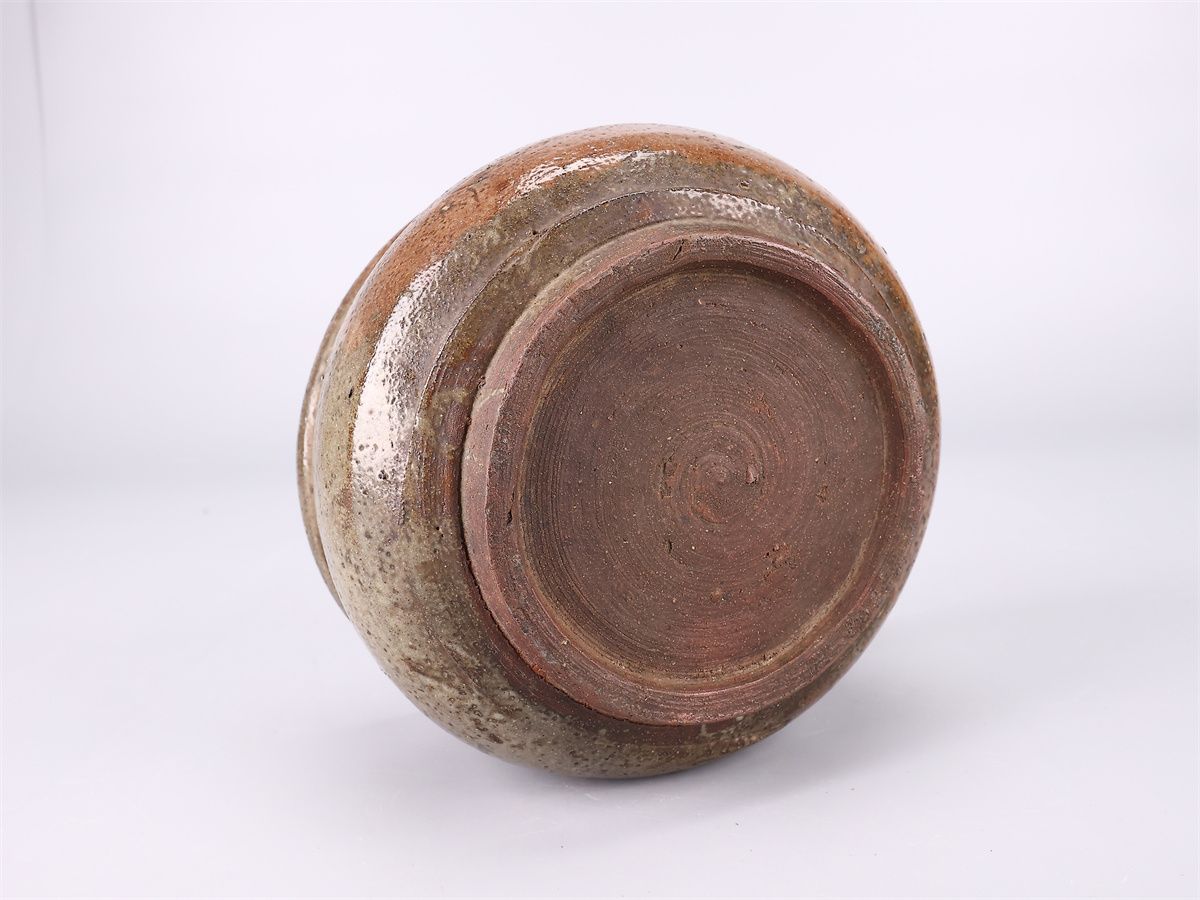
A pouring bowl in stoneware, with iron-brushed lattice motif under a sandy feldspathic glaze. The body shows the throw rings, kiln-flashed clay foot, and rim wear consistent with a wood-fired Karatsu kiln in the 20th-century folk-revival lineage. Seller-described as Edo-period Ko-Karatsu; we have not independently verified the attribution.
The accompanying wooden box bears the inscription 「尼口鉢」 (amaguchi-bachi — a different form-name describing a bowl with an inward-curled rim). The actual piece has a clearly pinched-out pouring spout (片口 katakuchi). The box and the piece therefore do not match in form, indicating a later associated wooden box rather than an original maker's box.
🔹 [ BASIC DETAILS ]
- Form: Katakuchi (片口) — pouring bowl with pinched spout
- Material / Technique: Karatsu stoneware (唐津焼), wheel-thrown; iron-oxide underglaze brushwork in lattice / mountain motif; ash-feldspar glaze, wood-fired
- Likely period: 20th century, Karatsu kiln lineage (mingei-era revival). Seller-described as Edo-period; not independently authenticated.
- Origin: Karatsu, Saga Prefecture (Kyushu), Japan
- Dimensions: Height approx. 10 cm, Width approx. 17 cm
- Box: Later associated wooden box (合わせ箱) inscribed 「尼口鉢」, which does not match the piece form (片口). Box of unverified relationship to the maker.
- Condition: Surface wear at rim and handle consistent with use; no chips or cracks observed.
🔹 [ ABOUT KARATSU AND E-KARATSU ]
Karatsu ware (唐津焼) is among the most established Japanese stoneware traditions, produced in northern Kyushu since the late sixteenth century. E-Karatsu (絵唐津 — "picture Karatsu") refers specifically to pieces where iron-oxide brushwork is applied to the leather-hard clay before glazing, leaving the iron motif visible beneath the feldspathic surface after firing. The motifs — grasses, lattices, abstracted mountains — are typically executed in a few decisive brushstrokes; the technique requires confidence rather than refinement.
This piece sits within that lineage. The lattice motif and pouring-spout form are recognisable Karatsu vocabulary, and the body and glaze show wood-fired Karatsu kiln character. What the piece does not display, on our reading, are the specific markers of Ko-Karatsu (古唐津) — the Momoyama through early-Edo lineage that commands very different valuations and is identified by distinct foot finishing, clay impurities, and brush character that this piece does not show.
🔹 [ ATTRIBUTION NOTE ]
Independent authentication has not been performed. Attribution rests on the seller's text and the box inscription, both of which we have separately noted. Buyers should evaluate the piece against their own attribution criteria.
🔹 [ 日本語解説 ]
素地・釉薬・焼成いずれも唐津焼の窯仕事の景色を備えており、二十世紀の唐津窯系民芸の系譜にあると読めます。鉄絵の格子文・片口の形状ともに唐津の語彙の中にありますが、江戸初期〜桃山の「古唐津」の技法的特徴(高台の重ね焼跡、桃山期の即興的な鉄絵の筆勢、釉のカセ)は確認できません。出品者は「江戸時代 古唐津」と記載していますが、私たちはこの帰属を独立には確認していません。
付属の木箱には「尼口鉢」の墨書がありますが、実物は明確に注ぎ口を持つ片口鉢で、箱書の形態名と一致しません。これは合わせ箱(後年に当てがわれた木箱)であり、作者の共箱ではないと扱います。
🔹 [ SHIPPING & PACKAGING ]
- Dispatch: Within 1–6 business days
- Carrier: Japan Post EMS / UPS (with tracking)
- Packaging: Carefully wrapped with protective materials
Couldn't load pickup availability
Low stock: 1 left
View full details