1
/
of
9
Dojo Soko Ikkan-nuri O-Natsume Tsubo-tsubo Gold Line Tea Caddy Lacquer
Dojo Soko Ikkan-nuri O-Natsume Tsubo-tsubo Gold Line Tea Caddy Lacquer
Regular price
Dhs. 1,707.00 AED
Regular price
Sale price
Dhs. 1,707.00 AED
Taxes included.
Shipping calculated at checkout.
An o-natsume (large tea caddy) by Dojo Soko (道場宗廣), executed in ikkan-nuri — a lacquer technique distinguished by its application over a paper or hemp cloth base, yielding an exceptionally lightweight body with a warm, dry surface texture. A single gold S-curve traces the tsubo-tsubo (壺々, gourd) motif across the lid — one gesture against infinite black. Accompanied by signed tomobako.
━━━━━━━━━━━━━━━━━━━━
🔹 [ BASIC DETAILS ]
• Artist: Dojo Soko (道場宗廣)
• Technique: Ikkan-nuri (一閑塗) — lacquer over paper/hemp cloth body
• Era: Showa–Heisei period
• Origin: Japan
• Dimensions: 7.0 cm diameter × 7.0 cm height (2.8" dia × 2.8" h)
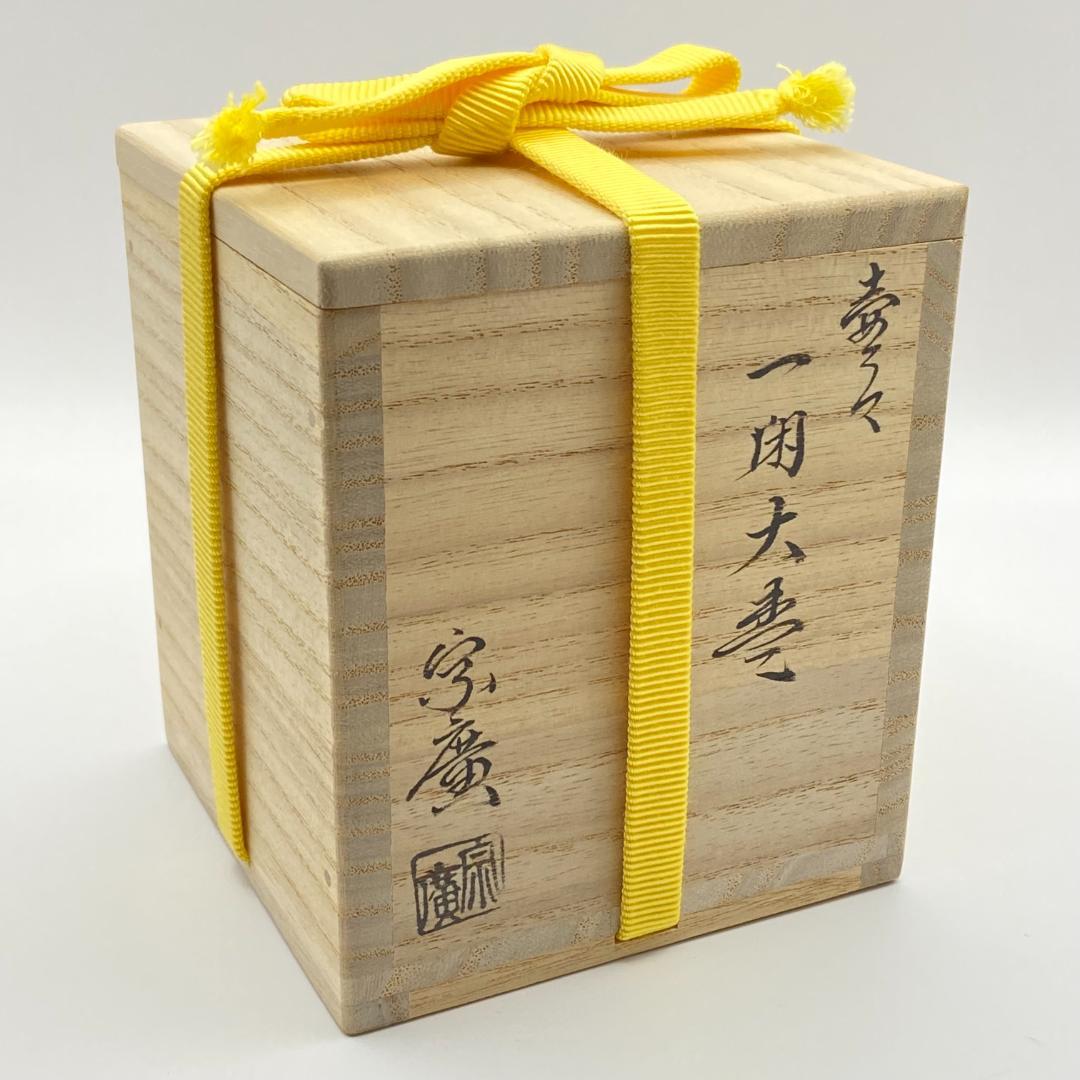
• Box: Tomobako (signed wooden box) — "壺々 一閑大棗 宗廣"
• Condition: Excellent — lacquer surface clean and intact, no chips, cracks, or repairs
━━━━━━━━━━━━━━━━━━━━
🔹 [ CULTURAL & ARTISTIC INSIGHT ]
Ikkan-nuri takes its name from Hiki Ikkan (飛来一閑), a Chinese monk who crossed to Japan in the early Edo period and introduced a lacquerwork technique fundamentally different from the carved or turned wooden bodies that defined Japanese lacquer tradition. Instead of wood, the base is formed from layered paper or hemp cloth — dried, shaped, and then lacquered. The result is a vessel that weighs almost nothing in the hand yet carries the full visual authority of urushi.
This distinction is not decorative. It is structural. When you lift an ikkan-nuri natsume, the absence of expected weight creates a moment of recalibration — the hand adjusts, the mind follows. In tea practice, where every gesture is calibrated, this lightness becomes a statement about material economy: how little is needed to achieve presence.
Dojo Soko's interpretation distills the form to its essence. The body is pure black — kuro-urushi of extraordinary evenness, with the slightly dry, matte surface characteristic of lacquer over a paper substrate. No decoration appears on the body or sides. The entire visual weight of the object rests on the lid, where a single gold line traces the tsubo-tsubo motif: an S-curve that suggests the outline of a gourd without completing it. One line. One gesture. The gold rim at the junction of lid and body provides the only other accent — a structural boundary rendered visible.
This is restraint elevated to authorship. Where other lacquer artists fill the surface with maki-e narratives, Dojo Soko chose the harder path: a single mark that must justify itself against an expanse of black. The tsubo-tsubo succeeds because it carries the cultural weight of centuries of tea aesthetics — the gourd motif has appeared on tea wares since the Muromachi period — while delivering that weight through the absolute minimum of means.
*"One gold line across black lacquer. The gourd exists in the space the brush did not fill."*
━━━━━━━━━━━━━━━━━━━━
🔹 [ DEEP-DIVE COMMENTARY ]
**Ikkan-nuri (一閑塗) — The Paper Body Tradition**: Hiki Ikkan arrived in Japan from Ming China and settled in Kyoto, where he found patronage among tea masters who recognized the aesthetic potential of his technique. The paper or hemp base is built up in layers over a wooden mold, then removed and lacquered. This process yields several distinctive qualities: extraordinary lightness (often half the weight of a comparable wooden piece), a subtle surface warmth that differs from lacquer over wood, and a resonant quality when tapped — hollow rather than solid, suggesting interior space even in a closed form. The technique has been maintained by successive generations of craftsmen, each inheriting the name Ikkan and the technical knowledge that accompanies it. Dojo Soko works within this established lineage.
**Tsubo-tsubo (壺々) — The Gourd as Meditation**: The tsubo-tsubo motif derives from the hyotan (瓢箪, gourd), one of the most enduring symbols in East Asian art. In Taoist tradition, the gourd represents a universe contained within a vessel — a portal between worlds. In tea culture, it signals abundance tempered by simplicity. Dojo Soko's rendering reduces the motif to a single continuous line — an S-curve that evokes the gourd's double-bulbed silhouette without outlining it completely. This incompleteness is itself meaningful: the viewer's eye completes what the brush left open, creating a participatory relationship between object and observer.
**O-Natsume Form**: The o-natsume (大棗, large natsume) is the standard size for thin tea (usucha) storage, its generous proportions allowing the host to scoop matcha with ease during temae. The rounded form — wider at the shoulder, tapering slightly at the base — echoes the jujube fruit (natsume, 棗) from which the vessel takes its name. In Dojo Soko's hands, the proportions are particularly graceful: the height equals the diameter, creating a compact, self-contained geometry.
**Black Lacquer as Negative Space**: The decision to leave the body entirely undecorated is neither laziness nor economy — it is a compositional strategy. In the visual grammar of Japanese lacquerwork, black urushi functions as ma (間, negative space). It is not absence but potential. Against this field of potential, the single gold line on the lid acquires a gravitational force it could never achieve on a decorated surface. The eye has nowhere else to go. The line becomes the entire world of the object.
**Tomobako Documentation**: The signed box inscribed "壺々 一閑大棗 宗廣" provides full identification: the motif (tsubo-tsubo), the technique and form (ikkan o-natsume), and the artist (Soko). The seal confirms attribution.
━━━━━━━━━━━━━━━━━━━━
🔹 [ 日本語解説 ]
【基本情報】
• 作家:道場宗廣
• 技法:一閑塗(紙胎漆器)
• 意匠:壺々(つぼつぼ)金蒔絵
• 時代:昭和〜平成期
• 産地:日本
• 寸法:直径約7.0cm × 高さ約7.0cm
• 付属:共箱(「壺々 一閑大棗 宗廣」銘)
• 状態:良好 — 漆面は均一で美しく、傷・ヒビ・直しなし
【解説】
道場宗廣作、一閑塗大棗「壺々」。紙胎に漆を施す一閑塗の技法で作られた、手に取ると驚くほど軽い薄茶器です。
一閑塗は、明代中国から渡来した飛来一閑に始まる技法で、木地ではなく紙や麻布を素地として漆を重ねます。木地の漆器とは異なる独特の軽さと、かすかに乾いた風合いが特徴です。茶の湯において、この予想を裏切る軽さは、道具との出会いの中に小さな驚きを生みます。
本作の装飾は極限まで削ぎ落とされています。胴は一切の加飾なく、純粋な黒漆の世界。蓋の中央に壺々(瓢箪)のS字曲線が金蒔絵で一筋だけ描かれ、合口に金線が一条走るのみ。この最小限の金が、黒の広がりの中で圧倒的な存在感を放ちます。引き算の美学を体現した一品です。
━━━━━━━━━━━━━━━━━━━━
🔹 [ SHIPPING & PACKAGING ]
• Dispatch: Within 1-6 business days
• Carrier: Japan Post EMS / UPS (with tracking)
• Packaging: Carefully wrapped with protective materials
*One gold line divides the black. The gourd appears — not where the brush touched, but where the eye completes what the hand left open.*
━━━━━━━━━━━━━━━━━━━━
🔹 [ BASIC DETAILS ]
• Artist: Dojo Soko (道場宗廣)
• Technique: Ikkan-nuri (一閑塗) — lacquer over paper/hemp cloth body
• Era: Showa–Heisei period
• Origin: Japan
• Dimensions: 7.0 cm diameter × 7.0 cm height (2.8" dia × 2.8" h)
• Box: Tomobako (signed wooden box) — "壺々 一閑大棗 宗廣"
• Condition: Excellent — lacquer surface clean and intact, no chips, cracks, or repairs
━━━━━━━━━━━━━━━━━━━━
🔹 [ CULTURAL & ARTISTIC INSIGHT ]
Ikkan-nuri takes its name from Hiki Ikkan (飛来一閑), a Chinese monk who crossed to Japan in the early Edo period and introduced a lacquerwork technique fundamentally different from the carved or turned wooden bodies that defined Japanese lacquer tradition. Instead of wood, the base is formed from layered paper or hemp cloth — dried, shaped, and then lacquered. The result is a vessel that weighs almost nothing in the hand yet carries the full visual authority of urushi.
This distinction is not decorative. It is structural. When you lift an ikkan-nuri natsume, the absence of expected weight creates a moment of recalibration — the hand adjusts, the mind follows. In tea practice, where every gesture is calibrated, this lightness becomes a statement about material economy: how little is needed to achieve presence.
Dojo Soko's interpretation distills the form to its essence. The body is pure black — kuro-urushi of extraordinary evenness, with the slightly dry, matte surface characteristic of lacquer over a paper substrate. No decoration appears on the body or sides. The entire visual weight of the object rests on the lid, where a single gold line traces the tsubo-tsubo motif: an S-curve that suggests the outline of a gourd without completing it. One line. One gesture. The gold rim at the junction of lid and body provides the only other accent — a structural boundary rendered visible.
This is restraint elevated to authorship. Where other lacquer artists fill the surface with maki-e narratives, Dojo Soko chose the harder path: a single mark that must justify itself against an expanse of black. The tsubo-tsubo succeeds because it carries the cultural weight of centuries of tea aesthetics — the gourd motif has appeared on tea wares since the Muromachi period — while delivering that weight through the absolute minimum of means.
*"One gold line across black lacquer. The gourd exists in the space the brush did not fill."*
━━━━━━━━━━━━━━━━━━━━
🔹 [ DEEP-DIVE COMMENTARY ]
**Ikkan-nuri (一閑塗) — The Paper Body Tradition**: Hiki Ikkan arrived in Japan from Ming China and settled in Kyoto, where he found patronage among tea masters who recognized the aesthetic potential of his technique. The paper or hemp base is built up in layers over a wooden mold, then removed and lacquered. This process yields several distinctive qualities: extraordinary lightness (often half the weight of a comparable wooden piece), a subtle surface warmth that differs from lacquer over wood, and a resonant quality when tapped — hollow rather than solid, suggesting interior space even in a closed form. The technique has been maintained by successive generations of craftsmen, each inheriting the name Ikkan and the technical knowledge that accompanies it. Dojo Soko works within this established lineage.
**Tsubo-tsubo (壺々) — The Gourd as Meditation**: The tsubo-tsubo motif derives from the hyotan (瓢箪, gourd), one of the most enduring symbols in East Asian art. In Taoist tradition, the gourd represents a universe contained within a vessel — a portal between worlds. In tea culture, it signals abundance tempered by simplicity. Dojo Soko's rendering reduces the motif to a single continuous line — an S-curve that evokes the gourd's double-bulbed silhouette without outlining it completely. This incompleteness is itself meaningful: the viewer's eye completes what the brush left open, creating a participatory relationship between object and observer.
**O-Natsume Form**: The o-natsume (大棗, large natsume) is the standard size for thin tea (usucha) storage, its generous proportions allowing the host to scoop matcha with ease during temae. The rounded form — wider at the shoulder, tapering slightly at the base — echoes the jujube fruit (natsume, 棗) from which the vessel takes its name. In Dojo Soko's hands, the proportions are particularly graceful: the height equals the diameter, creating a compact, self-contained geometry.
**Black Lacquer as Negative Space**: The decision to leave the body entirely undecorated is neither laziness nor economy — it is a compositional strategy. In the visual grammar of Japanese lacquerwork, black urushi functions as ma (間, negative space). It is not absence but potential. Against this field of potential, the single gold line on the lid acquires a gravitational force it could never achieve on a decorated surface. The eye has nowhere else to go. The line becomes the entire world of the object.
**Tomobako Documentation**: The signed box inscribed "壺々 一閑大棗 宗廣" provides full identification: the motif (tsubo-tsubo), the technique and form (ikkan o-natsume), and the artist (Soko). The seal confirms attribution.
━━━━━━━━━━━━━━━━━━━━
🔹 [ 日本語解説 ]
【基本情報】
• 作家:道場宗廣
• 技法:一閑塗(紙胎漆器)
• 意匠:壺々(つぼつぼ)金蒔絵
• 時代:昭和〜平成期
• 産地:日本
• 寸法:直径約7.0cm × 高さ約7.0cm
• 付属:共箱(「壺々 一閑大棗 宗廣」銘)
• 状態:良好 — 漆面は均一で美しく、傷・ヒビ・直しなし
【解説】
道場宗廣作、一閑塗大棗「壺々」。紙胎に漆を施す一閑塗の技法で作られた、手に取ると驚くほど軽い薄茶器です。
一閑塗は、明代中国から渡来した飛来一閑に始まる技法で、木地ではなく紙や麻布を素地として漆を重ねます。木地の漆器とは異なる独特の軽さと、かすかに乾いた風合いが特徴です。茶の湯において、この予想を裏切る軽さは、道具との出会いの中に小さな驚きを生みます。
本作の装飾は極限まで削ぎ落とされています。胴は一切の加飾なく、純粋な黒漆の世界。蓋の中央に壺々(瓢箪)のS字曲線が金蒔絵で一筋だけ描かれ、合口に金線が一条走るのみ。この最小限の金が、黒の広がりの中で圧倒的な存在感を放ちます。引き算の美学を体現した一品です。
━━━━━━━━━━━━━━━━━━━━
🔹 [ SHIPPING & PACKAGING ]
• Dispatch: Within 1-6 business days
• Carrier: Japan Post EMS / UPS (with tracking)
• Packaging: Carefully wrapped with protective materials
*One gold line divides the black. The gourd appears — not where the brush touched, but where the eye completes what the hand left open.*
Quantity
Couldn't load pickup availability
Low stock: 1 left
View full details