1
/
of
15
Dōba Sōkō Joshinsai-Konomi Akoda Tame-Nuri Lacquer Tea Caddy with Shifuku
Dōba Sōkō Joshinsai-Konomi Akoda Tame-Nuri Lacquer Tea Caddy with Shifuku
Regular price
Dhs. 1,699.00 AED
Regular price
Sale price
Dhs. 1,699.00 AED
Taxes included.
Shipping calculated at checkout.
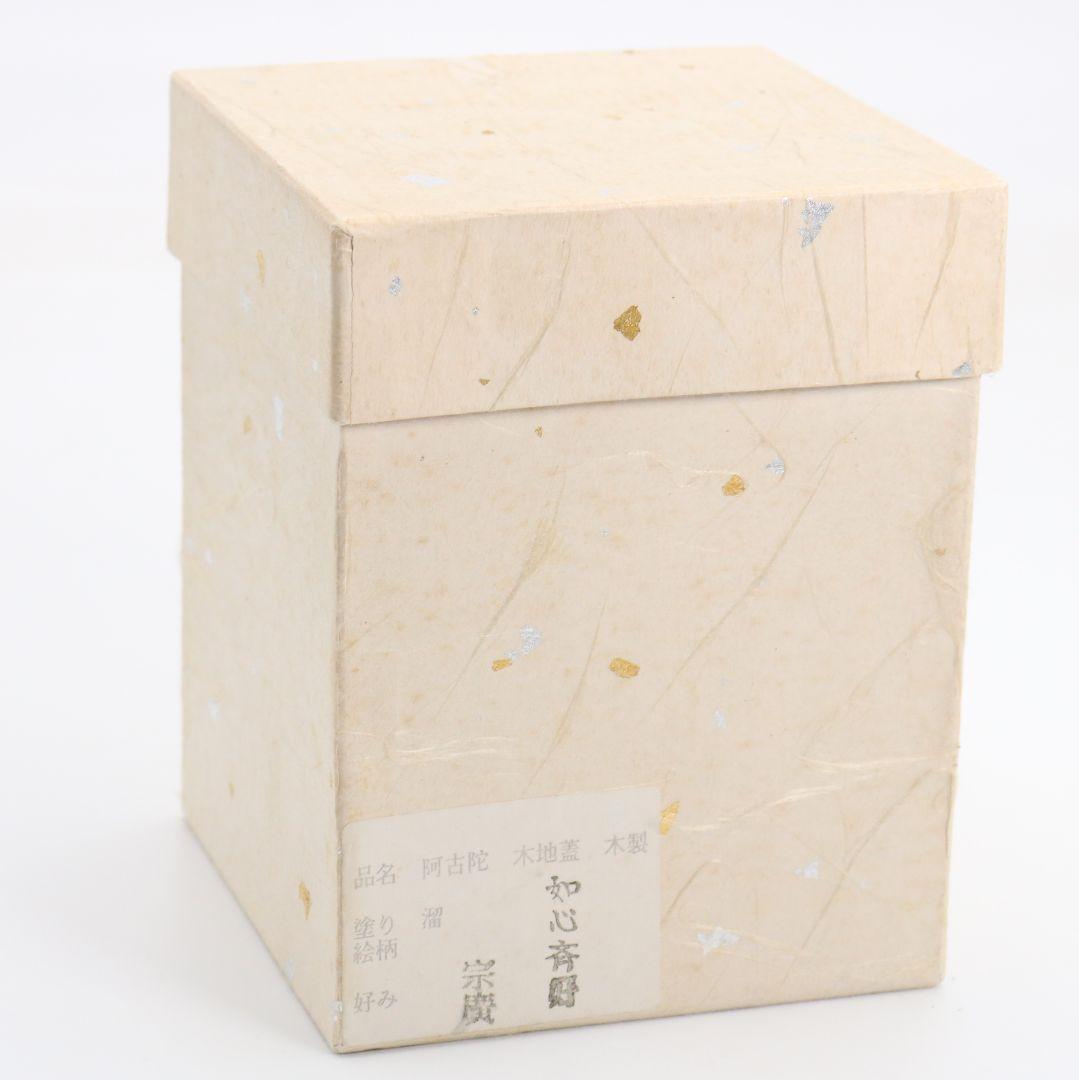
A tame-nuri lacquer usuchaki shaped in the akoda (gourd-melon) form, favored by Joshinsai, the 7th Grand Master of Omotesenke. Six vertical lobes rise and converge beneath a wooden lid, the deep reddish-brown surface revealing amber warmth where light gathers in the lacquer's depth. Crafted by Dōba Sōkō (道場宗廣), this thin tea container carries the quiet conviction of a maker whose hand understood both structure and restraint. Accompanied by its original Joshintama shifuku in gold brocade with purple kumihimo cord, and authenticated tomobako bearing the artist's inscription and red seal.
🔹 [ BASIC DETAILS ]
• Artist: Dōba Sōkō (道場宗廣)
• Form: Akoda (阿古陀) — gourd/melon shape with six lobes
• Designation: Joshinsai-konomi (如心斎好)
• Technique: Tame-nuri (溜塗) over wood base
• Interior: Jet-black urushi
• Lid: Kibutacha (wooden lid) with simple knob
• Era: Shōwa–Heisei
• Origin: Japan
• Dimensions: Height approx. 7.7 cm, Diameter approx. 7 cm
• Condition: Excellent — lacquer surface smooth and lustrous, no chips or wear
• Includes: Joshintama shifuku (如心玉仕覆) in gold brocade, purple kumihimo cord, tomobako with inscription and seal
🔹 [ CULTURAL & ARTISTIC INSIGHT ]
The akoda form takes its name from a variety of winter melon — a shape that entered tea culture not as ornament but as a meditation on organic proportion. When Joshinsai (天然宗左, 1705–1751) selected this form as a konomi piece, he was affirming a specific relationship between the hand and the vessel: the lobed surface invites the fingers to find their place naturally, turning the act of opening a tea caddy into an embodied gesture rather than a mechanical one.
There is a stillness in tame-nuri that other lacquer techniques do not attempt. The translucent upper layer allows the reddish-brown undercoat to breathe through — not hiding the foundation but letting it participate in the surface. In certain light the lacquer appears nearly black; in others, it glows with the warmth of aged amber.
Light moves through tame-nuri the way memory moves through tradition — never arriving all at once.
🔹 [ DEEP-DIVE COMMENTARY ]
Joshinsai (如心斎) served as the 7th iemoto of Omotesenke during a period when the tea tradition was consolidating its aesthetic vocabulary. His konomi selections — the objects he endorsed as suitable for his school's practice — reflect a preference for forms that balance visual quietness with tactile presence. The akoda usuchaki is among the most distinctive of these: its lobed body references the natural world without imitating it literally, maintaining the abstraction that Omotesenke values.
Dōba Sōkō's execution honors this lineage. The six lobes are defined but not exaggerated, each ridge catching light along its edge while the valleys between them hold shadow. The kibutacha lid sits flush, its unadorned knob asking nothing of the eye. The accompanying shifuku — a Joshintama pattern in gold brocade — completes the formal presentation prescribed by the school.
The tomobako inscription reads simply: 如心斎好 阿古陀茶器 宗廣, followed by the artist's red seal. No elaboration. The object carries its own authority.
🔹 [ 日本語解説 ]
道場宗廣作による如心斎好の阿古陀薄茶器。溜塗の深い赤褐色の表面は、光の加減により琥珀色の温もりを見せます。六つの稜線が整然と走る瓜形の器体は、表千家七代如心斎が好んだ端正な造形。木蓋茶の蓋はすっきりとした摘みを備え、内部は漆黒の漆で仕上げられています。
如心玉仕覆(金襴・紫組紐)と共箱(宗廣銘・朱印)が付属。状態は優良で、漆面に欠けや傷みは見られません。寸法:高さ約7.7cm、径約7cm。
🔹 [ SHIPPING & PACKAGING ]
• Dispatch: Within 1-6 business days
• Carrier: Japan Post EMS / UPS (with tracking)
• Packaging: Carefully wrapped with protective materials
🔹 [ BASIC DETAILS ]
• Artist: Dōba Sōkō (道場宗廣)
• Form: Akoda (阿古陀) — gourd/melon shape with six lobes
• Designation: Joshinsai-konomi (如心斎好)
• Technique: Tame-nuri (溜塗) over wood base
• Interior: Jet-black urushi
• Lid: Kibutacha (wooden lid) with simple knob
• Era: Shōwa–Heisei
• Origin: Japan
• Dimensions: Height approx. 7.7 cm, Diameter approx. 7 cm
• Condition: Excellent — lacquer surface smooth and lustrous, no chips or wear
• Includes: Joshintama shifuku (如心玉仕覆) in gold brocade, purple kumihimo cord, tomobako with inscription and seal
🔹 [ CULTURAL & ARTISTIC INSIGHT ]
The akoda form takes its name from a variety of winter melon — a shape that entered tea culture not as ornament but as a meditation on organic proportion. When Joshinsai (天然宗左, 1705–1751) selected this form as a konomi piece, he was affirming a specific relationship between the hand and the vessel: the lobed surface invites the fingers to find their place naturally, turning the act of opening a tea caddy into an embodied gesture rather than a mechanical one.
There is a stillness in tame-nuri that other lacquer techniques do not attempt. The translucent upper layer allows the reddish-brown undercoat to breathe through — not hiding the foundation but letting it participate in the surface. In certain light the lacquer appears nearly black; in others, it glows with the warmth of aged amber.
Light moves through tame-nuri the way memory moves through tradition — never arriving all at once.
🔹 [ DEEP-DIVE COMMENTARY ]
Joshinsai (如心斎) served as the 7th iemoto of Omotesenke during a period when the tea tradition was consolidating its aesthetic vocabulary. His konomi selections — the objects he endorsed as suitable for his school's practice — reflect a preference for forms that balance visual quietness with tactile presence. The akoda usuchaki is among the most distinctive of these: its lobed body references the natural world without imitating it literally, maintaining the abstraction that Omotesenke values.
Dōba Sōkō's execution honors this lineage. The six lobes are defined but not exaggerated, each ridge catching light along its edge while the valleys between them hold shadow. The kibutacha lid sits flush, its unadorned knob asking nothing of the eye. The accompanying shifuku — a Joshintama pattern in gold brocade — completes the formal presentation prescribed by the school.
The tomobako inscription reads simply: 如心斎好 阿古陀茶器 宗廣, followed by the artist's red seal. No elaboration. The object carries its own authority.
🔹 [ 日本語解説 ]
道場宗廣作による如心斎好の阿古陀薄茶器。溜塗の深い赤褐色の表面は、光の加減により琥珀色の温もりを見せます。六つの稜線が整然と走る瓜形の器体は、表千家七代如心斎が好んだ端正な造形。木蓋茶の蓋はすっきりとした摘みを備え、内部は漆黒の漆で仕上げられています。
如心玉仕覆(金襴・紫組紐)と共箱(宗廣銘・朱印)が付属。状態は優良で、漆面に欠けや傷みは見られません。寸法:高さ約7.7cm、径約7cm。
🔹 [ SHIPPING & PACKAGING ]
• Dispatch: Within 1-6 business days
• Carrier: Japan Post EMS / UPS (with tracking)
• Packaging: Carefully wrapped with protective materials
Quantity
Couldn't load pickup availability
Low stock: 1 left
View full details