1
/
of
10
Daitoku-ji Chashaku Tea Scoop by Hasegawa Kanshu, Signed Bamboo Chashaku with Poetic Name Hana no En (Flower Banquet) and Tomozutsu
Daitoku-ji Chashaku Tea Scoop by Hasegawa Kanshu, Signed Bamboo Chashaku with Poetic Name Hana no En (Flower Banquet) and Tomozutsu
Regular price
Dhs. 756.00 AED
Regular price
Sale price
Dhs. 756.00 AED
Taxes included.
Shipping calculated at checkout.
Experience Authentic Japan Art with this Daitoku-ji Chashaku Tea Scoop. This Hasegawa Kanshu Bamboo Chashaku serves as a Japanese Tea Ceremony Utensil and Hand-Carved Matcha Scoop, featuring Signed Tomozutsu Bamboo Tube and Poetic Mei Hana no En—a must-have for any Art Collector seeking Zen Monk Calligraphy and Museum Quality Chanoyu Ware.
🔹 [ BASIC DETAILS ]
• Artist: Hasegawa Kanshu (長谷川寛州), Zen priest of Daitoku-ji, Kyoto
• Technique: Hand-carved aged susudake / white bamboo, single-node chashaku with signed tomozutsu
• Form: Chashaku (茶杓) — the tea scoop that lifts matcha into the tea bowl
• Mei (Poetic Name): "Hana no En" (花の宴 — Flower Banquet)
• Era: Late Showa to Heisei period, circa 1980–2010
• Origin: Daitoku-ji monastery, Kyoto, Japan
• Dimensions: Chashaku length approx. 18.3 cm (7.2 in) / Tomozutsu tube length approx. 21.5 cm × diameter approx. 2.7 cm
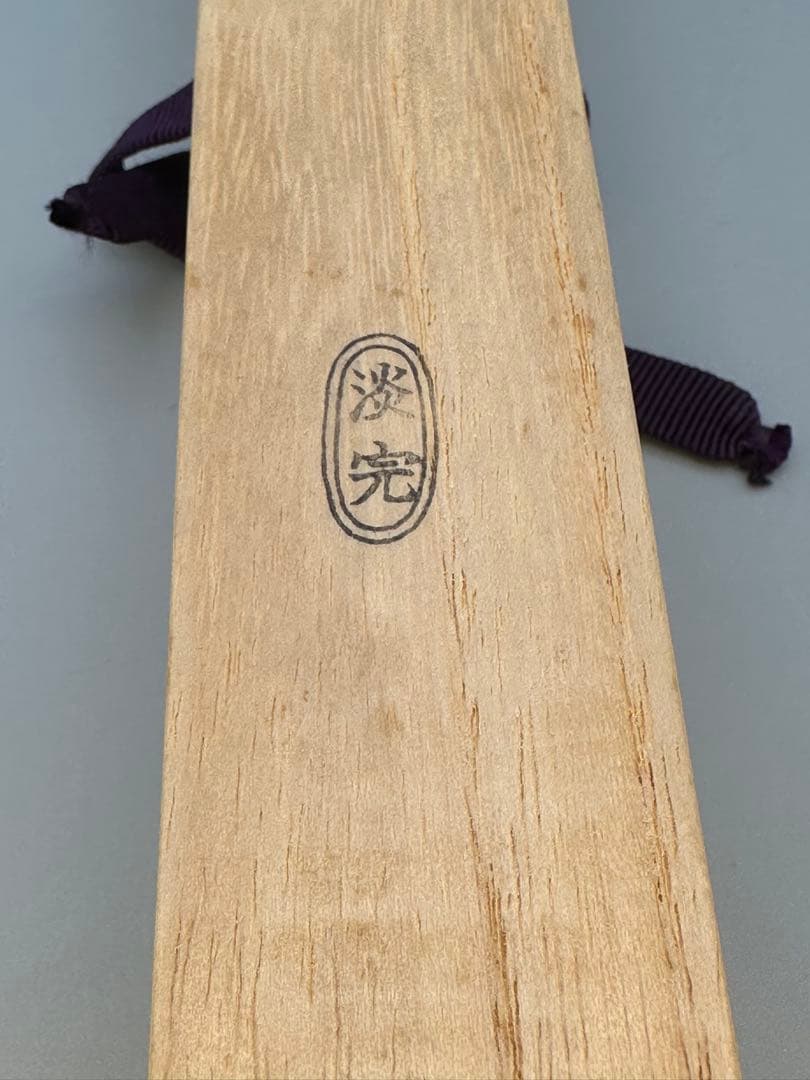
• Box: Original signed tomozutsu (bamboo storage tube) with ink inscription of the mei and artist's signature; outer kiri-wood box included
• Condition: Excellent. No cracks, no chips, bamboo fibre firm and well-seasoned.
🔹 [ Cultural & Artistic Insight ]
Historical Context — Daitoku-ji, founded in 1315 in northern Kyoto, is the spiritual heart of Japanese tea culture. It is here that Sen no Rikyū, the most influential tea master in history, studied Zen and forged the philosophy of wabi-cha. For centuries, the abbots and high priests of Daitoku-ji have carved chashaku as extensions of their spiritual practice — each scoop a meditation, each inscription a koan. A Daitoku-ji chashaku is not merely a utensil but a silent transmission from the Zen lineage to the tea room.
Technique & Aesthetic — Hasegawa Kanshu, a respected priest of the Daitoku-ji school, carved this chashaku from a single length of bamboo with one deliberate node (fushi). The node is the biographical centre of the piece — where the bamboo remembers the season it grew, and where the carver chose to leave its story intact. The curve at the bowl end is gentle and assured; the spine is straight and quiet. The mei inscribed on the tomozutsu, Hana no En (花の宴 — "Flower Banquet"), turns the scoop into a small poem: a reference to cherry blossom viewing and to the elegant gatherings of classical Japanese literature.
Philosophical Reflection — In the tea room, the chashaku is the most modest object and the most watched. It is lifted, named, contemplated, returned. A Zen priest's carving reminds us that the simplest tool can carry the weight of a lifetime's practice.
🔹 [ Deep-Dive Commentary ]
Within the hierarchy of tea utensils, the chashaku occupies a place almost impossible to overstate. It is the one object that the host, during the long quiet of the tea procedure, formally names aloud. The guests examine it closely, consider its mei, and let its carver's intention travel through them. Unlike the bowl or the kettle, the chashaku cannot hide behind function — its entire purpose is contemplation in the shape of craft.
A chashaku carved by a Zen priest of Daitoku-ji sits in a particular category of value: it is valued less for its visual sophistication and more for its spiritual lineage. In Japanese connoisseurship, this is called bokuseki-esque weight — the same quiet authority that collectors seek in Zen calligraphy. The tomozutsu is essential: it is a bamboo cylinder made from the same stalk or a companion piece, on which the priest writes the mei and signs with brush and seal. Without the tomozutsu, the chashaku loses its voice. This example retains both the inscribed tomozutsu and its outer kiri-wood box — complete provenance, intact.
The mei "Hana no En" — Flower Banquet — draws its resonance from The Tale of Genji, where a chapter of the same name describes a moonlit cherry blossom gathering at the imperial court. To choose this name for a chashaku is to frame the tea gathering itself as a kind of flower banquet: transient, elegant, remembered. Every spring, when the scoop is taken out for a hanami-season chaji, it will speak to the flowers outside the shoji paper window.
For the serious collector, a signed Daitoku-ji chashaku with complete tomozutsu is one of the quietest but most enduring acquisitions in the field of chanoyu. It is not loud on the shelf. It is not ornate in the hand. But it is alive with lineage, and it deepens the longer it is lived with.
[ JAPANESE DESCRIPTION / 日本語解説 ]
🔹 [ 基本情報 ]
• 作家:長谷川寛州(はせがわ かんしゅう)— 大徳寺派高僧
• 品目:茶杓(ちゃしゃく)— 抹茶を掬う茶席の主役
• 銘:花の宴(はなのえん)
• 時代:昭和後期〜平成期(1980–2010年頃)
• 産地:京都・大徳寺
• 寸法:茶杓 長さ約18.3cm/共筒 長さ約21.5cm・径約2.7cm
• 付属:共筒(銘書・署名入)、外箱(桐)あり
• 状態:良好。割れ・欠けなし、竹の繊維はしっかりと残っております。
🔹 [ 文化的・芸術的背景 ]
大徳寺は、臨済宗の古刹にして侘茶の精神的源流です。千利休が参禅し、茶の湯の思想がこの寺院のもとで育まれて参りました。以来、大徳寺の高僧の手になる茶杓は、単なる道具ではなく、禅の一滴を茶席に運ぶ「墨蹟にも似た一本」として、数寄者に珍重されて参りました。
長谷川寛州師は、大徳寺派の禅僧として知られ、その茶杓は節の表情と線の気息に独自の静けさを湛えております。本作は一本の竹から一節を残して削り出されており、櫂先の反りは穏やか、樋の通りは真っ直ぐに澄み、持つ手に自然と馴染みます。
🔹 [ 銘「花の宴」について ]
銘「花の宴」は、『源氏物語』の同名の巻 — 月下の桜の宴 — に由来する優雅な言葉です。茶杓にこの銘を与えることは、茶席そのものを一夜の花の宴に見立てることにほかなりません。春の茶事にあわせて取り出せば、障子の外の花と呼応し、席の景色をいっそう深めてくれます。
共筒には銘と署名が墨で記されており、外箱も揃います。共筒を欠いた茶杓は声を失いますが、本作は全ての付属を備え、由緒が損なわれておりません。大徳寺僧侶の在銘茶杓として、長く愛蔵いただける一本です。
🔹 [ SHIPPING & PACKAGING ]
• Dispatch: Within 1-6 business days
• Carrier: Japan Post EMS / UPS (with tracking)
• Packaging: Carefully wrapped with protective materials
🔹 [ BASIC DETAILS ]
• Artist: Hasegawa Kanshu (長谷川寛州), Zen priest of Daitoku-ji, Kyoto
• Technique: Hand-carved aged susudake / white bamboo, single-node chashaku with signed tomozutsu
• Form: Chashaku (茶杓) — the tea scoop that lifts matcha into the tea bowl
• Mei (Poetic Name): "Hana no En" (花の宴 — Flower Banquet)
• Era: Late Showa to Heisei period, circa 1980–2010
• Origin: Daitoku-ji monastery, Kyoto, Japan
• Dimensions: Chashaku length approx. 18.3 cm (7.2 in) / Tomozutsu tube length approx. 21.5 cm × diameter approx. 2.7 cm
• Box: Original signed tomozutsu (bamboo storage tube) with ink inscription of the mei and artist's signature; outer kiri-wood box included
• Condition: Excellent. No cracks, no chips, bamboo fibre firm and well-seasoned.
🔹 [ Cultural & Artistic Insight ]
Historical Context — Daitoku-ji, founded in 1315 in northern Kyoto, is the spiritual heart of Japanese tea culture. It is here that Sen no Rikyū, the most influential tea master in history, studied Zen and forged the philosophy of wabi-cha. For centuries, the abbots and high priests of Daitoku-ji have carved chashaku as extensions of their spiritual practice — each scoop a meditation, each inscription a koan. A Daitoku-ji chashaku is not merely a utensil but a silent transmission from the Zen lineage to the tea room.
Technique & Aesthetic — Hasegawa Kanshu, a respected priest of the Daitoku-ji school, carved this chashaku from a single length of bamboo with one deliberate node (fushi). The node is the biographical centre of the piece — where the bamboo remembers the season it grew, and where the carver chose to leave its story intact. The curve at the bowl end is gentle and assured; the spine is straight and quiet. The mei inscribed on the tomozutsu, Hana no En (花の宴 — "Flower Banquet"), turns the scoop into a small poem: a reference to cherry blossom viewing and to the elegant gatherings of classical Japanese literature.
Philosophical Reflection — In the tea room, the chashaku is the most modest object and the most watched. It is lifted, named, contemplated, returned. A Zen priest's carving reminds us that the simplest tool can carry the weight of a lifetime's practice.
🔹 [ Deep-Dive Commentary ]
Within the hierarchy of tea utensils, the chashaku occupies a place almost impossible to overstate. It is the one object that the host, during the long quiet of the tea procedure, formally names aloud. The guests examine it closely, consider its mei, and let its carver's intention travel through them. Unlike the bowl or the kettle, the chashaku cannot hide behind function — its entire purpose is contemplation in the shape of craft.
A chashaku carved by a Zen priest of Daitoku-ji sits in a particular category of value: it is valued less for its visual sophistication and more for its spiritual lineage. In Japanese connoisseurship, this is called bokuseki-esque weight — the same quiet authority that collectors seek in Zen calligraphy. The tomozutsu is essential: it is a bamboo cylinder made from the same stalk or a companion piece, on which the priest writes the mei and signs with brush and seal. Without the tomozutsu, the chashaku loses its voice. This example retains both the inscribed tomozutsu and its outer kiri-wood box — complete provenance, intact.
The mei "Hana no En" — Flower Banquet — draws its resonance from The Tale of Genji, where a chapter of the same name describes a moonlit cherry blossom gathering at the imperial court. To choose this name for a chashaku is to frame the tea gathering itself as a kind of flower banquet: transient, elegant, remembered. Every spring, when the scoop is taken out for a hanami-season chaji, it will speak to the flowers outside the shoji paper window.
For the serious collector, a signed Daitoku-ji chashaku with complete tomozutsu is one of the quietest but most enduring acquisitions in the field of chanoyu. It is not loud on the shelf. It is not ornate in the hand. But it is alive with lineage, and it deepens the longer it is lived with.
[ JAPANESE DESCRIPTION / 日本語解説 ]
🔹 [ 基本情報 ]
• 作家:長谷川寛州(はせがわ かんしゅう)— 大徳寺派高僧
• 品目:茶杓(ちゃしゃく)— 抹茶を掬う茶席の主役
• 銘:花の宴(はなのえん)
• 時代:昭和後期〜平成期(1980–2010年頃)
• 産地:京都・大徳寺
• 寸法:茶杓 長さ約18.3cm/共筒 長さ約21.5cm・径約2.7cm
• 付属:共筒(銘書・署名入)、外箱(桐)あり
• 状態:良好。割れ・欠けなし、竹の繊維はしっかりと残っております。
🔹 [ 文化的・芸術的背景 ]
大徳寺は、臨済宗の古刹にして侘茶の精神的源流です。千利休が参禅し、茶の湯の思想がこの寺院のもとで育まれて参りました。以来、大徳寺の高僧の手になる茶杓は、単なる道具ではなく、禅の一滴を茶席に運ぶ「墨蹟にも似た一本」として、数寄者に珍重されて参りました。
長谷川寛州師は、大徳寺派の禅僧として知られ、その茶杓は節の表情と線の気息に独自の静けさを湛えております。本作は一本の竹から一節を残して削り出されており、櫂先の反りは穏やか、樋の通りは真っ直ぐに澄み、持つ手に自然と馴染みます。
🔹 [ 銘「花の宴」について ]
銘「花の宴」は、『源氏物語』の同名の巻 — 月下の桜の宴 — に由来する優雅な言葉です。茶杓にこの銘を与えることは、茶席そのものを一夜の花の宴に見立てることにほかなりません。春の茶事にあわせて取り出せば、障子の外の花と呼応し、席の景色をいっそう深めてくれます。
共筒には銘と署名が墨で記されており、外箱も揃います。共筒を欠いた茶杓は声を失いますが、本作は全ての付属を備え、由緒が損なわれておりません。大徳寺僧侶の在銘茶杓として、長く愛蔵いただける一本です。
🔹 [ SHIPPING & PACKAGING ]
• Dispatch: Within 1-6 business days
• Carrier: Japan Post EMS / UPS (with tracking)
• Packaging: Carefully wrapped with protective materials
Quantity
Couldn't load pickup availability
Low stock: 1 left
View full details