1
/
of
12
Crane and Pine Maki-e O-Natsume by Nishimura Shoun — Red Lacquer Tea Caddy
Crane and Pine Maki-e O-Natsume by Nishimura Shoun — Red Lacquer Tea Caddy
Regular price
Dhs. 1,003.00 AED
Regular price
Sale price
Dhs. 1,003.00 AED
Taxes included.
Shipping calculated at checkout.
Discover this crane pine makie masterwork in a red lacquer natsume form. This o-natsume tea caddy features gold makie lacquer and a matsukuitsuru motif with vermilion urushi art and gradient lacquerware—a signed tomobako art piece from the japan tea ceremony, a collector urushi box of lasting presence.
🔹 [ Basic Details ]
• Artist: Nishimura Shoun (西村祥雲)
• Technique: Gold maki-e (蒔絵) on vermilion-to-black gradient urushi lacquer
• Era: Contemporary (Heisei–Reiwa period)
• Origin: Japan
• Dimensions: Height approx. 7.6 cm, Diameter approx. 7.5 cm
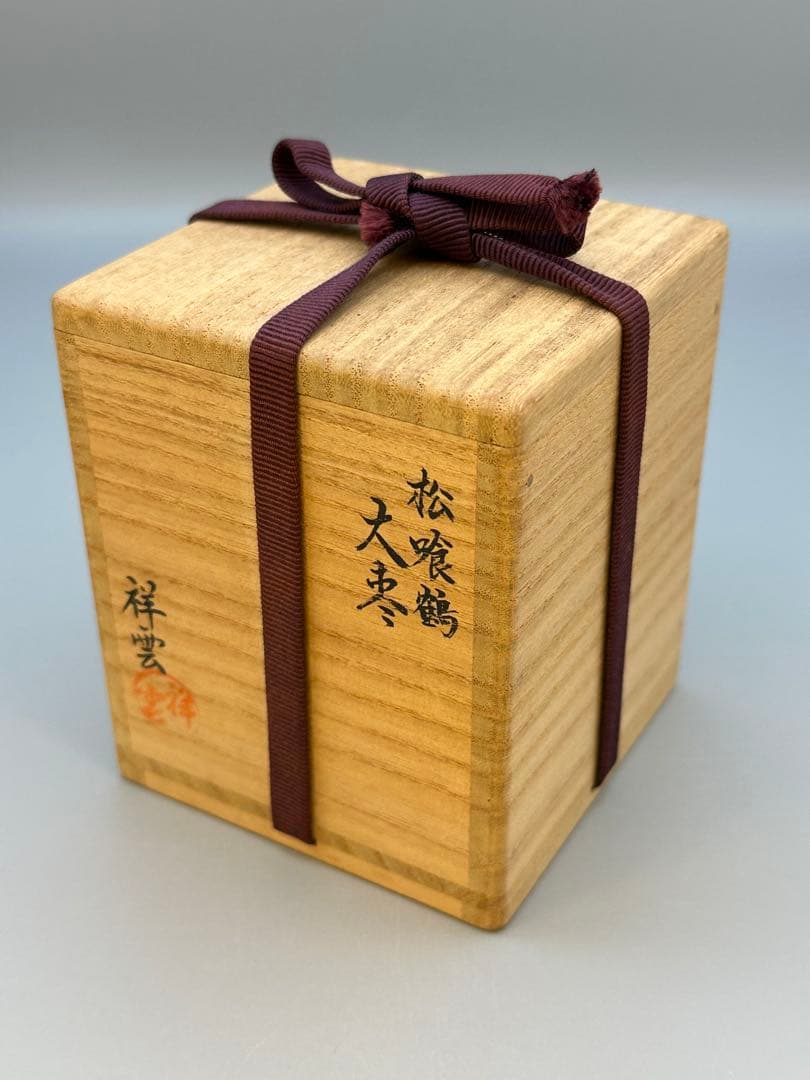
• Box: Signed tomobako (共箱) inscribed "松喰鶴 大棗" (Matsukuitsuru O-natsume), signed 祥雲 (Shoun)
• Condition: Excellent — no notable scratches, chips, or repairs. Pristine condition.
🔹 [ Cultural & Artistic Insight ]
The matsukuitsuru (松喰鶴) motif—cranes carrying pine branches in their beaks—is one of Japan's most auspicious decorative themes. Cranes symbolize longevity and fidelity; pine represents evergreen endurance. Together, they form a visual prayer for lasting prosperity.
Nishimura Shoun renders this motif in shimmering gold maki-e across a dramatic vermilion-to-black gradient ground. The lid glows in brilliant red with cranes soaring overhead, while the body deepens to dark lacquer at the base, creating an effect of golden birds descending through a sunset sky. Multiple cranes wheel across the surface, each rendered with individual wing positions and flight attitudes.
"The crane carries what does not wither. The pine accepts what does not land."
🔹 [ Deep-Dive Commentary ]
The o-natsume (大棗, large natsume) is a generous format within the natsume family, used for gatherings that require a substantial quantity of usucha or for occasions where visual presence is desired. The larger surface area invites more ambitious decorative programs.
The vermilion-to-black gradient (朱溜塗, shu-tame-nuri) is achieved through multiple coats of transparent lacquer over a vermilion base, with the darker tones emerging where lacquer pools most deeply. This technique creates an organic transition impossible to replicate mechanically—each piece develops its gradient uniquely.
Matsukuitsuru has deep roots in Japanese cultural symbolism, appearing in Noh costumes, imperial furnishings, and tea ceremony utensils. The motif gained particular prominence during the Edo period as a congratulatory design for weddings and New Year celebrations.
The artist's decision to multiply the cranes across the entire surface transforms a decorative motif into an atmosphere. The viewer does not observe a single crane but enters a sky full of them.
【日本語解説】
🔹 [ 基本情報 ]
・作家:西村祥雲
・技法:金蒔絵、朱溜塗(朱から黒へのグラデーション漆)
・時代:現代(平成・令和期)
・産地:日本
・寸法:高さ約7.6cm、径約7.5cm
・箱:共箱(「松喰鶴 大棗」と墨書、祥雲落款)
・状態:極めて良好 — 目立つ傷や汚れなし。
🔹 [ 文化的・美術的解説 ]
松喰鶴は日本の装飾意匠において最も吉祥性の高い文様の一つである。鶴は長寿と貞節を、松は常緑の不変を象徴し、両者が結びついて永続する繁栄への祈りを形成する。
西村祥雲は鮮やかな朱から黒へと移行するグラデーション地に、金蒔絵で複数の鶴を描く。蓋は明るい朱に金の鶴が舞い、胴は下方へ向かって暗くなり、夕焼けの空を翔ける金の鳥のような効果を生む。
🔹 [ 深掘り解説 ]
大棗は棗の中でも大振りの形式であり、薄茶を多く必要とする席や視覚的な存在感が求められる場に用いられる。広い表面積はより意欲的な装飾を可能にする。
朱溜塗は朱漆の上に透漆を幾重にも塗り重ねることで、漆が深く溜まる箇所ほど暗い色調が現れる技法である。機械的に再現不可能な有機的グラデーションが生まれ、一点一点異なる表情を見せる。
松喰鶴は能装束、皇室調度、茶道具など日本文化の広範な領域に根を張る意匠であり、特に江戸期以降、婚礼や正月の祝儀文様として格別の地位を得た。
🔹 [ SHIPPING & PACKAGING ]
• Dispatch: Within 1-6 business days
• Carrier: Japan Post EMS / UPS (with tracking)
• Packaging: Carefully wrapped with protective materials
🔹 [ Basic Details ]
• Artist: Nishimura Shoun (西村祥雲)
• Technique: Gold maki-e (蒔絵) on vermilion-to-black gradient urushi lacquer
• Era: Contemporary (Heisei–Reiwa period)
• Origin: Japan
• Dimensions: Height approx. 7.6 cm, Diameter approx. 7.5 cm
• Box: Signed tomobako (共箱) inscribed "松喰鶴 大棗" (Matsukuitsuru O-natsume), signed 祥雲 (Shoun)
• Condition: Excellent — no notable scratches, chips, or repairs. Pristine condition.
🔹 [ Cultural & Artistic Insight ]
The matsukuitsuru (松喰鶴) motif—cranes carrying pine branches in their beaks—is one of Japan's most auspicious decorative themes. Cranes symbolize longevity and fidelity; pine represents evergreen endurance. Together, they form a visual prayer for lasting prosperity.
Nishimura Shoun renders this motif in shimmering gold maki-e across a dramatic vermilion-to-black gradient ground. The lid glows in brilliant red with cranes soaring overhead, while the body deepens to dark lacquer at the base, creating an effect of golden birds descending through a sunset sky. Multiple cranes wheel across the surface, each rendered with individual wing positions and flight attitudes.
"The crane carries what does not wither. The pine accepts what does not land."
🔹 [ Deep-Dive Commentary ]
The o-natsume (大棗, large natsume) is a generous format within the natsume family, used for gatherings that require a substantial quantity of usucha or for occasions where visual presence is desired. The larger surface area invites more ambitious decorative programs.
The vermilion-to-black gradient (朱溜塗, shu-tame-nuri) is achieved through multiple coats of transparent lacquer over a vermilion base, with the darker tones emerging where lacquer pools most deeply. This technique creates an organic transition impossible to replicate mechanically—each piece develops its gradient uniquely.
Matsukuitsuru has deep roots in Japanese cultural symbolism, appearing in Noh costumes, imperial furnishings, and tea ceremony utensils. The motif gained particular prominence during the Edo period as a congratulatory design for weddings and New Year celebrations.
The artist's decision to multiply the cranes across the entire surface transforms a decorative motif into an atmosphere. The viewer does not observe a single crane but enters a sky full of them.
【日本語解説】
🔹 [ 基本情報 ]
・作家:西村祥雲
・技法:金蒔絵、朱溜塗(朱から黒へのグラデーション漆)
・時代:現代(平成・令和期)
・産地:日本
・寸法:高さ約7.6cm、径約7.5cm
・箱:共箱(「松喰鶴 大棗」と墨書、祥雲落款)
・状態:極めて良好 — 目立つ傷や汚れなし。
🔹 [ 文化的・美術的解説 ]
松喰鶴は日本の装飾意匠において最も吉祥性の高い文様の一つである。鶴は長寿と貞節を、松は常緑の不変を象徴し、両者が結びついて永続する繁栄への祈りを形成する。
西村祥雲は鮮やかな朱から黒へと移行するグラデーション地に、金蒔絵で複数の鶴を描く。蓋は明るい朱に金の鶴が舞い、胴は下方へ向かって暗くなり、夕焼けの空を翔ける金の鳥のような効果を生む。
🔹 [ 深掘り解説 ]
大棗は棗の中でも大振りの形式であり、薄茶を多く必要とする席や視覚的な存在感が求められる場に用いられる。広い表面積はより意欲的な装飾を可能にする。
朱溜塗は朱漆の上に透漆を幾重にも塗り重ねることで、漆が深く溜まる箇所ほど暗い色調が現れる技法である。機械的に再現不可能な有機的グラデーションが生まれ、一点一点異なる表情を見せる。
松喰鶴は能装束、皇室調度、茶道具など日本文化の広範な領域に根を張る意匠であり、特に江戸期以降、婚礼や正月の祝儀文様として格別の地位を得た。
🔹 [ SHIPPING & PACKAGING ]
• Dispatch: Within 1-6 business days
• Carrier: Japan Post EMS / UPS (with tracking)
• Packaging: Carefully wrapped with protective materials
Quantity
Couldn't load pickup availability
Out of stock
View full details